

Have you ever spent an hour prepping fresh kangkong and gabi, only to find your broth tastes more like a plain soup than a tangy masterpiece? If you are standing over your stove asking, why is my sinigang not sour enough, you are likely facing a common chemistry problem rather than a lack of effort. It is incredibly frustrating to waste quality ingredients on a bland dish that fails to capture the sharp asim you remember from your family’s kitchen back home.
With over 700,000 Filipinos in the UAE, the quest for authentic flavor is a daily challenge, especially when choosing between a 6.00 AED pack of Mother’s Best mix or fresh tamarind imports that can cost up to 6.37 USD per kg. This guide will show you how to rescue your current pot immediately and master the perfect souring ratios for the future. We will dive into the Hybrid Method of mixing agents, the secret of water timing, and exactly where to source seasonal Filipino fruits and pantry staples in Dubai through our mobile app to ensure every spoonful hits that perfect, mouth-puckering note.
Key Takeaways
- Learn how the right level of acidity balances fatty meats like pork belly to create the authentic ‘asim’ soul of the dish.
- Identify the ‘Dilution Effect’ caused by over-watering or adding too many moisture-heavy vegetables like radish and eggplant.
- Master the ‘Double-Sour’ technique to rescue your current pot if you are still wondering why is my sinigang not sour enough.
- Understand when to choose fresh souring agents like Kamias over instant mixes to achieve a multi-dimensional flavor profile.
- Discover how to source authentic Filipino pantry items and seasonal fruits in the UAE through convenient mobile app ordering.
Understanding the ‘Asim’ Factor: What Makes Sinigang Sour?
‘Asim’ is much more than a simple flavor profile; it’s the very soul of Filipino comfort food. When you sit down to a bowl of steaming broth, you expect that immediate, mouth-watering sensation that defines the dish. If that’s missing, you’re left wondering why is my sinigang not sour enough after all that prep work. This acidity serves a vital functional purpose, especially when you’re cooking with rich, fatty meats like pork belly or spare ribs. The sourness cuts through the heavy grease, cleansing your palate with every spoonful and making the protein feel lighter and more balanced.
To understand what sinigang is at its core, you have to look at the diversity of souring fruits used across the Philippines. While most modern cooks reach for a convenient packet of mix, traditional recipes rely on the seasonal bounty of the islands. Different regions have perfected their own versions based on local flora:
- Sampalok (Tamarind): The gold standard for its deep, earthy tang and thick consistency.
- Kamias (Bilimbi): Offers a sharp, clean acidity that’s incredibly refreshing in fish-based versions.
- Calamansi: Usually used as a quick fix or for a lighter, citrusy broth.
- Regional Variations: In some provinces, you’ll find green mangoes, guava (for Sinigang sa Bayabas), or even santol providing that signature kick.
The Science of Souring Agents
The acidity in these fruits comes primarily from tartaric and citric acids. These compounds react with your taste buds to trigger salivation, which is why a well-made Sinigang feels so revitalizing. Fresh fruits provide a brighter, more complex flavor profile because they contain volatile aromatic compounds that are often lost during the industrial dehydration process used for powders. Sampalok is the most common souring agent due to its high tartaric acid content. Using fresh seasonal Filipino fruits ensures you get those fruity top notes that a factory-made mix simply can’t replicate.
Why Your Palate Might Be Deceiving You
Sometimes the broth is technically acidic, but your tongue can’t perceive it properly. This often happens because of the fat content; oil from the pork coats your taste buds, acting as a physical barrier against the sourness. If you find yourself asking why is my sinigang not sour enough, try checking your salt levels. Patis (fish sauce) is essential for savory depth, but too much salt can actually mask acidity. You want a tension between the salt and the sour, not a competition. Keep in mind that restaurant versions often use flavor enhancers like MSG to make the broth taste sharper than a traditional home-cooked version, so your “bland” pot might just be missing a touch of seasoning rather than more fruit.
Fresh vs. Instant: Comparing Souring Agents for Maximum Flavor
Choosing between a 6.00 AED packet of Mother’s Best mix and a bag of fresh tamarind is the most common crossroads for home cooks in the UAE. While instant mixes offer undeniable convenience for a quick weeknight meal, they often provide a single-note acidity that lacks complexity. If you have ever wondered why is my sinigang not sour enough despite using an entire packet, it is because powders rely on dehydrated acids that lose their aromatic oils during processing. Fresh agents, by contrast, release a bouquet of fruity scents and a “thick” mouthfeel that powders simply cannot replicate.
Understanding the science of sourness reveals that fresh fruits contain a mix of acids and sugars that create a balanced, rounder flavor. In the UAE, the price of fresh tamarind imports has ranged from $1.65 to $6.37 per kg in 2024. This investment pays off in the depth of your broth. While Sinigang sa Sampalok is famous for its earthy, brown base, Sinigang sa Kamias offers a lighter, clearer soup with floral undertones. Using Seasonal Filipino Fruits ensures you are getting the most potent acidity possible, as the shelf life of these fruits directly impacts their tartness.
The Pros and Cons of Sinigang Mixes
Mixes are reliable and provide a consistent level of salt and tang. However, they are often high in sodium, which can overwhelm the delicate flavors of your vegetables. To fix a “flat” mix, try sautéing your onions and tomatoes until they are completely soft and jammy before adding water. This creates a savory base that supports the powder. For a standard 44g to 50g pack, most brands recommend 1 liter of water, but using 750ml instead is a pro-tip for those who want a sharper kick. You can find these essential Filipino pantry items on our mobile app for quick delivery.
The Power of Fresh Calamansi and Kamias
If your pot is already simmering and you are asking why is my sinigang not sour enough, fresh calamansi is your best friend. Squeezing fresh juice into the bowl just before serving provides a bright, citrusy finish that a boiled-down mix lacks. Kamias, or bilimbi, should be added midway through cooking; they soften quickly and release a sharp, clean acid. If you are using fresh tamarind, boil the pods in a small amount of water until soft, mash them into a paste, and strain the pulp. This extra step results in a professional-grade broth with a rich, clouded texture that defines a true five-star Sinigang.
Common Culinary Mistakes: Why Your Soup is Lacking Tartness
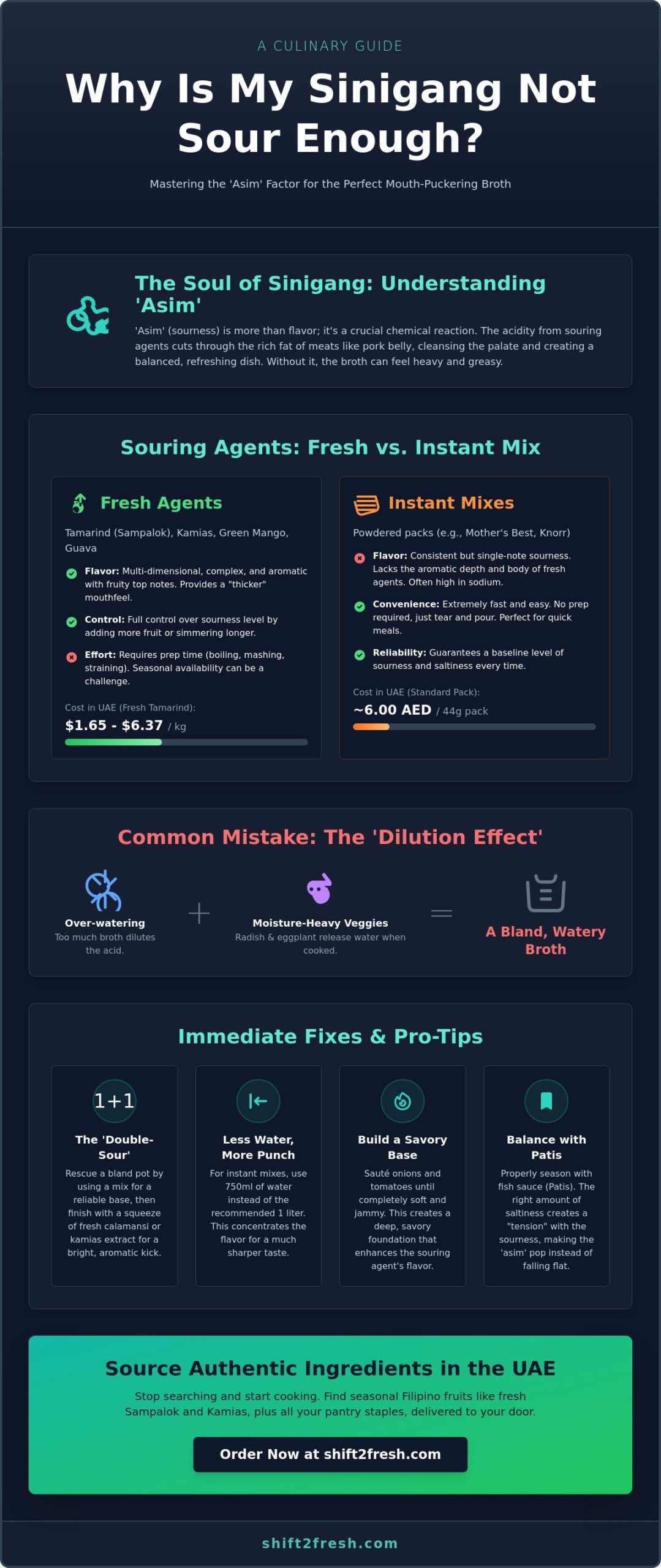
Most home cooks blame the quality of their tamarind when the broth fails to hit the mark. However, the most frequent reason you find yourself asking why is my sinigang not sour enough is actually the volume of liquid in the pot. If you are staring at a massive pot of soup that tastes like plain water, you’ve likely fallen into the trap of over-dilution. Most 44g or 50g commercial mixes are formulated for exactly one liter of water. Adding even a single extra cup of liquid can reduce the perceived acidity by nearly 20 percent, leaving the dish tasting flat and uninspired.
Timing is another critical factor that many overlook. Boiling the broth for an extended period after adding the souring agent can be a major error. Research into common culinary mistakes suggests that simmering the mix for too long results in a harsh, metallic taste rather than a bright tang. It is best to add your sinigang mix or fresh fruit extracts in the final 10 to 15 minutes of cooking. This preserves the volatile acid compounds that provide that signature puckering sensation. In the UAE, the mineral profile of tap water can also play a subtle role; high mineral content can act as a buffer, neutralizing some of the acids and making the soup taste less sharp than expected.
The Water-to-Sour Ratio
When you are prepping your Asian Vegetables, you must account for their internal moisture. Ingredients like radish (labanos) and eggplant (talong) are composed of over 90 percent water. As these vegetables soften, they release that liquid directly into your broth. If you start with a full liter of water and then add a large quantity of these vegetables, you’ve effectively watered down your soup. A pro-tip is to start with only 750ml of liquid. This concentrated base ensures the ‘asim’ remains dominant, and you can always add a splash more water at the end if the flavor is too intense.
The Vegetable Trap
Gabi (taro) is a staple in Sinigang because it creates a thick, comforting texture. Unfortunately, that very starch acts like a sponge for flavor. It coats the tongue and can significantly mask the tartness of the tamarind, making you wonder why is my sinigang not sour enough despite following the recipe. Similarly, using too many onions or very ripe tomatoes introduces a natural sweetness that chemically balances out the acidity. To combat this, follow a strict order of operations. Add your souring agent last, after the vegetables have already released their sugars and the gabi has thickened the soup. This allows you to taste and adjust the final acidity with total precision.
Immediate Fixes and Pro-Tips for an Extra Sour Sinigang
If you find yourself staring at a steaming pot and wondering why is my sinigang not sour enough, don’t worry. You can still save the dish without starting from scratch. One of the most effective ways to rescue a bland broth is the ‘Double-Sour’ technique. This involves layering two different agents to create a more complex flavor profile. For instance, if you used a tamarind base but it lacks punch, adding a few pieces of fresh kamias or a splash of calamansi can provide those missing high notes that hit the back of the palate.
You should also look at your enhancers. Siling haba, or green finger chillies, are not just for heat; they actually heighten your perception of sourness. By breaking one or two open in the broth, the capsaicin triggers a sensory response that makes the ‘asim’ feel sharper on the tongue. Similarly, patis is crucial. A splash of high-quality fish sauce doesn’t just add salt; it acts as a flavor bridge that ‘wakes up’ the acidic molecules in the tamarind. This makes the tartness feel more vibrant rather than just flat and acidic.
Emergency Souring Fixes
If the broth is too thin, simmer the pot uncovered for ten minutes. This evaporates excess water and concentrates the existing acids. You can also create a ‘sourness slurry’ by mixing a small amount of sinigang powder with just a tablespoon of warm water before stirring it into the pot. This prevents clumping and ensures an even distribution of tang. For an instant brightness that cuts through the fat of pork belly, a fresh squeeze of calamansi right before you turn off the heat is the ultimate secret weapon.
Pro Secrets for Depth of Flavour
Start your Sinigang by sautéing your tomatoes until they completely burst and turn jammy. This releases natural malic acid, which provides a foundational tartness that complements the sharper citric acids added later. Be careful with fresh tamarind pods, though; boiling them for too long or mashing the seeds can release tannins that make your broth taste unpleasantly bitter. For the best results, add half the souring agent at the start and half at the end for layered flavour.
Ready to master your next meal? You can order authentic Filipino pantry items and fresh fruits through our mobile app to ensure you always have the right ingredients on hand for a perfect pot of Sinigang.
Sourcing the Best Ingredients in the UAE for Authentic Sinigang
Achieving that perfect, mouth-puckering ‘asim’ is nearly impossible if you’re working with subpar ingredients. If you’ve followed every troubleshooting tip and still find yourself asking why is my sinigang not sour enough, the issue likely lies in your shopping bag. Standard international supermarkets in the UAE often stock generic souring agents that lack the punch of true Filipino cultivars. To replicate the taste of home, you need access to high-quality Filipino Pantry Items that are specifically selected for their potency and authenticity. Using the right brands and fresh produce ensures that the chemical balance of your broth is correct from the very first simmer.
Why Fresh Matters for Sinigang
Freshness is the non-negotiable factor in Filipino cooking. While frozen calamansi is available in many corners of Dubai and Sharjah, it often loses its bright, citrusy oils during the freezing process. Air-flown fresh fruits maintain their natural acids, which are essential for cutting through the richness of pork or seafood. Finding seasonal kamias or fresh sampalok pods in the Middle East used to be a weekend-long hunt. Now, with more than 700,000 Filipinos in the UAE as of 2025, the demand for these specific items has made it possible to source them with much higher standards. Choosing fresh imports doesn’t just improve your soup; it also supports the Filipino farmers who cultivate these traditional crops specifically for the global Pinoy community.
The Shift 2 Fresh Advantage
Shift 2 Fresh bridges the gap between traditional Philippine markets and your kitchen in the UAE. We focus on delivering seasonal Filipino fruits and Asian vegetables directly to your doorstep via our mobile app, ensuring you never have to settle for wilted greens or flavorless tamarind. Our quality control process ensures that every piece of produce is at its peak acidity. This helps you avoid the common frustration of wondering why is my sinigang not sour enough after hours of labor in the kitchen. By sourcing directly, we provide the hard-to-find ingredients that give Sinigang its multi-dimensional flavor profile, from the earthy depth of tamarind to the floral notes of fresh kamias. You can shop our fresh Filipino produce and pantry staples now to experience the difference that authentic sourcing makes.
Before you start your next Philippine Supermarket haul, keep this checklist in mind to ensure your pantry is ready for a five-star meal:
- Fresh Sampalok (Tamarind): Look for pods that feel heavy for their size.
- Fresh Kamias (Bilimbi): These should be firm and vibrant green for maximum tartness.
- Air-flown Calamansi: Choose fruits with thin skins, as they typically hold more juice.
- Authentic Patis: Essential for balancing the ‘asim’ with savory umami.
- Gabi (Taro): High-quality taro provides the thick, creamy consistency that carries the sour notes.
By combining these premium ingredients with the troubleshooting techniques shared in this guide, you’ll never have to worry about a bland pot of soup again. Your Sinigang will finally have that authentic, bold character that rivals even the best home-cooked meals in the Philippines.
Master the Art of the Perfect Sinigang
Perfecting your broth is a balance of chemistry and quality ingredients. You’ve learned that mastering the water-to-sour ratio and layering fresh agents with your favorite mixes are the secrets to that elusive five-star tang. If you’ve spent years wondering why is my sinigang not sour enough, you now have the professional techniques to rescue any pot and replicate the authentic flavors of home right here in the Middle East.
Achieving that bold ‘asim’ starts with what’s in your pantry. We bring 45+ years of food industry experience to your kitchen, providing authentic air-flown Filipino produce that powders alone can’t match. You can Get Fresh Filipino Souring Agents Delivered to Your UAE Home Today and enjoy free delivery in the UAE on orders over AED 500. Don’t let another bowl of soup fall flat when the best seasonal fruits are just a few clicks away. Your next kitchen masterpiece is going to be your most delicious one yet.
Frequently Asked Questions
Can I use lemon or lime instead of tamarind for Sinigang?
You can use lemon or lime as a substitute, but the resulting flavor will be more one-dimensional and citrusy compared to the earthy depth of tamarind. While these fruits provide the necessary acidity, they lack the fruity complexity found in traditional Filipino ingredients. For a more authentic citrus-based tang, it is better to use fresh calamansi, which offers a unique aroma that complements the savory broth.
Is it better to add the Sinigang mix at the beginning or the end?
It’s best to add the sinigang mix during the last 10 to 15 minutes of cooking. Adding the powder too early and allowing it to boil for an extended period can result in a harsh, metallic aftertaste. By adding it toward the end, you preserve the volatile acid compounds that give the soup its bright, refreshing kick without over-processing the flavor.
Why does my Sinigang taste bitter instead of sour?
Bitterness usually happens if you over-boil fresh tamarind pods or accidentally mash the seeds while extracting the pulp. Tamarind seeds contain tannins that release a bitter flavor when they are crushed or simmered for too long. To avoid this, boil the pods just until they are soft, mash them gently to release the fruit, and strain the mixture carefully before adding it to your pot.
How many pieces of fresh tamarind do I need for 1kg of pork?
You generally need about 15 to 20 medium-sized fresh tamarind pods to provide enough acidity for 1kg of pork. This amount ensures the ‘asim’ is strong enough to cut through the heavy fats of the meat. If you use this ratio and still wonder why is my sinigang not sour enough, you likely have too much water in your pot or too many moisture-heavy vegetables like radish diluting the broth.
Can I use vinegar to make my Sinigang more sour?
You should avoid using vinegar because it completely changes the flavor profile of the dish, moving it closer to a Paksiw or Adobo. Sinigang relies on fruit-based acids like tartaric and citric acid for its signature refreshing tang. If your soup needs a boost, it is much better to add more tamarind paste, fresh kamias, or a final squeeze of calamansi juice rather than reaching for the vinegar bottle.
Does reheating Sinigang make it more or less sour?
Reheating usually makes the broth taste more sour because the liquid evaporates, which concentrates the existing acids. However, the vegetables will continue to soften and may release more starches, which can sometimes coat the tongue and mute the sharp notes. If the flavor feels dull after reheating, add a small splash of water and a fresh souring agent to restore the original brightness of the dish.
What is the best way to extract juice from fresh kamias?
The most effective method is to boil the kamias in a small amount of water until they become soft and slightly translucent. Once they reach this stage, mash them thoroughly with a fork or a mortar and pestle to release all their juices. Strain the resulting liquid into your main pot to ensure your broth stays clear while gaining the sharp, floral acidity that defines Sinigang sa Kamias.
Why is my Sinigang broth cloudy and how does it affect the taste?
Cloudiness is usually a result of the starch released by Gabi (taro) or the natural pulp from fresh tamarind. This is actually a sign of a rich, traditional broth and is often preferred because it gives the soup a thicker mouthfeel. If you are asking why is my sinigang not sour enough in a cloudy soup, the starch might be masking the acidity on your palate; simply add a bit more souring agent to compensate.
0 comments