

Imagine standing in a crowded Dubai supermarket aisle on a Friday morning, searching for the specific snap of sitaw for your sinigang, only to find rows of generic green beans instead. It’s a common struggle for the 700,000 Filipinos living in the UAE who want to recreate authentic flavors but feel lost among confusing international labels. You likely agree that nothing beats the nutritional punch and nostalgic taste of home grown produce, yet finding the right ingredients in a foreign land often feels like a chore. This guide will help you identify exactly what vegetables are grown in the philippines, bridging the gap between traditional Tagalog names and their English counterparts.
We’re diving deep into the diverse range of crops that define Pinoy cuisine, from the lowland staples mentioned in the Bahay Kubo song to the cool highland specialties of Benguet. You’ll learn how to distinguish between different varieties and, more importantly, how to prepare them like a pro. We’ll also reveal the most reliable ways to source these fresh essentials in Dubai and Sharjah, ensuring your next home cooked meal costs less than a 35 AED takeout order. From seasonal availability to local sourcing tips, this is your definitive roadmap to bringing the taste of the archipelago to your kitchen in the Emirates.
Key Takeaways
- Understand how the Philippines’ unique volcanic soil and tropical climate create the perfect environment for the diverse produce featured in traditional Filipino culture.
- Explore a detailed breakdown of what vegetables are grown in the philippines, from essential pinakbet vine crops to starchy root staples that define the local diet.
- Identify indigenous leafy greens and superfoods that offer high nutritional value and resilience, providing healthy alternatives to standard supermarket varieties.
- Learn how to overcome sourcing challenges in the Middle East by connecting with specialized importers that bring fresh Philippine harvests directly to the UAE market at competitive prices in AED.
The Agricultural Heritage of the Philippines: More Than Just a Song
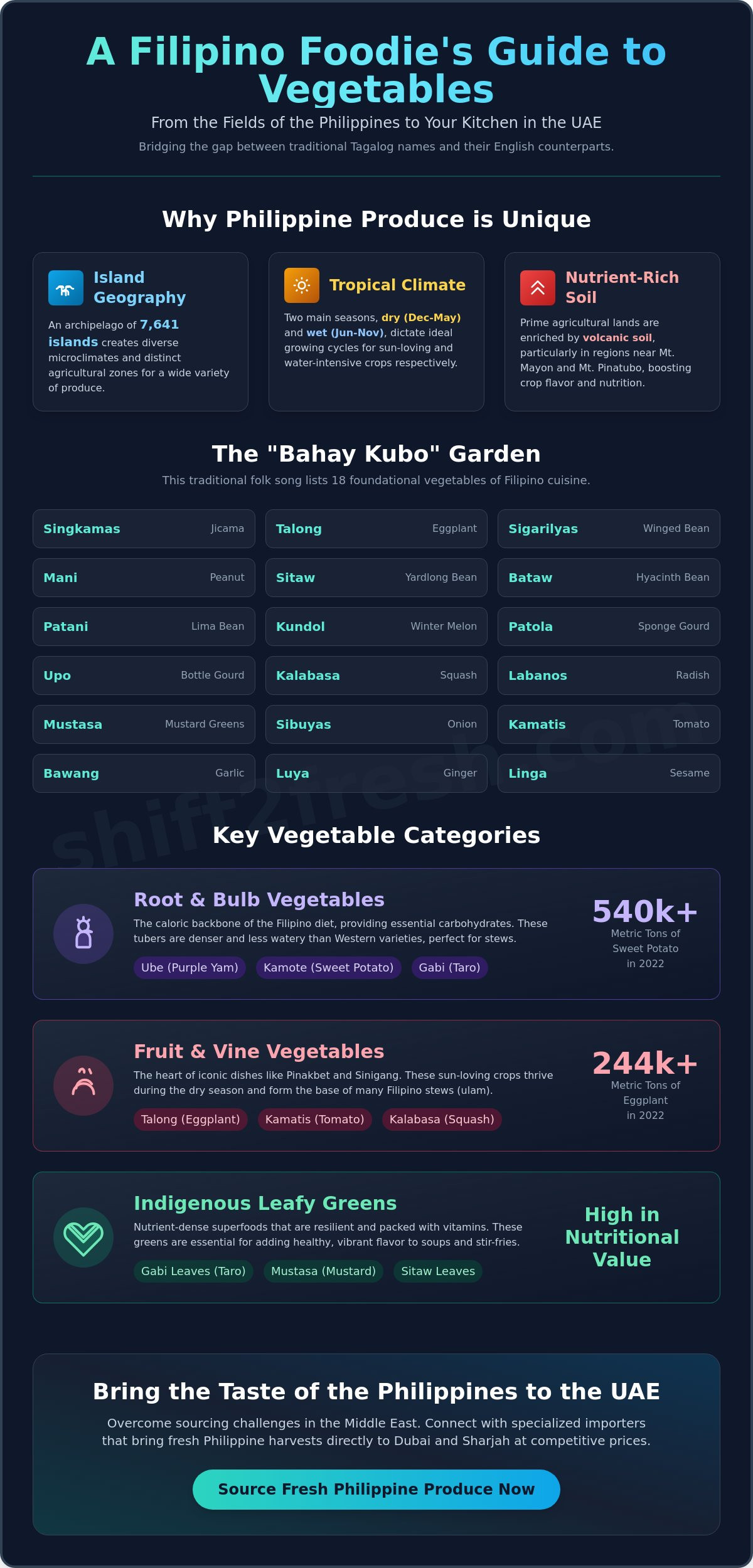
The Philippines consists of 7,641 islands, creating a diverse landscape that dictates what vegetables are grown in the philippines. This archipelago benefits from a tropical climate and nutrient-rich volcanic soil, particularly in regions surrounding Mt. Mayon and Mt. Pinatubo. Geography creates distinct agricultural zones. Highland areas, specifically the Cordillera Administrative Region, provide approximately 80% of the country’s temperate vegetables like carrots and cabbage. Meanwhile, the lowland plains of Central Luzon focus on heat-resistant varieties. Backyard gardening remains a pillar of Filipino food culture, with over 30% of rural households maintaining “gulayan” patches to ensure family self-sufficiency.
The “Bahay Kubo” Varieties
It’s not just a melody; the traditional Filipino folk song, ‘Bahay Kubo’, serves as a living botanical record for the nation. The lyrics list 18 different plants, including singkamas (jicama), talong (eggplant), and sigarilyas (winged bean). The song provides a foundational list of what vegetables are grown in the philippines, categorizing them by their local names and growth habits. While these were once primarily subsistence crops, many have transitioned to large-scale commercial production. For example, the Philippine Statistics Authority reported that the country produced 244,538 metric tons of eggplant in 2022. This commercial shift ensures a steady supply for domestic markets and export chains reaching Filipino communities in the UAE.
Seasonal Cycles in Philippine Agriculture
Farmers follow two primary seasons: the dry season from December to May and the wet season from June to November. The dry season is ideal for sun-loving crops like tomatoes and peppers, while the wet season supports water-intensive gourds. However, the country faces an average of 20 typhoons annually, which often disrupt these cycles and impact the cost of exports to Dubai and Abu Dhabi. To mitigate this risk, farmers utilize off-season crops. Off-season crops are vegetable varieties specifically cultivated outside their natural growing window to maintain market supply during periods of extreme weather or unfavorable environmental conditions. This practice helps stabilize vegetable prices and ensures food security throughout the year.
Essential Filipino Root and Bulb Vegetables
Root crops and bulbs serve as the caloric backbone of the Philippine archipelago. They provide complex carbohydrates and essential nutrients that fuel a high-energy lifestyle. When people ask what vegetables are grown in the philippines, they often overlook these underground treasures, yet they represent a significant portion of agricultural output. In 2022, sweet potato production alone exceeded 540,000 metric tons according to the Philippine Statistics Authority. These staples are more than just food; they’re an economic lifeline for rural farmers in regions like Central Luzon and Northern Mindanao.
Philippine root crops differ from Western varieties in texture and sugar content. Pinoy tubers are generally denser and less watery, making them ideal for slow-cooked stews or heavy desserts. For Filipinos living in the UAE, recreating the taste of home requires these specific cultivars. Because the UAE’s desert environment fluctuates between extreme heat and high humidity, storing these vegetables correctly is vital. You should keep root crops in a cool, dark, and well-ventilated space. Avoid the refrigerator for most tubers, as the cold can convert starches into sugars, altering the flavor and texture of the produce.
The Purple Power: Ube and Other Tubers
Ube, or purple yam, is the Philippines’ most famous export in the dessert world. Unlike the common sweet potato, true ube has a rough, bark-like skin and vibrant violet flesh. It’s prized for its nutty, vanilla-like profile. Kamote, the Philippine sweet potato, comes in yellow and white varieties. Tarlac remains a massive production hub for these, offering a dry, starchy texture that’s perfect for kamote cue. Gabi (Taro) plays a dual role in Philippine kitchens. While the corm provides thickness to Sinigang, the leaves are the star of Bicolano cuisine, particularly in the dish Laing. If you’re looking to bring these authentic flavors to your kitchen in Dubai or Abu Dhabi, you can source fresh Philippine produce through specialized importers.
Bulbs and Aromatics: The Foundation of Gisa
The “holy trinity” of Filipino cooking—garlic, onion, and ginger—starts with local bulbs. Sibuyas (onion) production centers heavily in Nueva Ecija, specifically in Bongabon, known as the Onion Capital of the Philippines. Local red onions are smaller but pack a more intense heat than the large, mild varieties often found in Western supermarkets. Bawang (garlic) from the Ilocos region is similarly distinct. It’s smaller than the bleached, imported white garlic found globally, but it contains a higher concentration of essential oils, giving it a superior pungent aroma. Finally, Luya (ginger) and Dilaw (turmeric) are staples for both flavor and traditional medicine. They’re the base for tinola and salabat, a soothing ginger tea used for generations to treat throat irritations.
Fruit-Bearing and Vine Vegetables: The Heart of Pinakbet
Vine-grown crops form the backbone of the Filipino lowland diet because they thrive in the archipelago’s tropical heat and humidity. These plants climb bamboo trellises or crawl across the soil, producing high yields in relatively small spaces. When people ask what vegetables are grown in the philippines, these climbing varieties often define the answer. They offer a complex palette of textures, from the snap of a fresh bean to the velvety softness of cooked squash. Farmers typically harvest these crops at dawn to prevent wilting. For the UAE market, logistics providers use temperature-controlled environments to keep produce crisp during the 9-hour flight from Manila to Dubai.
The “Big Five” vine vegetables every Filipino kitchen depends on include:
- Ampalaya: The iconic bitter melon.
- Kalabasa: A dense, nutty squash.
- Sitaw: Long, crunchy yard-long beans.
- Talong: Slender purple eggplants.
- Okra: A fibrous pod that acts as a natural thickener.
The Bitter and the Sweet: Ampalaya and Kalabasa
Ampalaya is famous for its medicinal properties, especially its role in regulating blood sugar levels through compounds like polypeptide-p. You can reduce its intense bite by rubbing sliced pieces with salt or soaking them in cold water for 15 minutes before cooking. Philippine Kalabasa is distinct for its dense, creamy flesh that stays firm in stews, unlike the more watery butternut squash varieties. Combining squash with string beans creates a nutritional synergy where the Vitamin A from the squash works with the fiber in the beans to support vision and digestive health.
Legumes and Pods: Sitaw and Patani
Sitaw is the most versatile legume in the country. It absorbs the savory vinegars of Adobo and the sour tamarind broth of Sinigang perfectly. Sigarilyas, or winged bean, provides a unique four-angled crunch and contains high levels of protein and Vitamin C. Traditional legumes like Patani and Bataw are staples in rural provinces, often added to soupy dishes to provide a buttery richness. Understanding what vegetables are grown in the philippines helps expatriates in the UAE identify these authentic ingredients in local markets. Specialized importers now bring these pods to grocers across Abu Dhabi and Dubai, where they typically retail for 12 to 18 AED per kilogram depending on the season.
Leafy Greens and Indigenous Superfoods
Leafy greens are the backbone of Filipino home cooking. While international markets often prioritize kale or spinach, the Philippines relies on hardy, heat-tolerant varieties that thrive in tropical humidity. These backyard greens are often overlooked but offer a nutritional profile that rivals expensive imported salads. They’re built for resilience. Most Philippine leafy vegetables can withstand temperatures exceeding 32 degrees Celsius, a trait that makes them surprisingly adaptable for greenhouse cultivation in the UAE’s controlled environments. To keep these tropical greens from wilting, you should submerge them in a basin of cool water for 12 minutes immediately after purchase. This rehydrates the cell walls before they go into the refrigerator. A 2023 market analysis showed a 30% rise in the demand for these indigenous superfoods as people look for natural ways to boost immunity.
Malunggay: The Miracle Tree
Malunggay, or Moringa, is widely considered the most nutritious green available in the islands. It’s a powerhouse of vitamins. A 2022 study by the Department of Science and Technology (DOST) confirmed it contains significantly more Vitamin C than citrus fruits and more potassium than bananas. You’ll find it most often in Tinola, where the leaves are added at the very last minute to preserve their enzymes. It’s also a common nutritional supplement for nursing mothers. One of the best things about Malunggay is its toughness. It grows in almost any soil type, from sandy coastal patches to clay-heavy backyard plots. In the UAE, you can often find dried Malunggay leaves or powder in specialty groceries, typically priced between 15 AED and 28 AED per pack.
Swamp and Soil Greens: Kang-kong and Talbos
Kang-kong, also known as water spinach, comes in two main varieties. Upland Kang-kong has narrow leaves and is grown in moist soil, while the aquatic variety has thick, hollow stems that allow it to float on water. Both provide a mild, earthy flavor that’s perfect for stir-fries like Adobong Kang-kong. Talbos ng Kamote, or sweet potato tops, are another staple. These purple-veined leaves are rich in iron and are frequently used in simple salads with a dash of calamansi. Pechay, a native cabbage, provides the essential crunch in heavy stews like Nilaga and Pochero. Understanding what vegetables are grown in the philippines helps you appreciate why these greens are so central to the local diet. These plants aren’t just food; they’re accessible medicine. When you’re looking for authentic ingredients, knowing what vegetables are grown in the philippines ensures you get the right texture for your traditional recipes.
Bringing the Taste of the Philippines to the UAE
Living in the UAE often means compromising on the specific flavors of home. While it’s easy to research what vegetables are grown in the philippines, finding those exact varieties in Dubai or Sharjah is a different story. Local supply chains often prioritize shelf life over the delicate textures of Pinoy produce. This results in vegetables that look the part but lack the authentic snap and sweetness you remember from local markets in Manila or Cebu.
The 2,500-mile distance between the Philippines and the UAE makes freshness a logistical hurdle. Traditional sea freight can take 15 to 25 days, which often results in wilted greens or woody root vegetables. Specialized importers like Shift 2 Fresh bridge this gap by prioritizing air-freighted shipments. This ensures that the Ampalaya or KangKong you receive arrives within 48 to 72 hours of harvest. This rapid transit preserves the “just-picked” flavor that defines Filipino home cooking.
Sourcing Authentic Produce in Dubai
Most local grocery chains stock generic varieties that don’t match the flavor profile of Sitaw or Ube. If you’re looking for a dedicated Asian Supermarket Near Me, specialized platforms are the most reliable solution. Shift 2 Fresh leverages over 45 years of food industry experience to ensure every batch meets strict quality standards. They understand that a Pinoy Sinigang isn’t the same without the specific tartness of fresh Labanos or the creamy texture of authentic Gabi, which are often missing from standard supermarket shelves.
Cooking with Freshness: From App to Table
Modern technology makes it easier to track these seasonal arrivals. You can use the Shift 2 Fresh app to find Essential Asian Vegetables like Kalabasa and Gabi without leaving your home. These heavy items are difficult to carry on public transport, so home delivery in Dubai and Sharjah is a practical choice for busy families. Since these vegetables are flown in, they require proper care to last in the UAE’s high-humidity environment.
- Keep leafy greens like Malunggay or Pechay in perforated bags in the crisper drawer to maintain moisture.
- Store root crops like Gabi and Kalabasa in a cool, dry place away from direct sunlight to prevent premature sprouting.
- Use air-freighted Sitaw within three days to enjoy its maximum crunch.
Understanding what vegetables are grown in the philippines helps you plan your weekly meals, but having a reliable delivery partner ensures those meals taste like they came straight from a Philippine farm. By choosing air-freighted options, you support a supply chain that values quality over volume, bringing the true essence of Pinoy agriculture to your kitchen in the Middle East.
Savor Authentic Filipino Flavors in Your UAE Home
From the crunchy texture of sitaw to the earthy depth of ube, the agricultural landscape of the islands offers a rich palette for any home cook. You’ve explored the diverse range of produce that defines Filipino cuisine, including the essential ingredients for a perfect Pinakbet and the nutrient-dense leafy greens used in traditional tinola. Knowing exactly what vegetables are grown in the philippines allows you to select the most authentic ingredients for your family table. You don’t have to settle for substitutes when the real taste of home is accessible. It’s time to cook.
Shift2Fresh bridges the gap between the islands and the Middle East by leveraging 45 years of expertise in the food industry. We source seasonal produce directly from Filipino farmers to ensure you receive the highest quality goods available in the United Arab Emirates. If you’re planning a feast, you’ll benefit from free delivery on all orders over AED 500. Shop Fresh Filipino Vegetables Delivered to Your Door in the UAE and start cooking your favorite regional dishes today. Your next delicious, home-cooked meal is just a few clicks away.
Frequently Asked Questions
What is the most popular vegetable grown in the Philippines?
Eggplant, known locally as Talong, is the most popular vegetable grown in the Philippines. According to the Philippine Statistics Authority 2022 report, eggplant production reached 242,730 metric tons. This versatile crop accounts for roughly 30 percent of the country’s total vegetable production volume. It’s a staple in dishes like Tortang Talong and Pinakbet because it grows year-round across all regions.
Can I find authentic Filipino vegetables in Dubai?
You can easily find authentic Filipino vegetables in Dubai through specialized importers like Shift 2 Fresh. They deliver fresh produce directly to your doorstep across the UAE, including areas like Al Barsha and Dubai Marina. These imports must meet strict UAE Ministry of Climate Change and Environment standards. This ensures food safety and quality for the 700,000 Filipinos living in the Emirates.
What is the “Bahay Kubo” vegetable list?
The Bahay Kubo vegetable list comes from a traditional folk song that names 18 different crops. These include jicama (singkamas), eggplant (talong), winged bean (sigarilyas), and peanut (mani). The list also features long beans (sitaw), hyacinth bean (bataw), and lima bean (patani). It serves as a cultural blueprint for what vegetables are grown in the philippines in a typical backyard garden.
Are Filipino vegetables organic?
Not all Filipino vegetables are organic, but the sector is growing under the Organic Agriculture Act of 2010. Currently, about 1.2 percent of Philippine agricultural land is certified organic. Farmers use natural fertilizers and avoid synthetic pesticides to meet these standards. If you’re shopping in the UAE, look for specific organic certifications on the packaging to ensure the produce meets international health regulations.
Why is Malunggay called a “superfood” in the Philippines?
Malunggay is called a superfood because it contains seven times more Vitamin C than oranges and four times more calcium than milk. It’s packed with essential amino acids and antioxidants that boost the immune system. Filipino households often grow this “miracle tree” in their yards. It’s a key ingredient in soups like Tinola, providing a massive nutritional punch for a very low cost.
What are the best Filipino vegetables for weight loss?
The best Filipino vegetables for weight loss are Ampalaya and Sayote because they’re low in calories and high in fiber. Ampalaya contains polypeptide-p, which helps regulate blood sugar levels naturally. Sayote consists of about 94 percent water, making it excellent for hydration and satiety. Incorporating these into your diet helps you feel full without consuming excess calories or sugar.
How often does Shift 2 Fresh restock Filipino vegetables in the UAE?
Shift 2 Fresh typically restocks their Filipino vegetable inventory 2 times per week to maintain maximum freshness. This frequent schedule ensures that produce like Sitaw and Malunggay don’t wilt in the UAE’s heat. By timing deliveries with air freight arrivals from Manila, they provide the crispest options available. You can check their website every Tuesday and Friday for the newest arrivals.
What is the English name for Ampalaya, Sitaw, and Kalabasa?
The English names for these popular crops are Bitter Melon for Ampalaya, Yardlong Beans for Sitaw, and Calabaza Squash for Kalabasa. While the names differ, the flavor profiles remain identical to what you’d find in a Manila market. These three vegetables are essential components of many dishes that define what vegetables are grown in the philippines. They’re prized for their distinct textures and nutritional benefits.
0 comments