

If you’ve searched “what is kamayan feast,” the simplest answer is a shared Filipino meal where people traditionally eat with their hands. Kamayan refers to the hand-eating practice; a kamayan feast is a gathering built around sharing food in this way. The meal’s menu and setup can vary.
A spread on banana leaves and a table without personal cutlery are familiar features, but they aren’t requirements. Kamayan isn’t one fixed menu or restaurant-style presentation. Families and hosts shape the food and customs to suit the occasion and the people gathered.
This guide explains what kamayan means, what might be served and how guests can take part considerately. Before eating, wash your hands and follow your host’s lead. Traditionally, diners may eat with the right hand and take food from the area in front of them, but practices vary. Whether you’re learning about the tradition or planning a Filipino-inspired gathering at home in the UAE, these practical details can help you approach the meal with curiosity and respect.
Key Takeaways
- Learn what is kamayan feast by distinguishing the hand-eating practice from a gathering built around sharing food.
- Explore how a shared meal can express Filipino hospitality and belonging, while recognizing that customs vary by family and community.
- See how rice, grilled or fried foods, seafood, vegetables and sauces may come together, without treating any dish as essential.
- Follow your host’s lead, share considerately and adapt to the gathering’s preferences rather than treating etiquette as a rigid rulebook.
- Plan a kamayan-inspired meal around your guests, dietary needs, serving space and a menu you can comfortably prepare.
What Is a Kamayan Feast? The Meaning Behind Eating Together
A kamayan feast is a Filipino communal meal where diners share food, often arranged on banana leaves, and traditionally eat with their hands. The word kamayan describes the hand-eating practice; the feast is the gathering and shared meal built around it. That distinction answers “what is kamayan feast?” without implying that there’s one required menu or table setup.
Picture food arranged within reach of people gathered around a table. Rice and other dishes may be laid out on banana leaves for diners to choose from. The leaves are a familiar serving surface, not a rule that defines every gathering. A household might serve food on plates or use another arrangement that works for its guests and setting.
The details can change from one occasion to another. A family meal at home may look different from a planned celebration or an event for a larger group. The dishes, presentation and degree of formality depend on the hosts and the traditions they follow. Kamayan on Wikipedia offers further background, but no single description captures every family’s practice.
What does kamayan mean in Tagalog?
In Tagalog, kamayan is connected to the hand and refers to eating with the hands. That’s the key idea behind the term. The word itself doesn’t specify what will be served, how the table will be set or who will be invited. Those details belong to the particular meal, rather than to the word’s basic meaning.
Is kamayan a meal, a method, or both?
It can refer to the method or to a gathering where that method is part of the experience. People may eat by hand during an ordinary meal, while a host may organize a larger communal feast around shared food. In everyday conversation, the meanings can overlap, so context usually clarifies whether someone means hand-eating generally or a specific gathering.
A hosted feast doesn’t have to follow a strict script. Some guests may use their hands for suitable foods; others may use a spoon, fork or serving utensil, depending on the food, their comfort and the host’s preference. Utensils don’t automatically make a meal less communal. The shared table and the way people come together matter, too. Think of kamayan as a flexible dining practice with a communal expression, not a format every gathering must copy.
Kamayan’s Filipino Roots: Community, Hospitality, and Shared Food
A shared meal can do more than put food on the table. It can welcome guests, make space for conversation and give everyone a part in the gathering. Kamayan’s communal format makes that visible: diners share food in a common setting rather than treating the meal as a series of separate plates. At a kamayan gathering, participation is part of the meal: people share the table, reach for food together and make room for one another.
That sense of togetherness may connect with bayanihan, a Filipino concept associated with cooperation and mutual support. It can help explain why a communal meal feels meaningful, but it doesn’t mean every Filipino family celebrates in the same way. A family dinner, reunion or other celebration might include a shared spread; the occasion and customs depend on the people hosting it.
How kamayan brings people together
Eating around a shared spread can encourage diners to talk, notice what others are enjoying and offer food across the table. It shifts attention from an individual plate to the group experience. As a guest, you can follow the host’s lead, leave room for others and join the conversation at a comfortable pace. No single gesture defines Filipino hospitality; the welcome is expressed through the people and traditions of that particular gathering.
Kamayan is also seen in contemporary settings, including hosted events and restaurant presentations. These can introduce the format to new diners, but they’re examples rather than templates for every household. For practical inspiration on hosting a Kamayan feast at home, Food Network discusses preparation and setup. Adapt ideas to suit your guests and family customs.
Kamayan, salu-salo, and boodle fight: related but distinct
Salu-salo is commonly used for a gathering or meal shared with others. It describes the social occasion, not necessarily a particular way of eating. Kamayan, by contrast, points to eating with the hands and can also describe a communal feast centered on that practice. The ideas can overlap: a salu-salo might include kamayan, but the words don’t mean precisely the same thing.
Boodle fight is another related term. The name is associated with a communal style of dining linked to the Philippine military, where eating together was used to foster camaraderie across ranks. Today, people sometimes use “boodle fight” and “kamayan feast” interchangeably, though the terms can carry different associations and usage varies. It’s more accurate to treat them as overlapping descriptions, not automatic synonyms or strict categories.
If you’re planning a gathering in the UAE, Filipino pantry ingredients and seasonal produce can help you shape a menu around your guests. Explore Filipino pantry items and seasonal produce for ideas, then let your own table reflect the people you’re bringing together.
What Food Is Served at a Kamayan Feast?
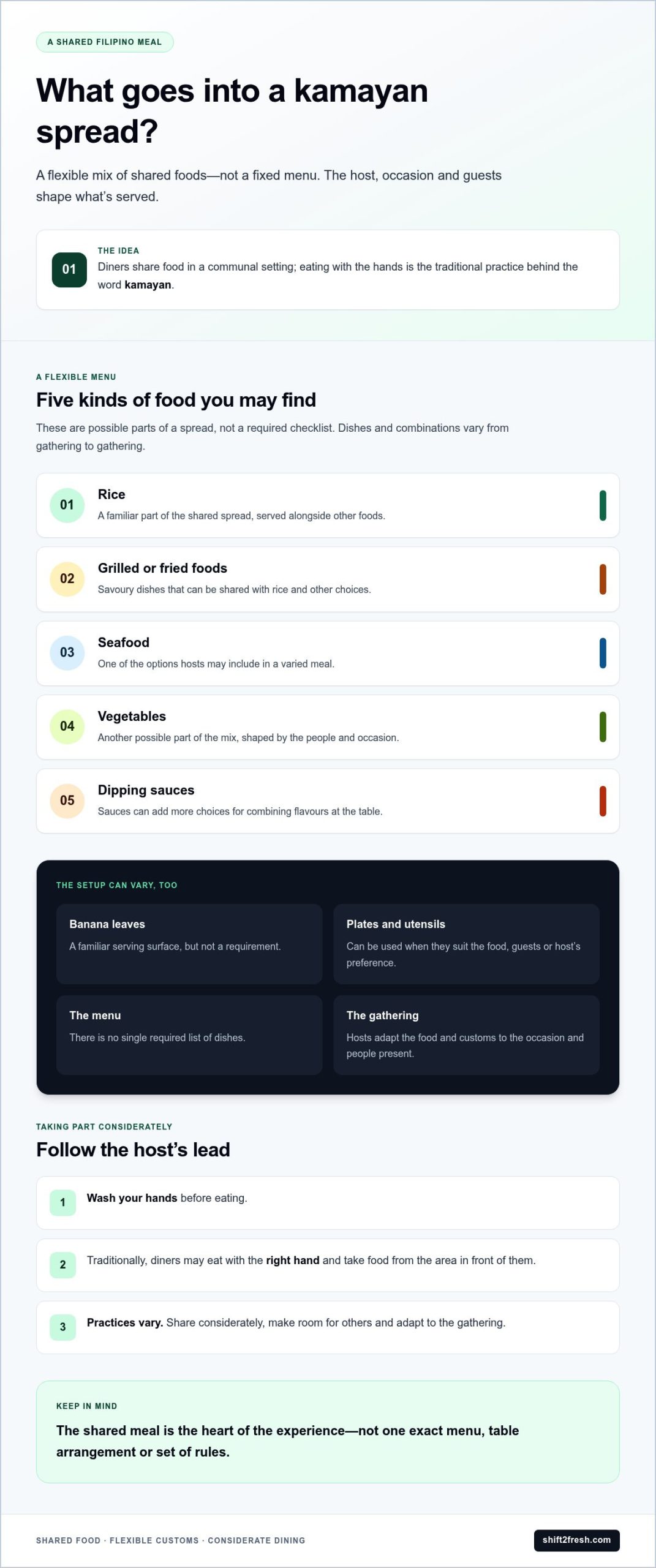
There isn’t one required menu. A kamayan spread may bring rice, grilled or fried dishes, seafood, vegetables and dipping sauces together. The host, occasion and guests shape the choices. If you’re asking “what is kamayan feast” and picturing a fixed list of dishes, think instead of a flexible meal that lets people share different flavours and combinations.
Dishes are arranged for sharing so diners can choose a mix of rice, savoury food and sauces from the common spread. The table might include grilled fish alongside rice and vegetables, or fried seafood with a tangy dip. These are possibilities, not a checklist. Dietary needs, family preferences and regional food traditions can all influence what appears.
Common components and possible menu variations
Rice often provides a filling base for richer or strongly flavoured dishes, while sauces let guests adjust each mouthful to their taste. A host might balance grilled or fried items with vegetables and seafood, or keep the meal simple with familiar family favourites. Named Filipino dishes can be part of a host’s menu, but no particular dish is required for a meal to be shared in this style.
| Possible component | Role in the shared spread |
|---|---|
| Rice | A staple that can accompany savoury dishes and sauces. |
| Grilled or fried foods | Add hearty, crisp or smoky options for guests to share. |
| Seafood | Offers another savoury choice, depending on the host and guests. |
| Vegetables | Bring variety and balance alongside richer items. |
| Dipping sauces | Let diners pair different flavours with rice and other foods. |
Use the table as a planning guide, not a traditional formula. A gathering might feature several of these categories or just a few. To account for dietary preferences, choose a varied menu and make it clear which dishes contain ingredients guests may need to avoid.
Why banana leaves are often used
Banana leaves are commonly used as a surface for laying out food in many kamayan presentations. They create a broad shared area and give the spread a distinctive look, but they aren’t essential to every meal. A host may choose another serving arrangement to suit the space, food or guests. The leaves are a practical and visual feature of some presentations, not a requirement that defines the wider tradition.
For a home gathering in the UAE, start with a few dishes you can prepare comfortably, then add rice, vegetables or sauces to round out the spread. Filipino pantry items and seasonal Filipino fruits or produce can inspire your menu. There’s no need to recreate one supposedly universal feast.
How to Join a Kamayan Feast Respectfully
If you’re wondering what kamayan feast etiquette looks like in practice, start with a simple principle: follow the host’s lead. Customs vary, so you don’t need to arrive knowing a set of rules. A warm greeting, a willingness to observe and consideration for the people sharing the meal go a long way.
A simple way to approach the shared table
Before eating, wash your hands well, then notice how the host and other diners begin. Wait for an invitation if the group hasn’t started, and watch how people take food from the shared spread. Some gatherings may have preferred ways to eat or handle particular dishes. A quick, polite question is better than guessing.
- Follow the host’s cues. They can explain when to begin and how food is being shared.
- Take a manageable amount. Choose food from the area in front of you where that’s the custom, and leave plenty for others.
- Keep hands clean. Wash before the meal and use napkins or a handwashing option as needed.
- Notice the group’s approach. If serving utensils are provided, use them as directed rather than reaching across other diners.
Some hosts may prefer that guests eat with the right hand. Treat this as a custom you may encounter, not a rule to impose on every gathering. If you’re unsure, follow the host’s example or ask quietly. The point is to participate thoughtfully, not to perform a perfect version of someone else’s tradition.
Making the gathering comfortable for everyone
Guests have different needs and comfort levels. If you have an allergy or dietary restriction, let the host know before the meal when possible so they can explain which dishes are suitable. Hosts can make sharing easier by keeping napkins, serving utensils and regular cutlery within reach, and by explaining any food that may contain ingredients guests need to avoid.
Using a fork or spoon is a reasonable choice if you prefer utensils or need them. You can still enjoy the shared meal, conversation and company without eating by hand. If you’re hosting, offering both utensils and a clear place to wash hands can help everyone feel welcome without changing the spirit of the gathering.
Respect doesn’t require pretending you know every custom. A simple “How would you like us to share this?” shows interest and gives the host room to explain their own practice. Families and hosts may do things differently, so let their guidance take priority over a rule you’ve read elsewhere.
Planning a gathering of your own? Explore Filipino pantry items and seasonal produce for ingredients that can help you build a shared menu around your guests’ preferences.
Planning a Kamayan-Inspired Meal at Home
A home gathering doesn’t need to reproduce a restaurant presentation or follow a fixed menu. If your starting question was “what is kamayan feast,” think of planning as creating a welcoming shared meal, then adapting the food and setup to your guests, kitchen and table. Choose dishes you’re comfortable preparing, and make the format work for the people who’ll be there.
Build a flexible menu and prepare the table
Start with the practical details before deciding on every dish. This checklist can keep the meal manageable:
- Guests: Consider who’s coming and how much room everyone will need around the table.
- Dietary needs: Ask about allergies, restrictions and preferences early enough to plan thoughtfully.
- Menu balance: Pair a filling staple such as rice with savoury dishes, vegetables and sauces. Fruit can be an optional fresh finish.
- Serving space: Choose a shared arrangement that fits the table and lets guests reach food comfortably.
- Cleanup: Set out napkins, serving utensils and a place for used plates or scraps before everyone sits down.
Keep the menu flexible. A few well-prepared dishes are easier to enjoy than an ambitious spread that leaves the host rushing. Filipino pantry ingredients can help shape the flavours of your meal, while Asian vegetables offer options for adding colour and variety. For ideas as you plan, browse this guide to essential Filipino pantry ingredients and these Asian vegetables for home cooking. Treat both as inspiration, not a mandatory shopping list.
Use whatever serving surface makes sense for your home. Banana leaves may suit the presentation, but a large platter or separate serving dishes can also make sharing comfortable. Arrange food so guests can reach it without leaning over one another, and keep serving utensils handy. Aim for an easy flow around the table, not a perfect replica of a particular feast.
Find Filipino ingredients in the UAE
For UAE home cooks, Filipino pantry items and seasonal Filipino produce are useful starting points when deciding what to cook. Shift 2 Fresh offers these groceries through online ordering, so you can browse ingredients for a meal at home. Seasonal fruit can also be a simple addition or a light finish; see the guide to seasonal Filipino fruits in the UAE for ideas.
Make the gathering your own: choose food you enjoy preparing, consider what guests can eat and leave room for conversation. If you’re planning Filipino-inspired cooking at home, browse Filipino groceries and build your menu one comfortable choice at a time.
Bring a Shared Meal to Your Table
Understanding what is kamayan feast can be the beginning of a more thoughtful way to gather, not a checklist to reproduce perfectly. Start with one simple idea: make space for people to enjoy food together. You might plan a relaxed meal at home, invite guests to bring a favourite dish, or build the menu around ingredients you already enjoy cooking with. Let your guests’ needs and your own family’s preferences guide the details.
If you’re in the UAE and planning Filipino-inspired home cooking, Shift 2 Fresh brings more than 45 years of food-industry experience to its selection of Filipino and South Asian produce and pantry items, available through online grocery shopping. Browse at your own pace and choose ingredients that suit the meal you have in mind.
Explore Filipino pantry items and fresh produce for home cooking, then bring everyone to the table. A warm welcome and good company are a lovely place to start.
Frequently Asked Questions
Is a kamayan feast the same as a boodle fight?
Not exactly, although the terms are sometimes used interchangeably. Kamayan refers to eating with the hands and can describe a communal meal. A boodle fight is associated with a group-dining format linked to camaraderie among Philippine military personnel. In everyday use, meanings can overlap, so context matters. If a host uses one term, follow their explanation rather than assuming a particular setup.
Can people who are not Filipino take part in a kamayan feast?
Yes, guests who aren’t Filipino can join when they’re welcomed by the host. Treat the invitation as a chance to share the meal, not to imitate or make assumptions about Filipino culture. If you’re unsure how the group is handling the food, observe or ask a simple question. Showing interest, listening to the host and being considerate of other diners are good ways to participate.
Is it acceptable to use utensils at a kamayan feast?
Yes. You can use utensils if that’s your preference, or if you need them for comfort, accessibility or the food being served. Hosts may also provide serving spoons or tongs for shared dishes, which are different from personal cutlery. If you’re uncertain about what’s intended, ask the host. There’s no need to feel pressured to eat by hand to show respect.
Do you need banana leaves to have a kamayan feast?
No. Banana leaves are a familiar serving surface in some presentations, but they aren’t essential. At home, a large platter, washable table covering or separate serving dishes can work if they make the food accessible and cleanup manageable. Choose a setup that suits your table and guests. The gathering doesn’t become less welcoming simply because you use practical dishes instead of leaves.
Can a kamayan feast include vegetarian or allergy-conscious dishes?
Yes. A host can plan dishes around guests’ dietary needs, including vegetarian choices, and explain ingredients before everyone serves themselves. For allergies, ask about ingredients and preparation, and keep suitable food and serving utensils separate where needed to reduce contact with allergens. A shared meal still needs thoughtful planning: don’t assume a dish is safe based on appearance, and let guests decide what they can eat.
What does pagkakamay mean?
Pagkakamay refers to the practice or method of eating with the hands. It helps distinguish the act itself from a hosted gathering that may be called a kamayan feast. The term doesn’t name a menu or dictate how a table must be arranged. You may encounter it when reading about Filipino dining customs; the precise practices at a meal still depend on the host and context.
Is kamayan only for special occasions?
No. Eating with the hands can be part of everyday dining, while a more organized communal spread may be chosen for a family gathering or celebration. There’s no single occasion required. A household might adapt the idea to an ordinary shared meal, serving dishes in a way that feels natural to them. The scale and presentation can change; what matters is the host’s chosen way of sharing food.
0 comments