

You’ve been craving the sweet, tart zing of real Philippine calamansi all week, but when your delivery arrives at your door in Dubai, the vibrant green has turned into a mushy brown. It’s a common anxiety for anyone ordering specialty groceries online: what if my produce is not fresh? We know that wasting your hard-earned AED on inedible food isn’t just a blow to your budget. It’s a massive disappointment when that authentic taste of home you were looking forward to arrives spoiled.
At Shift 2 Fresh, we believe you should never have to gamble on quality. With over 45 years of food industry experience, we’ve perfected the specialized cold chain needed to bring delicate Asian vegetables and seasonal fruits to the UAE market. We understand that items like ube and mangoes require expert handling to stay perfect from the farm to your kitchen. You deserve produce that’s as fresh as if you’d picked it yourself.
This guide will teach you how to spot the difference between natural ripening and true spoilage so you can shop with total confidence. We’ll walk through our high quality standards, our transparent refund and replacement policy, and exactly how to use our mobile app to report any issues within the required timeframe.
Key Takeaways
- Learn to distinguish between natural ripening and actual spoilage in delicate items like ube and Philippine mangoes.
- Understand how our Sharjah-based climate-controlled facility and specialized cold chain preserve quality over the 4,000-mile journey from the Philippines.
- Discover the specific steps to take and what if my produce is not fresh when it arrives at your doorstep in the UAE.
- Master the visual cues for peak freshness in imported Asian vegetables and fruits to ensure you get the best value for your grocery budget.
- Find out how to use our mobile app for immediate reporting and documentation to secure a fast resolution or replacement.
Identifying Freshness in Imported Filipino Produce
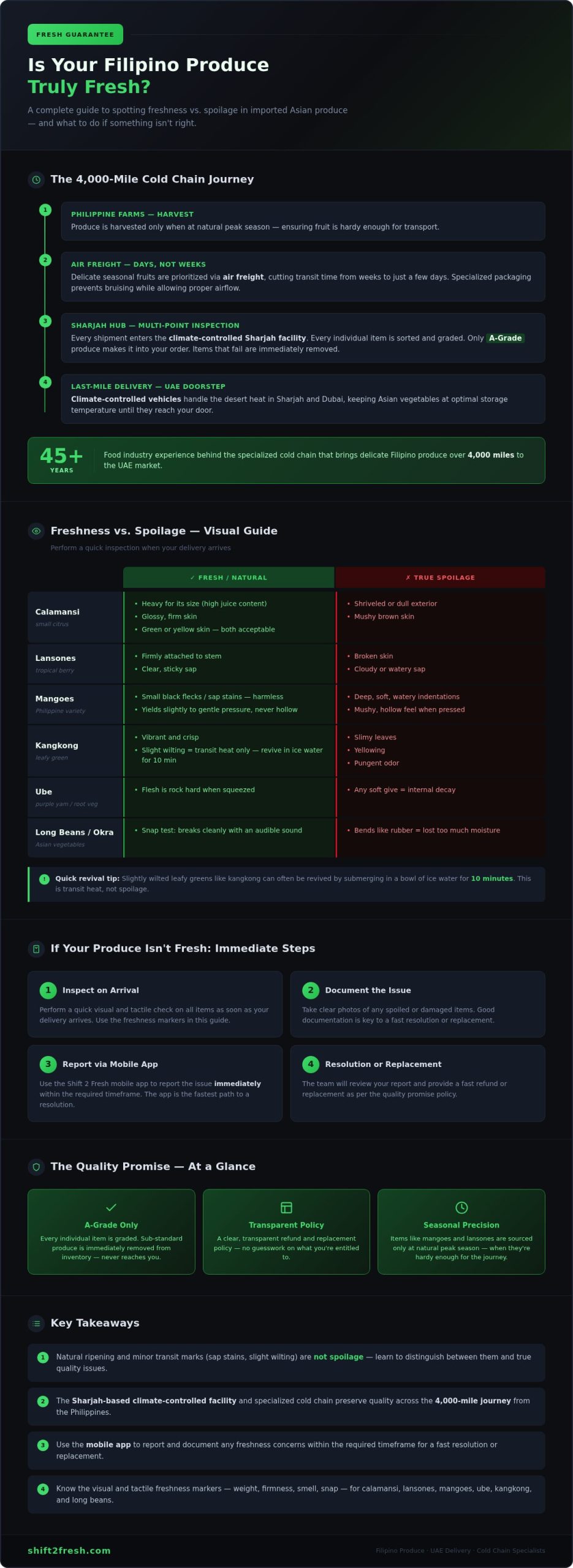
When your delivery arrives, your first thought is likely, “what if my produce is not fresh?” It’s a valid concern because tropical items often look different than standard supermarket fare found in the UAE. For instance, a small amount of skin discoloration on a mango might just be dried sap. This doesn’t affect the sweet fruit inside. However, actual spoilage involves mushy textures or sour smells. Because these items travel thousands of miles, we use advanced cold-chain logistics to keep them stable. You should still perform a quick inspection upon arrival to distinguish between minor transit bruising and genuine quality issues.
Freshness Markers for Filipino Fruits
Identifying peak quality in fresh fruits and vegetables from the Philippines requires a specific approach. Different fruits have unique indicators that tell you if they’re ready to eat or have turned during their journey.
- Calamansi: These small citrus fruits should feel heavy for their size. This weight indicates high juice content. Look for a glossy, firm skin rather than a shriveled or dull exterior. Green or yellow skins are both acceptable depending on the specific variety.
- Lansones: Check that the berries are still firmly attached to the stem. If the skin is broken and the sap looks cloudy or watery rather than sticky and clear, the fruit is likely past its prime.
- Mangoes: Don’t be alarmed by small black flecks or sap stains. These are common and harmless. You should only worry if the skin has deep, soft indentations that feel watery when pressed. A ripe mango should yield slightly to gentle pressure but never feel hollow.
Signs of Quality in Asian Vegetables
Asian vegetables often react quickly to temperature changes. Leafy greens like kangkong should be vibrant and crisp. If you notice slight wilting, it’s often just a sign of transit heat. You can usually revive these in a bowl of ice water for ten minutes. True spoilage is different. It’s characterized by slimy leaves, yellowing, or a pungent odor that indicates the breakdown of the plant material.
For root vegetables like Ube, the flesh must be rock hard. Any soft give when you squeeze the tuber suggests internal decay. When checking long beans or okra, try the snap test. A fresh bean should break cleanly with an audible sound. If it bends like rubber, it has lost too much moisture during its journey. If you find yourself asking “what if my produce is not fresh” after performing these checks, our team is ready to assist you through the mobile app.
Our Cold-Chain: From Philippine Farms to UAE Doorsteps
Transporting calamansi and ube from the Philippines to the UAE is an intricate 4,000-mile journey. With over 45 years of food industry experience, we’ve built a specialized system designed to prevent the common worry: what if my produce is not fresh? We don’t just ship food; we manage a rigorous temperature-controlled environment from the moment the harvest leaves the farm until it reaches your door. This expertise allows us to maintain the delicate balance required for tropical items that are sensitive to both heat and excessive cold.
The Logistics of Freshness
Speed is the ultimate defense against spoilage. While sea freight works for pantry staples, we prioritize air freight for our most delicate seasonal fruits. This choice cuts transit time from weeks to just a few days. We also utilize specialized packaging that prevents bruising while allowing for proper airflow. Once the items land in the UAE, the challenge shifts to the local climate. Our delivery staff is specifically trained to handle the “last mile” in the intense desert heat. We use climate-controlled vehicles to ensure that even when temperatures soar in Sharjah or Dubai, your Asian vegetables remain at their optimal storage temperature. Following global standards for selecting and serving produce safely helps us maintain these high standards throughout the journey.
Quality Control at Our Sharjah Hub
Every shipment goes directly to our Sharjah-based climate-controlled facility for a multi-point inspection. Our team doesn’t just move boxes; they sort and grade every individual item. Only “A-grade” produce that meets our strict visual and tactile freshness markers makes it into your order. We also manage seasonal availability with precision. By sourcing items like mangoes or lansones only when they’re at their natural peak, we ensure the fruit is hardy enough for transport. If any item fails our hub inspection, it’s immediately removed from the inventory. This proactive sorting is why most of our customers never have to worry about what if my produce is not fresh. You can browse our latest arrivals of authentic Filipino produce through our app to see what’s currently in peak season.
Freshness vs. Ripeness: A Guide to Exotic Produce
Understanding the difference between ripeness and spoilage is key to enjoying authentic Filipino flavors. When you open your box, you might wonder, “what if my produce is not fresh?” because a fruit feels hard or looks spotted. In many cases, we intentionally select items that are slightly under-ripe. This ensures they can withstand the journey from the Philippines without becoming mushy. Once these items enter the warm, humid air of the UAE, the ripening process often kicks into high gear. Knowing how to manage this transition helps you enjoy your groceries at their absolute peak.
The Ripening Guide for Tropical Favorites
Different fruits require specific handling once they reach your kitchen in Dubai or Sharjah. Not every item is ready to eat the moment it leaves our climate-controlled delivery van.
- Durian: This fruit is famous for its odor. A powerful, sweet aroma usually signals peak flavor. However, if the smell is sharp and acidic, or if the shell has deep, wet cracks, it may have fermented.
- Papaya: If your papaya arrives green and firm, don’t worry. Keep it at room temperature for a day or two. It will turn yellow-orange and soften naturally.
- Avocados: Imported varieties don’t always turn black when ripe. Use the gentle squeeze test near the stem. If it gives slightly under your thumb, it’s ready for your salad or smoothie.
Natural Imperfections vs. Real Damage
Tropical produce rarely looks like the “wax-perfect” fruit found in generic grocery stores. Real food has character. For example, “sugar spots” on mangoes or bananas are actually tiny freckles that indicate high sugar levels. They’re a sign of intense sweetness, not decay. Similarly, some Asian vegetables have natural color variations in their leaves or stems that are perfectly safe to eat. These are simply biological traits of traditional cultivars.
We encourage a “peel and see” approach. Sometimes the skin of a fruit might look a bit dull due to the change in air pressure during flight, but the flesh inside remains vibrant and delicious. If you’ve checked the internal quality and still feel concerned, you might ask again, “what if my produce is not fresh?” That’s when you should document the issue. Our 45 years of expertise helps us distinguish these natural traits from actual damage, ensuring you only pay for quality that meets our high standards.
Immediate Steps: What to Do if Your Delivery Is Not Fresh
While our team strives for perfection, shipping delicate tropical items over 4,000 miles can sometimes result in unexpected issues. If you open your box and find yourself asking, “what if my produce is not fresh?”, the first rule is to act quickly. Inspecting your fresh fruits and vegetables immediately upon arrival is the most critical step. Since these are highly perishable items, documenting their condition right away ensures our Sharjah-based support team can resolve the problem without delay. We prioritize these reports because we know you’re often planning meals around these specific ingredients.
Documentation and Reporting
Clear evidence is the key to a fast resolution. If an item doesn’t meet our high standards, take multiple photos from different angles. Make sure to capture the specific area of concern, such as a soft spot on a mango or wilting in leafy greens, alongside the delivery packaging. The most efficient way to submit these is through our mobile app. This platform allows you to upload images and order details in real-time, sending them directly to our quality control desk. It’s essential that you don’t throw the item or its packaging away until our team has confirmed your claim. We sometimes need specific batch numbers or labels from the box to track the issue back through our cold chain and notify our partners in the Philippines.
Resolution Timelines
We operate with a strict 24-hour reporting window for all fresh produce. Because of the climate in the UAE and the nature of items like calamansi or kangkong, we can’t accurately assess quality issues reported several days after delivery. Once you submit your report, our customer support team in Sharjah reviews the evidence. We’re committed to a “no-hassle” approach for genuine quality slips. Depending on your preference and current stock availability, we’ll arrange for a replacement in your next delivery or provide a credit to your account in AED. Our 45 years of experience means we value your long-term trust more than any single transaction. We use every piece of feedback to refine our sorting process at the hub. If you’re ready to experience our quality commitment first-hand, you can browse our seasonal Filipino produce and order with total peace of mind.
The Shift 2 Fresh Quality Promise
Shift 2 Fresh is more than just an online supermarket; we’re a bridge to the authentic flavors of home. Our reputation in the UAE market depends entirely on your satisfaction. We don’t just sell food. We sell the assurance that your calamansi, ube, and seasonal mangoes will arrive in peak condition. Every piece of customer feedback we receive goes directly into our sourcing strategy. If a particular harvest doesn’t meet our standards, we adjust our supply chain immediately. This iterative process ensures that the question “what if my produce is not fresh” becomes a rare concern rather than a daily worry for our customers.
Expert Sourcing and Selection
Our team maintains direct relationships with farmers across the Philippines. This isn’t a hands-off operation. Because we have over 45 years of food industry experience, we know exactly what to look for at the source. We often reject a significant portion of produce at the import level if it doesn’t meet our strict “A-grade” criteria. The “Shift 2 Fresh” standard means we only pack what we’d serve to our own families. Choosing a specialist for your Asian vegetables means you’re getting expertise that general retailers simply can’t match. We understand the biology of tropical produce, from the way kangkong breathes to how ube stores its starch.
Shopping with Confidence
We’ve built multiple safety nets into our service to protect your grocery budget. From our Sharjah-based climate-controlled facility to our 24-hour reporting window, we’ve designed every step to ensure quality. We want you to focus on the joy of cooking traditional dishes rather than the logistics of delivery. You’ll never have to worry about what if my produce is not fresh when planning your weekend feast. To help you get the best value on your kitchen essentials, we offer free shipping on all orders over AED 500. This allows you to stock up on your favorites while knowing our quality guarantee covers every single item in your basket.
We treat your groceries with the same care as if they were for our own dinner table. Whether you’re in Dubai, Sharjah, or Ajman, our goal is to bring you the freshest taste of the Philippines without the stress. Don’t let the fear of spoilage stop you from enjoying the authentic flavors you crave. Download our app and start your fresh journey today!
Enjoy Authentic Filipino Flavors with Total Confidence
You now have the knowledge to distinguish between natural ripening markers and actual spoilage. By understanding how our 45+ years of food industry expertise protects your order, you can shop without the typical anxiety of online grocery delivery. We’ve built a system that prioritizes speed and temperature control from Philippine farms directly to your doorstep in the UAE. Our trained Sharjah-based delivery team is specifically handled to manage delicate items like ube and kangkong, ensuring they arrive in the best possible condition for your kitchen.
If you ever find yourself asking, what if my produce is not fresh, you can rely on our transparent replacement policy and easy reporting through our mobile app. We’re committed to being your trusted bridge to the tastes of home, treating every order with the same care we’d give our own family’s table. It’s time to stop worrying about quality and start planning your next traditional feast. Your favorite seasonal fruits and vegetables are just a few clicks away, backed by a team that truly understands the value of authentic freshness.
Browse Our Fresh Seasonal Collection with Confidence and enjoy the vibrant flavors you’ve been missing today.
Frequently Asked Questions
How long do I have to report if my produce is not fresh?
You have exactly 24 hours from the time of delivery to report any quality issues with your fresh produce. Because tropical fruits and Asian vegetables are highly perishable in the UAE climate, immediate inspection is necessary. Using our mobile app to submit photos within this timeframe ensures our Sharjah-based team can verify the claim and process a resolution quickly. Reports made after this 24-hour window cannot be accepted for fresh items.
Will I get a refund or a replacement for spoiled items?
We offer both replacements and account credits depending on current stock availability and your preference. If you’re asking “what if my produce is not fresh,” our goal is a no-hassle fix. If we have the item in stock at our Sharjah hub, we can often arrange a replacement in your next delivery. Alternatively, we can provide a credit in AED to your Shift 2 Fresh account for use on future orders.
Do I need to return the spoiled produce to the delivery driver?
You don’t need to hand the item back to the driver immediately, but you must keep the spoiled produce and its original packaging until your claim is fully processed. Our quality control team may request additional photos or specific batch information from the box. Once our Sharjah office confirms the issue and issues your credit or replacement, you can then safely dispose of the inedible items according to local UAE regulations.
What if only one item in a bag of calamansi is bad?
We strive for perfection, but if a single item in a multi-pack like calamansi or lansones is spoiled, please document it. We typically offer a pro-rated credit or a replacement if the overall quality of the bag is compromised. If you find yourself wondering what if my produce is not fresh for just a portion of your order, simply snap a photo of the affected piece next to the healthy ones for our review and documentation.
How does the Sharjah heat affect my delivery freshness?
The intense UAE heat is why we operate a specialized cold chain from our Sharjah-based climate-controlled facility. We use trained staff and refrigerated vehicles to ensure your Asian vegetables and Filipino fruits stay at optimal temperatures during the last mile of delivery. This system prevents heat-related wilting or rapid ripening that often occurs when produce is transported in standard, non-refrigerated vans across the Emirates during peak summer months.
Are your Filipino fruits organic or treated for export?
We prioritize natural freshness and work directly with farmers in the Philippines who follow strict agricultural standards. While specific certifications vary by seasonal harvest, all our imports comply with UAE food safety regulations. We rely on speed and our 45-year expertise in cold-chain logistics rather than heavy chemical treatments to keep items like mangoes and ube fresh during their 4,000-mile journey from the farm to your kitchen table.
Can I track the temperature of my delivery through the app?
While our mobile app provides real-time order tracking and issue reporting, it doesn’t currently show a live temperature feed of the delivery vehicle. However, you can rest assured that every Shift 2 Fresh delivery is handled by our trained Sharjah team using climate-controlled transport. We monitor these internal logs at our hub to ensure the cold chain remains unbroken from the moment produce arrives in the UAE until it reaches your doorstep.
What is the best way to store my Asian vegetables to keep them fresh longer?
Proper storage depends on the specific item. Leafy greens like kangkong should be kept in the crisper drawer of your refrigerator, ideally wrapped in a damp paper towel. If they show slight wilting from transit, a ten-minute soak in ice water often revives them. Root vegetables like ube prefer a cool, dark, and dry place. Avoid washing your produce until you’re ready to use it, as excess moisture can speed up spoilage.
0 comments