

What if the vegetables you choose, and how you handle them at home, matter as much as where you shop? If you’re tired of bland supermarket vegetables, you’re not imagining the difference: variety, harvest timing, storage, and preparation can all affect the flavor and texture on your plate.
You don’t need to overhaul your weekly shop. Start with a dish in mind, choose vegetables that suit it, store each ingredient according to its needs, and use a cooking method that brings out the qualities you enjoy. Filipino and South Asian vegetables can also add new flavors and meal ideas to a familiar routine.
This guide explains what can influence vegetable flavor, what to look for when shopping, and how to store and prepare produce for more satisfying meals. You’ll also find ways to explore Filipino and South Asian options in the UAE through online grocery shopping.
Key Takeaways
- If you’re tired of bland supermarket vegetables, consider how variety, storage, and cooking affect flavor instead of assuming every supermarket option is the same.
- Learn how a vegetable’s variety, harvest, transport, and storage can affect its aroma, texture, and taste.
- Compare produce by the recipe you have in mind, the qualities you want, and the product information available.
- Use a simple routine: plan a dish, choose suitable produce, inspect it, store it appropriately, and cook it thoughtfully.
- Explore Filipino and South Asian produce through Shift 2 Fresh’s online grocery platform and mobile app to add new ingredients and meal ideas to your UAE shop.
Tired of bland supermarket vegetables? Start by understanding the flavor
If you’re tired of bland supermarket vegetables, the frustration is understandable. A mild-tasting tomato or greens with less aroma than you expected can make a meal disappointing. But flavor varies between vegetables, and the shop where you buy them alone won’t tell you exactly how they’ll taste.
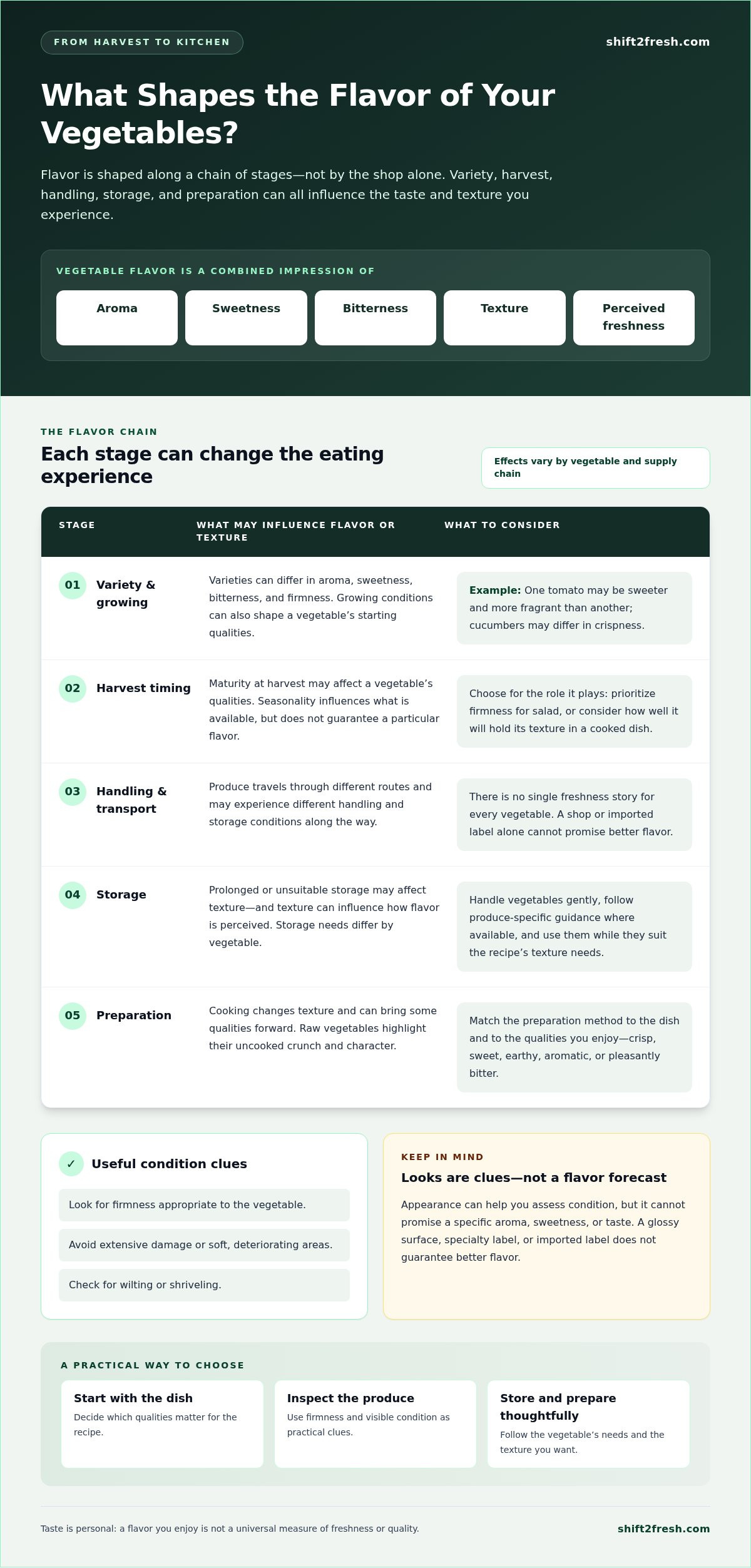
Vegetable flavor is the combined impression of aroma, sweetness, bitterness, texture, and perceived freshness when you eat it. These qualities work together: a crisp cucumber can feel refreshing, while a vegetable’s aroma can make its taste seem more vivid. The broad category of vegetables includes many varieties and culinary uses, so flavor isn’t one fixed standard.
What you notice depends partly on the vegetable itself and partly on what happens between growing and eating it. Variety, growing conditions, harvest timing, handling, storage, and cooking can all shape taste and texture. That’s why two examples of the same vegetable may not give you the same result.
Why the same vegetable can taste different
Vegetable varieties can differ in aroma, sweetness, bitterness, and firmness. Growing conditions and maturity at harvest may also influence those qualities. For example, one tomato may taste sweeter and more fragrant than another, while two cucumbers may differ in crispness. These are general illustrations, not guarantees about a particular variety.
Preference is personal, while condition is something you can assess more directly. You might enjoy a bitter note in leafy greens, while someone else prefers a milder taste. That doesn’t mean either vegetable is fresher or better quality. Aroma and texture matter, but the flavor you enjoy depends on your palate and the dish.
What ‘fresh’ can and cannot tell you about flavor
Freshness can describe how produce looks and feels, but appearance alone can’t promise a specific aroma, sweetness, or flavor. A glossy surface, for instance, doesn’t tell you whether a vegetable will taste mild or pronounced. Nor does a specialty or imported label mean the produce will automatically taste better.
Use visible signs as practical clues, not as a flavor forecast. Check for firmness appropriate to the vegetable, avoid produce with extensive damage or soft, deteriorating areas, and look for wilting or shriveling. Then consider what you’ll cook: a vegetable that’s pleasantly firm in a salad may soften during cooking, changing the texture you experience.
Thinking about flavor this way makes shopping less of a guessing game. Instead of asking whether vegetables are simply “good” or “bad,” decide what you want for a meal: crisp, sweet, earthy, aromatic, or pleasantly bitter. Next, consider how those qualities can shift as produce travels from harvest to your kitchen.
What influences vegetable flavor from harvest to your kitchen?
A vegetable’s flavor is shaped along a chain of steps, not at one moment in the supermarket. Variety and growing conditions shape its starting qualities; harvest timing, handling, transport, storage, and preparation can affect the taste and texture you experience. So being tired of bland supermarket vegetables doesn’t mean every shop or every vegetable will taste the same.
Vegetable flavor reflects the variety and growing conditions, when and how produce is harvested, how it is handled and stored, and how it is prepared. Each stage can influence eating quality, but the effect varies by vegetable and supply chain. Different routes can involve different handling and storage conditions, so there isn’t one freshness story that applies to everything.
Harvest timing, variety, and seasonality
Vegetables come in different varieties, which may have distinct textures and flavor profiles. One type may be firmer or more aromatic; another may have a milder taste. Growing conditions and maturity at harvest can also affect a vegetable’s qualities. Seasonality influences which produce is available at a given time, but it doesn’t guarantee a particular flavor.
For everyday cooking, think about the role the vegetable needs to play. If texture matters in a salad, firmness may be a priority. For a dish where ingredients cook together, consider how well the vegetable holds its texture. These preferences can guide your choice, but they aren’t universal measures of quality.
Storage and preparation can change the experience
After harvest, handling and storage help determine how produce reaches your kitchen. Prolonged or unsuitable storage may affect texture and, in turn, how you perceive flavor. Storage needs vary, so don’t assume one method suits every vegetable. Follow produce-specific guidance where available, and use ingredients while they still have the texture your recipe calls for.
The USDA Handbook on Commercial Storage of Fruits and Vegetables explains how storage practices relate to produce quality. At home, handle vegetables gently, store them according to their needs, and choose a preparation method that suits the dish. Cooking changes texture and can bring some qualities forward, while serving a vegetable raw highlights its uncooked crunch and character.
For ingredient-specific ideas, explore this guide to essential Asian vegetables. Trying an unfamiliar vegetable is a manageable way to broaden your meals. You can also browse Asian vegetables at Shift 2 Fresh and explore options for your UAE shop.
Supermarket vegetables or specialty Asian produce: how to compare your options
If you’re tired of bland supermarket vegetables, switching shops isn’t the only answer. Everyday supermarkets and specialty produce stores can serve different needs: one may make familiar ingredients easy to add to a regular shop, while the other can help you explore vegetables and food traditions beyond your usual list. Choose based on what you’re cooking, what you enjoy, and the information available for the produce you’re considering.
Use this comparison as a guide, not a ranking. Flavor and condition can vary between individual vegetables and supply chains, so a store type alone can’t tell you exactly how something will taste.
| What to compare | Familiar supermarket choices | Specialty Filipino and South Asian produce |
|---|---|---|
| Variety | Often useful for familiar ingredients and regular recipes. | Can introduce options that may be less familiar in a typical weekly shop. |
| Recipe fit | A straightforward choice when you know the ingredient and how you’ll use it. | May inspire a new dish or call for learning a different preparation method. |
| Convenience | Can fit naturally into an established grocery routine. | Online ordering and delivery make exploring specialty ingredients practical for UAE shoppers. |
| Product information | Use the details shown and your own inspection to guide your choice. | Review the available product details and consider how the ingredient suits your plans. |
When familiar supermarket choices may suit your needs
Familiar vegetables make sense when you want to prepare a recipe you already know, shop efficiently, or choose ingredients that suit your household’s preferences. There’s no need to replace a dependable choice for the sake of novelty. Select produce that suits the dish, inspect its visible condition, and consider how you’ll store and use it. A familiar ingredient can still make a satisfying meal.
When exploring Filipino and South Asian vegetables makes sense
Specialty produce can broaden your ingredient choices and inspire a different meal. An unfamiliar vegetable may not work exactly like the ingredients you usually buy. Its texture, taste, or customary use could call for a new recipe or preparation method. Exploring one ingredient at a time keeps experimentation manageable.
In the UAE, Shift 2 Fresh sells Filipino and South Asian produce, including Asian vegetables, through its e-commerce platform and mobile app. Online grocery shopping can fit into your routine alongside familiar in-store choices.
More variety creates more possibilities, not a blanket quality verdict. Choose familiar vegetables when they suit your recipe, and explore specialty options when you’re curious about new ingredients or flavors. Your weekly shop can stay convenient while making room for discovery.
How to choose, store, and prepare vegetables for a better-tasting meal
A reliable way to get more from your vegetables is to choose them with a dish in mind. If you’re tired of bland supermarket vegetables, adjust the whole process: shop with a recipe in view, then choose a cooking method that suits the ingredient. Planning also helps you avoid buying more than you’ll use.
A simple produce-shopping checklist
Start by deciding what you want the meal to taste and feel like. Are you after crisp textures, gentle sweetness, or something more earthy? Let that guide your choices, then follow this sequence:
- Plan the dish. Choose a recipe or meal idea first, especially if you’re trying an unfamiliar ingredient. Decide whether the vegetable will be served raw, cooked on its own, or combined with other ingredients.
- Choose produce for the recipe. Consider the texture and flavor role you want instead of picking a vegetable simply because it looks appealing.
- Inspect what you’re buying. Look for firmness appropriate to that vegetable, and check for visible damage, wilting, shriveling, or areas that appear to be deteriorating. Appearance is a useful check, not a promise of how it will taste.
- Keep the quantity manageable. If an ingredient is new to you, buy enough for a first dish rather than stocking up before you know how you like it or how you’ll use it.
- Store and cook with a plan. Follow guidance suited to the specific produce, then choose a preparation method that fits the meal.
Store and cook vegetables with their characteristics in mind
There isn’t one storage rule that works for every vegetable. Leafy produce and firm vegetables can have different needs, so follow storage information for the particular ingredient instead of treating the whole produce drawer alike. Keep track of what you’ve bought and plan meals around ingredients that need to be used sooner. This helps you avoid forgetting produce and pay attention to its condition.
Cooking changes texture and can shift how a vegetable’s flavor comes through, but no method guarantees a better result. Raw preparations preserve crunch; steaming or simmering can soften vegetables, while roasting or sautéing can create a more browned, concentrated character. Match the method to the texture you enjoy and the dish you’re making. For unfamiliar ingredients, a simple preparation can help you notice their distinctive qualities before adding strong sauces or seasonings.
Curious about trying different ingredients? Filipino and South Asian produce can bring more variety to a UAE meal plan. Shift 2 Fresh sells these ingredients through its online grocery platform and mobile app, so you can explore something new alongside familiar vegetables.
Ready to add a new ingredient to your next meal? Explore Filipino and South Asian produce and choose an option that suits a dish you’re excited to cook.
Discover Filipino and South Asian produce with Shift 2 Fresh
Finding vegetables you enjoy doesn’t mean abandoning familiar shops or recipes. If you’re tired of bland supermarket vegetables, adding variety to your weekly plan can be a simple next step. Shift 2 Fresh is a UAE online grocery store focused on imported Filipino and South Asian produce, including Asian vegetables and seasonal Filipino fruits.
That focus gives curious shoppers a way to explore ingredients connected with Filipino and South Asian cooking, as well as produce they may not often encounter in a familiar grocery routine. An unfamiliar vegetable won’t automatically taste better, and there’s no need to replace ingredients you already like. Treat variety as another option: a chance to find a new fit for a meal or revisit a flavor you remember.
A convenient way to explore produce from the Philippines and South Asia
Shift 2 Fresh brings Filipino and South Asian produce together through an online grocery platform and mobile app, so you can browse with a meal plan in mind. The selection includes seasonal Filipino fruits and Asian vegetables. For more ideas about including fruit in a varied shop, this guide to seasonal Filipino fruits in the UAE offers related context.
Browsing online gives you time to consider product information and how an ingredient might work in a dish. Choose what fits your tastes, cooking plans, and household routine. Shift 2 Fresh offers delivery, making online shopping a practical way for UAE shoppers to bring Filipino and South Asian options into their grocery planning.
Make your next grocery shop a chance to try something new
Keep your first experiment straightforward. Pick a dish you’d genuinely like to make, then explore the produce range for an ingredient that fits. If it’s new to you, start with a manageable amount and look for recipe guidance that explains how to prepare it. You’ll get a clearer sense of what you enjoy and how the ingredient fits into your meals without remaking your whole weekly shop.
Shift 2 Fresh has more than 45 years of food-industry experience and specializes in Filipino and South Asian produce. Its e-commerce platform and mobile app let you browse and order online, with delivery available. Explore the range at your own pace, whether you’re looking for Asian vegetables or seasonal Filipino fruit to complement a meal plan.
Ready to add a little more variety to an upcoming meal? Browse Filipino and South Asian produce and choose an ingredient that suits a dish you’re looking forward to making.
Make your next meal a little more adventurous
If you’re tired of bland supermarket vegetables, let curiosity guide your next grocery shop. Pick one dish you’re excited to cook, then choose an ingredient that fits it. You don’t need to change your whole routine: one new addition can be enough to explore a different flavor or cooking tradition.
For UAE shoppers, Shift 2 Fresh sells imported Filipino and South Asian produce online through its e-commerce platform and mobile app, with delivery available. Free shipping applies to orders over AED 500. Choose what suits your meal plans, and let new ingredients earn their place in your kitchen one dish at a time.
Explore Filipino and South Asian produce at Shift 2 Fresh and find an ingredient that inspires your next meal. A little variety can make everyday cooking feel fresh with possibilities.
Frequently Asked Questions
Why do supermarket vegetables sometimes taste bland?
Vegetables can taste mild because flavor depends on more than the store where you buy them. Variety, growing conditions, harvest timing, handling, storage, and your own preferences all play a part. If you’re tired of bland supermarket vegetables, compare different varieties where available and consider whether the vegetable suits your recipe. A mild-tasting ingredient may also seem more flavorful when paired with contrasting ingredients.
Does seasonal produce always taste better?
No. Seasonality can influence which produce is available, but it doesn’t guarantee that every seasonal item will taste better to you. Flavor also depends on the specific variety, how it was grown and handled, and how you plan to use it. Treat seasonal options as a chance to explore, not a promise. If you’re unsure, choose a small quantity and try it in a familiar dish first.
How can I tell if vegetables are fresh when shopping online?
You can’t judge every quality of produce through a screen, so use the information shown in the online listing to guide your selection. Check the item description and images, then consider how it fits your planned meal. After delivery, inspect it for firmness, visible damage, wilting, or deterioration.
Can storing vegetables incorrectly affect their taste?
Yes. Unsuitable storage can cause vegetables to lose desirable texture or deteriorate, which may change how enjoyable they taste. Avoid putting every kind of produce in the same conditions by default; storage needs differ. Keep packaging or product guidance for reference, and check vegetables before cooking. If you notice softening, wilting, or damage, use sound portions promptly if appropriate, and discard produce that has spoiled.
What is the best way to cook vegetables so they taste less bland?
There’s no single best method, since the right approach depends on the vegetable and dish. Try building flavor in layers: season during cooking, then taste before serving and adjust with herbs, spices, or a little acidity such as lemon juice or vinegar if it suits the recipe. Avoid overcooking if you want a firmer texture. Small adjustments can make a familiar preparation more appealing.
Are Filipino and South Asian vegetables difficult to cook with?
Not necessarily. Some ingredients may be unfamiliar, but that doesn’t make them difficult; the main challenge is learning how they’re commonly prepared and what texture to expect. Start with a straightforward recipe that names the ingredient and explains its preparation. If you’re trying an ingredient for the first time, use a modest amount and keep the rest of the meal familiar. That makes it easier to decide whether you enjoy it.
Can buying different vegetable varieties make meals more interesting?
Yes. Different varieties can bring changes in texture, aroma, or taste, giving a familiar recipe a new character without requiring a completely different meal. For example, compare available varieties of a vegetable you already cook with, then note which one you prefer in a salad, soup, or side dish. Your own taste is a useful guide, so keep a simple note of combinations you’d happily make again.
0 comments