

You’re standing in a crowded supermarket aisle in Dubai, staring at a bin of long, green pods. Is it the long beans you need for your traditional stew, or is it a different variety that will turn mushy the second it hits the pot? It’s a frustratingly common scene for many of us living in the Emirates. Finding high-quality produce that tastes like home is tough when the UAE imports 90% of its food. You shouldn’t have to settle for wilted leaves or confusing labels just to cook an authentic meal. This comprehensive 2026 guide to filipino vegetables is designed to change that.
We’ll help you confidently identify over 15 essential varieties of Pinoy produce, from the crunch of jicama to the perfect eggplant. You’ll also discover specific storage tips to keep your tropical greens fresh in the desert climate and learn the health benefits of your favorite traditional ingredients. We’re even sharing where to find the most reliable, fresh imports across Sharjah and Dubai so you can cook with confidence every single night.
Key Takeaways
- Understand the cultural roots of “Bahay Kubo” favorites and why these nutrient-dense greens are vital for maintaining a healthy, authentic Pinoy diet in the Middle East.
- Master the art of selecting the right ingredients with our guide to filipino vegetables, ensuring your Sinigang and Pinakbet always have the perfect traditional textures.
- Learn to identify specific visual markers of high-quality fresh imports so you can confidently choose the best produce over frozen or canned alternatives.
- Discover specialized washing and drying techniques designed to protect delicate tropical greens from the unique humidity and heat found in UAE kitchens.
- Find out how to access direct-from-the-Philippines produce through mobile app ordering to ensure your home is always stocked with the freshest seasonal items.
The Bahay Kubo Heritage: Why Filipino Vegetables Are Culinary Essentials
For the Filipino diaspora in the Emirates, food acts as a bridge. It’s not just about eating; it’s about remembering. The foundation of this memory is found in the backyard garden. This guide to filipino vegetables explores why these specific plants are more than just side dishes. They are the soul of “lutong bahay,” the home-cooked meals that provide comfort after a long shift in Sharjah or Dubai.
The Cultural Connection to Food
Vegetables like sitaw (long beans) and kalabasa (squash) carry the weight of regional Filipino identities. Whether you’re making an Ilocano Pinakbet or a Bicol Express, the specific texture of these greens defines the dish’s authenticity. In the UAE, where community is built around shared meals, these ingredients take center stage during Boodle Fights. These communal feasts prove that fresh produce is the lifeblood of our social gatherings. Most of these essential crops are immortalized in the Bahay Kubo song, a folk melody that lists the staples of a traditional Filipino home garden like upo and patola. Because the UAE imports up to 90% of its food, finding these items fresh rather than frozen is the key to maintaining that vital cultural link. Freshness isn’t just a preference; it’s a requirement for the “lutong bahay” taste.
Nutritional Profiles of Tropical Greens
Pinoy greens offer a nutritional punch that often surpasses standard supermarket staples found in the Middle East. Malunggay (moringa) is a global superfood packed with vitamins A and C, while ampalaya (bitter melon) is famous for its blood sugar regulating properties. Fibre-rich gourds like upo (bottle gourd) and patola (sponge gourd) provide essential digestive benefits, making them perfect for the heavy, meat-based diets sometimes found in expat life. The Bahay Kubo vegetable group functions as a holistic nutritional system, providing a balanced mix of minerals, vitamins, and hydration tailored for tropical health.
Living in a desert climate presents a unique challenge for preserving these authentic flavors. Tropical vegetables thrive in humidity, but the dry heat of the UAE can cause them to wilt rapidly. This makes our guide to filipino vegetables essential for anyone trying to replicate the taste of home without compromising on quality. When you source the right produce, you aren’t just cooking a meal; you’re preserving a heritage that spans thousands of miles. It’s about bringing the garden to your table, even when the nearest backyard is a world away.
A Categorized Guide to Filipino Vegetables and Their Uses
Walking into a market in Sharjah or Dubai can be overwhelming when you’re searching for specific ingredients for your Sunday lunch. While many supermarkets stock generic Asian produce, finding the exact variety required for a traditional recipe is a skill. This guide to filipino vegetables breaks down the essentials by their culinary function, helping you shop with purpose. Understanding the origins of these Bahay Kubo vegetables allows you to substitute wisely when necessary, though nothing beats the authentic version.
Leafy Greens: Malunggay, Pechay, and Kang Kong
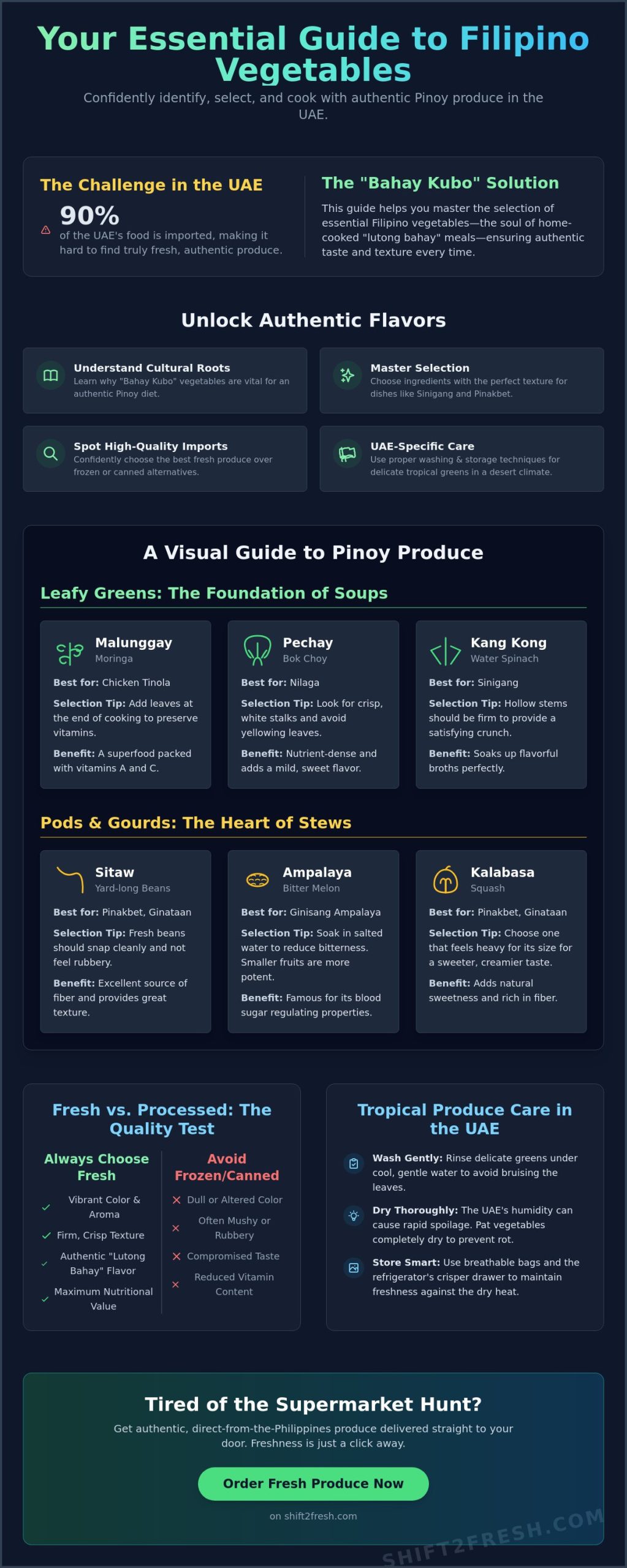
Leafy greens are the nutritional foundation of Filipino soups. Malunggay, often called the “Miracle Tree,” is a non-negotiable addition to Chicken Tinola. Its tiny leaves should be stripped from the stems and added at the very end of cooking to preserve their vitamins. For Nilaga, look for Pechay with crisp, white stalks and deep green leaves. If the leaves are yellowing, the flavor will be muted. Kang Kong, or water spinach, is the star of Sinigang. Its hollow stems soak up the sour tamarind broth, providing a satisfying crunch that makes the dish complete. If you’re craving these greens, you can easily browse fresh Asian vegetables through a mobile app for home delivery.
Pods and Gourds: Sitaw, Ampalaya, and Kalabasa
Texture is everything in dishes like Pinakbet. When selecting Sitaw (yard-long beans), give them a gentle bend; they should snap cleanly rather than feel rubbery. For Ampalaya (bitter melon), smaller fruits often pack a more intense punch. To balance the bitterness in Ginisang Ampalaya, soak the sliced pieces in salted water before sautéing. Kalabasa adds a creamy sweetness to Ginataang Sitaw. Choose a squash that feels heavy for its size with a matte skin, which indicates it’s fully mature and ready to melt into your coconut milk sauce.
Root Crops: Ube, Kamote, and Gabi
Root crops provide the heartiness needed for stews and the vibrant colors for desserts. Gabi (taro) is essential for Sinigang because it acts as a natural thickener, creating a velvety texture in the broth. Be careful not to confuse fresh Ube (purple yam) with purple sweet potatoes; true Ube has a rough, bark-like skin and a more earthy, nutty flavor perfect for Halaya. Kamote, or sweet potato, is a versatile snack staple. While the UAE has many local varieties, the orange-fleshed types are excellent for making Kamote Cue, providing the right balance of starch and sugar for that caramelized coating.
Fresh vs. Processed: Identifying High-Quality Philippine Imports
Choosing the right produce isn’t just about recognizing the name on the label; it’s about understanding the state of the vegetable after it has traveled thousands of miles. This guide to filipino vegetables focuses on helping you spot the difference between a premium import and produce that has suffered from “travel stress.” While frozen or canned options offer convenience, they rarely match the structural integrity of fresh greens. If you want the snap of sitaw or the specific bite of okra in your Sinigang, fresh imports are the only way to achieve that authentic “lutong bahay” texture.
What to Look for When Shopping Online
When you can’t physically touch the produce, you have to rely on visual markers and the reputation of your source. Look for deep, vibrant colors and a natural sheen. Tropical vegetables like eggplant (talong) and okra are particularly susceptible to “chilling injury” if stored at incorrect temperatures during transit. You can identify this by looking for small pits on the skin or water-soaked spots that indicate the cell structure has begun to break down. Sourcing from specialists with over 45 years of experience ensures that the cold chain is managed correctly from the farm in the Philippines to your doorstep in Dubai or Sharjah.
The Myth of “Local is Always Better”
In the UAE, there’s a strong push for local farming, which is excellent for sustainability. However, for certain Asian Vegetables, the soil composition makes a massive difference in flavor. The mineral-rich, volcanic soil found in many parts of the Philippines gives root crops like gabi (taro) and ube (purple yam) an earthy depth that desert-grown variants often lack. While local UAE produce might be cheaper per kilogram, it may not provide the starchiness required to thicken a traditional broth properly.
Balancing your weekly grocery budget in the Emirates means knowing when to splurge on authenticity. You might choose local greens for a basic salad, but for a celebratory Pinakbet, the Philippine-grown ampalaya and squash are worth the extra few dirhams. High-quality imports maintain their nutritional value better than processed alternatives, making them a smarter long-term choice for your family’s health. When you use this guide to filipino vegetables to select your ingredients, you ensure that every dish you serve tastes exactly like the ones from your childhood kitchen.
Kitchen Preparation: How to Clean and Store Tropical Produce in the UAE
Fresh produce is an investment in your health and heritage. In the intense UAE heat, even a short trip from the supermarket to your kitchen in Dubai or Sharjah can start the wilting process. This guide to filipino vegetables provides the technical steps needed to protect your ingredients from the desert’s high humidity and temperature fluctuations. Proper handling doesn’t just prevent waste; it ensures the vitamins and minerals we discussed earlier actually make it to your plate.
Start by washing your vegetables in a mixture of cool water and a splash of white vinegar. This helps remove surface residues without the need for harsh scrubbing that can bruise delicate leaves. Once washed, drying is the most critical step. Moisture trapped in a plastic bag is a recipe for mold in a humid UAE kitchen. Use a salad spinner or pat everything dry with clean kitchen towels before storing. For temperature management, keep most tropical greens in the crisper drawer, but avoid the very back of the fridge where temperatures can drop enough to cause “chilling injury” to eggplants and okra. If you’re a busy professional, spend your Saturday blanching greens like kang kong for 30 seconds before plunging them into an ice bath; they’ll stay vibrant in the freezer for weeks.
Storage Secrets for Longevity
To extend the life of leafy greens like pechay, wrap the unwashed stalks in dry paper towels before placing them in a reusable silicone bag. The paper absorbs excess moisture, preventing that dreaded slimy texture. A pro tip for your crisper drawer: never store ampalaya and sitaw together. Bitter melon releases ethylene gas, which acts as a ripening agent that will make your long beans turn rubbery and yellow overnight. If you notice your greens looking slightly sad after a long day, give them a “cold shock” by soaking them in ice water for 15 minutes. This simple trick rehydrates the cell walls and restores that satisfying crunch.
Adapting Recipes to UAE Kitchens
Cooking in the Emirates often requires flexibility. You can scale your recipes based on the Filipino Pantry Items you have in your cupboard, using soy sauce or fish sauce to deepen the umami when fresh aromatics are running low. If a specific seasonal vegetable is out of stock, look for a substitute with a similar water content. To prep kalabasa, peel and cube the flesh for savory stews or steam and mash it for use in traditional desserts and rice cakes. Ready to start cooking? Order your fresh Asian vegetables now through our mobile app for convenient home delivery.
Sourcing Your Greens: Why Shift 2 Fresh is the Trusted Choice
Finding the right ingredients shouldn’t be a weekend-long treasure hunt through Satwa or Karama. While local markets have their charm, they often lack the consistency required for a reliable guide to filipino vegetables. Shift 2 Fresh bridges this gap by managing the entire supply chain from Philippine farms directly to your doorstep. Our 45-year legacy in the industry means we’ve perfected the art of importing delicate produce, ensuring that the ampalaya and sitaw you receive are as fresh as the Seasonal Filipino Fruits we bring in every month.
From Philippine Farms to Your Doorstep
Every shipment undergoes rigorous quality control to ensure it meets the strict standards of the UAE’s food safety regulations. As a leading philippine supermarket, we focus on the “Freshness Factor” mentioned earlier. Our Sharjah hub acts as a central distribution point, allowing us to maintain the cold chain until the moment your groceries arrive. This direct-import model eliminates the middleman, which translates to more affordable prices for the community without sacrificing the quality of your lutong bahay meals. We don’t just sell food; we provide the building blocks for your most cherished family traditions.
Join the Shift 2 Fresh Community
The days of guessing when the next shipment of gabi or malunggay will arrive are over. By using our mobile app, you can track real-time arrivals of fresh produce and set notifications for your favorite seasonal items. This level of transparency is what sets us apart as a premier online supermarket dubai. We also offer exclusive deals for gourmet food delivery dubai fans who want to elevate their home cooking with the best Asian vegetables available in the Middle East.
Cooking authentic Filipino food is an act of love and a way to stay connected to our roots. By choosing a trusted source, you’re not just buying food; you’re supporting a system that values authenticity and community health. It’s time to stop settling for wilted supermarket alternatives and start cooking with the vibrant, nutrient-rich greens you deserve. Start your journey to authentic cooking today by browsing our fresh vegetable selection on the app and experience the difference that 45 years of expertise makes in every bite.
Bring the Taste of Home to Your UAE Kitchen
You now have the tools to transform your UAE kitchen into a hub of authentic Pinoy flavors. We’ve explored the deep cultural roots of the “Bahay Kubo” tradition and shared the secrets of identifying high-quality imports. By applying these specific storage and preparation techniques, you ensure that every dish you serve retains its nutritional value and traditional texture. This guide to filipino vegetables is your roadmap to cooking with confidence, no matter where in the Emirates you call home.
Authenticity starts with the right source. Shift 2 Fresh brings 45+ years of food industry expertise to your table, offering direct imports from the Philippines and South Asia. You don’t have to worry about travel-stressed produce when you choose a specialist who understands the cold chain. Enjoy the convenience of mobile app ordering and get free delivery on orders over AED 500. It’s time to stop searching and start cooking. Shop Fresh Filipino Vegetables at Shift 2 Fresh today and bring the true taste of home to your next family meal.
Frequently Asked Questions
What are the top 5 essential Filipino vegetables for beginners?
The five most essential vegetables for anyone starting their journey with this guide to filipino vegetables are sitaw (long beans), talong (eggplant), kalabasa (squash), pechay (bok choy), and ampalaya (bitter melon). These staples allow you to cook iconic dishes like Sinigang and Pinakbet. They’re versatile and widely available through specialized importers in the Emirates, making them perfect for your first “lutong bahay” meal.
Where can I buy fresh Filipino vegetables online in Dubai?
You can purchase fresh produce through the Shift 2 Fresh mobile app for convenient delivery in Dubai and Sharjah. This service specializes in direct imports, ensuring you don’t have to navigate crowded physical markets. It’s the most reliable way to get authentic ingredients for your weekly meal prep without leaving your home, especially during the hot summer months.
How do I know if the ampalaya is too bitter to cook?
Ampalaya is never truly too bitter to cook, but its intensity depends on size and ripeness. Choose firm, bright green gourds for a balanced flavor. If the skin is turning yellow or the flesh feels soft, it’s overripe and may have a mushy texture. Use the salt-soak method described in our guide to filipino vegetables to manage the bite before sautéing.
Can I find fresh Malunggay in the UAE?
Fresh malunggay is available in the UAE through specialist importers who fly in produce directly from the Philippines. While it can be seasonal, it’s a common item in our inventory due to its high demand for Tinola. Check the Shift 2 Fresh app regularly to see when the latest batch of these nutrient-dense leaves has arrived at our Sharjah hub.
What is the best way to store Sitaw to keep it crunchy?
The best way to keep sitaw crunchy is to wrap the unwashed beans in a dry paper towel before placing them in a sealed bag. Store them in the crisper drawer of your fridge. Avoid washing them until right before you’re ready to cook. Excess moisture is the primary cause of premature rotting and rubbery textures in humid UAE kitchens.
Are Filipino vegetables in the UAE imported or grown locally?
Most authentic Filipino vegetables in the UAE are imported directly from the Philippines and South Asia. While the UAE produces some local greens, the specific mineral content of Philippine soil is what gives gabi and ube their unique starchiness. We prioritize these imports to ensure your home-cooked meals taste exactly like the ones from your childhood kitchen back home.
What can I use as a substitute for Kang Kong in Sinigang?
If you can’t find kang kong, spinach or local mustard greens are the best substitutes for Sinigang. They provide a similar leafy texture and hold up well in the sour tamarind broth. While you’ll miss the signature crunch of the hollow kang kong stems, these alternatives are widely available in most Dubai supermarkets and won’t ruin the overall flavor profile.
How often does Shift 2 Fresh receive new shipments of vegetables?
Shift 2 Fresh receives new shipments of vegetables and fruits multiple times per week to maintain maximum freshness. We don’t rely on long-term storage; we move produce quickly from our hub to your kitchen. You can use our mobile app to track specific arrivals and receive alerts when your favorite seasonal items are back in stock for delivery.
0 comments