

You open your door to a delivery driver in the intense Dubai heat, but the bag of sitaw and calamansi he hands you is already wilting and warm to the touch. It’s a frustrating moment that makes you realize the risk of ordering fresh produce online is often higher than the convenience is worth. When you’re paying premium AED prices for authentic Asian flavors, you shouldn’t have to settle for bruised fruit or broken cold chains.
We know you want to provide the best for your family without the constant worry of wasted money or foodborne illness. Recent 2026 updates from the FDA regarding fresh-cut produce safety highlight just how critical proper handling is for everything in your grocery cart. This guide will help you identify reliable vendors who specialize in the delicate logistics of imported goods. You’ll learn how to spot red flags in a mobile app, understand the importance of specialized staff training for handling “exotic” items like durian, and finally enjoy fresh Filipino produce that arrives at your doorstep exactly as it should.
Key Takeaways
- Learn why choosing a specialist importer over a generalist aggregator is the most effective way to mitigate the risk of ordering fresh produce online.
- Discover how to verify a vendor’s “last mile” logistics to ensure your seasonal Filipino fruits survive the intense UAE heat without losing flavor or nutrition.
- Identify the specific red flags in online return policies and vendor credentials that signal a lack of commitment to food safety.
- Understand the importance of specialized staff training for handling fragile Asian vegetables compared to standard gig-worker picking methods.
- Get a practical checklist for vetting online grocery apps based on the latest 2026 food safety guidelines and industry best practices.
Understanding the Risk of Ordering Fresh Produce Online in 2026
The convenience of a few taps on a screen has replaced early morning trips to the market for many families across the UAE. By 2026, the online share of grocery shopping trips has grown significantly; however, this shift comes with a trade-off in quality control. When you stand in a physical aisle, you are the final inspector. You can feel the weight of a mango or smell the fragrance of a pineapple. In e-commerce, you delegate that responsibility to a stranger. This transition has led to “aggregator fatigue,” where shoppers are tired of receiving sub-par items from massive platforms that treat a delicate Asian vegetable the same way they treat a box of detergent.
The true risk of ordering fresh produce online isn’t just a missed delivery. It’s the invisible loss of value. You might receive your order on time, but if the calamansi is dry or the sitaw is limp, the nutritional and culinary value is gone. The psychological barrier of losing the “touch and smell” test is real, and it’s why many buyers still feel a sense of hesitation when clicking “purchase” on perishables.
Safety vs. Quality: Two Different Risks
Safety and quality are often grouped together, but they represent different challenges. Microbial safety is the most critical concern. Contamination can happen at any point from the farm in the Philippines to the warehouse in Sharjah. Following food safety protocols is non-negotiable, especially following the 2026 FDA guidance issued after major biological hazard outbreaks. A vendor must prove they understand these risks to protect your family.
Then there is organoleptic quality. This refers to the sensory experience: the crunch of a ginger root or the vibrant color of a purple yam. When produce sits in a delivery van that isn’t properly climate-controlled, it undergoes rapid nutritional decline. Vitamins like Vitamin C degrade quickly when exposed to heat and light. This means your “fresh” delivery might be less healthy than it looks if the risk of ordering fresh produce online isn’t managed through specialized logistics.
The E-Commerce Trust Gap
A major hurdle for online shoppers is the trust gap created by misleading stock photos. A glistening, perfect picture of a durian on an app doesn’t guarantee that the fruit inside the box isn’t overripe. This is why transparent sourcing is vital. In 2026, savvy buyers look beyond the image. They want to know exactly where the produce came from and how it was handled before it reached their door.
While customer reviews can offer some insight, they have limits. A five-star review for a pantry staple doesn’t mean the vendor understands how to pack fragile seasonal fruits. You need to look for consistency in how a vendor manages the “last mile” to truly bridge that gap between the digital screen and your kitchen table.
The UAE Heat Factor: Temperature and Handling Risks
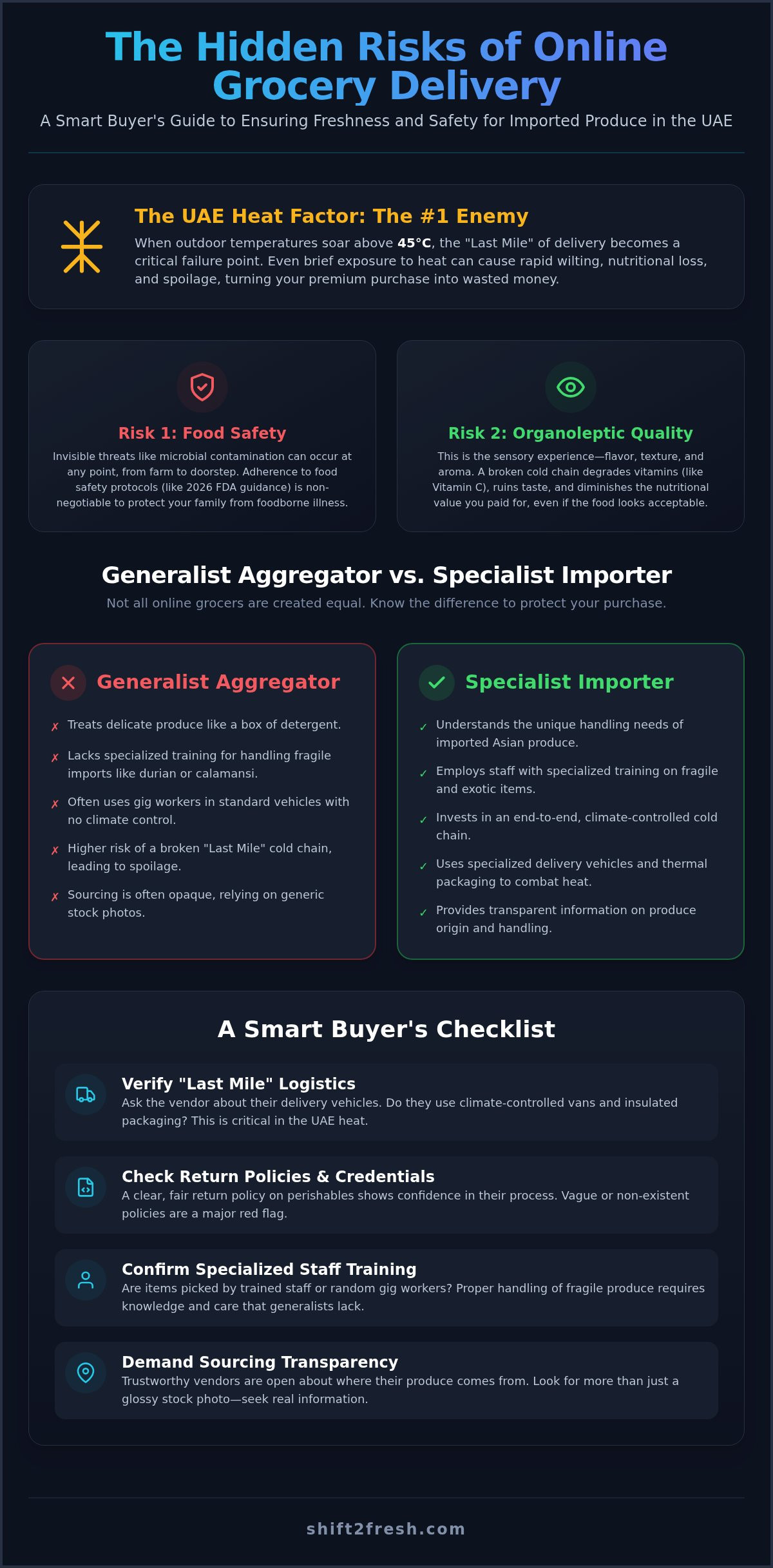
The UAE summer presents a logistical hurdle that many generalist delivery services fail to clear. When temperatures soar above 45°C, the “Last Mile” becomes the most dangerous part of the journey. Even 15 minutes of exposure to ambient heat can trigger rapid spoilage. This is a primary risk of ordering fresh produce online in the Middle East; if the delivery chain breaks for even a moment, the quality you paid for evaporates. It’s not just about the fruit getting warm; it’s about the accelerated chemical breakdown that ruins flavor.
Maintaining cold chain integrity requires more than just a refrigerated warehouse. It demands a continuous link from the Philippine farm to the Sharjah distribution center. If that link fails, fruits like lansones can ferment, and calamansi can lose its essential oils. Identifying vendors who make Safer Food Choices by prioritizing temperature-stable logistics is essential for any household. You need to know your food hasn’t been sitting in a hot van while the driver makes ten other stops.
Managing the Cold Chain in the Middle East
Any online supermarket dubai residents trust must use specialized, climate-controlled vehicles. Standard delivery vans often lack the insulation needed to combat humidity. When your order arrives, look for thermal packaging or insulated liners. These aren’t just extras; they’re necessities. High turnover also plays a role. Produce that spends less time in storage has a much lower chance of temperature-related degradation. If the vendor doesn’t mention their cold chain, it’s a major red flag.
Handling Delicate Filipino Imports
Handling Seasonal Filipino Fruits requires a different set of skills than moving local potatoes or onions. Tropical imports are highly sensitive to ethylene gas buildup. In an enclosed delivery container, one overripe mango can cause a whole batch of Asian vegetables to yellow and wilt prematurely. This is an overlooked risk of ordering fresh produce online that only specialists truly understand.
Pressure damage is another “invisible” risk. If a heavy durian is stacked atop a bag of sitaw, the bruising won’t show until you start cooking. Trained delivery staff understand the fragility of these items. They know that proper stacking prevents the crushing that leads to waste. If you’re tired of bruised deliveries, you can order through our dedicated app to ensure your produce is handled by specialists who know how to protect every item.
Marketplace vs. Specialist: Comparing Your Options
Choosing where to buy your groceries is the first step in managing the risk of ordering fresh produce online. Most shoppers default to massive aggregator apps because they’re familiar. However, these platforms often operate on a “Store to Door” model. This means your delicate Filipino mangoes are chosen by a gig-economy worker who might have been delivering car parts an hour earlier. They aren’t trained to identify the subtle signs of over-ripeness or the specific fragrance of a perfectly ready fruit.
Accountability is another major differentiator. When you buy from a marketplace, you’re often three steps removed from the source. If your calamansi arrives dry, you’re stuck talking to a chatbot or a customer service rep who doesn’t know the difference between a lime and a lemon. Specialist importers own the entire process. They’re responsible for the fruit from the moment it leaves the farm until it reaches your kitchen, ensuring a higher standard of care.
The Problem with Gig-Economy Picking
Picking the right ube or ginger root is a skill, not a task. A generalist picker in a high-volume warehouse is under immense pressure to move fast. This speed often leads to “picking errors” where bruised or sub-par items are tossed into your bag. There’s also a higher risk of cross-contamination in these environments. If you’re looking for an Asian Supermarket Near Me, remember that the level of expertise varies. A specialist understands the cultural and culinary importance of the items they handle.
The Specialist Advantage
Specialists thrive on expert curation. They won’t sell you a seasonal fruit if it isn’t at its peak. This direct sourcing model reduces the number of hands that touch your food, which is a key factor in maintaining quality. It’s especially important for Asian Vegetables that require specific humidity levels to stay crisp. Generalist vans don’t have the tailored storage zones needed for leafy greens versus heavy tubers. By choosing a specialist, you significantly lower the risk of ordering fresh produce online and ensure your family eats only the best.
A Smart Buyer’s Checklist for Safe Online Ordering
Vetting a vendor is your primary defense against the risk of ordering fresh produce online. Don’t just look at the price in AED; look at the company’s history. A vendor with a physical presence and decades of experience in the food industry is far more likely to have established safety protocols than a digital-only startup. Check their refund policy specifically for perishables. If they don’t offer a resolution within 24 hours for spoiled fruit, they aren’t taking your food safety seriously. While “same day” delivery sounds appealing, it’s not always the safest choice. Rushed logistics often lead to the picking errors discussed in previous sections. A slightly longer window that allows for proper sorting and temperature stabilization is often better for delicate imports.
Pre-Purchase Red Flags
Hidden shipping costs can be a sign of trouble. If a vendor offers suspiciously low rates for delivery in the UAE heat, they might be cutting corners on refrigerated transport. Transparency is also vital. Any reputable philippine supermarket should clearly state the origin of their produce. If the app uses generic, glossy stock photos instead of real images of seasonal stock, it’s a sign they might not have the items on hand. High-quality vendors update their inventory to reflect what is actually in peak season and provide specific origin information for their imports.
The 60-Second Delivery Inspection
When the driver arrives, don’t just take the bags and close the door. Perform a quick inspection. Check for “sweating” or condensation inside plastic-wrapped items. This is a clear indicator of a broken cold chain where the produce has moved from cold to hot and back again. This temperature fluctuation is a major risk of ordering fresh produce online that leads to rapid bacterial growth and loss of texture.
Use your senses before the delivery van pulls away. High-sugar fruits like mangoes or pineapple will give off a sour, vinegary smell if they’ve begun to ferment in the heat. Finally, do a firmness check on Filipino vegetables like sitaw or ampalaya. They should be crisp and snap easily. If they feel rubbery or bend without breaking, they’ve lost their moisture and nutritional value. To avoid these headaches entirely, download the Shift 2 Fresh app and experience a service designed around quality rather than just speed.
How Shift 2 Fresh Eliminates Online Ordering Risks
The risk of ordering fresh produce online vanishes when you partner with a team that has 45 years of food industry heritage. At Shift 2 Fresh, we’ve spent decades refining our approach to food logistics. This isn’t just about moving boxes; it’s about understanding the biological life cycle of every fruit and vegetable we import. We apply traditional food expertise to a modern e-commerce platform, ensuring that the “last mile” in the UAE heat is managed with the precision it deserves.
Our “Trained Picker” promise is the cornerstone of our quality control. Unlike the gig-economy workers used by generalist apps, our staff members are specialists. They’re trained to identify the subtle signs of peak ripeness and the specific fragrance that signals a high-quality fruit. They don’t just grab the first item on the shelf; they inspect every piece for firmness and integrity. If it wouldn’t make it to our own family tables, it won’t make it to yours. We also take the financial risk off your shoulders with a transparent refund policy. If an item doesn’t meet our strict standards, we make it right.
We provide a level of Gourmet Food Delivery Dubai residents can trust for even the most delicate items. By managing our own logistics from our Sharjah-based operations, we maintain total control over the environment. This central hub is critical for UAE-wide freshness, allowing us to stabilize temperatures before the final delivery begins.
Our Direct Sourcing and Cold Chain
Managing the seasonal transitions of Filipino favorites requires deep industry connections. We source directly to reduce the number of hands that touch your food, which significantly lowers the risk of ordering fresh produce online. Our mobile app ordering system is designed for transparency, giving you real-time tracking so you know exactly when your climate-controlled delivery will arrive. This technology ensures that the cold chain remains unbroken from the moment the produce leaves our warehouse until it reaches your doorstep.
Join the Shift to Fresh
Getting started with your first risk-free order is simple. We offer free shipping on orders over AED 500, making it the perfect time to stock up on fresh bundles and essential Filipino Pantry Items. You don’t have to compromise on the authentic flavors of home just because you’re shopping digitally. Download our app today and experience the difference that 45 years of expertise makes. It’s time to enjoy premium produce without the worry of bruised fruit or wasted money.
Secure Your Kitchen with Smarter Online Shopping
Choosing the right vendor is the difference between wasted money and a delicious home-cooked meal. You’ve learned that the risk of ordering fresh produce online in the UAE isn’t just about delivery times; it’s about maintaining a strict cold chain and ensuring specialized handlers pick your items. By following our smart buyer’s checklist and prioritizing specialist importers over generalist apps, you can finally eliminate the frustration of bruised fruit and spoiled vegetables.
With 45+ years of food industry expertise, we’ve built a system that protects your produce from the Philippine farm to your doorstep. Our trained staff treats every calamansi and mango with the care it deserves, so you don’t have to worry about quality compromises. We even offer free delivery on orders over AED 500 to help you stock up on the authentic flavors you love. It’s time to stop gambling with your grocery list and start enjoying the peace of mind that comes with professional handling.
Order your fresh Filipino favorites risk-free today! and bring the true taste of home back to your table.
Frequently Asked Questions
Is it safe to order highly perishable fruits like lansones online in the UAE?
Yes, it’s safe if the vendor uses climate-controlled logistics. Lansones are highly sensitive to the UAE heat and can ferment in minutes. Shift 2 Fresh manages this by using specialized vehicles and trained staff who understand the fragility of tropical imports. By prioritizing a continuous cold chain from our Sharjah hub, we ensure your favorite seasonal fruits arrive with their authentic flavor and texture intact.
What should I do if my fresh produce arrives bruised or spoiled?
You should document the damage and contact customer support immediately. A trustworthy vendor will have a clear, time-sensitive refund policy for perishables. Shift 2 Fresh removes the financial burden from the buyer by offering a transparent resolution process. Since we use our own trained delivery team, we can often identify and resolve quality issues before they even reach your kitchen table.
How does Shift 2 Fresh ensure the cold chain isn’t broken during delivery?
We maintain total control over the environment from our Sharjah-based operations. By using our own fleet of climate-controlled vehicles, we eliminate the reliance on third-party gig workers. This specialized approach prevents the temperature fluctuations that typically occur during the “last mile” of delivery. Our 45 years of experience in the food industry have taught us that a broken cold chain is the biggest threat to freshness.
Can I track my fresh produce delivery in real-time?
Our dedicated mobile app provides real-time tracking for every order. This feature is essential for managing the risk of ordering fresh produce online because it allows you to be ready when the driver arrives. Ensuring your groceries move directly from a refrigerated van to your fridge prevents unnecessary heat exposure. Transparency in the delivery window is a key part of our commitment to food safety.
Are online groceries as nutritious as those bought in a physical market?
They can be even more nutritious if the vendor uses direct sourcing. Produce begins losing vitamins, particularly Vitamin C, the moment it’s harvested. Our direct sourcing model reduces the number of hands that touch your food and the time it spends in transit. By skipping the long delays found in traditional retail chains, we deliver Asian vegetables that are still packed with their original nutritional value.
What are the signs of a reliable online grocery store in Dubai?
Look for vendors with deep industry heritage and a focus on specialized imports. A reliable store will clearly state its sourcing origins and provide detailed information about its handling protocols. In Dubai, a trustworthy vendor should also have a physical presence and a robust mobile app for tracking. These elements show they are invested in the long-term safety and quality of their produce.
Why do some online fruits look different from their photos?
Natural produce varies by season, so it rarely matches a perfectly edited stock photo. Factors like soil conditions and harvest time in the Philippines influence the size and color of the fruit. We strive for transparency by using realistic representations of our current stock. If you’re ever unsure, our app provides origin details to help you understand exactly what you’re adding to your cart.
How does Shift 2 Fresh handle the delivery of heavy items like durian?
Our trained pickers use specific stacking protocols to prevent heavy items from damaging fragile goods. They understand that putting a heavy durian on top of leafy greens is a major risk of ordering fresh produce online. By training our staff to organize bags based on weight and fragility, we ensure that every item, from bulky fruits to delicate calamansi, arrives in perfect condition.
0 comments