

What if the secret to authentic, restaurant-quality stir-fry isn’t found in a bottle of store-bought soy sauce, but in the vibrant, naturally gluten-free produce of the Philippines? You’ve likely felt that sting of disappointment when a “safe” meal at home turns out to have hidden wheat in the marinade. Finding fresh Asian ingredients in local UAE supermarkets can feel like a scavenger hunt, often leaving you with bland substitutes that lack that essential umami punch.
This guide shows you how to master gluten-free asian cooking by returning to the roots of the cuisine: fresh fruits and vegetables. You’ll discover how to recreate those bold, complex flavors without the fear of cross-contamination or hidden additives. We’ll explore how to use staples like Ube and Calamansi to elevate your dishes and show you exactly how to get these authentic Filipino ingredients and pantry items delivered straight to your door in the UAE via a convenient mobile app.
Key Takeaways
- Reclaim your kitchen by embracing the rice-based traditions that make gluten-free asian cooking naturally accessible and delicious.
- Identify hidden wheat in common pantry staples like soy and oyster sauce to ensure every meal is truly safe for your family.
- Discover how seasonal Filipino produce can replace processed thickeners and artificial flavorings for a cleaner, bolder taste.
- Learn specific techniques to maintain high-heat “Wok Hei” and authentic textures without relying on gluten-heavy marinades.
- Simplify your grocery shopping by using a mobile app to source direct-import Asian vegetables and fruits across the UAE.
Understanding the Foundations of Gluten-Free Asian Cooking
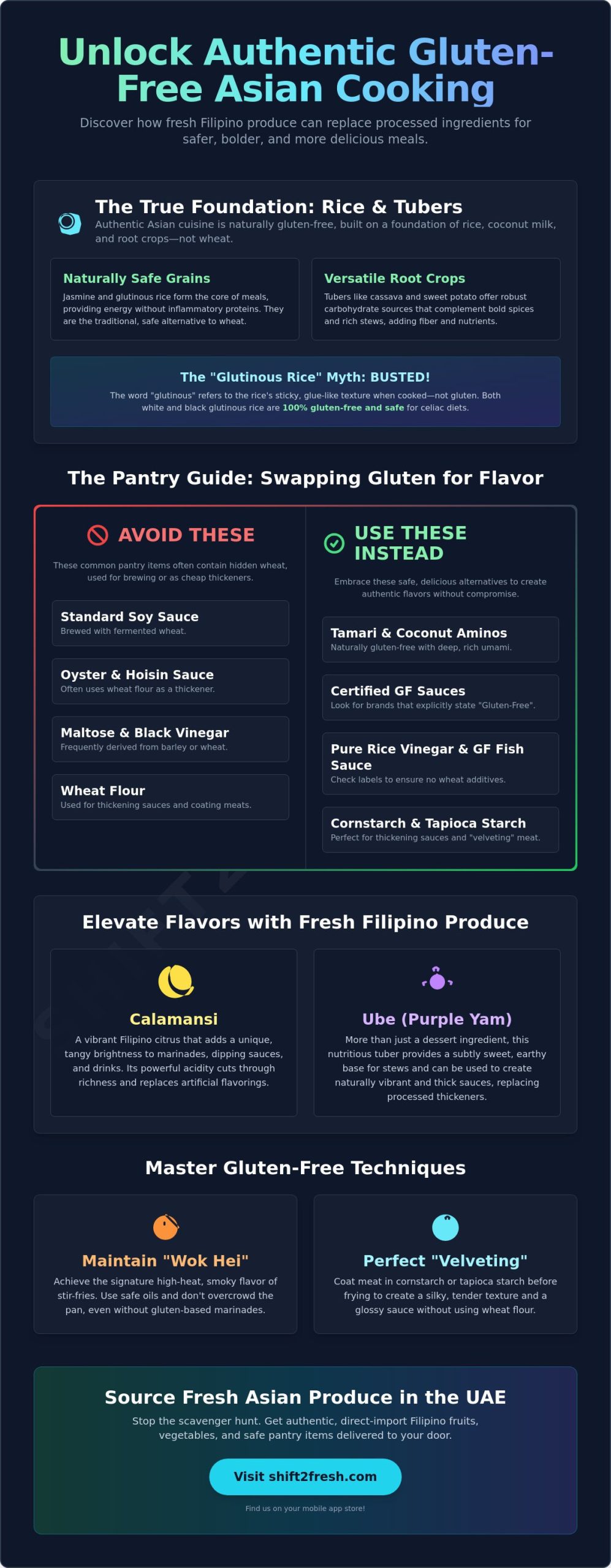
Gluten-free Asian cooking is defined by a deliberate focus on whole, fresh ingredients rather than processed wheat additives. While many Western kitchens struggle to find bread replacements, traditional Asian pantries have always revolved around naturally safe grains. This isn’t a new trend; it’s a return to a rice-based heritage that existed long before the industrialization of wheat. In fact, many of the world’s most beloved flavors were originally crafted using ingredients that are safe for everyone to enjoy.
South Asian and Filipino cuisines are naturally predisposed to being gluten-free because their foundations are built on tropical abundance. Instead of wheat, these cultures rely on coconut milk, rice, and root crops. When you strip away modern, commercialized sauces, you find a culinary landscape where gluten was never the guest of honor. The shift from wheat flour to starches like corn, tapioca, and rice isn’t a compromise. It’s the secret to achieving the specific textures that define authentic dishes, from the snap of a stir-fry to the silkiness of a thick sauce.
Rice and Tubers: The Natural GF Base
Jasmine rice and glutinous rice are the heartbeat of the Asian table. They provide the necessary bulk and energy without the inflammatory proteins found in wheat. Beyond grains, tubers like cassava and sweet potatoes offer versatile carbohydrate sources that stand up to bold spices and rich stews. Integrating a variety of Asian Vegetables into your meal planning ensures your plate is balanced, vibrant, and entirely safe from hidden fillers. These whole foods provide fiber and nutrients that processed gluten-free substitutes often lack.
The “Glutinous Rice” Myth
One of the biggest hurdles for home cooks is the word “glutinous.” It sounds like it’s packed with wheat, but the term actually refers to the rice’s sticky, glue-like texture when cooked. For anyone Understanding Celiac Disease, knowing that both white and black glutinous rice are 100% gluten-free is a game changer. This rice contains amylopectin, which provides that signature chewiness without any actual gluten proteins.
Safe varieties include black glutinous rice, which offers a nuttier flavor and higher antioxidant content, and standard white sticky rice, the perfect canvas for mangoes and coconut cream. You can use rice-based flours to recreate traditional Filipino desserts like Palitaw or Kakanin. Using these traditional flours ensures the texture remains authentic, proving that mastering gluten-free asian cooking never has to mean skipping the best part of the meal.
Identifying Hidden Gluten in the Asian Pantry
The biggest challenge in gluten-free asian cooking isn’t the main protein or the rice; it’s the liquid seasoning. Standard soy sauce is almost always brewed with a significant amount of fermented wheat. This hidden ingredient acts as a catalyst in the traditional brewing process, but it makes the final product unsafe for those with gluten sensitivities. Beyond soy sauce, many bottled favorites like hoisin and oyster sauce rely on wheat flour as a cheap thickening agent to give them that signature syrupy body. If you aren’t careful, a single tablespoon of a pre-made stir-fry paste can compromise an otherwise fresh meal.
Overlooked sources of gluten often hide in the most basic condiments. Maltose, a common sweetener used to glaze roasted meats, is frequently derived from barley. Similarly, Chinese black vinegar and some specialty rice vinegars are fermented with wheat or other gluten-containing grains. When you are Identifying Hidden Sources of Gluten, you must also consider cross-contamination. Many commercial Filipino Pantry Items are processed in facilities that handle wheat, making it essential to source from brands that prioritize transparency and safety.
Safe Sauce Substitutions
Tamari is the most popular substitute for soy sauce because it’s brewed with little to no wheat, offering a deeper, richer flavor. Liquid aminos are another excellent choice, providing a salty, savory kick without the fermentation complexity. For those avoiding soy entirely, coconut aminos offer a slightly sweeter, gluten-free alternative that pairs perfectly with tropical flavors. Always double-check fish sauce labels; while traditional recipes only use anchovies and salt, some modern brands add wheat-based thickeners to cut costs.
Wheat-Free Thickening Agents
Achieving the perfect “velveting” texture on meat or a glossy finish on a sauce doesn’t require wheat flour. Cornstarch and tapioca starch are your best allies here. Cornstarch provides a matte, crisp coating for frying, while tapioca starch creates a clear, stretchy consistency ideal for dumplings. Arrowroot powder is another premium option that remains stable even when frozen. If you’re making a hearty soup, try using mashed tubers or a slurry of rice flour to add body without the risk of gluten. Browsing for authentic, safe ingredients on shift2fresh.com can help you build a pantry that supports your health goals without sacrificing the soul of the dish.
Essential Fresh Ingredients for Authentic GF Flavors
The most reliable way to guarantee a safe meal is to prioritize whole ingredients that don’t come with a complex label. While bottled sauces are often minefields for hidden wheat, fresh produce is inherently safe. This shift toward whole foods is a cornerstone of gluten-free asian cooking, allowing you to bypass the risks associated with processed fillers. By focusing on the natural vibrancy of the garden, you aren’t just avoiding gluten; you’re also embracing a diet rich in antioxidants and essential nutrients. As noted in the Gluten-Free Certification Organization’s guide to Asian cuisine, many traditional dishes are naturally safe if you stick to the raw basics and avoid the “soy sauce trap” mentioned earlier.
Building deep umami naturally doesn’t require a chemistry degree or a shelf full of additives. You can create complex savory profiles using dried shiitake mushrooms, fermented black beans (always check for rice-based starters), and a generous hand with aromatics. Incorporating Seasonal Filipino Fruits into savory recipes provides a unique balance of sweetness and acidity. For example, using fresh pineapple or green mango in a stew provides a bright, tangy lift that negates the need for commercial, grain-based vinegars. This approach ensures your kitchen remains a sanctuary for clean eating without sacrificing the bold flavors you love.
Filipino Superfoods: Ube, Calamansi, and More
Ube, the iconic purple yam, is a nutritional powerhouse that serves as a naturally gluten-free base for desserts and breads. Its earthy, vanilla-like profile pairs perfectly with coconut milk, creating textures that rival any wheat-based pastry. Calamansi is another essential; this small citrus fruit provides a sharp, floral acidity that is vital for marinades and dipping sauces. Unlike bottled lemon juice or processed vinegars, fresh calamansi is pure and free from cross-contamination. Don’t forget the anti-inflammatory duo of fresh ginger and turmeric, which form the aromatic heart of many South Asian dishes and support overall gut health.
Leafy Greens and Exotic Vegetables
Texture is everything in a stir-fry, and vegetables like bok choy, kangkong (water spinach), and sayote (chayote) provide the perfect crunch. These greens absorb flavors beautifully while maintaining their structural integrity under high heat. If you’re feeling adventurous, prepping exotic produce like durian or lansones can add a surprising depth to both sweet and savory dishes. Finding high-quality fresh fruits and vegetables in the UAE used to be a challenge, but sourcing them directly from specialists ensures you get the authentic taste of the islands with the safety of a gluten-free guarantee.
Mastering Gluten-Free Asian Cooking Techniques
The soul of a great stir-fry lies in “Wok Hei,” or the breath of the wok. Achieving this smoky, charred essence in gluten-free asian cooking requires a slight shift in how you handle high heat. Traditional marinades often use wheat-based soy sauce, which can burn too quickly or create a sticky residue that prevents the meat from searing. By switching to dry rubs or tamari-based marinades, you allow the wok’s intense heat to caramelize the proteins directly. This creates a better crust and ensures the delicate flavors of your vegetables remain crisp rather than soggy.
For more delicate produce like sayote or kangkong, steaming and boiling are naturally safe methods that preserve both nutrients and vibrant colors. These techniques are inherently gluten-free and highlight the natural sweetness of the ingredients. When you do want a crunch, deep-frying with rice flour is a revelation. Rice flour creates a much lighter, crispier barrier than wheat, which can often feel heavy or doughy. When frying with rice flour, you should maintain a slightly higher oil temperature than you would with wheat to ensure the coating seals instantly and doesn’t become greasy.
The Velveting Technique (GF Version)
Velveting is the secret behind that incredibly tender, silky meat found in restaurant dishes. To master this at home without gluten, follow these steps:
- Slice your protein thinly against the grain.
- Coat the meat in a mixture of one egg white, a tablespoon of cornstarch, and a splash of rice wine or calamansi juice.
- Let it marinate for 20 to 30 minutes in the fridge.
- Briefly blanch the meat in hot oil or simmering water before finishing it in your stir-fry.
A common mistake is over-thickening the marinade, which leads to a gummy texture. If your sauce becomes too thick in the pan, simply whisk in a tablespoon of water or broth at a time to loosen it back to a glossy consistency.
Wrapping and Rolling Without Wheat
Appetizers don’t have to be off-limits just because you’re avoiding wheat flour wrappers. Rice paper rolls, often called summer rolls, are a fresh and naturally gluten-free way to showcase vibrant herbs and shrimp. If you prefer a warm option, lettuce leaves make an excellent, low-carb “bun” for savory fillings. For those craving a more traditional experience, you can find everything you need at a philippine supermarket to make fresh Lumpia using homemade crepes made from cornstarch and rice flour. These wrappers are more delicate than wheat versions but offer a much cleaner flavor that lets the filling shine. To get started on your next culinary project, you can order your fresh Filipino staples today and have them delivered right to your kitchen.
Sourcing Fresh Asian Produce in the UAE
Finding the right ingredients for gluten-free asian cooking in Dubai or Sharjah shouldn’t feel like an impossible task. Most standard supermarkets stock generic varieties of produce that lack the specific punch needed for authentic Filipino dishes. When you’re looking for the sharp acidity of calamansi or the creamy texture of real ube, “close enough” isn’t good enough. Standard local retail chains often prioritize shelf life over flavor, leading to a lack of the exotic Asian Vegetables that form the base of your favorite recipes. Direct-import produce offers a massive advantage in both flavor and safety. Because these items are sourced specifically for their culinary heritage, they haven’t been modified or treated with the same industrial fillers often found in mass-market commercial sauces and pastes.
Supporting sustainable imports from the Philippines and South Asia ensures that traditional farming communities can continue to provide these unique crops. When you source directly, you’re bypassing the long supply chains where cross-contamination often occurs. This transparency is vital for anyone managing a gluten-free household. Mobile app ordering has transformed the way home cooks in the UAE access these specialty items. Instead of driving to multiple specialty stores across the city, you can now browse a full selection of Filipino Pantry Items and fresh produce from your phone, ensuring your kitchen is always stocked with safe, authentic ingredients.
Shift 2 Fresh: Your Local GF Partner
We bridge the gap between the islands and your kitchen. Shift 2 Fresh focuses on sourcing seasonal fruits like lansones and durian, ensuring they arrive in the UAE with their flavor profiles intact. Our delivery coverage extends across Sharjah and Dubai, bringing fresh Asian flavors directly to your doorstep. Our staff is trained specifically to handle delicate exotic produce, so your order arrives fresh and ready for the wok. This specialized handling is crucial for fruits like durian, which require specific care to maintain their quality during transit. By choosing our service, you ensure that every piece of fruit and every vegetable meets the high standards required for a healthy, gluten-free diet.
Building Your Weekly GF Asian Meal Plan
Building a weekly meal plan becomes a simple process when you have the right tools. Selecting seasonal items ensures you’re getting the maximum nutrient density from your food while keeping your recipes exciting. Using the Shift 2 Fresh app, you can track seasonal availability in real-time. This allows you to plan your stir-fries and stews around what’s freshest, rather than relying on frozen or processed substitutes. Tracking what’s in season means your gluten-free asian cooking will always feature the best the Philippines has to offer. It’s time to stop settling for bland substitutes and start cooking with the vibrant, fresh ingredients you deserve. Start your gluten-free journey with our fresh Asian produce today and experience the difference that authentic sourcing makes.
Reclaim Your Kitchen with Authentic Asian Flavors
Mastering gluten-free asian cooking is a journey that leads away from processed shortcuts and back to the vibrant, whole foods of the Philippines. By understanding the rice-based foundations of these cuisines and identifying hidden wheat in commercial sauces, you’ve already taken the biggest steps toward a safer, more flavorful kitchen. You now have the techniques to maintain that essential “Wok Hei” and the knowledge to swap heavy wheat flours for light, crispy rice-based coatings.
Bringing these authentic flavors to your UAE home is simpler than ever. With over 45 years of food industry experience, we specialize in importing exotic fruits like lansones and durian that you won’t find in standard local supermarkets. Our mobile app provides a direct link to seasonal harvests with convenient delivery across the region. It’s time to stop worrying about hidden ingredients and start celebrating fresh, seasonal produce. Order Fresh Filipino Produce for Your Next GF Meal and rediscover the joy of cooking without limits. Your next culinary masterpiece is just one fresh ingredient away.
Frequently Asked Questions
Is glutinous rice gluten-free?
Yes, glutinous rice is 100% gluten-free. The name describes its sticky, glue-like texture when cooked, not the presence of gluten proteins. It’s safe for those with Celiac disease because it contains amylopectin starch rather than the wheat proteins found in bread. You can confidently use both white and black sticky rice in your recipes. It’s a staple for traditional Filipino desserts and side dishes that won’t compromise your health or flavor.
Which Asian sauces typically contain hidden gluten?
Standard soy sauce is the most common culprit because it’s brewed with fermented wheat. Other dangerous sauces include hoisin, oyster sauce, and many pre-made stir-fry pastes that use wheat flour as a thickener. Maltose and some grain-based vinegars also hide gluten. Always read the label for wheat or barley declarations. Sticking to fresh produce and pure seasonings is the safest way to enjoy gluten-free asian cooking without accidental exposure.
Can I use cornstarch instead of flour in Asian recipes?
Yes, cornstarch is an excellent substitute and is often preferred in authentic Asian recipes for its superior thickening power. It creates a silkier, clearer sauce compared to wheat flour. You can use it for velveting meats to achieve a tender, restaurant-quality texture. It’s also perfect for creating a light, crispy coating on fried items. Just remember to mix it with cold water first to prevent lumps from forming in your hot pan.
Are rice noodles always gluten-free?
Most dried rice noodles are naturally gluten-free, but you must check the ingredient list for hidden wheat starch. Some manufacturers add wheat to fresh noodles to improve elasticity and prevent them from breaking. This is particularly common in certain types of thick flat noodles. Always verify that the product only contains rice and water. If you’re dining out, ask if the noodles are 100% rice to avoid cross-contamination from shared boiling water.
How do I know if my fish sauce is safe for Celiacs?
A safe fish sauce should only contain anchovies, salt, and water. While traditional recipes are naturally safe, some commercial brands add wheat-based thickeners or caramel coloring derived from gluten. Look for brands that explicitly state they are gluten-free or have a minimal ingredient list. Since fish sauce is essential for building umami, taking a moment to verify the brand ensures your savory dishes remain safe for everyone at the table without any risk.
Where can I buy fresh Filipino vegetables in Dubai?
You can find authentic Asian Vegetables and seasonal fruits through specialty importers like Shift 2 Fresh. While standard supermarkets might have limited stock, our mobile app provides direct access to high-quality produce like kangkong and sayote delivered across Dubai and Sharjah. Sourcing from specialists ensures the vegetables are fresh and handled correctly. This is the most reliable way to maintain the authentic flavors of the islands while living in the UAE.
Is Ube naturally gluten-free?
Yes, Ube is a root vegetable and is naturally gluten-free. This purple yam is a fantastic source of carbohydrates and nutrients for those on a restricted diet. It’s incredibly versatile and can be used to make breads, cakes, and puddings when paired with gluten-free flours. Because it’s a whole food, it carries no risk of hidden gluten. It’s one of the most vibrant ways to add color and unique flavor to your dining table.
What is the best gluten-free substitute for soy sauce in Filipino cooking?
Tamari is generally the best substitute because it offers a rich, deep flavor that closely mimics traditional soy sauce. It’s brewed with little to no wheat, making it a staple for gluten-free asian cooking. Liquid aminos are another great option with a slightly saltier profile. For those who prefer a soy-free and gluten-free alternative, coconut aminos provide a sweeter taste that complements many Filipino marinades and dipping sauces perfectly for home cooks.
0 comments