

Imagine the steam rising from a bowl of Kare-Kare in your Sharjah apartment, but the sauce lacks that distinct, earthy depth your grandmother mastered back in Quezon City. For many of the 780,000 Filipinos currently living in the UAE, the emotional journey of making my lola’s recipe often ends in disappointment when local substitutes make the dish taste “off.” It’s a common frustration to feel like you’re losing a vital connection to your heritage simply because you can’t find the right calamansi or sitaw in a standard Dubai supermarket.
We agree that your family’s culinary secrets deserve better than “close enough” ingredients. This guide will teach you how to successfully recreate those nostalgic flavors by sourcing authentic Filipino produce and pantry staples that meet strict quality standards. You’ll learn how the January 2026 Comprehensive Economic Partnership Agreement has made your favorite home-grown flavors more accessible than ever. We will also show you how to use a mobile app to get fresh Asian vegetables and seasonal fruits delivered directly to your doorstep, ensuring every bite tastes exactly like home.
Key Takeaways
- Understand the emotional and cultural significance of traditional dishes as a way to stay connected to your roots while living abroad.
- Master the specific balance of aromatics and souring agents required for making my lola’s recipe taste exactly as you remember it.
- Learn the “Sangkutsa” technique to properly brown meats, ensuring a rich and authentic flavor profile.
- Identify the best ways to source hard-to-find Asian vegetables and seasonal Filipino fruits using convenient mobile app ordering.
- Discover how to stock your kitchen with genuine Filipino pantry items that avoid the common pitfalls of generic supermarket substitutes.
Why Making My Lola’s Recipe is More Than Just Cooking
For many Filipinos, a kitchen isn’t just a place to prepare meals. It’s a sanctuary where memories of home are kept alive through the rhythmic chopping of garlic and the sizzle of onions. Making my lola’s recipe isn’t merely about following a list of instructions; it’s an act of cultural preservation. These dishes represent a lineage of love and resilience, carrying the weight of family history in every spoonful of broth. When you’re thousands of miles away from the Philippines, the familiar aroma of a slow-simmered Adobo provides a sense of comfort that no takeout container can match.
The emotional power of food is undeniable. Scent and taste are directly linked to the brain’s emotional center, which is why a specific combination of vinegars and spices can instantly trigger “flavor memories” of a childhood spent in a bustling family kitchen. Recreating Filipino cuisine with precision is vital for expats because it bridges the gap between their current life in the UAE and their roots. Without the right ingredients, that memory remains fuzzy. The dish feels like a hollow imitation rather than a true connection to your heritage.
The Cultural Heart of the Filipino Kitchen
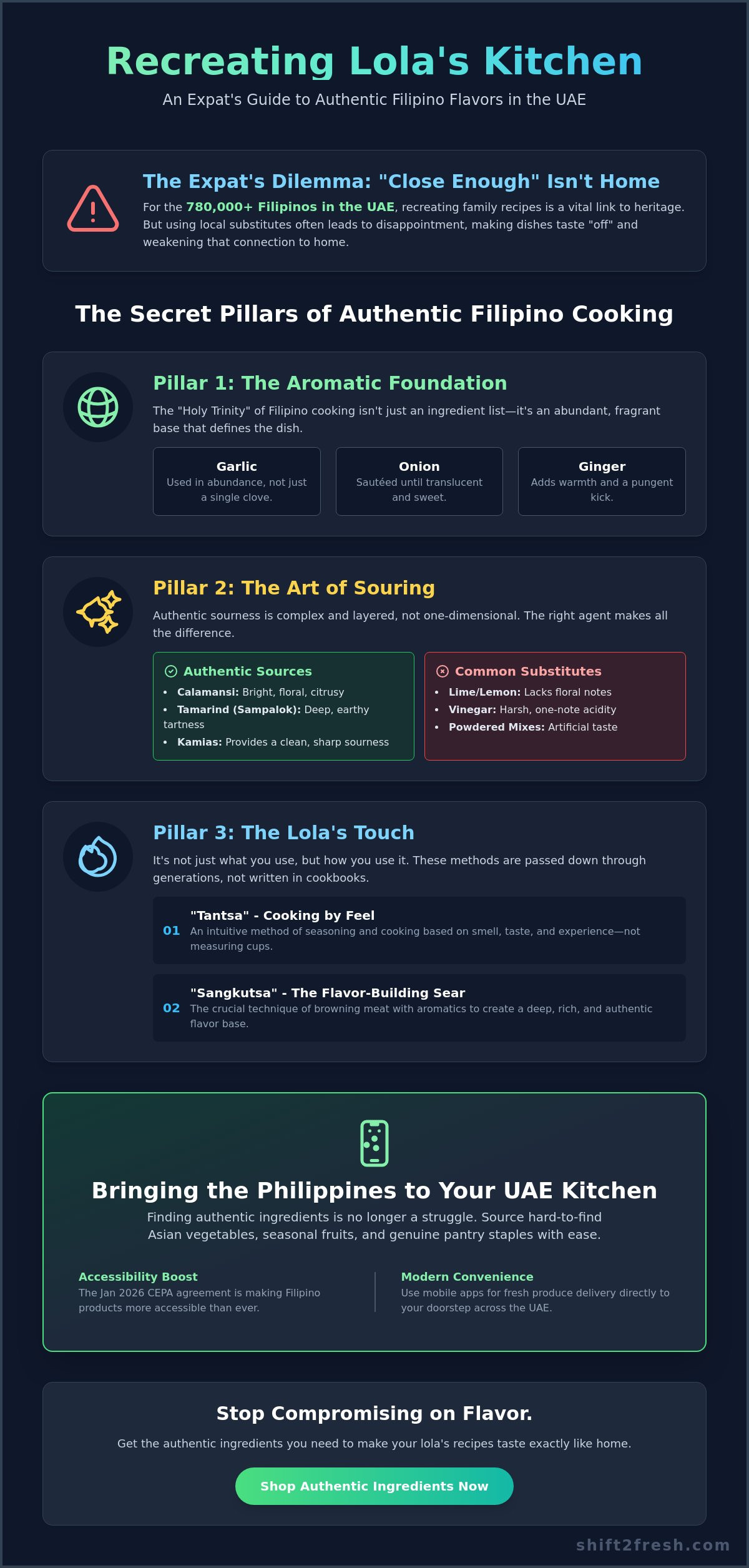
In the Philippines, the Lola is often the undisputed matriarch of the kitchen. She doesn’t usually rely on measuring cups or digital scales. Instead, she uses “tantsa,” a method of cooking by feel, smell, and intuition. This makes making my lola’s recipe a unique challenge for the next generation. You aren’t just learning a technique; you’re trying to capture her “pagmamahal” (love), which is widely considered the most important ingredient in any Filipino home.
- Oral Tradition: Most family secrets are passed down through observation rather than written notes.
- Intuitive Seasoning: Learning when to add the patis by the way the steam smells as it rises from the pot.
- Regional Heritage: Each family’s recipe tells a story of their province, from the coconut-rich dishes of Bicol to the sour profiles of Central Luzon.
The Struggle of the UAE Expat Chef
The transition from the tropical humidity of the Philippines to the arid climate of Dubai or Abu Dhabi changes more than just your lifestyle. It changes how you cook. Recreating these recipes becomes a struggle when you’re forced to use non-traditional substitutes. A standard supermarket lime might provide acidity, but it lacks the floral, citrusy soul of a fresh calamansi. For the 780,000 Filipinos living in the UAE, finding authentic produce is a psychological necessity. Cooking traditional food is a vital tool for mental well-being. It helps overseas workers combat homesickness and maintain their identity in a fast-paced, globalized environment.
The Secret Pillars of Authentic Filipino Cooking
Authenticity isn’t just about following a sequence of steps. It’s about the specific foundations that give a dish its soul. When making my lola’s recipe, you can’t simply swap one vegetable for another and expect the same emotional result. Filipino cooking is a plateful of history, built on pillars of specific flavors and textures that define our culinary identity. The structural integrity of a dish like Pinakbet, for instance, depends entirely on using Essential Asian Vegetables rather than Western substitutes that may turn mushy or lack the necessary bitterness.
The first pillar is the “Holy Trinity” of Filipino aromatics: garlic, onion, and ginger. In our kitchens, we don’t just use a single clove of garlic; we use an abundance of it. These aromatics must be sautéed until they’re fragrant and translucent, creating a savory base that carries the rest of the ingredients. Texture is equally vital. The specific snap of a fresh sitaw (yardlong bean) or the dense, earthy creaminess of real ube provides a mouthfeel that standard green beans or purple sweet potatoes simply cannot replicate. You can find these authentic ingredients delivered across the UAE to ensure your kitchen stays stocked with the right building blocks.
Souring and Seasoning the Traditional Way
In Filipino cuisine, souring is an art form. While bottled extracts or powders are convenient, they lack the complex, floral acidity of fresh Filipino fruits. Using real tamarind, calamansi, or kamias provides a bright, layered tartness that defines Sinigang or Paksiw. Balancing this acidity requires a careful hand with patis (fish sauce) or bagoong (shrimp paste). These fermented seasonings add umami and saltiness without the one-dimensional bite of table salt. Fresh produce is always superior because it releases its natural juices into the broth, creating a richer, more cohesive flavor profile.
The Importance of Native Produce Varieties
Specific varieties of produce behave differently during the cooking process. A Filipino eggplant (talong), for example, has a thinner skin and a more delicate flesh than the large European varieties found in most UAE supermarkets. This difference is crucial for a perfect Tortang Talong, as the native variety chars more evenly and absorbs the egg mixture better. Similarly, the intense, floral sweetness of Philippine mangoes is essential for traditional desserts. Understanding Seasonal Filipino Fruits helps you know when to prepare certain heritage recipes that rely on peak ripeness for their signature taste.
Recreating the Magic in the UAE: Overcoming Common Hurdles
The most common obstacle when making my lola’s recipe in Dubai or Sharjah is the hunt for the right produce. You’ve likely stood in a massive supermarket aisle, staring at a “generic” Asian section that treats all Eastern flavors as interchangeable. This is where many home cooks falter. A lemon is not a substitute for the floral tang of a calamansi, and a standard purple sweet potato won’t provide the starchy richness of real ube. These subtle differences are what separate a “good” meal from a true taste of home.
Understanding the history of Filipino cuisine helps explain why these specific varieties matter so much. Our food is a complex blend of Malay, Chinese, and Spanish influences, each requiring precise ingredients to hit the right notes. Relying on specialists who prioritize Philippine import standards is the only way to ensure your Sinigang has that authentic pucker. Fortunately, modern logistics now make it possible to get delicate items like fresh Lansones or Durian delivered straight to your door via mobile app, bypassing the hit-or-miss quality of local retail shelves.
Identifying True Filipino Ingredients
Spotting the real deal requires a keen eye. When you’re looking for Calamansi, ignore the larger, tougher citrus fruits often mislabeled in stores. True Calamansi are small, usually about the size of a large marble, with thin, smooth skin that’s heavy with juice. For root vegetables like ube, don’t be fooled by uniform, clean-looking tubers. Authentic ube often has a rough, bark-like exterior and should feel firm to the touch. If you’re making my lola’s recipe for a special occasion, sourcing from specialists who understand these nuances ensures you aren’t wasting hours on a dish that tastes “off” because of poor-quality substitutes.
Building Your UAE Filipino Pantry
Having a well-stocked pantry is the secret to spontaneous Filipino feasts. While fresh Asian vegetables are the stars, you need reliable dry goods to back them up. You should keep essential vinegars, soy sauces, and fermented pastes on hand to complement your fresh deliveries. It’s helpful to consult a philippine supermarket guide to identify which brands offer the most traditional flavor profiles.
Maintaining freshness in the UAE heat is another hurdle. Tropical produce is sensitive to the extreme temperature shifts between the outdoors and your air-conditioned kitchen. Store your leafy Asian vegetables in the crisper drawer wrapped in a damp paper towel. For fruits like mangoes or durian, keep them in a cool, dark spot until they reach peak ripeness, then move them to the fridge to extend their life. These small steps ensure your ingredients stay Lola-approved until they hit the pot.
Pro-Tips for Replicating Lola’s Signature Flavours
Making my lola’s recipe requires a level of patience that modern, fast-paced cooking often ignores. While many viral videos suggest cooking on high heat to save time, the soul of Filipino food lies in the transition of flavours during a slow simmer. One of the most critical techniques to master is the “Sangkutsa.” This involves browning your meat and sautéing it with an abundance of aromatics before adding any liquid. This process allows the natural oils from the garlic, onions, and ginger to meld with the meat’s fats, creating a savoury foundation that boiling alone can never achieve.
Traditional recipes often fail when the heat is too high. In a dish like Adobo, a “low and slow” approach is the only way to ensure the vinegar mellows into a complex glaze rather than remaining sharp and acidic. You should also adopt the “Taste as You Go” rule. Instead of dumping your seasonings in all at once, adjust your patis and calamansi in small increments. This allows you to account for the specific potency of your fresh ingredients. To get the best results, use heavy-bottomed pans or a traditional clay pot (palayok) if available, as they distribute heat more evenly. Order your Filipino pantry items and fresh aromatics today to start practicing these heritage techniques with the right tools.
The Art of Souring (Pang-asim)
For a truly authentic Sinigang, avoid the temptation of instant mixes. To extract juice from fresh tamarind, boil the pods until they are soft, then mash them through a fine-mesh sieve into your broth. This method provides a bright, floral tartness that bottled extracts lack. Layer your sourness by adding a small amount at the beginning and finishing with a fresh squeeze of calamansi just before serving. The perfect sour is a balance of fruit acidity and savoury broth.
Achieving the Correct Texture
Texture is just as important as taste. When preparing Pinakbet, add your vegetables in stages. Start with the hardier squash and bitter melon, adding the okra and sitaw last to prevent them from becoming mushy. If you are making traditional desserts like Biko, ensure you use high-quality black glutinous rice to achieve that signature “sticky” but distinct grain consistency. For Lechon Kawali, the secret is air-drying the pork skin in the fridge overnight before frying. This ensures the skin becomes incredibly crispy while the meat inside remains tender and juicy.
Sourcing Your Ingredients: Bringing the Philippines to Your UAE Kitchen
The final hurdle in making my lola’s recipe is often the most practical one: where do you find the ingredients that meet a grandmother’s exacting standards? While generic supermarkets in Dubai and Sharjah have expanded their international sections, they often lack the depth required for true heritage cooking. Shift 2 Fresh acts as the vital bridge between Philippine farms and your UAE home. With 45 years of industry experience, the team understands the nuances of “Lola-grade” produce, selecting only the items that would pass the test in a traditional Filipino wet market. Sourcing from a specialist Online Supermarket guarantees that you aren’t just buying food; you’re buying the correct varieties that define our culinary culture.
For busy professionals living in the heart of the city, the convenience of mobile app ordering removes the stress of hunting through multiple stores for a single bag of calamansi or a specific brand of soy sauce. Because all food products imported into the UAE must comply with strict Gulf Standardization Organization (GSO) standards, including specific labeling and registration with the Dubai Municipality, buying from a trusted specialist ensures your pantry is stocked with safe, authentic, and high-quality goods. This reliability allows you to focus on the cooking process rather than the logistics of the search.
From the Philippines to Your Doorstep
The journey of specialty items like Lansones and Durian from Southeast Asia to the Middle East is a delicate one. Shift 2 Fresh manages this logistics chain with careful quality control, ensuring that even the most fragile seasonal fruits arrive in peak condition. Whether you’re in a high-rise in Dubai or a family villa in Sharjah, you can access the same produce you’d find in Davao or Laguna. To make family feast preparations even easier, the service offers free shipping on larger orders. This is particularly helpful when you’re stocking up on heavy pantry staples and a variety of Asian vegetables for a weekend celebration with the community.
Start Your Culinary Journey Today
We encourage you to pick just one dish to master this weekend. Perhaps it’s the Adobo you’ve been craving or the Sinigang that reminds you of rainy days back home. The Shift 2 Fresh app makes it simple to find specialty items that are usually hard to track down, such as authentic tablea for Champorado or guinamos for your vegetable dishes. Don’t let the distance from the Philippines stop you from making my lola’s recipe with the precision it deserves. Download the Shift 2 Fresh app and start making your Lola’s recipe today to bring the authentic taste of home into your UAE kitchen.
Bring the Taste of Home to Your UAE Kitchen
Mastering the art of Filipino cuisine while living abroad is about more than just satisfying a craving; it’s about preserving a legacy. By focusing on the “Holy Trinity” of aromatics and respecting traditional techniques like the slow-simmered sangkutsa, you can bridge the distance between the UAE and the Philippines. You’ve learned that the secret to success lies in the details, specifically using the correct varieties of Asian vegetables and seasonal fruits that define our heritage flavors.
Making my lola’s recipe becomes much simpler when you have a reliable partner in the kitchen. With over 45 years of food industry experience, Shift 2 Fresh acts as a specialist in authentic Filipino and South Asian produce. You don’t have to settle for “close enough” substitutes when you can access the real deal through a convenient mobile app. Order your authentic Filipino ingredients from Shift 2 Fresh now and enjoy fresh delivery across the UAE. Your grandmother’s kitchen is closer than you think, and the next great family meal is just one order away.
Frequently Asked Questions
Can I use lemon if I cannot find calamansi for my Lola’s recipe?
Lemon is a poor substitute because it lacks the distinct floral aroma and specific acidity levels found in calamansi. While lemon provides sourness, it doesn’t have the same citrus-sweet balance required for authentic dipping sauces or marinades. When you’re making my lola’s recipe, using the real fruit is essential to achieving that nostalgic, home-cooked flavor profile.
How long does it take for Filipino produce to be delivered in the UAE?
Delivery times for fresh produce depend on your specific location in Dubai, Sharjah, or other emirates. Most specialized mobile apps prioritize speed to ensure that Asian vegetables and seasonal fruits remain fresh upon arrival. It’s best to check the available delivery slots within your area through the Shift 2 Fresh app for the most accurate timing.
What are the most essential Filipino pantry items to keep in a UAE kitchen?
A traditional kitchen should always be stocked with cane vinegar, soy sauce, fish sauce (patis), and shrimp paste (bagoong). You’ll also need coconut milk, bay leaves, and peppercorns for stews. These Filipino pantry items are the building blocks for most heritage dishes and allow you to cook authentic meals whenever the craving strikes.
How do I know if the ube I am buying is authentic and not just a purple potato?
Authentic ube has a rough, dark brown, bark-like skin and a deep purple flesh that is starchier and more aromatic than a standard purple sweet potato. Purple potatoes usually have smoother skin and a different sugar content that can make desserts too watery. Always look for the textured, “hairy” exterior of genuine Philippine yams to ensure the correct consistency.
Is it possible to find fresh sitaw and ampalaya in Dubai supermarkets?
Yes, fresh sitaw (yardlong beans) and ampalaya (bitter melon) are widely available through specialized Filipino retailers and mobile ordering services. While some large supermarket chains carry generic bitter gourds, sourcing from a specialist ensures you get the specific Philippine varieties. These native vegetables have the correct snap and bitterness levels required for traditional recipes like Pinakbet.
What is the secret to making a traditional Filipino Adobo taste authentic?
The secret lies in the “low and slow” braising method and not stirring the vinegar until it has fully boiled off its raw sharpness. This patience allows the sauce to emulsify with the meat’s natural fats, creating a rich glaze. This technique is vital when making my lola’s recipe if you want to replicate that complex, savory balance she mastered.
Can I find ingredients for Filipino desserts like Halo-Halo on Shift 2 Fresh?
Yes, you can find a variety of components for Halo-Halo including preserved fruits and other essential Filipino pantry items. These are perfect for pairing with fresh, seasonal Filipino fruits to create a cooling summer treat. Using authentic preserved beans and jellies ensures your dessert has the traditional layers of flavor and texture found in the Philippines.
Why does my Sinigang taste different when I use a powder mix instead of fresh tamarind?
Fresh tamarind provides a layered, floral tartness and a thicker body to the broth that instant powders simply cannot match. Powdered mixes often rely on citric acid and high salt content, which results in a one-dimensional sourness. Boiling and mashing fresh tamarind pods releases natural pectins that give the soup a richer, more authentic mouthfeel.
0 comments