

What if the secret to fighting lifestyle diseases in the UAE isn’t found in a trendy salad bar, but buried within your lola’s traditional kitchen? Many of us in the Dubai and Sharjah expat community have grown to believe that Pinoy cuisine is strictly “brown, fried, and meat-heavy.” It’s easy to feel this way when lechon and crispy pata dominate every fiesta, making it seem impossible to find healthy filipino recipes with fresh vegetables that actually taste like home.
The truth is that traditional Filipino food is rooted in the “Bahay Kubo” philosophy of nutrient-dense, plant-forward eating. You don’t have to sacrifice your heritage to lower your cholesterol or manage your blood sugar. With retail vegetable prices in the UAE typically ranging from AED 2.89 to AED 3.95 per kilogram, eating well is more accessible than you might think. In this article, you’ll discover how authentic home-cooked meals offer surprising health benefits when you look beyond the deep fryer. We will identify Philippine superfoods like malunggay and ampalaya, explore how to balance your plate with indigenous greens, and show you exactly where to source fresh calamansi and ube across the Emirates.
Key Takeaways
- Learn the difference between high-calorie “Fiesta Food” and nutrient-dense “Everyday Ulam” to reclaim the healthy roots of Pinoy cooking.
- Discover how to prepare healthy filipino recipes with fresh vegetables like malunggay and ampalaya that serve as potent, natural superfoods.
- Identify traditional dishes like Sinigang and Pinakbet that naturally support digestion and provide essential fiber for a balanced diet.
- Master the “Sawsawan” culture and the use of fresh aromatics to reduce sodium and unhealthy fats while keeping authentic flavors alive.
- Find out how to easily source seasonal Philippine fruits and Asian vegetables in the UAE to ensure your home-cooked meals are always fresh.
The ‘Unhealthy’ Stigma: Why Filipino Cuisine is Often Misunderstood
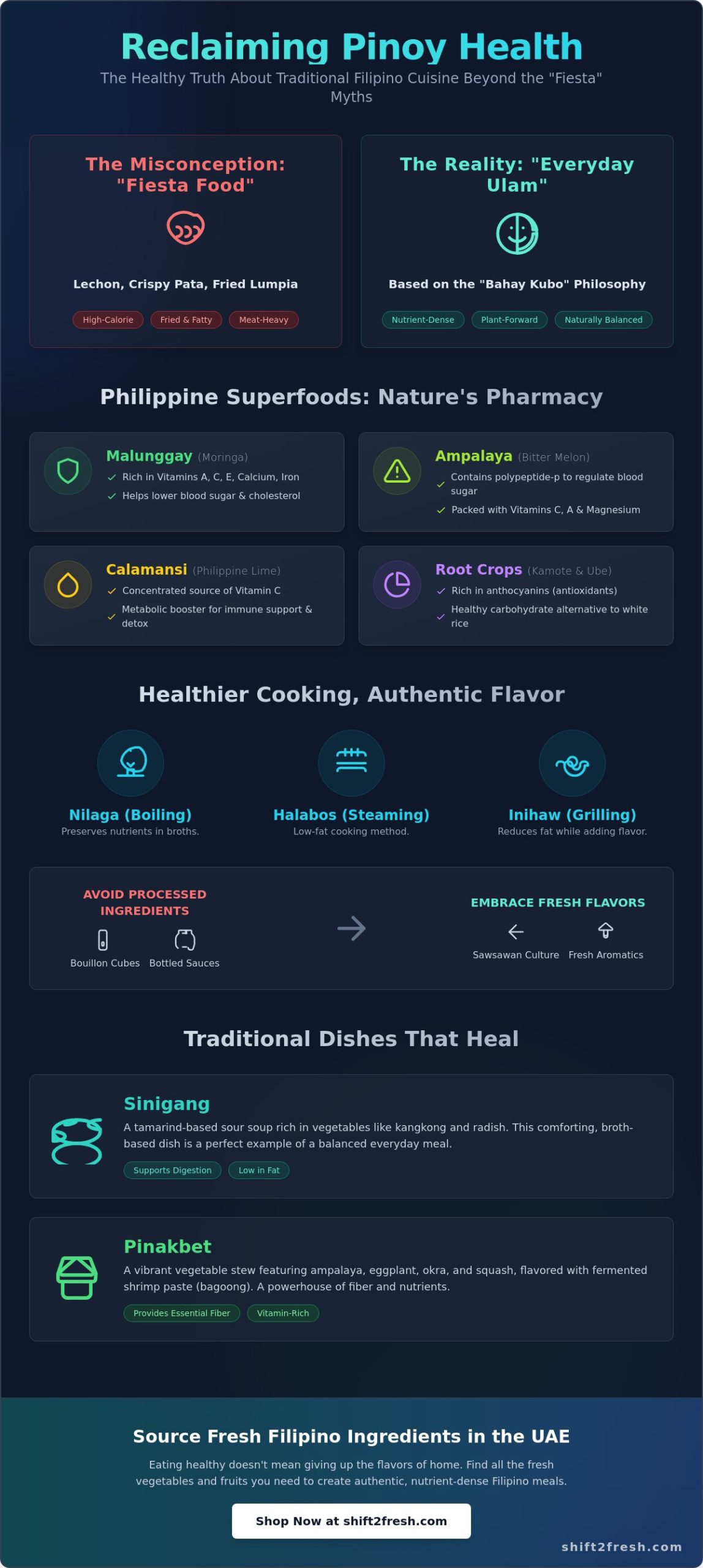
The global reputation of Pinoy food often boils down to a single, greasy image: a plate of lechon, fried lumpia, and a mountain of white rice. This “unhealthy” stigma is a major hurdle for many kabayan in the UAE who want to maintain a balanced lifestyle while staying connected to their roots. However, the idea that our food is inherently bad for the heart or waistline is a misunderstanding born from looking at celebration menus rather than daily reality. Finding healthy filipino recipes with fresh vegetables is the first step toward debunking the myth that our heritage is just “brown” or “fried.”
Much of the confusion stems from the historical evolution of Filipino cuisine. While ancestral diets focused on what could be foraged, fished, or farmed, colonial influences and the rise of modern food processing introduced an excess of refined sugars and high-sodium preservatives. We’ve traded fresh-squeezed coconut milk for canned versions and replaced slow-fermented pastes with bottled sauces loaded with MSG. Reclaiming your health means looking past the “fiesta” facade and embracing the vibrant, colorful regional dishes that have always existed in the archipelago. The healthiness of our meals depends entirely on the quality of the ingredients and the methods used in the kitchen.
Fiesta Food vs. Everyday Home Cooking
It’s unfair to judge a whole culture’s nutrition based on its party food. You wouldn’t eat a whole Crispy Pata every Tuesday. In a traditional home setting, the “Everyday Ulam” is often a simple, broth-based dish or a quick vegetable stir-fry. Historically, rice was a precious side dish rather than the main event. Ancestral cooking relied heavily on boiling (nilaga), steaming (halabos), and charcoal grilling (inihaw). These methods preserve the integrity of the produce and keep fat content low, proving that healthy filipino recipes with fresh vegetables are actually the backbone of our culture.
The Impact of Processed Ingredients
The shift from farm-to-table cooking to supermarket convenience has significantly impacted the Pinoy diet. Many modern cooks rely on high-sodium bouillon cubes and refined sauces that mask the natural sweetness of the earth. You can easily pivot back to wellness by choosing Essential Asian Vegetables over processed fillers. Returning to fresh aromatics like ginger, garlic, and onions provides that signature umami without the blood pressure spikes associated with modern pantry staples. Reclaiming health starts with what you put in your basket.
Nutritional Powerhouses: Healthy Filipino Fruits and Vegetables
Malunggay, or Moringa, is often hailed as a global superfood in Western wellness circles, yet it has been a humble staple in Pinoy backyards for generations. This leafy powerhouse is a rich source of vitamins A, C, and E, as well as calcium, potassium, and iron. Research indicates it may help lower blood sugar and cholesterol levels, making it an essential addition to any meal. Similarly, the tiny calamansi is more than just a souring agent for pancit. It acts as a concentrated source of Vitamin C and a potent metabolic booster that aids in detoxification and immune support.
For those managing their glucose levels, ampalaya (bitter melon) is a scientific marvel. It contains a specific compound known as polypeptide-p, which mimics the action of insulin to help regulate blood sugar naturally. It is also packed with vitamins C and A, alongside essential minerals like magnesium and potassium. When you swap out refined carbohydrates for root crops like kamote (sweet potato) and ube (purple yam), you’re choosing fuel rich in anthocyanins. These antioxidants give these tubers their vibrant colors and help combat oxidative stress in the body. You can find these nutrient-dense staples by browsing the Asian vegetables section at Shift 2 Fresh.
Philippine Leafy Greens and Their Benefits
Leafy greens like saluyot and pechay are high-fiber heroes that support digestive health and keep you feeling full longer. Kangkong, or water spinach, is particularly abundant in vitamins A, C, and K, while staying incredibly low in calories. Incorporating these into healthy filipino recipes with fresh vegetables is a simple way to boost your iron and beta-carotene intake. For those looking to transition their kitchen habits, these Heart-Healthy Filipino Recipes provide excellent guidance on using these greens effectively.
Exotic Fruits as Functional Foods
Sourcing Seasonal Filipino Fruits is vital for maintaining high antioxidant levels. Guyabano (soursop) is traditionally used for anti-inflammatory support, while lansones and longan serve as natural energy boosters rich in essential minerals. These fruits aren’t just snacks; they are functional foods that offer a healthy, fiber-rich alternative to the processed, sugary desserts often found in local markets. Choosing fresh fruit over canned sweets is one of the easiest ways to improve your daily nutrition without losing the flavors of home.
Traditional Dishes That Are Secretly Good for You
If you look past the crispy skin of lechon, you’ll find that the heart of the Filipino table is actually a bowl of steaming broth. Many everyday meals are naturally healthy filipino recipes with fresh vegetables that have been nourishing families for centuries. Take Ginisang Monggo, for example. This savory mung bean stew is a high-protein, plant-based staple that is remarkably heart-healthy. When cooked with shrimp and topped with fresh ampalaya leaves, it provides a balanced profile of fiber and minerals without the heavy fats found in festive meats.
Nilaga is another unsung hero of the Pinoy kitchen. While it’s often viewed as a simple beef or pork soup, the slow-simmering process creates a bone-broth base rich in essential collagen and minerals. By loading the pot with kalabasa (squash), pechay, and green beans, you turn a simple stew into a nutrient-dense powerhouse that supports joint health and skin elasticity. These dishes prove that you don’t need to reinvent the wheel to eat well; you just need to return to the basics of home cooking.
The Magic of Sinigang
Sinigang is arguably the most beloved comfort food in the Philippines, and its health benefits are just as impressive as its flavor. The tamarind base is nutritionally superior to cream-based Western soups because it promotes hydration and aids digestion through its natural acidity. Including radish, okra, and eggplant creates a low-glycemic meal that keeps your energy levels stable throughout the day. To keep your Sinigang as healthy as possible, try reducing added salt and instead rely on the natural “asim” or sourness of the tamarind to carry the flavor profile.
Vegetable-Centric Classics
For those seeking a masterclass in eating the rainbow, Pinakbet is the answer. It utilizes indigenous vegetables like sitaw (string beans) and winged beans, which are packed with fiber and antioxidants. In the Ilocos region, Diningding is often cited as a secret to local longevity. This dish consists of steamed, oil-free vegetables flavored only with a small amount of fermented fish paste. You can also explore Laing, where taro leaves are slow-cooked in coconut milk to provide healthy fats and significant fiber. To elevate your home-cooked healthy filipino recipes with fresh vegetables, consider stocking up on Filipino Pantry Items like tablea, which can be used in unique savory sauces for a boost of heart-healthy antioxidants.
How to Cook Healthy Filipino Meals in the UAE
Cooking in the desert heat requires a shift in mindset, especially when you’re trying to maintain the integrity of delicate produce. While it’s tempting to stock up on frozen goods, fresh ingredients are non-negotiable for maximum nutrient retention. When you choose healthy filipino recipes with fresh vegetables, you’re ensuring that your body receives the full spectrum of vitamins that often degrade during the freezing process. Start by adopting the “Pinggang Pinoy” model, a visual guide that suggests filling half your plate with fruits and vegetables, one-quarter with proteins, and only one-quarter with energy-giving whole grains.
One of the easiest ways to slash calories and unhealthy fats is to lean into our vibrant “Sawsawan” culture. Instead of deep-frying your proteins, try grilling or steaming them. You can compensate for the lack of oil by creating complex dipping sauces using fresh aromatics like ginger, garlic, and onions. These ingredients provide that deep umami flavor we crave without the need for excessive salt or bottled bouillon cubes. Using fresh aromatics not only improves the taste but also offers anti-inflammatory benefits that are essential for long-term health.
Smart Kitchen Substitutions
Small changes in your pantry can lead to significant health outcomes. Swap out bottled, synthetic vinegars for the juice of fresh Calamansi to get a natural hit of Vitamin C and a cleaner acidity. If you love Sinangag (garlic fried rice), try using brown rice or even cauliflower rice. These alternatives have a lower glycemic index, preventing the energy crashes often associated with white rice. To help you navigate the aisles, we’ve put together a Philippine Supermarket guide to help you build a nutrient-dense shopping list.
Managing Health in the UAE Climate
Staying hydrated in Dubai or Sharjah is a constant challenge. You can make hydration more enjoyable by creating fruit-infused waters using Philippine produce like guyabano or pomelo. During the hottest months, light and soupy dishes like Tinola are perfect for staying cool and replenished. The ginger-based broth is soothing and helps replace electrolytes lost through sweat. Since finding the time to shop in person can be difficult for busy expats, using an Online Supermarket Dubai service ensures you always have the right ingredients for healthy filipino recipes with fresh vegetables without having to brave the midday sun.
Ready to transform your kitchen with authentic flavors? You can order fresh Asian vegetables and seasonal fruits today to start cooking cleaner, healthier meals for your family.
Sourcing Fresh Filipino Ingredients with Shift 2 Fresh
Many expats in the UAE struggle to find the crisp, vibrant produce needed for healthy filipino recipes with fresh vegetables. It’s common to find wilted greens or frozen substitutes in generic supermarkets, which can be discouraging when you’re trying to eat better. Shift 2 Fresh acts as a direct bridge between the rich volcanic soils of Philippine farms and your kitchen in Dubai or Sharjah. With 45 years of logistical experience, the brand ensures that the journey from the farm to your table is as swift as possible. This speed is essential for preserving the delicate flavor and medicinal properties of every leaf and fruit you consume.
Authentic home cooking relies on the quality of the raw ingredients. When you’re preparing a traditional Pinakbet or a nutrient-dense Monggo stew, the snap of a fresh string bean or the firm texture of a bitter melon makes all the difference. By cutting out unnecessary middle-men, Shift 2 Fresh provides a level of quality that’s often missing in the local market. This direct-to-home model means you’re getting produce that hasn’t spent weeks sitting in a warehouse, ensuring your family gets the most out of every meal.
Freshness as a Nutrient Guarantee
Freshness isn’t just about taste; it’s a fundamental requirement for nutrition. Studies show that vegetables lose a significant portion of their vitamins, particularly Vitamin C and B-complex, within days of being harvested if not handled correctly. By prioritizing seasonal availability, you’re consuming produce at its peak nutrient density. Specialty items like Lansones and Durian are best when sourced during their natural harvest cycles to ensure you get the full benefit of their antioxidants. For those who want to elevate their home cooking to a professional level, accessing Gourmet Food Delivery Dubai provides restaurant-quality ingredients that make healthy eating a luxury rather than a chore.
Convenience for the Health-Conscious Expat
Balancing a demanding career in the UAE with a healthy diet is a major pain point for the community. The Shift 2 Fresh mobile app simplifies this by allowing you to plan your meals and order your healthy filipino recipes with fresh vegetables with just a few taps. You don’t have to spend your weekends searching for a specific Grocery Store Near Me that might not even have what you need. Instead, you can have authentic Asian vegetables and pantry items delivered directly to your doorstep.
Stocking up on healthy staples is even more cost-effective when you utilize the free shipping offer on orders over AED 500. This makes it easier to keep your pantry filled with essential aromatics and seasonal fruits throughout the month. Taking the first step toward a healthier lifestyle doesn’t require a radical change in your cultural identity. It simply requires better ingredients. By choosing genuine Philippine produce, you’re not just cooking a meal; you’re investing in your long-term wellness while keeping the flavors of home alive in the heart of the UAE.
Reclaiming Your Health Through the Flavors of Home
You’ve seen that Pinoy cuisine is far more than just “brown” or fried fiesta favorites. By returning to ancestral cooking methods and focusing on nutrient-dense superfoods like malunggay and ampalaya, you can enjoy healthy filipino recipes with fresh vegetables right here in the UAE. The secret lies in the quality of your ingredients and moving away from high-sodium, processed shortcuts that have clouded the reputation of our traditional dishes for too long.
With over 45 years of food industry expertise, Shift 2 Fresh makes this transition easy. We provide direct imports of seasonal favorites like Lansones and Calamansi, ensuring you get the highest nutrient density possible delivered straight to your door. You can also take advantage of free delivery on orders over AED 500, making it simple to stock your kitchen with authentic, life-giving produce. It’s time to let your kitchen reflect the vibrant, healthy traditions of the Philippines. Shop Fresh Filipino Produce at Shift 2 Fresh Today and start your journey toward a more balanced, authentic lifestyle.
Frequently Asked Questions
Is Filipino food high in cholesterol?
Filipino food is not high in cholesterol by default; the issue lies in modern cooking methods and fatty meat choices. While “fiesta” dishes like lechon are high in saturated fats, everyday “ulam” such as vegetable-heavy stews are naturally heart-healthy. You can keep cholesterol levels in check by using lean proteins like fish or chicken breast and choosing boiling or steaming over deep-frying.
Can I eat Filipino food if I have diabetes?
You can definitely enjoy Filipino food with diabetes by prioritizing fiber-rich vegetables and lean proteins. Focus on dishes like Pinakbet or Ginisang Ampalaya, as bitter gourd contains compounds that help manage blood sugar levels. Managing portion sizes of carbohydrates and opting for brown rice instead of white rice helps maintain stable glucose levels while you explore healthy filipino recipes with fresh vegetables.
What are the healthiest Filipino vegetables to eat daily?
Malunggay, kangkong, and pechay are among the best vegetables to consume daily for maximum nutrition. These greens are packed with vitamins A, C, and K, as well as essential minerals like iron and calcium. Incorporating these into healthy filipino recipes with fresh vegetables ensures a high intake of antioxidants and fiber, which are vital for digestive health and long-term disease prevention across the expat community.
Is white rice a mandatory part of a healthy Filipino meal?
White rice is a traditional staple, but it isn’t a mandatory part of a healthy Filipino meal. You can easily replace it with high-fiber alternatives like brown rice, red rice, or even cauliflower rice for a lower-calorie option. Root crops like boiled kamote also provide a slow-releasing energy source that is much more nutrient-dense than refined white grains, helping you stay full for longer.
How can I reduce the salt content in traditional Filipino recipes?
You can reduce sodium by swapping out heavy amounts of patis or bagoong for fresh aromatics and citrus. Use generous amounts of ginger, garlic, onions, and fresh calamansi juice to provide deep umami and tang without the extra salt. Experimenting with healthy filipino recipes with fresh vegetables allows the natural flavors of the produce to shine, reducing the need for high-sodium bottled seasonings and processed flavor cubes.
Where can I buy fresh Filipino produce in Dubai and Sharjah?
You can find authentic, farm-fresh Philippine produce in Dubai and Sharjah through specialized online platforms like Shift 2 Fresh. They offer a direct bridge from Philippine farms to UAE doorsteps, ensuring that items like calamansi, saba bananas, and Asian greens arrive fresh. Using their mobile app makes it easy for busy families to source seasonal items that are often unavailable in local generic supermarkets.
Is the coconut milk used in Filipino food healthy?
Coconut milk, or gata, is healthy when consumed in moderation as part of a balanced diet. It contains medium-chain triglycerides, which the body uses for quick energy. To keep your “ginataan” dishes healthy, try to use fresh coconut milk rather than canned versions that may contain stabilizers or added thickeners. Pair it with plenty of fiber-rich vegetables like squash and string beans to balance the meal.
What is the ‘Pinggang Pinoy’ healthy eating model?
The ‘Pinggang Pinoy’ model is a visual food guide developed by the Department of Science and Technology to help Filipinos eat a balanced diet. It recommends filling half of your plate with “Glow” foods like fruits and vegetables. The remaining half should be split equally between “Go” foods, which are carbohydrates, and “Grow” foods, which are proteins, ensuring you receive all necessary nutrients in a single sitting.
0 comments