

The fastest way to thicken peanut sauce isn’t always to turn up the heat. If yours is runnier than expected, choose a fix based on what’s in the sauce and how you plan to serve it. Learning how to thicken peanut sauce gradually helps you get a smooth sauce that clings to food without overwhelming its rich peanut flavor.
A thin sauce can leave you wondering whether to add peanut butter, simmer it, or use a thickener. Adding too much at once can make it lumpy or overly rich. Small adjustments let you check the texture and flavor as you go.
This guide covers simple fixes for homemade, warm, and already-served peanut sauce. Find out when to add peanut butter, gently reduce the sauce, use a cornstarch slurry, or let it cool and thicken naturally. You’ll also learn how to smooth out lumps and rebalance the flavor before serving.
Key Takeaways
- Decide whether you need a dip, dressing, noodle sauce, or satay sauce before adjusting the consistency.
- Choose a thickening method based on the sauce’s temperature and how loose it is.
- Compare gentle reduction, extra peanut butter, and a cornstarch slurry to find the right fix.
- Add thickening ingredients gradually, stirring and checking the texture between additions.
- Use small adjustments to correct sauce that is too thick, bland, or lumpy.
Why Is Your Peanut Sauce Too Thin? Start With the Texture
A thin peanut sauce usually doesn’t need to be remade. First decide how you want it to behave. Should it coat a spoon, cling to a skewer, or flow easily over noodles? Setting a target makes it easier to work out how to thicken peanut sauce without making it heavier than the dish needs.
There’s no single correct consistency. Peanut sauce has many regional variations, and recipes differ in their ingredients and intended uses. A satay dip can be thick and scoopable, while a noodle sauce needs to pour and spread easily. A dressing should be looser still, so it coats ingredients without forming a dense layer.
What consistency should peanut sauce have?
For dipping, aim for a sauce that clings to food but still comes off a spoon easily. A dressing should run in a steady ribbon and lightly coat a spoon, rather than sit in a mound. For noodles, look for a middle ground: fluid enough to toss through the strands, but thick enough to cling instead of pooling at the bottom of the bowl.
Why does peanut sauce turn out runny?
Too much added liquid is a common cause. Water, coconut milk, lime juice, or another liquid can loosen the mixture, especially when added generously instead of a little at a time. Warm sauce can also look thinner than it will after cooling slightly. Check the recipe’s measurements and proportions before deciding what to add.
Stir the sauce thoroughly before changing it. Ingredients can settle or separate, making the texture seem uneven. Mixing them helps you judge the sauce as a whole. Let it rest briefly, too. If it’s warm, allow it to cool a little before deciding whether it needs thickening.
Consider how you’ll serve it. A sauce that looks loose in the pan may coat noodles well, while a dip should hold its shape better on a spoon. If it still misses your target after stirring and resting, you’ll have a clearer idea of which adjustment to make.
How Peanut Sauce Thickens: The Role of Peanuts, Heat, and Starch
Once you know the consistency you want, choose an adjustment that suits the sauce. Peanut butter, gentle heat, and starch can all add body, but they work differently. Make one measured change at a time. Adding a handful of dry ingredients can make the sauce pasty, clumpy, or unbalanced.
How peanut butter changes sauce texture
Peanut butter adds solids to the mixture, so the same amount of liquid has less influence on the overall consistency. It also makes the sauce taste more strongly of peanuts. Stir in a small spoonful, mix until fully incorporated, then check the texture before adding more. If the peanut butter is salted or sweetened, taste as you go because it may also change the flavor balance.
Extra peanut butter is useful when you want both a thicker texture and a more pronounced peanut flavor. If you’d rather not change the flavor much, choose another method. Avoid adding dry ingredients at random to fix a thin sauce. They may not blend evenly and can introduce an unintended flavor or texture.
How heat and starch affect consistency
Gentle simmering thickens sauce by letting some liquid evaporate. As it reduces, the existing flavors become more concentrated, too. Keep the heat low and stir often, since peanut butter can scorch if left unattended. The sauce may continue to thicken as it cools, so stop heating when it’s just a little looser than your target consistency.
For a more noticeable thickening effect, mix starch with cool liquid before adding it to hot sauce. This smooth mixture, often called a slurry, disperses more evenly than dry starch stirred straight into the pan. As it heats, the sauce thickens. How starches thicken depends on heating them in liquid. Add the slurry in small amounts and stir well. Too much can make the sauce overly dense or give it an unwanted texture.
Think of each method as a measured adjustment, not a race to thicken the sauce. If you’re exploring Filipino cooking alongside this recipe, find Filipino pantry ingredients from Shift 2 Fresh.
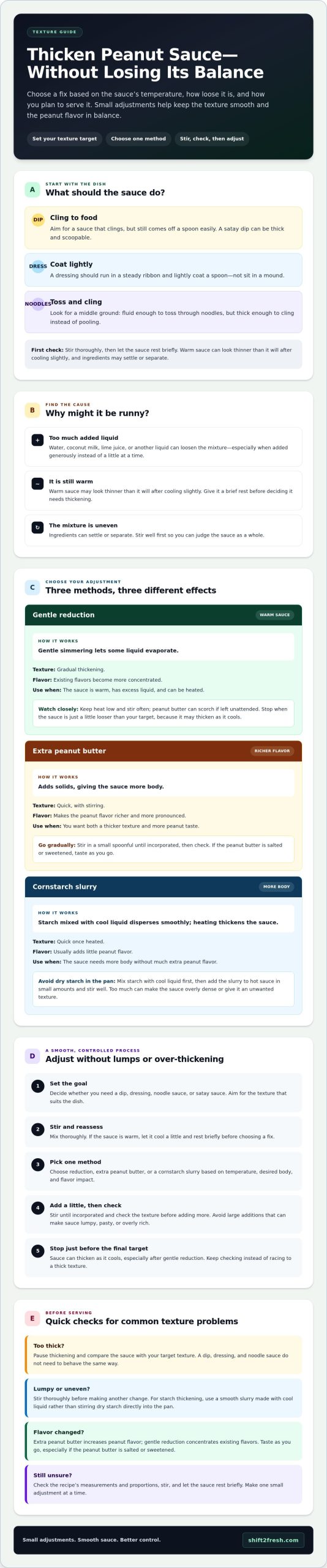
Peanut Sauce Thickening Methods Compared: Which One Should You Use?
The best fix depends on whether the sauce is warm or cooled, how much thicker it needs to be, and whether you want to change its flavor. Use this comparison to choose how to thicken peanut sauce without picking a method that clashes with the recipe.
| Method | Speed | Flavor impact | Best suited to |
|---|---|---|---|
| Gentle reduction | Gradual | Concentrates existing flavors | Warm sauce with excess liquid that can be heated |
| Extra peanut butter | Quick, with stirring | Makes the peanut flavor richer | Sauce that can use more peanut taste and body |
| Starch slurry | Quick once heated | Usually adds little peanut flavor | Sauce that needs more body without much extra peanut taste |
These methods are different approaches, not interchangeable fixes. General methods for thickening sauces include reduction and starch-based options, but the ingredients and serving style of your peanut sauce should guide your choice.
When should you reduce peanut sauce?
Choose reduction if the sauce is warm and contains more liquid than you intended. Keep it at a gentle simmer, stir frequently, and watch the pan so the peanut butter doesn’t stick or scorch. As the liquid evaporates, the sauce thickens, but its existing salt, sweetness, and other seasonings become more concentrated, too. Stop as soon as it reaches the texture you want.
When should you add peanut butter or a starch slurry?
Add peanut butter if a richer peanut taste will suit the dish. A small cornstarch slurry may be a better fit when you want extra thickness without much added peanut flavor. Mix the starch with cool liquid first, then stir a little into the hot sauce and check the result before adding more.
Consider the rest of the recipe before choosing. If coconut milk is a major ingredient, reducing the sauce concentrates its flavor along with the peanut and seasonings. Peanut butter shifts the balance toward peanuts, while a slurry can thicken the sauce without adding much flavor of its own. If the sauce is already cool, heating it just to reduce liquid may be less convenient than adding a thickener gradually.
How to Thicken Peanut Sauce Step by Step Without Lumps
For a smooth result, adjust the sauce in small stages instead of adding a large amount of thickener at once. This step-by-step approach to how to thicken peanut sauce lets you check the texture as you go and stop before the sauce becomes too dense.
- Assess the sauce. Stir it well so separated or settled ingredients are evenly mixed. If it’s warm, let it rest briefly, then check how it coats a spoon or the food you’re serving.
- Choose one method. Use extra peanut butter if a richer peanut flavor suits the recipe, a prepared starch slurry if you want thickness with little extra peanut flavor, or gentle reduction if the warm sauce has excess liquid.
- Test a small amount, if practical. Set aside a spoonful of sauce and mix in a little of your chosen thickener. This gives you a quick sense of how it may affect the flavor and texture before you adjust the whole batch.
- Add gradually and stir. Work in a small amount of peanut butter or slurry, mixing until the sauce looks uniform. For reduction, use gentle heat and keep stirring rather than letting the sauce sit in the pan.
- Pause, then recheck. Let the sauce rest briefly before deciding whether it needs more. Its texture can change as it sits, so judge it against how you plan to serve it, not only how it looks while stirring.
How to prevent lumps and over-thickening
If you’re using starch, whisk it into cool liquid until smooth, then stir that mixture into warm sauce. Don’t sprinkle dry starch directly into the pan. As the sauce heats, stir continuously and scrape the sides and base to keep it from sticking. Stop once it reaches serving consistency, since adding more can quickly make it too thick.
Keep the recipe’s flavor in mind as you adjust. Extra peanut butter can make the sauce richer, while reduction concentrates its existing seasoning. A starch slurry can add body with less change to the peanut flavor, but still needs to be added carefully. For ideas on ingredients used in Asian cooking, read this Filipino pantry ingredients guide.
Shift 2 Fresh also offers Filipino pantry staples for home cooking. Browse Filipino pantry items.
Fix Overly Thick, Bland, or Lumpy Peanut Sauce Before Serving
A sauce that’s too thick, uneven, or a little flat can often be adjusted without starting over. Make one small change at a time, then taste and check the texture before adding anything else. If you’ve been learning how to thicken peanut sauce, the same careful approach can help you correct it in the other direction, too.
How do you thin peanut sauce that became too thick?
Whisk in a little water, coconut milk, or another liquid already used in the recipe. A liquid that fits the sauce is less likely to clash with its flavor. Mix thoroughly after each addition, then check whether the sauce flows or coats food as intended. Avoid pouring in a large amount at once. Extra liquid can loosen the texture quickly and dilute the seasoning.
Once the consistency is right, taste again before adjusting the flavor. If it seems less lively, a small splash of lime juice or rice vinegar can add acidity. If it tastes underseasoned, adjust the saltiness with an ingredient that suits the recipe. Make flavor changes separately from texture adjustments so you can tell what each addition does.
What if the sauce is lumpy or bland?
For minor lumps, whisk vigorously while gently warming the sauce. Heat it slowly and keep stirring so it doesn’t stick. If whisking doesn’t smooth it out, briefly blend the sauce with an immersion blender or countertop blender, taking care with hot liquid. Thorough mixing may also improve a separated or grainy texture.
If the sauce tastes bland, first check whether thinning it has diluted the seasoning. Then adjust in small amounts, tasting between additions. Lime juice or rice vinegar can brighten the flavor, while a little soy sauce or tamari can add saltiness. For sweetness or heat, use a small amount of the sweetener or chilli that suits your recipe.
How do you serve and store adjusted peanut sauce?
Check the sauce at serving temperature, since it can feel thicker after cooling and looser when warm. A dipping sauce should cling to food; one for noodles or vegetables should be fluid enough to coat them. If it thickens while resting, whisk in a compatible liquid before serving and taste once more.
For leftovers, follow the recipe’s food-safety guidance for refrigeration and reheating. Warm the sauce gently and stir as it heats, then reassess its consistency before serving. For more information about Asian grocery delivery, see this Asian grocery delivery guide.
Get Your Peanut Sauce Back on Track
The best way to fix a thin or uneven sauce is to match the adjustment to its texture, temperature, and purpose. Add peanut butter for more body and a richer peanut taste, gently reduce warm sauce to concentrate it, or use a little prepared starch slurry when you want thickness with less flavor change. Whichever method you choose, work gradually, stir well, and taste before making another adjustment.
That steady approach is the key to learning how to thicken peanut sauce without turning a small consistency problem into a flavor one. Let the sauce rest briefly, then check it at the temperature you’ll serve it. If it needs fine-tuning, small changes are easier to manage.
Shift 2 Fresh sells specialty Filipino pantry items through its online store, alongside seasonal produce from the Philippines and South Asia. Explore Filipino pantry items from Shift 2 Fresh for your next home-cooked meal.
Frequently Asked Questions
How can I thicken peanut sauce quickly?
For a quick fix, whisk in a small spoonful of peanut butter, then check the texture before adding more. It thickens the sauce while making the peanut flavor richer. If you want less flavor change, stir a little prepared cornstarch slurry into warm sauce and heat gently until it thickens. Add either option gradually, since the sauce can quickly become too dense.
Can I use cornstarch to thicken peanut sauce?
Yes, cornstarch can thicken peanut sauce. First mix it with an equal amount of cold water until smooth, then whisk a small amount into gently simmering sauce. Stir continuously and give it a couple of minutes to thicken before deciding whether to add more. Don’t add dry cornstarch directly to the sauce, as it can form lumps. Using too much may also affect the texture.
Why is my peanut sauce still runny?
Your sauce may have more liquid than its peanut butter or other solids can balance. Generous additions of water, coconut milk, or lime juice can make it loose, and warm sauce may appear thinner than it will after cooling. Stir it thoroughly, let it rest briefly, and check the recipe proportions before adjusting. If it’s still too runny, choose a thickening method that suits its flavor and serving purpose.
Can I thicken peanut sauce without cooking it?
Yes. Stir in peanut butter a little at a time, mixing fully after each addition, or let the sauce rest or chill briefly so it can firm up as it cools. These approaches avoid heating, though extra peanut butter will make the flavor more pronounced. A starch slurry needs heat to thicken properly, so it isn’t the best choice if you don’t want to cook the sauce.
How do I fix peanut sauce that is too thick?
Whisk in a small amount of water, coconut milk, or another liquid already used in the recipe. Mix well and check the consistency before adding more. Once the sauce flows or coats food the way you want, taste it again because added liquid can dilute the seasoning. If needed, adjust salt, acidity, sweetness, or heat in small increments so the flavor stays balanced.
How do I make peanut sauce smooth instead of lumpy?
Whisk the sauce vigorously, adding any extra liquid gradually rather than all at once. If the lumps persist, warm the sauce briefly while stirring, or use an immersion blender to smooth it out. For a cornstarch thickener, whisk the starch with cold water until smooth before adding it to warm sauce. Stir continuously as it heats, scraping the sides and base of the pan.
Does peanut sauce get thicker as it cools?
Yes, peanut sauce can thicken as it cools, so a warm batch may seem looser than it will at serving temperature. Let it rest briefly before adding a thickener, then check the consistency again. If it becomes too thick after cooling, whisk in a little recipe-compatible liquid. Recheck the flavor afterward, since even a small addition can soften the seasoning.
0 comments