

If you’re wondering why your kare-kare sauce is thin, the usual causes are too much broth, too little peanut or rice thickener, or not enough uncovered simmering to reduce excess liquid. Stir in ground peanuts or a little peanut butter, then simmer gently until the sauce reaches your preferred consistency.
A thin sauce doesn’t mean the dish is ruined, and there’s no single right consistency: kare-kare can be served looser or thicker and stickier. This guide explains how to identify what’s affecting the sauce and choose a practical fix, from adjusting the broth to adding a smooth thickening mixture. You’ll also learn when to add the vegetables and how a gentle, uncovered simmer can help the sauce thicken without rushing it.
Key Takeaways
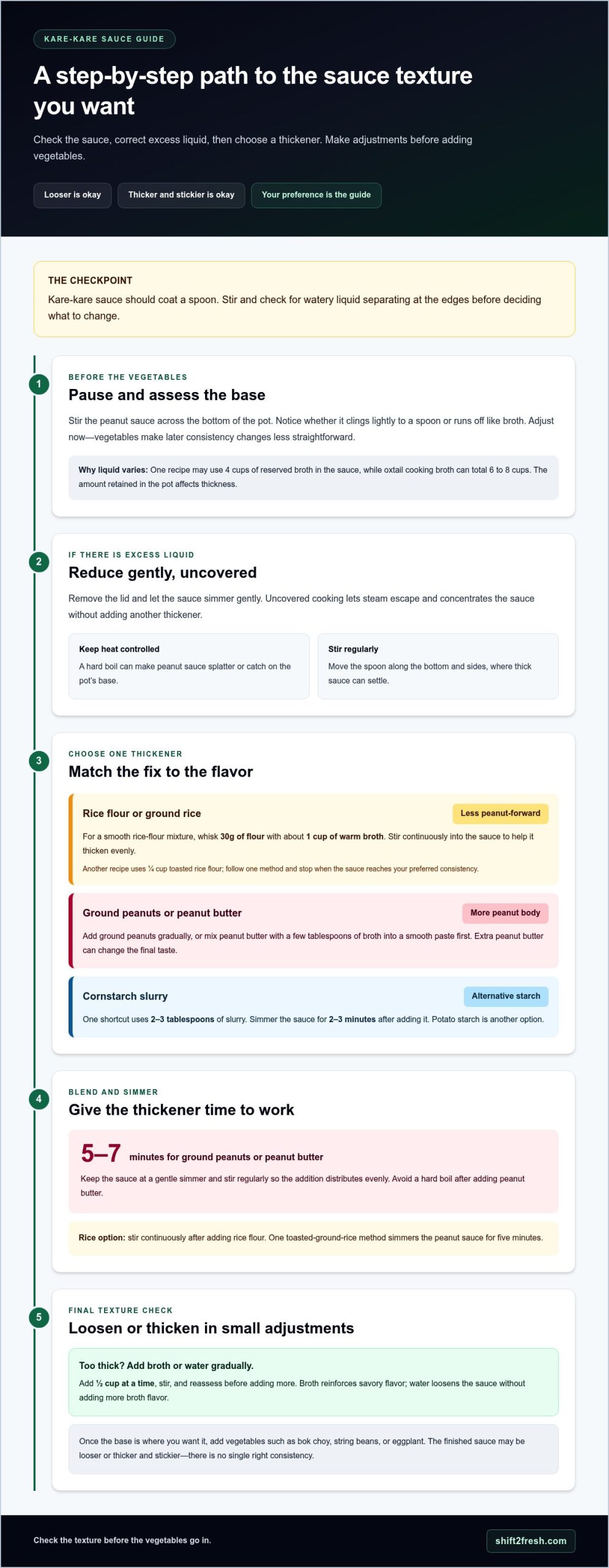
- Adjust the sauce before adding vegetables so you can judge its consistency without overcooking them.
- For a smooth rice-flour thickener, whisk 30g of flour with about 1 cup of warm broth before stirring it into the sauce.
- Ground peanuts or peanut butter can add body; mix peanut butter with a little broth first and keep the sauce at a gentle simmer.
- Simmering uncovered lets excess liquid evaporate, while adding broth gradually helps you avoid thinning the sauce further.
- Kare-kare can be thinner or thicker and stickier, so use the texture you enjoy as your guide.
Adjusting sauce thickness before adding vegetables
How thick should kare-kare sauce be? It should coat a spoon, but families may prefer it looser or thicker and stickier. To thicken it without changing the flavor much, use plain ground rice or reduce excess liquid before adding the vegetables.
Check the Sauce Consistency
Pause before adding vegetables and stir the sauce across the bottom of the pot. Check whether it clings lightly to the spoon or runs off like broth. A kare-kare recipe may use 4 cups of reserved broth in its sauce, while oxtail cooking broth can total 6 to 8 cups. Add liquid gradually, since the amount retained in the pot affects thickness.
- Judge the texture before adding vegetables. Stir the peanut sauce and look for an even consistency, without watery liquid separating around the edges. The sauce can be thinner or thicker according to preference, but vegetables make later adjustments less straightforward. Fix the base first, then add vegetables such as bok choy, string beans, or eggplant.
- Use ground rice for a subtle thickening option. Ground rice can be added plain or roasted first. For a toasted version, rice flour can be whisked with about 1 cup of warm broth to form a smooth mixture. Stir it into the sauce continuously, so the rice thickens evenly rather than forming lumps.
Adjust with Broth or Water
If the sauce gets too thick, add broth or water a little at a time. Stir after each addition, then check the consistency before adding more. Broth reinforces the stew’s savory flavor, while water loosens the sauce without adding more broth flavor. Either works, but adding too much at once can make the sauce thinner than you intended.
- Measure broth in half-cup additions. Add half a cup at a time, then stir and reassess before pouring more. This gradual approach lets you control the consistency, especially when the sauce already contains its planned broth. If you’re following a recipe, compare the sauce with its stated amount before making another adjustment.
- Choose a starch when liquid adjustment isn’t enough. One recipe uses 30g of rice flour, stirred continuously until the sauce turns thick and creamy. Another shortcut uses 2-3 tablespoons of cornstarch slurry; simmer the sauce for two to three minutes after adding it. Potato starch is another option. Use one thickener at a time, and judge the texture before adding vegetables.
- Keep the final texture flexible. If the sauce thickens too much, loosen it with broth or water and stir until smooth. Ground rice works as a thickener, while the amount of liquid determines how loose the sauce remains. Make the adjustment in the pot before the vegetables go in, so their cooking doesn’t distract from judging the sauce.
Ground peanuts and peanut butter in the sauce
To thicken kare-kare, stir in ground peanuts or peanut butter, then simmer gently for five to seven minutes. For a smooth addition, first mix the peanut butter with a few tablespoons of broth to form a paste. Rice flour or toasted ground rice can also thicken the sauce; one recipe simmers it for five minutes after adding toasted ground rice.
- Choose a thickener that suits the flavor. Ground peanuts add body while reinforcing kare-kare’s peanut flavor. Peanut butter can thicken the sauce quickly, but extra amounts may change its final taste. Ground almond flour is another suggested option, though its flavor differs from peanuts. Pick one addition at a time, so you can judge its effect before adjusting the seasoning.
- Make a smooth peanut paste before adding it. Spoon peanut butter into a small bowl, then stir in a few tablespoons of broth. Mix until the paste loosens and looks even, without dry pockets. This step helps it blend into the peanut sauce instead of sitting in dense clumps. A recipe’s ½ cup of smooth peanut butter is a reference, not an amount to add automatically.
- Stir in ground peanuts gradually. Add a small amount, mix thoroughly, and inspect the sauce before adding more. Finely ground peanuts disperse more evenly than coarse pieces, which can leave a grainy texture. If you use ground almond flour instead, add it in the same gradual way. Keep tasting as you adjust, since both choices affect the sauce’s flavor.
- Keep the pot at a gentle simmer. After adding ground peanuts and peanut butter, simmer the sauce for five to seven minutes. Stir regularly so the paste distributes evenly and doesn’t settle on the pot’s base. Avoid a hard boil after adding peanut butter; gentle heat helps the sauce stay smooth. Check the texture again before adding pepper or other seasoning.
- Use rice when you want a less peanut-forward adjustment. Toasted rice flour can thicken kare-kare without adding more peanut flavor. One recipe uses ¼ cup of toasted rice flour, while another adds toasted ground rice and simmers the peanut sauce for five minutes. Follow one method, stir continuously after adding the rice, and stop once the sauce reaches your preferred consistency.
Once the sauce is ready, serve kare-kare with vegetables such as bok choy, string beans, or eggplant. For a meal built around familiar greens, Asian vegetables are a natural accompaniment.
Simmering the sauce uncovered to reduce it
Uncover the pot and let the kare-kare simmer gently so excess liquid can evaporate. This concentrates the sauce without adding another thickener.
- Remove the lid and assess the liquid. Stir the sauce, then check whether it runs freely from the spoon. A covered pot traps steam, which returns moisture to the sauce. Leaving it uncovered lets steam escape as the sauce cooks. Keep the heat controlled, since a hard boil can make the peanut sauce splatter or catch on the pot’s base.
- Stir regularly while the sauce reduces. Move a spoon across the bottom and around the sides, where thick peanut sauce can settle. Stirring helps the sauce heat evenly and reduces scorching. Check its texture between stirs: the sauce should become more concentrated as moisture evaporates. Don’t leave the pot unattended while it simmers uncovered.
- Use broth reduction as a guide. One kare-kare method simmers broth until it has reduced by half before adding rice flour. That reduction concentrates the cooking liquid before it joins the sauce. It’s a useful sequence when starting from broth, rather than a requirement to reduce every finished pot by half. Judge the sauce you have, then stop reducing when it coats a spoon.
- Return the oxtail at the right stage. If the oxtail has been cooked separately, thicken the sauce before returning the meat. One recipe simmers the oxtail in the sauce for 10-15 minutes to help it thicken. Stir carefully around the pieces so they stay intact. If they’re already in the pot, keep the simmer gentle and turn them carefully as needed.
- Wait before seasoning again. As uncovered simmering removes water, salt, pepper, annatto, and shrimp paste flavors become more concentrated. Taste the sauce after reducing, then adjust salt and pepper only if needed. This prevents seasoning too early and ending with an overly salty or assertive sauce. Keep the pot uncovered during this check, and stir before tasting.
- Add vegetables after setting the consistency. Bok choy, string beans, and eggplant are common kare-kare accompaniments. Add them once the sauce has reached your preferred thickness, then cook them in the sauce. If you reduce the liquid after adding vegetables, they’ll remain in the pot longer. Their texture can soften, so complete most of the reduction first.
- Stop when the sauce suits your serving. Kare-kare can be served with a looser sauce or a thicker, stickier one. Remove the pot from the heat when it reaches the texture you prefer. If it reduces too far, stir in broth or water gradually. Check after each addition, since extra liquid reverses some of the reduction.
Traditional kare-kare ingredients
There isn’t one fixed ratio for thick kare-kare sauce; recipes balance broth, peanuts, and rice differently. Examples include 6 to 8 cups of oxtail cooking broth and ½ cup of toasted ground rice, while another recipe uses ¼ cup of glutinous rice.
- Start with the broth stated in your recipe. Oxtail cooking broth gives the sauce its savory base, but the amount affects how loose it becomes. One recipe uses 6 to 8 cups. Treat that as a recipe-specific quantity, not a universal ratio, and keep track of broth added during cooking.
- Pair peanuts with a deliberate thickener. Peanuts provide kare-kare’s characteristic richness, while rice helps give the sauce body. One recipe uses ½ cup of toasted ground rice; another calls for ¼ cup of glutinous rice. These are separate recipe examples, not amounts to combine automatically. Follow one recipe’s balance before making adjustments.
- Toast rice flour for a nutty base. A recipe uses ¼ cup of toasted rice flour to thicken kare-kare. Toast rice flour in a dry pan over low heat until lightly brown, stirring often. Another method toasts it for 3-6 minutes, until lightly golden and nutty-smelling. These descriptions guide the color and aroma, not a required timer for every pan.
- Build the sauce’s traditional flavor. Annatto seeds contribute its reddish-bronze color, while bagoong, or fermented shrimp paste, adds savory depth. Add these flavor ingredients with care as the sauce develops. They season the dish, but they don’t replace rice or peanuts as thickening ingredients. Account for their taste before adding more salt.
- Keep the vegetables distinct from the sauce base. Kare-kare is commonly served with bok choy, string beans, and eggplant. Prepare the sauce first, then add vegetables once its consistency suits your preference. This lets you judge the peanut-and-rice balance without the vegetables getting in the way.
- Adjust the recipe instead of chasing one ideal texture. Some families prefer a thinner sauce, while others like it thicker and stickier. If the sauce seems loose, compare its broth and thickener amounts with the recipe you followed. A difference in broth quantity can explain the texture without implying that traditional kare-kare has one mandatory consistency.
As a hearty stew, traditional kare-kare is made with peanuts and braised beef or oxtail. The Kare-Kare recipe uses 1/2 cup of toasted ground rice to thicken its sauce.
Why Kare-Kare sauce may be thin
A thin sauce usually means the balance of broth, thickener, and cooking time is off. Glutinous rice flour is suitable for thickening kare-kare sauce, while excess liquid or too little ground rice can leave it loose.
- Compare the broth with the recipe. Kare-kare recipes may use 6 to 8 cups of oxtail cooking broth, but each recipe balances liquid and thickener differently. If you added extra broth while cooking, the sauce may need more reduction or thickening. Note each addition, then compare the result with the recipe’s intended quantities.
- Check which rice thickener you used. Glutinous rice flour is the type that thickens the sauce properly. A recipe calling for ordinary rice flour may not behave the same way. Check the package and recipe before adding more. If using ground rice, remember that recipes may add it toasted or plain, and the texture depends on how finely it’s ground.
- Consider whether the sauce has cooked long enough. A watery appearance can mean broth has not reduced sufficiently. Simmering uncovered lets moisture escape, concentrating the liquid without adding another ingredient. Stir the pot so the ground rice or peanut mixture doesn’t settle. Stop when the sauce coats a spoon and looks smooth, rather than reducing it until sticky.
- Separate sauce thickness from meat tenderness. Oxtail needs time to become tender, but tenderness alone doesn’t make the sauce thick. If the meat is still cooking, keep it in the stew and monitor the sauce as it simmers. One method returns oxtail to the sauce for 10-15 minutes. Check both the meat and sauce, then adjust the liquid or thickener.
- Account for vegetables and other ingredients. Bok choy, string beans, and eggplant are commonly served with kare-kare. Add them after setting the sauce’s consistency, so they don’t complicate your assessment. Bagoong adds fermented shrimp paste flavor, but it isn’t a thickener. Don’t add more bagoong to solve a thin texture; adjust the ground rice, peanut mixture, or cooking liquid instead.
- Choose a fix that preserves the flavor you want. If the sauce already tastes right, reduce it uncovered or use glutinous rice flour rather than adding more peanut butter. If it lacks peanut richness, ground peanuts may thicken while reinforcing that flavor. Make one adjustment at a time, stir until smooth, and reassess before adding another ingredient.
For ingredients suited to Filipino cooking, explore Filipino pantry ingredients for your next kare-kare.
Shift 2 Fresh: Seasonal Filipino Fruits
Shift 2 Fresh helps UAE home cooks find Filipino and Asian ingredients for meals like kare-kare. Once your sauce is balanced, pair it with Asian vegetables, or browse Filipino pantry items for ingredients that complement Filipino cooking. Seasonal Filipino Fruits offer another way to round out your grocery choices beyond the main dish.
Use Mobile App Ordering to browse the available groceries while planning your next meal. Choosing vegetables and pantry items together can make it easier to gather ingredients for a Filipino-inspired home-cooked meal. The sauce-thickening methods in this guide remain the same.
Visit shift2fresh.com to explore the grocery selection or contact Shift 2 Fresh.
Make Your Next Kare-Kare Your Own
Let your preferred consistency guide your next batch. Make a note of the broth, thickener, and final texture so you can adjust deliberately next time instead of changing several things at once. If you’re still wondering why your kare-kare sauce is thin, treat the result as a clue and consider which part of the cooking process to adjust.
Planning a Filipino meal also means choosing ingredients that work well around the main dish. Shift 2 Fresh offers Asian Vegetables for kare-kare accompaniments, Filipino Pantry Items for your cooking cupboard, and Seasonal Filipino Fruits to round out the meal. Choose what suits your menu and cooking plans.
For your next grocery shop, contact Shift 2 Fresh today. Keep experimenting at your own pace, and enjoy shaping a kare-kare sauce that feels right for your table.
Frequently Asked Questions
Sauce too thin?
Thicken the sauce by reducing excess liquid or adding a suitable thickener. First, check whether the flavor is balanced. If it is, reduce the sauce uncovered rather than adding peanut butter, which changes the flavor. If it needs more body, stir in a smooth rice-flour mixture or peanut paste. Make one adjustment at a time, then taste and check the consistency before serving.
Why is kare-kare sauce thin or watery?
Kare-kare sauce may be watery if there’s too much broth compared with the peanuts or rice thickener, or if the recipe calls for glutinous rice flour but you used another kind. If you’re asking why your kare-kare sauce is thin, consider what went into the pot: extra cooking liquid, a different flour, or less reduction time can all affect the result. Compare your ingredients and method with the recipe you followed.
How long should kare-kare sauce simmer to reduce and thicken?
Simmer uncovered until excess liquid evaporates and the sauce reaches the consistency you want; the time depends on the amount of liquid and pot. A recipe simmers returned oxtail in the sauce for 10-15 minutes. For a cornstarch slurry, simmer for two to three minutes after adding it. Stir and check frequently, since these timings apply to particular methods, not every pot.
Does adding too much stock or water make kare-kare sauce thin?
Yes. Extra stock or water adds liquid without increasing the peanuts or thickener, which can leave the sauce loose. This may happen if you add all the reserved cooking liquid, then pour in more while adjusting the seasoning. Compare the amount of liquid you used with the recipe, and remember that liquid released during cooking also affects the finished sauce. Reduce the excess or adjust the thickener.
How can you fix thin kare-kare sauce after cooking?
Return the sauce to gentle heat and choose one fix: reduce it uncovered, or mix a thickener smoothly before adding it. For a cornstarch option, one recipe combines one tablespoon of cornstarch with three tablespoons of cold water. Stir the slurry into the sauce, then simmer for two to three minutes. If using peanut butter, blend it with broth first to help prevent clumps.
Can overcooking or boiling affect kare-kare sauce consistency?
Yes. A hard boil after adding peanut butter can make it harder to keep the sauce smooth, so lower the heat to a gentle simmer. Extended uncovered cooking also evaporates liquid and concentrates the sauce, making it thicker and more strongly seasoned. If the vegetables are already in the pot, prolonged cooking can soften them. Check the sauce and vegetables as they cook.
0 comments