

You are likely throwing away a significant portion of your grocery budget every time a bunch of bok choy wilts into a soggy mess after just two days in the fridge. It’s a common struggle for residents in the UAE, where the intense heat outside and the bone-dry air conditioning inside create a hostile environment for delicate greens. When you’re paying premium prices for imported calamansi or bitter melon, every leaf counts. Learning how to store exotic asian vegetables isn’t just about kitchen organization; it’s a vital skill to preserve the flavor of home and stop unnecessary waste.
We understand the frustration of finding your specialty ingredients shriveled before you’ve even had a chance to cook. That’s why we’re sharing professional techniques to help you extend the shelf life of your Asian greens by five to seven days. In this guide, you’ll discover why the standard crisper drawer might be failing you and how to maintain the ideal +2°C to +8°C environment. We will cover which items belong in the fridge, how to manage humidity to fight AC dryness, and the best ways to keep your imported produce as nutritious and flavorful as the day it arrived.
Key Takeaways
- Learn the “Paper Towel Method” to protect delicate leafy greens like Bok Choy and Kang Kong from the drying effects of UAE air conditioning.
- Discover why tropical roots like Ube and Gabi should stay out of the fridge and how to create a dedicated “Pantry Zone” to maintain their texture.
- Master the professional techniques for how to store exotic asian vegetables like Calamansi and Bitter Melon to prevent premature yellowing and flavor loss.
- Understand how managing respiration rates and humidity levels can add an extra 5 to 7 days of freshness to your imported produce.
- Find out why a consistent cold chain during delivery is essential for ensuring your specialty Filipino vegetables arrive at peak nutritional value.
The Science of Storing Asian Vegetables in the UAE Climate
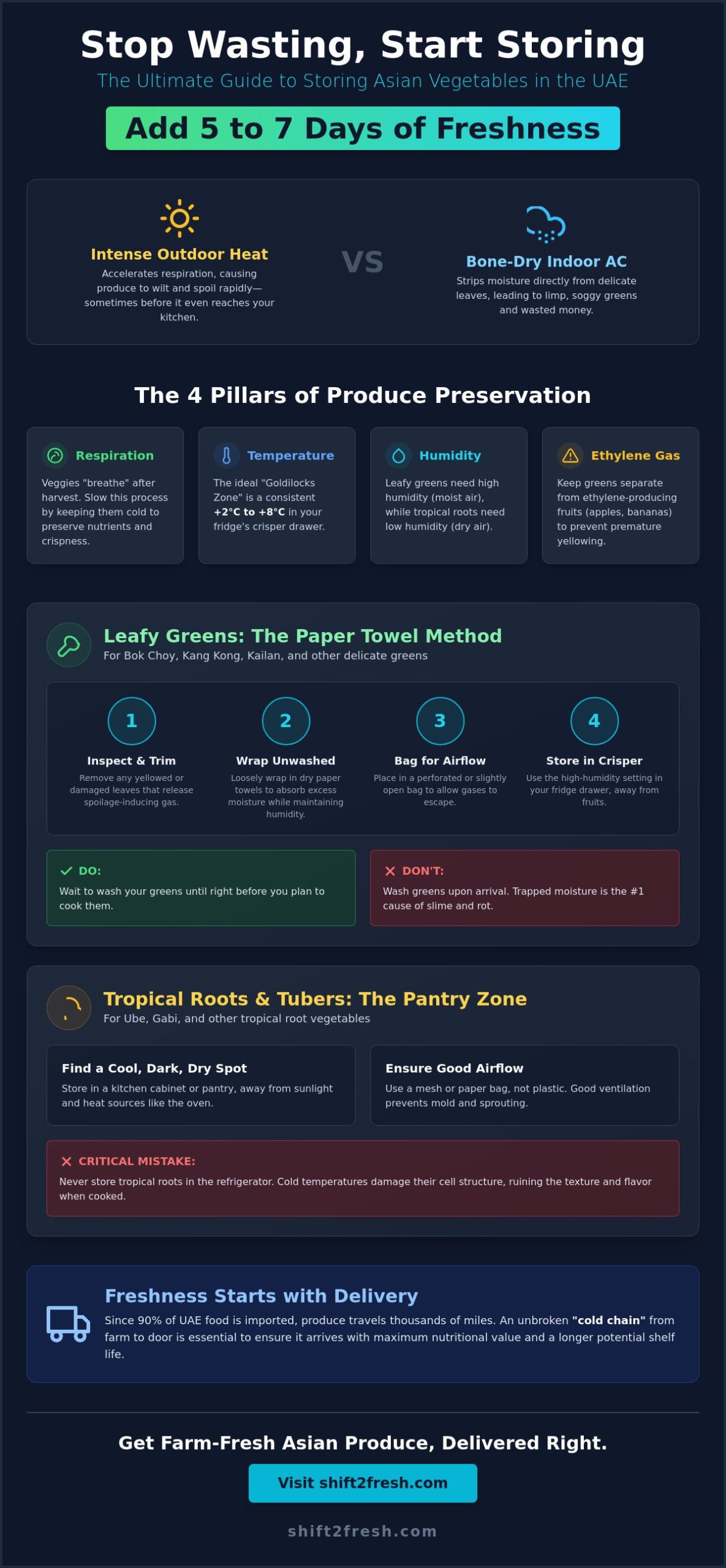
Most home cooks in Dubai or Abu Dhabi assume that putting greens in the fridge is enough to keep them fresh. It isn’t. The UAE presents a unique challenge for fresh produce. Outside, temperatures often soar above 40°C. Inside, we rely on heavy air conditioning. This constant cooling creates an incredibly dry atmosphere that is the primary enemy of imported greens. To master how to store exotic asian vegetables, you first need to understand that your produce is still alive and “breathing.”
Understanding Respiration in Tropical Produce
Vegetables continue to consume oxygen and release carbon dioxide after they are harvested. This process is known as the respiration rate. High-respiration vegetables, such as asparagus and broccoli, breathe much faster than hardy root crops. In the intense UAE heat, this metabolic rate can double or even triple for every 10-degree increase in temperature before the produce reaches your kitchen. This is why leaves turn yellow or limp so quickly. The Science of Storing Asian Vegetables teaches us that slowing this “breath” is the only way to prevent wilting. Since the UAE imports up to 90% of its food requirements, your produce has already traveled thousands of miles. It arrives with its internal energy partially spent, making proper storage critical the moment it enters your home.
The AC Factor: Humidity vs. Temperature
Your refrigerator is designed to keep things cold, but it’s also a massive dehumidifier. Air conditioning works by stripping moisture from the air. When you put delicate Bok Choy or Kang Kong in a standard fridge without protection, the dry air sucks the water right out of the plant cells. This highlights the vital difference between “Cold and Moist” storage and “Cool and Dry” storage. While onions and garlic thrive in dry air, leafy Asian greens require a high-humidity environment to stay crisp.
Most modern UAE kitchens feature refrigerators with humidity-controlled crisper drawers. Setting these to “High Humidity” closes the vents, trapping the natural moisture the vegetables release. This creates a “Goldilocks Zone” where the temperature stays between the regulated +2°C and +8°C, but the air remains damp. You must also account for ethylene gas. This natural ripening agent is released by fruits like bananas and mangoes. If you store your Asian greens next to these gas producers, they will spoil in half the time. Understanding these chemical reactions is the first step in learning how to store exotic asian vegetables successfully in a desert climate.
How to Store Leafy Asian Greens: Bok Choy, Kailan, and Kang Kong
Stop washing your greens the moment you get home. It’s a common mistake that leads to a slimy mess in the crisper drawer within 48 hours. When you are learning how to store exotic asian vegetables, the first rule is that moisture is the enemy of longevity. Leafy greens like Bok Choy and Kailan have high respiration rates, meaning they release moisture as they “breathe.” If that moisture is trapped against the leaves, it invites bacteria and rapid decay. Wait to wash your vegetables until right before you plan to cook them.
The Paper Towel Method for Maximum Crispness
This technique is the gold standard for keeping imported greens vibrant. It balances the need for humidity with the requirement for a dry surface. Follow these steps to keep your greens crisp for up to a week:
- Step 1: Inspect the bunch. Remove any yellowing or damaged leaves immediately, as these release ethylene gas and accelerate the spoilage of the healthy leaves.
- Step 2: Wrap the unwashed greens loosely in dry paper towels. These towels act as a buffer, absorbing excess surface moisture while keeping the internal environment humid.
- Step 3: Place the bundle in a perforated plastic bag or a reusable silicone bag. If you only have standard bags, leave the top slightly open to allow for airflow.
- Step 4: Store them in the crisper drawer. Keep them away from gas-producing fruits like apples to prevent premature wilting.
Airflow is just as important as temperature. If you find your greens are still wilting too quickly, check if your fridge is overcrowded. Proper circulation ensures the cold air can reach every leaf. For the best results, starting with the freshest possible produce is key. You can find high-quality, farm-fresh options through the Shift 2 Fresh app, which helps ensure your greens haven’t spent too long in transit before reaching your kitchen.
Special Care for Kang Kong and Water Spinach
Kang Kong is perhaps the most delicate item in an Asian pantry. Because it is semi-aquatic, it wilts almost instantly in the dry air of a UAE apartment. If the paper towel method isn’t enough, try the “bouquet method.” Trim the very bottom of the stems and stand the Kang Kong upright in a shallow jar with an inch of fresh water. Cover the tops loosely with a plastic bag and place the jar in the fridge. This keeps the plant hydrated from the bottom up.
If you notice your greens looking a bit sad, don’t toss them yet. You can often revive slightly wilted Bok Choy or Kailan by submerged them in an ice-water bath for 15 to 30 minutes. This rehydrates the cell walls and restores the crunch. However, if the leaves feel slimy or have a pungent odor, it’s time to compost them. Learning how to store exotic asian vegetables properly means knowing when to save them and when to start fresh.
Preserving Tropical Roots and Tubers: From Ube to Gabi
While leafy greens thrive in the humidity of a crisper drawer, tropical tubers like Ube (purple yam) and Gabi (taro) require a completely different approach. One of the biggest mistakes home cooks make is refrigerating these roots. In the tropics, these plants grow in warm soil. Putting them in a fridge set to 4°C causes “chilling injury.” This damage changes the cellular structure, turning the starch into sugar and leading to a gritty, off-flavor texture once cooked. Mastering how to store exotic asian vegetables like these means finding a balance between the UAE’s outdoor heat and the artificial cold of your refrigerator.
The ‘Pantry Zone’ Strategy
To keep your tubers fresh, you need to establish a “Pantry Zone.” This should be a dark, well-ventilated area that stays around 18°C to 22°C. In a typical UAE apartment, avoid cabinets next to the oven, dishwasher, or sunny windows. Heat from appliances will cause Ube to sprout or shrivel prematurely. If your kitchen gets too warm during the day, a lower cabinet in a hallway or a ventilated utility room is often a better choice.
- Use wicker baskets or mesh bags: Plastic bags trap moisture and cause high-starch roots to develop mold within days. Tubers need to “breathe” to stay firm.
- Keep them in the dark: Light triggers chlorophyll production in tubers like Gabi, which can lead to bitterness and a shorter shelf life.
- Separate from onions: Onions release gases that cause potatoes and yams to sprout faster. Give your Asian roots their own dedicated basket.
Ginger and Turmeric Longevity
Ginger and turmeric are staples that often dry out and become woody before you can finish them. If you don’t use them daily, the freezer is your best friend. Simply wash and dry the rhizomes, then store them whole in a sealed bag. You can grate what you need directly from frozen without even peeling. This preserves the potent essential oils that give these roots their signature punch. It also prevents the common UAE problem of ginger mold caused by humid air trapped in kitchen cupboards.
For those who prefer room-temperature storage, a traditional method involves burying fresh turmeric in a jar of dry sand. This mimics its natural environment, keeping it firm and juicy for months. When checking your roots, learn to distinguish between drying out and rotting. A dry, slightly shriveled piece of ginger is still perfectly usable for stocks or tea, but any sign of soft, mushy spots or white mold means the root has spoiled. Knowing how to store exotic asian vegetables like these ensures your pantry is always stocked with the aromatic foundations of Filipino and Asian cuisine.
Storing Specialty Filipino Produce: Calamansi and Bitter Melon
Filipino cooking relies on the specific punch of citrus and the distinct crunch of fresh gourds. In the UAE, these items are often the most expensive part of your grocery bill, with calamansi prices reaching nearly AED 50 per kilogram in some specialty stores. Because these items travel long distances, they require immediate attention once they reach your kitchen. Knowing how to store exotic asian vegetables like ampalaya or sitaw ensures you aren’t literally throwing money into the bin after just a few days of storage.
The Calamansi Preservation Guide
Calamansi is much more delicate than a standard lemon or lime. Its skin is incredibly thin, which means the juice content evaporates quickly in the dry air of a Dubai apartment. If you leave them in an open bowl on the countertop, they’ll become hard and juiceless within 48 hours. For short-term use, place them in an airtight glass jar or a sealed zip-top bag in the refrigerator. This creates a micro-climate that prevents the skin from shriveling.
If you have a large batch, consider the juice-and-freeze method. Squeeze the fresh calamansi and pour the juice into ice cube trays. Once frozen, transfer the cubes to a freezer bag. These cubes are perfect for adding to sawsawan or marinades and can last for months. This is a great way to manage your Filipino Pantry Items without worrying about spoilage. If you need a fresh restock of these citrus gems, you can order fresh calamansi directly through our app for delivery across the Emirates.
Ampalaya and Sitaw: Keeping the Crunch
Bitter Melon (Ampalaya) is sensitive to ethylene gas. If you store it next to ripening mangoes or bananas, it will turn yellow and then bright orange almost overnight. This yellowing signifies over-ripening, which makes the flesh mushy and the flavor unpleasantly dull. Keep ampalaya in its own section of the crisper drawer, wrapped in a single layer of paper towel to manage moisture. If you only use half, don’t leave the cut end exposed. Use a beeswax wrap to seal the cut surface; it allows the vegetable to breathe slightly while preventing the dry fridge air from toughening the skin.
Sitaw (Longbeans) follow a “5-day rule” in the UAE. Even with perfect storage, they begin to lose their characteristic snap after five days. To maximize their life, don’t snap them into pieces until you’re ready to cook. Keep them whole, coiled loosely in a large bag with a dry paper towel. For lemongrass, you have three options: keep it in a jar of water on the counter if you’ll use it in 48 hours, wrap it in plastic in the fridge for two weeks, or trim and freeze the stalks for up to six months. By following these specific steps for how to store exotic asian vegetables, you can maintain the authentic textures of your favorite home-cooked meals.
Maximizing Freshness with Shift 2 Fresh Delivery
Even the most advanced knowledge of how to store exotic asian vegetables won’t save produce that has already spent too much time in warm temperatures. Freshness starts long before the vegetables reach your kitchen. At Shift 2 Fresh, we rely on a strictly managed cold chain to transport goods from the Philippines to our hubs in Sharjah and beyond. This ensures that every item remains within the mandatory +2°C to +8°C range required for food safety and quality. With 45 years of experience in the industry, we’ve refined the logistics of bringing delicate tropical harvests to the desert without sacrificing their nutritional value.
When your order arrives, it’s vital to perform a quick inspection. Check for firm stems and vibrant colors as outlined in our guide to the best Online Supermarket Dubai experiences. If you’ve ordered high-respiration items like kailan or sitaw, they should feel cool to the touch and show no signs of condensation inside the packaging. Starting with produce that has been handled professionally is the only way to ensure our storage tips actually work to extend your groceries’ life by that extra week.
From Farm to UAE Doorstep
Our “Freshness First” philosophy means we don’t just buy what’s available; we source Seasonal Filipino Fruits and Asian Vegetables at their peak maturity. This timing is critical. If a vegetable is picked too early, it never develops its full flavor. If it’s picked too late, it won’t survive the journey. We handle these delicate imports with specialized care, ensuring they aren’t crushed or exposed to fluctuating temperatures during transit. This dedication to quality is why our customers trust us for their weekly Filipino pantry staples.
Smart Shopping with the Shift 2 Fresh App
The easiest way to manage your kitchen inventory is through our mobile app. You can use it to track when your favorite seasonal items are in stock, preventing the disappointment of missing out on a fresh harvest of calamansi or ube. The app allows you to set alerts so you’re the first to know when a new shipment arrives from the Philippines. It’s a game-changer for gourmet food delivery dubai fans who want the best produce without the hassle of visiting multiple markets. By ordering through the app, you’re tapping into a streamlined system designed to get how to store exotic asian vegetables right from the very first step: procurement.
Master Your Kitchen’s Freshness Today
Mastering how to store exotic asian vegetables isn’t just about saving money; it’s about honoring the ingredients that make your favorite dishes special. By using the paper towel method for your greens and keeping your ube and gabi in a ventilated pantry zone, you can effectively combat the drying effects of UAE air conditioning. These simple adjustments ensure that your bitter melon stays crisp and your calamansi remains juicy until the very last drop.
At Shift 2 Fresh, we bring over 45 years of food industry expertise to your doorstep. We specialize in direct imports from the Philippines and South Asia to ensure you receive the highest quality produce every time. You can enjoy free delivery on all orders over AED 500 when you Order Fresh Asian Vegetables Now on Shift 2 Fresh. Start stocking your kitchen with confidence and enjoy the authentic flavors of home every single day.
Frequently Asked Questions
Should I wash my Asian vegetables as soon as they are delivered?
Don’t wash your vegetables until you are ready to use them. Excess moisture trapped on leaves or stems is the main cause of bacterial growth and rot. When you receive a delivery, simply inspect the items and follow the specific steps for how to store exotic asian vegetables mentioned in our guide. Keeping them dry ensures they stay fresh. If they arrive slightly damp, pat them dry with a clean cloth before storage.
Can I freeze leafy greens like Pak Choi for later use?
You shouldn’t freeze leafy greens like Pak Choi or Bok Choy while they are raw. The high water content in the leaves will expand and destroy the cell walls, resulting in a mushy texture once thawed. If you must freeze them, blanch the leaves in boiling water for two minutes, plunge them into ice water, and then drain them thoroughly. This preserves the color and flavor for use in soups or stir-fries later.
How long does Ube last in a typical UAE pantry?
Fresh Ube typically lasts between one to two weeks in a standard UAE pantry. It’s important to keep it in a cool, dark spot with plenty of ventilation to prevent mold. Avoid placing it in the refrigerator, as the cold temperatures will ruin the starchy texture. If your kitchen gets very hot during the day, try to find a lower cabinet or a utility room where the temperature stays more consistent.
What is the best way to store fresh lemongrass?
The best way to store fresh lemongrass is in the refrigerator or the freezer. For short-term use, wrap the stalks tightly in plastic wrap and keep them in the crisper drawer for up to three weeks. If you want it to last longer, you can trim the stalks and freeze them whole in a sealed bag. They will retain their aromatic oils and distinct citrus flavor for several months when stored in the freezer.
Why do my longbeans get rubbery so quickly in the fridge?
Your longbeans become rubbery because they are losing moisture to the dry air inside your refrigerator. This is a common issue in the UAE due to constant air conditioning. To prevent this, place the beans in a sealed plastic bag with a slightly damp paper towel. This keeps the humidity levels high enough to maintain their snap without causing rot. Proper moisture management is the secret to keeping these delicate beans crunchy for days.
Is it safe to store onions and potatoes together?
You should never store onions and potatoes in the same basket. Onions release ethylene gas and moisture that cause potatoes and other tubers to sprout and spoil much faster. It’s better to keep them in separate, well-ventilated containers at least a few feet apart. This simple change in your pantry organization can significantly extend the shelf life of your ingredients and reduce unnecessary grocery waste in your household.
How can I tell if my bitter melon has gone bad?
You can tell bitter melon has gone bad if the skin feels slimy or if there are soft, sunken spots on the surface. While a slight yellowing is a sign of ripening, a bright orange color combined with a mushy texture means it’s past its prime. Learning how to store exotic asian vegetables properly helps prevent this. Always trust your nose; a pungent or fermented smell is a clear sign the vegetable is no longer safe.
What is the ‘Cold Chain’ and why does it matter for my vegetables?
The ‘Cold Chain’ is a temperature-controlled supply chain that keeps produce between +2°C and +8°C from the farm to your door. It’s vital for imported vegetables because it slows down the respiration rate and prevents spoilage during the journey from the Philippines. Without a solid cold chain, delicate greens would wilt before they reached the UAE. This system ensures you receive the highest nutritional value and the freshest possible taste.
0 comments