

Sayote isn’t the only good choice for tinola: green papaya brings gentle sweetness and a tender-crisp texture to the broth. Choosing papaya for tinola starts with firm, green fruit. Peel and seed it, then cut it into 2-inch wedges. Add the pieces after the chicken has simmered in rice wash for 10 minutes, and cook them for 15 to 20 minutes, until tender.
It’s easy to overcook papaya until the wedges lose their shape, or to wonder how its flavour compares with sayote. This guide explains how to prepare papaya for tinola and time the cooking for your preferred texture. You’ll also learn how green papaya affects the broth and when sayote may better suit your taste. Choosing the right papaya for tinola helps you shape the soup’s flavour and texture.
Key Takeaways
- Choose firm, green fruit for pieces that hold their shape as they cook.
- Cut evenly so the pieces soften at a similar pace, then watch their texture as they simmer.
- Green papaya adds a mild sweetness and can give the broth a fuller feel.
- Choose between papaya and sayote based on the flavour and texture you want in your tinola.
Cooking papaya until tender yet crisp
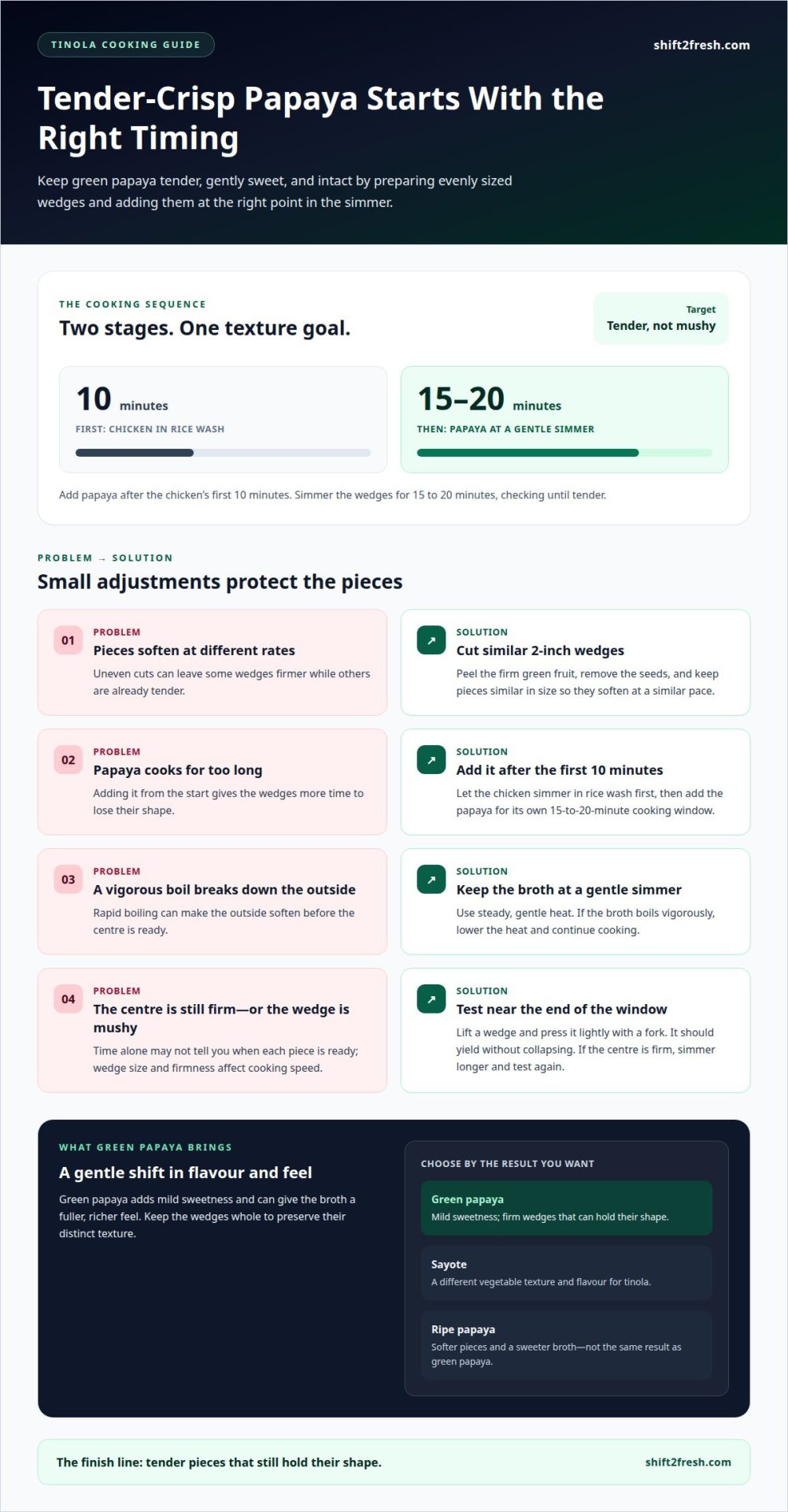
Add papaya after the chicken has simmered in rice wash for 10 minutes. Then simmer the wedges for 15 to 20 minutes, until tender, checking their texture as they cook.
Prepare the Papaya
Peel the green papaya, remove its seeds, and cut it into 2-inch wedges. Keep the pieces similar in size so they soften at a similar pace. Before cooking, check each wedge for remaining seeds or tough peel. Set the prepared pieces aside while the chicken completes its first 10 minutes of simmering in rice wash.
Add Papaya for Tender-Crisp Texture
Add the wedges to the pot after the chicken has simmered in rice wash for 10 minutes. Keep the broth at a gentle simmer, then cook the papaya for 15 to 20 minutes, until tender. Start checking the texture as the cooking window nears its end. The aim is softening without letting the wedges lose their shape.
- Keep the simmer steady while the papaya cooks. A gentle, consistent heat lets the centres soften without rapidly breaking down the outside. If the broth boils vigorously, lower the heat and continue cooking. Use the recipe’s 15-to-20-minute window as a guide, because wedge size and firmness affect how quickly each piece becomes tender.
- Test a wedge near the end of the simmer. Lift it carefully with a spoon and press it lightly with a fork. It should yield without turning mushy or collapsing. If the centre still feels firm, continue simmering and test again. Stop cooking when the papaya is tender but still holds its shape.
Green papaya as the traditional vegetable in chicken tinola
Green papaya is the traditional choice for chicken tinola, adding vegetable substance without overpowering ginger broth. Ripe papaya can be used, but its softer texture and sweeter taste change the result.
- Use two green papayas for a tinola recipe serving four people. Their mild taste complements chicken, ginger and broth, while the wedges stay distinct when cooked. Choose firm, unripe fruit for less sweetness and pieces that hold their shape. Ripe papaya makes softer pieces and a sweeter broth.
- Brown the chicken in the pot before building the broth. One recipe method calls for browning it for about two minutes, then adding the liquid. This quick step gives the chicken a lightly browned surface before simmering. Keep the heat controlled so the pieces brown rather than scorch, especially if ginger or garlic remains in the pot.
- Build the ginger flavour by sautéing ginger with onion before adding chicken broth. Add garlic with the aromatics, then use fish sauce to season the chicken and liquid. Keep the ingredient balance simple: chicken, green papaya, ginger, onion, garlic, fish sauce and broth. The ginger should flavour the soup without masking the papaya.
- Simmer the chicken in rice wash for 10 minutes before adding the green papaya. This sequence lets the broth take on flavour from the chicken and ginger first. Add the papaya after that initial simmer, rather than cooking it from the start. The timing keeps the vegetable from spending the entire chicken-cooking period in the pot.
- Choose green papaya when you want the familiar tinola profile; choose sayote for a different vegetable texture. For the recipe’s main vegetable, explore Asian vegetables as part of planning your ingredients. Keep ripe papaya for a sweeter variation, not an identical replacement. Its softness can make the finished soup feel less crisp.
Green papaya’s effect on broth texture and flavour
Green papaya gives chicken tinola gentle sweetness and a fuller-feeling broth. Its texture and flavour shape the soup, as well as the vegetable pieces themselves.
- Taste the broth before adding green papaya, noting the ginger and chicken flavours. This gives you a useful baseline for the finished soup. Green papaya can bring a mild sweetness and soft texture to the soup. Keep that in mind when deciding how prominent you want the vegetable flavour to be.
- Let the papaya pieces simmer without breaking apart, then taste the broth and vegetable together. A spoonful with both gives you a sense of how their textures work in one bite. The softened fruit contrasts with the liquid, while its sweetness rounds out the savoury chicken and ginger. Don’t judge the broth by tasting the liquid alone.
- Keep the ginger easy to recognise in the finished soup. Its warm, aromatic flavour provides a clear counterpoint to papaya’s mild sweetness. If the broth tastes strongly of ginger before you add the vegetable, the papaya can soften that edge. Taste again after cooking, then adjust the seasoning to suit your preference.
- Consider the broth’s thickness before adding extra liquid. Green papaya can give it a richer, thicker character, so compare a spoonful with your preferred tinola consistency. For a lighter-feeling soup, serve the broth alongside the papaya rather than mashing the pieces into it. Keeping the wedges whole preserves their distinct texture.
- Choose green papaya when you want mild sweetness in chicken tinola. A bowl of chicken, ginger and intact papaya pieces, for example, balances savoury broth with tender vegetable. Choose another vegetable if you prefer a different flavour or texture. The right fit depends on the soup you want, not on changing its ginger-led base.
Preparing and cutting papaya for tinola
- Choose firm green papaya for wedges that hold their shape in the pot. A small green fruit suits a chicken tinola recipe that calls for one papaya. Avoid soft, ripe fruit if you want the pieces to remain distinct. Keep the fruit whole until you’re ready to prepare it, so the cut surfaces don’t dry out before cooking.
- Rinse the papaya under running water, then place it on a stable cutting board. Trim the ends to create flat surfaces before cutting it lengthwise. A stable base gives you better control as you halve the fruit. Use a sharp knife and keep your fingers clear of the blade.
- Scoop out the seeds and the soft material around them with a spoon. Check the centre carefully, as seeds can cling to the inner cavity. Peel away the green skin with a vegetable peeler or knife, removing the tough outer layer without cutting deeply into the flesh. A cleanly peeled surface cooks evenly.
- Cut the peeled papaya into wedges about 2 inches long. Keep their thickness consistent, because larger pieces take longer to soften than thinner ones. If one end of the papaya is much wider, divide it into manageable sections before cutting wedges. This helps the pieces cook at a similar pace and makes serving easier.
- Set the cut wedges aside while the chicken broth develops, then add them at the recipe’s specified point. Don’t leave the pieces submerged in water, which can dilute their surface flavour. For a tinola ingredient list, browse Asian vegetable options and plan the produce before cooking. Keep the wedges intact as you transfer them, rather than crushing or mashing them into the broth.
Shift 2 Fresh
Shift 2 Fresh helps UAE home cooks source ingredients for Filipino meals, including vegetables suited to chicken tinola. Its range includes Asian Vegetables, Seasonal Filipino Fruits, and Filipino Pantry Items, while Mobile App Ordering offers another way to shop. When planning tinola, use the preparation guidance above to choose firm green papaya and decide how much to cook. Pair it with the ginger and other ingredients your recipe calls for, keeping the papaya’s mild sweetness and texture in mind. Shift 2 Fresh can be a practical next step when you’re gathering Filipino and Asian groceries for a home-cooked meal. For help with your grocery needs, contact Shift 2 Fresh.
Make Tinola Part of Your Next Meal Plan
A good pot of tinola can inspire a broader Filipino meal plan. Think about which flavours and ingredients will complement the soup, then build your grocery list around the dishes you want to cook next. Shift 2 Fresh offers Seasonal Filipino Fruits, Asian Vegetables, and Filipino Pantry Items to help you plan those meals. The choices you make at the market can turn one familiar recipe into a starting point for exploring more Filipino home cooking.
As you plan your next pot, choose papaya for tinola with the texture and broth you enjoy in mind. Then carry that same care into the rest of your meal, selecting ingredients that suit your taste and cooking plans. For help with your grocery needs, contact Shift 2 Fresh. Enjoy making tinola your own, one thoughtful meal at a time.
Frequently Asked Questions
Sayote or Papaya?
Green papaya is the traditional choice for chicken tinola, while sayote is a suitable alternative. Choose papaya for a mildly sweet flavour and a fuller-feeling broth. Pick sayote when you want to vary the vegetables while keeping the soup’s ginger-and-chicken base. Either way, add your chosen vegetable during simmering rather than cooking it with the chicken from the beginning.
What type of papaya is used in Filipino tinola?
Use green, unripe papaya for the familiar version of tinola. Its taste is milder than ripe fruit, which is softer and sweeter. Choose firm green papaya when you want pieces that remain distinct in the soup. Semi-ripe or ripe fruit changes the balance, so use it for a sweeter variation rather than expecting the same result.
How do you prepare green papaya for tinola?
Rinse the green papaya, peel it, halve it and scoop out the seeds. Cut the flesh into wedges of similar size so they soften at the same pace. Prepare the fruit shortly before adding it to the pot, and transfer it gently. Smaller pieces soften faster, so avoid slicing the wedges thinly.
How much papaya should be used in a tinola recipe?
A chicken tinola recipe serving four people uses two green papayas. The amount of papaya for tinola depends on the recipe’s serving size and how much vegetable you want in each bowl. If you’re following a recipe, use its stated quantity rather than guessing from the pot size. Keep the pieces manageable so they’re easy to serve alongside the chicken.
How long does papaya take to cook in tinola?
Simmer green papaya wedges for 15 to 20 minutes, until tender. Start checking a piece as it nears the end of that cooking window: it should yield when pressed but still hold together. The size and firmness of the wedges affect how quickly they soften, so use the texture test alongside the recipe’s timing.
Can green papaya be substituted with sayote in tinola?
Yes, sayote, also called chayote, can replace green papaya in tinola. It’s a useful option if you want to make the soup without papaya. The substitution changes the vegetable in the bowl, so follow your tinola recipe’s sequence for adding vegetables and check their tenderness as they cook. Upo and potatoes are also used as alternatives.
0 comments