

The classic purple rice cake doesn’t need to begin with purple rice. A homemade version of puto bumbong can use white glutinous rice and purple sweet potato, then be steamed into soft, fragrant rice cakes. The essential ingredients for puto bumbong also include familiar toppings such as butter, muscovado sugar, and grated coconut.
If you know puto bumbong as a Christmas-season treat, you’re right: in the Philippines, it is closely associated with Simbáng Gabí and the snacks enjoyed around early-morning church services. Its colour and festive feel may seem difficult to recreate, but the ingredients are straightforward once you know what each one does.
This guide explains what puto bumbong is, how it fits Filipino Christmas tradition, and how white rice and purple sweet potato work together in a homemade version. You’ll also learn which ingredients shape its chewy texture, colour, and classic sweet topping, so you can plan what to gather before you start.
Key Takeaways
- Understand how this steamed Filipino rice cake is shaped and served, including its familiar butter, coconut, and muscovado toppings.
- See why puto bumbong is linked with Simbáng Gabí and Christmas-season snacks in the Philippines.
- Learn how white glutinous rice and purple sweet potato contribute to a homemade version’s texture and color.
- Review the core ingredients and topping choices before preparing your own batch.
- Discover how traditional purple rice differs from the accessible ingredients used in this adaptation.
What is Puto Bumbong?
Puto bumbong is a Filipino steamed rice cake shaped into a cylinder and traditionally served on banana leaves. Its name combines Tagalog words for steamed rice cake and bamboo tube. Is grated coconut required? No. It’s a classic topping, but you can serve the rice cake without it.
- Serve the rice cake warm or at room temperature. For a familiar presentation, place each piece on a banana leaf. The leaf provides a traditional base, while the toppings add sweetness, richness, and texture. Prepare the toppings before serving, then let everyone choose how much to add. This keeps the rice cake’s soft texture at the centre of each bite.
- Brush the surface with butter or margarine before adding sugar. Butter adds richness and helps the sugar cling to the warm rice cake. Muscovado is a classic choice, with deeper, molasses-like sweetness than plain white sugar. Brown sugar also works, while white sugar gives a simpler sweetness. Add the sugar after brushing so it stays on the surface instead of disappearing into the cake.
- Add grated coconut for a familiar finish. Freshly grated coconut adds a tender, slightly chewy contrast to the soft rice cake. Scatter it over the butter and muscovado rather than mixing it into the rice. This keeps the coconut visible and its texture distinct. For a simpler topping, leave it off; the cake can still be served with butter and sugar.
- Use sesame seeds as an optional extra. They’re sometimes added to puto bumbong, bringing a distinct texture alongside the coconut and sugar. Use a small amount so they complement rather than cover the rice cake. For a classic combination, pair sesame seeds with butter, muscovado, and grated coconut. When serving several portions, set the seeds aside in a small dish so guests can choose.
- Offer less common toppings separately. Condensed milk, grated cheese, and leche flan are alternatives to the usual butter, sugar, and coconut combination. Their stronger sweetness or savoury flavour changes each serving, so avoid piling them all onto one piece. Portion each topping before serving, then let diners choose one addition. This makes it easy to compare these variations with the classic finish.
Puto bumbong is commonly served with butter or margarine, muscovado, brown or white sugar, and grated coconut; sesame seeds are sometimes added.
Puto bumbong’s Filipino Christmas tradition
Use these steps to understand the tradition and choose a suitable rice base for a homemade version.
- Connect puto bumbong with Simbáng Gabí, the Filipino Christmas-season tradition. Before dawn, snack stalls commonly appear outside churches, serving the purple rice cake to people attending services. This setting explains the dish’s close association with the season. To evoke the tradition at home, serve it as a snack or breakfast dish rather than only as a dessert after dinner.
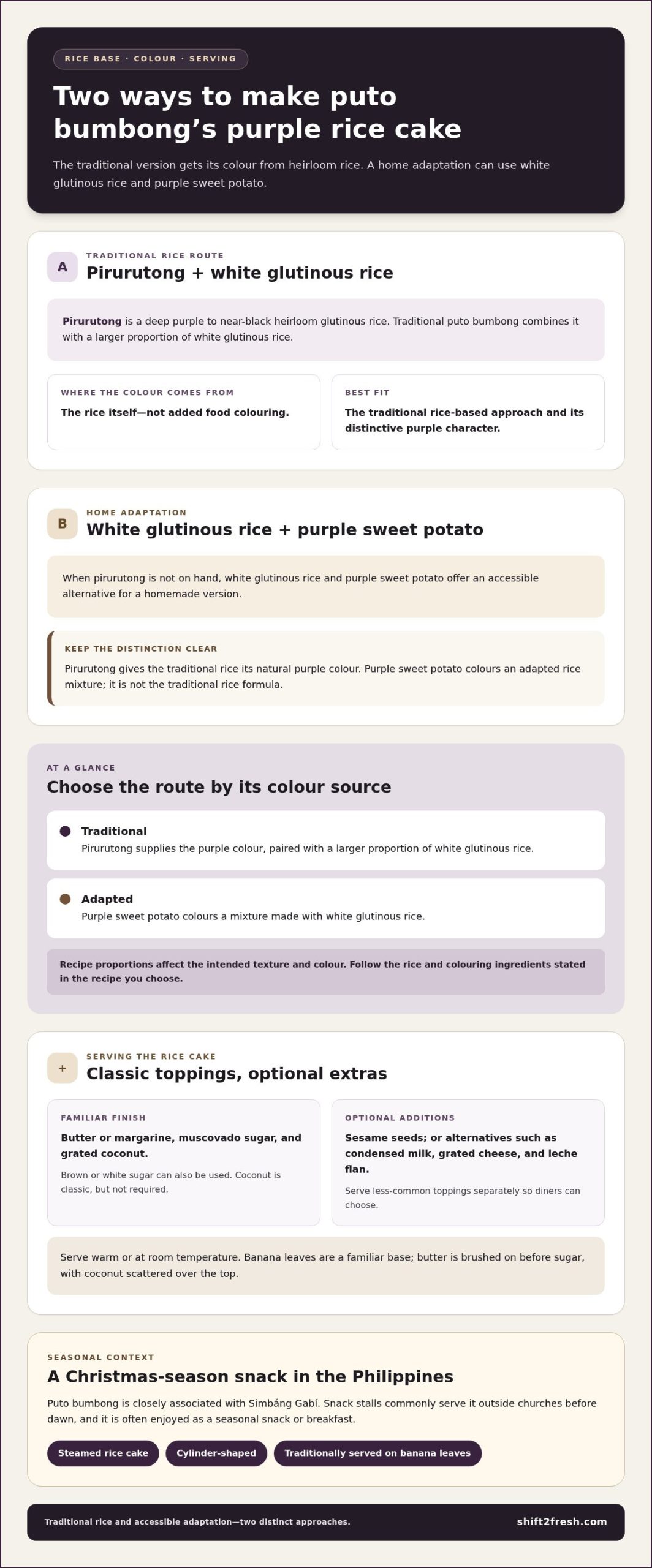
- Start with the traditional rice when authenticity is your priority. Puto bumbong is made with pirurutong, a deep purple to near-black heirloom variety of glutinous rice. Its distinctive colour comes from the rice itself, not from added food colouring. Pirurutong is the traditional variety to look for when comparing recipes. The cake’s colour and steamed form, along with its seasonal associations, make it recognisable as puto bumbong.
- Understand how white glutinous rice accompanies the darker grain. Traditional puto bumbong uses pirurutong alongside a larger proportion of white glutinous rice. This combination preserves the distinctive purple character while making the rice base less dependent on the dark variety alone. When reviewing a recipe, check whether it names both rice types. Their proportions affect the intended texture and colour, so don’t assume every purple rice cake uses the same grain mix.
- Choose a practical route for your home kitchen. If pirurutong isn’t in your pantry, a recipe using white rice and purple sweet potato offers an alternative, not the traditional rice formula. Keep the distinction clear: pirurutong gives the classic rice-based colour, while sweet potato colours an adapted version. For the most traditional result, use a recipe calling for the heirloom rice; for an accessible adaptation, follow the recipe’s stated rice and colouring ingredients consistently.
- Plan the serving around the occasion. In the Philippines, puto bumbong is commonly eaten as a Christmas-season snack or breakfast, especially around Simbáng Gabí. At home, prepare it for a morning gathering or serve it as a seasonal snack. If you’re assembling Filipino pantry staples for holiday cooking, Filipino pantry items can help with your broader preparation. Keep the rice choice central, since it determines whether you’re following the traditional pirurutong approach or making an adaptation.
The name puto bumbong comes from Tagalog words meaning steamed rice cake and bamboo tube. Another related rice cake is putong sulot, a variation from Batangas and Pampanga made with white glutinous rice and available year-round. Its year-round availability distinguishes it from puto bumbong’s close association with Christmas, while offering another way to enjoy a steamed rice cake.
White glutinous rice and purple sweet potato
Traditional versions use pirurutong with white glutinous rice; modern adaptations may use white rice and purple sweet potato. Pirurutong supplies the natural purple colour, while sweet potato colours an alternative rice mixture.
Choose the rice and colour source
For a traditional base, combine pirurutong with white glutinous rice. Pirurutong is a deep purple to near-black heirloom glutinous rice, and recipes pair it with a larger amount of white glutinous rice. A modern adaptation can use white glutinous rice and purple sweet potato instead. Regular white rice is another substitute, but it produces a less chewy texture. Keep these approaches distinct: sweet potato changes the source of colour, while the rice choice affects the cake’s chew.
One recipe uses 1 1/3 cups of glutinous white rice and adds 4 chunks of purple sweet potato. Treat those amounts as a particular recipe’s proportions, not a universal formula. Traditional puto bumbong relies on the rice combination, while this adaptation uses the potato to tint its rice mixture purple.
Use purple sweet potato for an adapted colour
Boil the purple sweet potato before adding it to the rice mixture. One recipe uses 1 cup of water for boiling, then directs soaking the cooked potato overnight. This makes the sweet potato part of the recipe’s colour preparation, rather than a replacement for the rice itself. Add the potato as directed; the mixture’s colour comes from this ingredient in the adapted version.
To understand what makes the cake purple, note that traditional recipes use pirurutong, while this modern method uses purple sweet potato. These ingredients create colour in different ways, so don’t treat them as interchangeable. Follow the chosen method consistently throughout preparation.
Soak the rice
Place the chosen rice in water and soak it before grinding. One recipe soaks its rice varieties together for 2 days in 6 cups of water. Another directs soaking glutinous rice overnight in 3 cups of water. These are separate recipe methods, not steps to combine. Follow the soaking duration and water amount that match your chosen recipe. Avoid switching rice types midway, since each method sets up its own grinding step.
After soaking, drain the rice before processing. Check that the grains have softened throughout, rather than judging by the surface alone. Keep the rice mixture together if the recipe combines white rice with pirurutong. For a sweet potato adaptation, follow its separate instructions for adding the potato.
Grind soaked rice
Grind the soaked rice until it reaches the texture your recipe needs. A food processor took around 10 minutes to produce a very fine consistency in one preparation. Check the mixture during processing, because coarse grains can remain around the edges. Scrape them back into the centre, then continue until the rice is evenly ground.
Other recipes aim for a coarser texture, so don’t assume every method needs fine rice. One directs blending for 5 to 6 pulses. Use the result specified for your chosen method: fine ground rice and briefly pulsed rice are different preparations. Add purple sweet potato only at the stage your recipe directs.
Ingredients for homemade puto bumbong
Homemade recipes vary, so choose one ingredient list and follow its proportions. The versions below show how rice, liquid, colouring, and toppings work together.
- Choose a rice base. One recipe uses 2 cups of glutinous rice, while another combines 1 1/3 cups of sticky purple rice with 2/3 cup of long-grain purple rice. A separate version uses 1 cup of glutinous rice flour. These are different formulas, not ingredients to combine automatically. Pick the version that matches your method, then keep its rice type consistent through preparation.
- Measure the liquid for your chosen mixture. One recipe adds 6 tablespoons of water, while another uses 3 tablespoons of colored water. Don’t treat those amounts as interchangeable, because each belongs to a different ingredient list. Add the liquid gradually if the recipe directs, and aim for the texture described by that method. Too much liquid can change how easily the rice mixture can be shaped.
- Prepare the purple colouring. A recipe using rice flour calls for ¼ teaspoon of violet liquid food colouring. Another method gets its colour from purple rice or purple sweet potato. The approaches differ: food colouring adds hue directly, while purple rice or potato becomes part of the mixture. Follow one method rather than combining all the colouring options. This keeps the ingredient balance aligned with the selected recipe.
- Set out the toppings separately. One ingredient list uses 3 tablespoons of brown sugar or muscovado, ½ cup of grated coconut, and 1 tablespoon of butter or margarine for brushing. Another uses ¾ cup of muscovado sugar, 1½ cups of freshly grated coconut, and ½ cup of softened butter. These quantities belong to separate recipes. Measure the toppings for the version you chose, then add them after cooking.
- Consider ingredients that may matter to guests. Do puto bumbong ingredients include common allergens? Some recipes may include butter, coconut, condensed milk, or grated cheese as toppings. Check the ingredients you plan to use and consider diners’ known allergies before serving; you can keep toppings separate.
- Keep the ingredient list beside your cooking area. Note whether you chose rice grains or rice flour, along with the corresponding liquid and colouring. For example, don’t pair the flour recipe’s ¼ teaspoon of violet colouring with another recipe’s rice proportions without adjusting the method. Set the sugar, grated coconut, and butter or margarine within reach for finishing. This simple setup helps prevent mixing quantities from different recipes.
What are the traditional ingredients for puto bumbong?
Build a traditional version around its rice base, then add classic toppings after steaming. Keep the core ingredients distinct from optional modern substitutions.
- Use pirurutong as the defining rice. This heirloom glutinous rice has a deep purple to near-black colour. Traditional puto bumbong also combines it with a larger proportion of white glutinous rice, also called malagkit. Together, these grains form the traditional rice base. A recipe using only white rice and purple sweet potato does not follow the same traditional formula. It’s an adaptation, not the pirurutong-based version.
- Keep the rice varieties identifiable as you measure. Pirurutong provides the dark rice component, while white glutinous rice makes up the larger share in the traditional mixture. Recipes may vary in their precise ratio, so follow the quantities given rather than inventing a new measure. This distinction helps you understand ingredient lists: both rice types belong in the traditional combination, while purple sweet potato is used in an alternative method.
- Prepare coloured water only when your chosen recipe calls for it. One recipe adds 3 tablespoons of coloured water to the rice mixture. Treat this as a specific recipe instruction, not a universal quantity for every traditional version. Add it as directed, mixing it through the rice rather than pouring it over the finished cake. This step adds colour to that preparation, while pirurutong itself is naturally dark purple.
- Set out the classic finishing ingredients before serving. Brush the steamed rice cake with butter or margarine, then add muscovado, brown, or white sugar. Finish with grated coconut for the familiar combination of richness, sweetness, and soft coconut texture. Keep the toppings separate until serving so diners can choose their preferred balance. Sesame seeds are another occasional addition, but they aren’t essential to the rice mixture.
- Separate traditional ingredients from optional toppings. Condensed milk, grated cheese, and leche flan are less common choices, not required parts of the traditional rice base. When serving several people, place these additions apart from the butter, sugar, and coconut. This lets everyone taste the classic combination first, then try a variation without changing the whole batch.
- Check your ingredient list before cooking. A traditional list should name pirurutong and white glutinous rice, with butter or margarine, sugar, and grated coconut for finishing. If the list names purple sweet potato instead of pirurutong, it describes a modern adaptation. Choosing ingredients deliberately makes the difference clear while preserving the rice cake’s familiar topping options.
Shift 2 Fresh: Seasonal Filipino Fruits
Shift 2 Fresh can help with Filipino grocery shopping alongside your puto bumbong preparation. The store offers Filipino pantry items, seasonal Filipino fruits, and Asian vegetables, useful for planning a broader Filipino meal or adding produce to a festive table. Its mobile app ordering provides a way to place grocery orders from the UAE. For this recipe, focus on the rice and toppings in your chosen ingredient list; turn to the store for complementary Filipino groceries and seasonal produce. Browse the available offerings through mobile app ordering, then plan your meal around the ingredients you need. To explore Filipino groceries or ask about ordering, contact Shift 2 Fresh or visit shift2fresh.com.
Make Your Next Gathering a Little More Filipino
Let your first batch become the start of your own holiday tradition. Keep a short kitchen note on the rice, colouring, and toppings you chose, then adjust your next batch to match the texture and sweetness you enjoy. This makes the ingredients for puto bumbong easier to plan for another festive meal.
As you plan the table, think beyond the rice cake. Shift 2 Fresh offers Seasonal Filipino Fruits, Asian Vegetables, and Filipino Pantry Items to help round out a Filipino-inspired meal. Choosing complementary dishes can turn a single homemade recipe into a shared occasion, whether you’re cooking for family or welcoming friends.
Take the next step with your grocery planning and contact Shift 2 Fresh today. Enjoy making the recipe your own, and bring a little more Filipino tradition to your table.
Frequently Asked Questions
What type of rice flour or rice is used for puto bumbong?
Traditional versions use pirurutong, a dark glutinous rice, together with white glutinous rice. Some home recipes use glutinous rice flour instead. This is a different preparation, not a direct measurement swap for whole grains. If using flour, follow a recipe written for it, since its liquid amounts and mixing method differ from recipes that soak and grind rice.
What toppings are served with puto bumbong?
Butter or margarine, sugar, and grated coconut make up the familiar topping combination. Muscovado, brown, or white sugar provides the sweetness, while sesame seeds are another occasional addition. For a different finish, some versions use condensed milk, grated cheese, or leche flan. Serve extras separately so everyone can choose a topping without changing the flavour of every piece.
What ingredients are used for puto bumbong sauce or butter topping?
Puto bumbong is usually finished with a butter topping rather than a separate sauce. A recipe may use 1 tablespoon of butter or margarine for brushing, followed by brown sugar or muscovado and grated coconut. Brush the cooked rice cake first, then add the dry toppings so they cling to its surface. Keep the topping ingredients separate until serving.
What are common ingredient substitutes for puto bumbong?
Regular white rice can replace white glutinous rice, but the result is less chewy. Purple sweet potato can colour an adapted recipe, while traditional versions use pirurutong for their dark hue. These substitutions change the method and texture, so use a recipe designed for the substitute rather than replacing ingredients one for one.
What quantities of ingredients are needed for a home batch of puto bumbong?
One listed homemade formula uses 2 cups of glutinous rice, with topping quantities of ¾ cup muscovado sugar, 1½ cups freshly grated coconut, and ½ cup softened butter. Treat these as one recipe’s measurements, not universal proportions. Use its full instructions for the rice and liquid, and don’t combine these topping amounts with quantities from another recipe.
0 comments