

A little citrus can turn soy sauce into a bright, savory dip. A toyomansi recipe combines Filipino soy sauce and calamansi juice to make the Filipino dipping sauce called toyomansi. Add aromatics if you like, then let the sauce stand so the flavors meld.
If you enjoy a balance of salty and tart, this simple sauce delivers both without complicated preparation. Calamansi gives toyomansi its distinctive citrus flavor, while lemon or lime juice can stand in when that’s what you have.
Here, you’ll learn how to choose and mix soy sauce and citrus, add optional garlic, onion, or chili, and let the sauce infuse before serving. You’ll also find pairing ideas for grilled meats, seafood, noodles, and other Filipino favorites, along with tips for preparing it ahead.
Key Takeaways
- Use the recipe’s light soy sauce and citrus proportions as a starting point, then adjust the balance to suit your taste.
- Let the sauce stand at room temperature for at least 10 minutes before serving so its flavors can meld.
- Make the sauce a day ahead when convenient; its flavors meld further as it rests.
- Keep the chili optional, and use toyomansi as either a dipping sauce or a marinade.
Filipino soy-calamansi dipping sauce
Toyomansi combines Filipino soy sauce and calamansi juice in a savory, citrusy dipping sauce. Serve it with grilled meats, steamed or grilled fish and seafood, siomai, noodles, or porridge.
Make the Soy-Calamansi Dipping Sauce
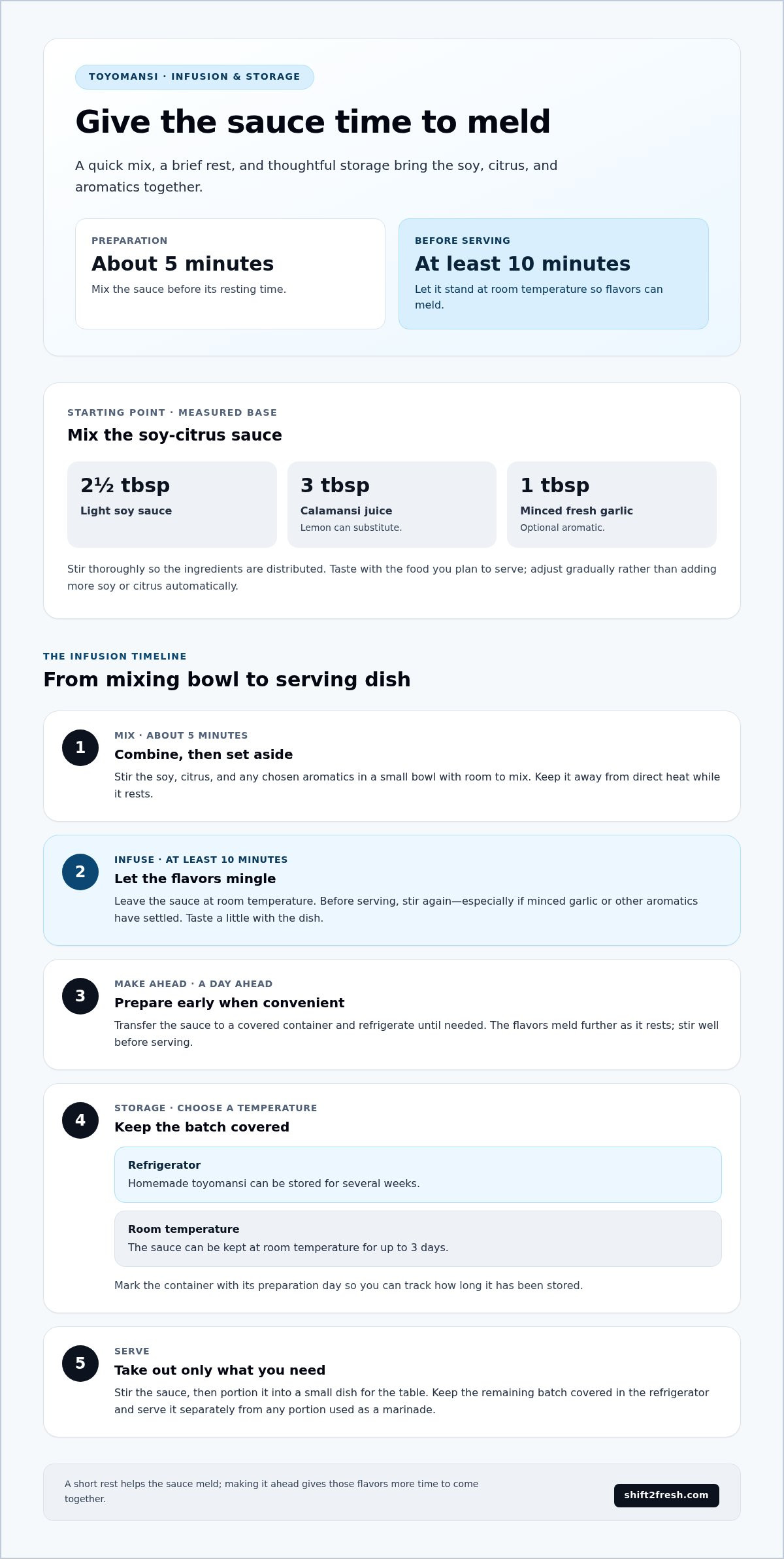
Mix 2½ tablespoons of light soy sauce with 3 tablespoons of calamansi juice. If calamansi isn’t available, use lemon juice instead. Stir in 1 tablespoon of minced fresh garlic until evenly distributed. This toyomansi recipe creates a punchy, salty-citrus base. Taste a small amount with a spoon, rather than adding extra soy or citrus automatically. The balance should suit the food you plan to serve.
- Taste the sauce with a bite of the main dish to find the right balance. If the soy flavor dominates, add citrus gradually and stir. If it tastes too tart, add soy sauce in small increments. Stir thoroughly after each adjustment so you can judge the result. Start with measured amounts: even small changes can shift the sauce’s salty, sour character.
Serve It with Common Dishes
Serve toyomansi with grilled meat, steamed fish, or grilled seafood. Its soy-citrus flavor also pairs well with siomai, noodles, and porridge. Match the serving style to the dish: offer it as a dip beside grilled food, or in a small dish with siomai. For noodles or porridge, start with a little sauce, taste, then add more as desired. Keep the sauce separate until serving.
- Use the same soy-and-citrus mixture as a marinade to season food before cooking. Coat the food evenly, but keep a separate portion for dipping. That way, you can serve fresh sauce alongside the cooked dish. Toyomansi works in both roles, but serving some separately preserves its bright, uncooked citrus flavor.
Infusing the sauce before serving
- Finish mixing the sauce, then set it aside before serving. Preparation takes about 5 minutes, but the citrus and soy need time to mingle. Stir thoroughly so the ingredients are distributed rather than settling in separate layers. Use a small bowl that leaves room for stirring, and keep it away from direct heat while it rests.
- Let the sauce stand at room temperature for at least 10 minutes. This brief infusion allows the flavors to meld before they reach the table. Stir once more after resting, especially if minced garlic or other aromatics have settled. Taste a little with the food you plan to serve, since the pairing can change how the balance comes through.
- Prepare the sauce a day ahead to get part of the meal ready early. As the flavors meld, the citrus and aromatics blend with the soy. Transfer the sauce to a covered container and refrigerate until needed. Before serving, stir well to redistribute the ingredients.
- Store homemade toyomansi in the refrigerator for several weeks. It can also be kept at room temperature for up to 3 days. For planned meals, refrigeration gives you a straightforward way to keep a batch ready. Mark the container with its preparation day so you can track how long it has been stored.
- Bring out only the amount you need, and stir before serving. For example, set a small portion beside siomai and keep the rest covered in the refrigerator. This makes serving simple and avoids repeatedly bringing the full batch to the table. If you prepared the sauce ahead, taste it again after stirring to see how the flavors have melded.
Toyomansi can be made a day ahead, and the flavors improve as they meld. That advance preparation centers on allowing the sauce’s existing flavors to come together; the make-ahead choice is useful when you want that melding to happen before serving.
Optional chili and aromatics
Add chili and aromatics to customize the sauce’s heat and fragrance. Adjust sweetness, saltiness, or spice gradually, tasting after each addition.
Add Optional Chili and Aromatics
Chop 1 Thai red chili and stir it into the sauce for extra heat; leave it out for a milder dip. Another option is 2 minced bird’s eye chilies, with the amount adjusted to taste. Add ¼ cup finely minced shallot or red onion for a sharper savory note. Use minced garlic for aroma, and stir well so each addition spreads through the sauce.
- Choose aromatics to complement the dish instead of adding everything by default. Garlic and shallot, for example, add a savory edge, while chili brings heat. If serving guests with different spice preferences, leave out the chili at first. Put chopped chili on the side so everyone can add it to their own portion.
Adjust the Flavor
Taste a small spoonful, then change one quality at a time. For more saltiness, add a little soy sauce or tamari and stir before tasting again. The recipe can use 3 tablespoons of tamari or another soy sauce. For more heat, mix in chopped chili gradually. To make the dip sweeter, stir in a small amount of sugar, then taste again.
- Use a small spoon to measure additions, and taste between changes. If the sauce becomes too salty, add citrus juice to restore a tart balance. If it gets too spicy, add more of the soy-citrus base rather than more chili. Make one adjustment at a time so you can control the result.
- For a shared meal, prepare the base and divide it into portions. Leave one plain, add chili to another, and extra shallot to a third. This gives diners a choice without changing the flavor of the whole batch. Keep the additions separate until serving, especially when guests prefer different heat levels.
Soy sauce and citrus ingredients
- Use light soy sauce and citrus as the foundation. One measured version combines 2½ tablespoons of light soy sauce with 3 tablespoons of calamansi or lemon juice. If calamansi is unavailable, lemon juice is a practical substitute for the citrus portion. Measure both ingredients first, then stir them together to create a consistent base before adding optional ingredients.
- Choose citrus based on what you have and the flavor you want. Calamansi gives this Filipino sauce its characteristic citrus flavor, while lemon juice can replace it. Lime juice is another alternative in a variation that uses ¼ cup of citrus juice. Use one type of juice consistently in each version rather than automatically combining different citrus measures.
- Keep recipe measurements together rather than mixing quantities from separate versions. For example, pair 2½ tablespoons of light soy sauce with 3 tablespoons of citrus in one formulation. Another variation calls for ¼ cup of calamansi or lime juice and includes 1 tablespoon of white vinegar. These are different ingredient proportions, so choose one approach before mixing.
- Measure the soy sauce with a tablespoon, then add the citrus gradually. Stir after each addition and taste a little with the food you plan to serve. This helps you judge the salty-tart balance in context. If you substitute lemon for calamansi, begin with the recipe’s stated citrus measure and adjust only after tasting.
- For a dependable first batch, follow one complete set of measurements from start to finish. Don’t use the ¼-cup citrus amount alongside the 3-tablespoon version unless intentionally adapting the proportions. Record which citrus you used, calamansi, lemon, or lime, so you can repeat the combination you prefer next time.
The toyomansi recipe yields 4 ounces of sauce, giving you a clear total to measure against when preparing this soy sauce and citrus mixture.
Shift 2 Fresh: Seasonal Filipino Fruits
Shift 2 Fresh is a useful next step when you want Filipino ingredients for home cooking beyond this sauce. Explore its Seasonal Filipino Fruits, Asian Vegetables, and Filipino Pantry Items to bring more Filipino flavors into everyday meals. Mobile App Ordering offers a convenient way to browse the grocery selection.
For a meal built around toyomansi, consider what else you’d like to serve alongside the dip, then browse pantry items and produce to shape the menu. Seasonal fruits can also add a fresh finish to the table. Visit Shift 2 Fresh online or contact the team to explore its offerings.
Bring More Filipino Flavors to Your Table
Let your next meal inspire you to explore more than one dipping sauce. A toyomansi recipe can be a starting point for experimenting with the Filipino ingredients and flavors you enjoy. Pair your cooking plans with seasonal fruit, vegetables, and pantry staples, then try a new dish alongside familiar favorites.
Shift 2 Fresh offers Seasonal Filipino Fruits, Asian Vegetables, and Filipino Pantry Items for home cooks in the UAE. Browse its selection when you’re planning a Filipino-inspired meal or looking for ingredients to add variety to your kitchen. Each new ingredient can spark a different combination, whether you’re preparing a simple lunch or sharing dinner at home.
Ready to explore ingredients for your next meal? Contact Shift 2 Fresh and take your next cooking idea from plan to plate.
Frequently Asked Questions
What is Toyomansi?
Toyomansi is a Filipino soy-citrus condiment: soy sauce provides the savory base, and calamansi adds tartness. Serve it as a dip or use it to season meat and seafood before cooking. For a simple meal, serve it alongside grilled fish or siomai, and let diners choose how much sauce to add to each bite.
What ingredients are needed for a basic toyomansi recipe?
A basic toyomansi recipe calls for soy sauce, calamansi juice, and minced garlic. Substitute lemon juice if calamansi isn’t available. Keep the mixture simple or add aromatics such as shallot, red onion, or chili for extra flavor. Prepare the ingredients before mixing, and choose additions to suit the dish and diners’ preferences.
What are the measurements for soy sauce, calamansi juice, garlic, and pepper?
One version uses 2½ tablespoons of light soy sauce, 3 tablespoons of calamansi juice, and 1 tablespoon of minced fresh garlic. Use lemon juice instead if calamansi is unavailable. Pepper isn’t essential to the basic combination; add it according to your taste, then stir and sample the sauce with the food you plan to serve.
How do you make toyomansi dipping sauce step by step?
Measure the soy sauce and citrus into a small bowl, then stir them together. Add minced garlic and mix until evenly distributed. Taste a little with the dish you plan to serve, since the pairing can affect how salty or tart the sauce seems. If needed, adjust one ingredient at a time and stir again before serving.
How do you use toyomansi as a marinade for meat or seafood?
Coat meat or seafood with toyomansi before cooking, turning each piece so the mixture reaches all sides. Choose a dish that suits the soy-citrus flavor, such as grilled fish or meat. Keep any dipping portion separate from the marinade, and follow the cooking instructions for the ingredient you’re preparing.
0 comments