

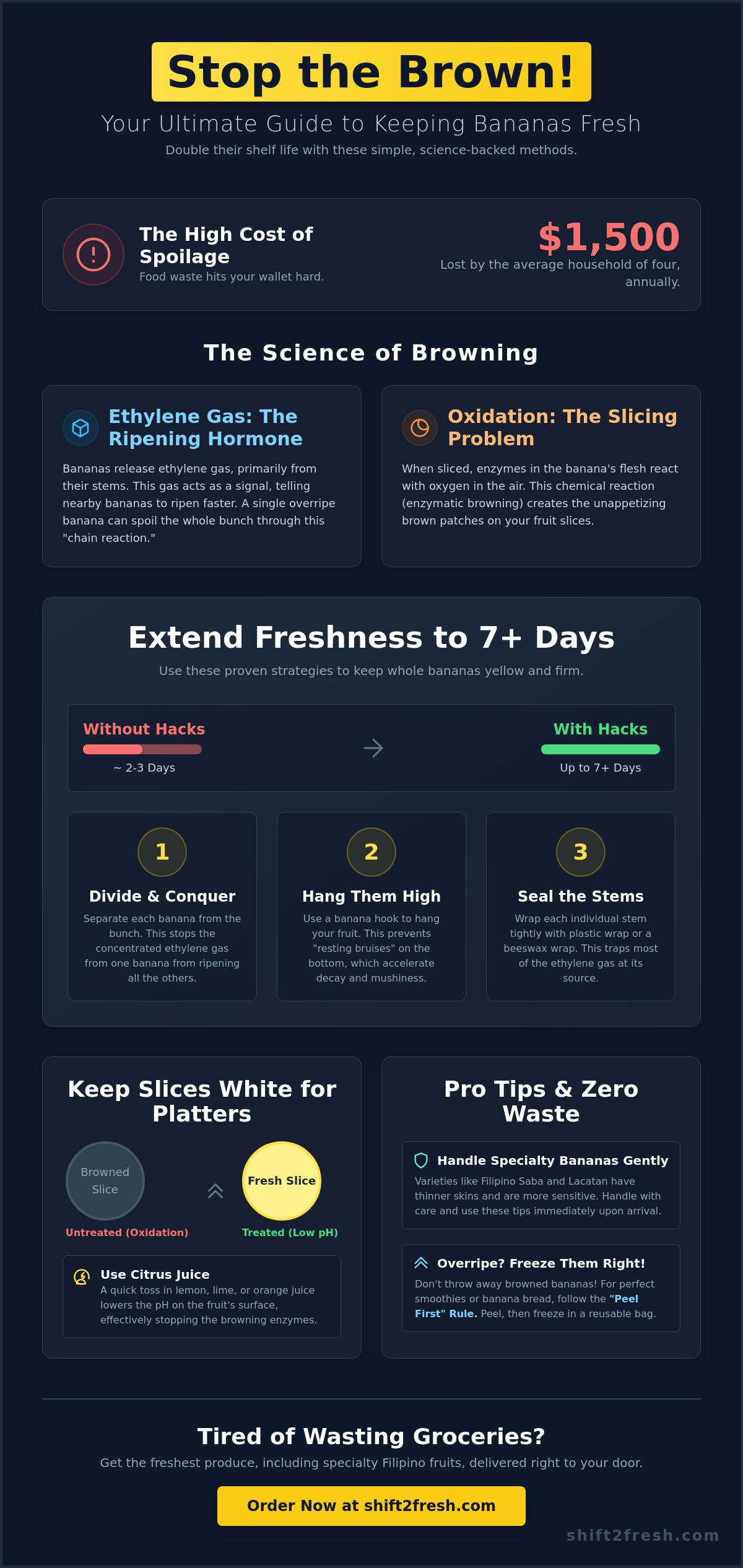
Did you know the average household of four loses about $1,500 every year to food waste? A huge chunk of that cost comes from those bright yellow bunches turning into a mushy, brown mess before you can even grab a bowl of cereal. It’s incredibly frustrating to watch your groceries spoil, especially when the intense humidity in the UAE seems to turn a firm banana into a soggy disaster overnight. You want to enjoy that perfect creamy texture, not toss your hard earned money into the bin. Mastering how to keep bananas from browning is the best way to protect your budget and your breakfast. Even with the 2026 arrival of gene-edited, non-browning varieties in global markets, most of us are still dealing with traditional fruit that ripens at lightning speed.
This guide will help you master the science of ethylene gas and oxidation to effectively double the shelf life of your fruit. We’ll cover practical hacks to keep whole bunches yellow for seven days or more, along with pro tips for keeping slices white for your party platters. We will also look at the best ways to handle delicate imported Filipino varieties so they stay fresh from the moment they arrive via our mobile app until the very last bite.
Key Takeaways
- Understand how ethylene gas acts as a ripening hormone so you can strategically slow down the aging process of your fruit.
- Discover the “Divide and Conquer” method and the best materials for sealing stems to learn how to keep bananas from browning for up to a week.
- Learn how to use simple pantry staples like citrus juice or honey water to prevent oxidation and keep fruit slices white for party platters.
- Get specific handling tips for specialty varieties like Saba and Lacatan to ensure they reach the perfect ripeness for cooking or snacking.
- Find out the “peel first” rule for freezing overripe fruit to create the perfect base for smoothies and professional-grade banana bread.
The Science of Ripening: Why Bananas Turn Brown
Understanding the chemical shifts inside your fruit is the first step in learning how to keep bananas from browning. The process is a complex biological transition known as enzymatic browning. As a banana matures, its internal starches break down into sugars. This makes the fruit delicious, but it also compromises the cellular integrity of the peel and flesh. It’s helpful to distinguish between skin browning and flesh browning. Often, a spotted peel hides a perfectly firm interior. However, once physical bruising occurs, the cell walls rupture. This allows enzymes to leak out and react with the air, turning the fruit mushy and dark almost instantly.
The Role of Ethylene Gas
Bananas are classified as climacteric fruits, meaning they don’t stop ripening once they leave the tree. They produce a gaseous plant hormone called ethylene. The Science of Ripening explains how this gas functions as a messenger. Bananas literally “talk” to each other through the air. When one fruit begins to ripen, it emits ethylene, which signals nearby fruits to start their own ripening process. This is why a single bruised or overripe banana can trigger a chain reaction that spoils an entire bunch. In the high humidity of the UAE, this gas trapped around the fruit can accelerate decay significantly. When you’re dealing with Seasonal Filipino Fruits like Lacatan, the ethylene production can be even more intense because these varieties are often thinner skinned and more sensitive to environmental changes.
Oxidation and Sliced Fruit
The moment you peel or slice a banana, you initiate a race against time. The fruit’s flesh contains polyphenol oxidase, an enzyme that reacts aggressively with oxygen. This chemical reaction creates melanin, resulting in those unappetizing brown or grey patches on your fruit salad. To win this battle, you must disrupt the enzyme’s environment. The most effective way to do this is by lowering the surface pH. Since these enzymes cannot function in highly acidic conditions, a quick splash of citrus can halt the process. Mastering these chemical triggers is the secret to how to keep bananas from browning when you need them to stay white and fresh for a party platter or school lunch.
While biotechnology is evolving, such as the 2026 approval of gene-edited non-browning bananas in Japan and Brazil, most consumers still deal with the natural oxidation process. By managing the air exposure and gas concentration around your fruit, you can effectively hit the pause button on nature’s clock.
Proven Strategies for Keeping Whole Bananas Fresh
Living in the UAE presents a unique challenge for fruit storage. The intense heat and high humidity levels mean that imported produce can ripen at an alarming rate. If you leave a bunch sitting on your kitchen counter during a humid afternoon, they might be overripe by the time you wake up the next morning. The first rule of thumb is to “Divide and Conquer.” Most people keep their fruit in a single bunch, but this concentrates ethylene gas in one spot. By separating each banana from the crown, you reduce the gas concentration and give yourself more time to eat them. It’s a simple, effective trick for how to keep bananas from browning that many people overlook.
Hanging your bananas is another essential strategy. When fruit rests on a hard counter or in a bowl, the weight of the bunch causes “resting bruises” on the bottom fingers. These bruises rupture cell walls and trigger rapid decay. Using a banana hook or even a simple piece of string allows air to circulate freely around each piece. If you’ve just received a delivery of fresh Filipino fruits through our mobile app, hanging them immediately helps maintain that premium quality you expect from imported varieties.
The Stem Wrapping Technique
Most of the ethylene gas that triggers ripening is released from the stem, or crown, of the banana. By sealing this area, you can significantly slow down the maturation process. Plastic wrap is the most common choice, but eco-friendly beeswax wraps are often more effective because they provide a tighter, more consistent seal. To do this correctly, wrap each stem individually after you’ve separated the bunch. This method can extend the “yellow life” of your fruit by an extra 3 to 5 days. Research from the Harvard T.H. Chan School of Public Health suggests that proper storage techniques are just as important as using citrus to prevent sliced bananas from browning later on when you’re ready to serve them.
Ideal Storage Environments
Bananas are happiest in the “Goldilocks zone” between 13°C and 15°C. In the UAE, your room temperature is likely much higher, making a cool pantry or a temperature-controlled kitchen an ideal spot. While many people believe the refrigerator is the enemy, it’s actually a useful tool once the fruit has reached your desired ripeness. The cold will turn the peel dark brown or black almost immediately, but the flesh inside will stay firm and sweet for several more days. Just remember to keep them away from other ethylene producers like apples, avocados, and tomatoes. These gas-heavy neighbors will undo all your hard work and cause your bananas to spoil prematurely.
Best Methods to Prevent Sliced Banana Browning
Once you peel and cut a banana, you’ve started a high-stakes countdown. The exposed surface immediately begins reacting with oxygen in the air, leading to that unappetizing grey or brown tint. To master how to keep bananas from browning once they’re sliced, you have to look at the science of enzymatic browning. While preserving whole bunches is about managing gas, keeping slices fresh is all about managing oxygen exposure and surface pH levels. If you’re preparing a fruit platter for a gathering in the UAE, you need a method that survives both the heat and the clock.
One of the most effective flavor-neutral methods is the Honey Water Hack. By mixing two tablespoons of honey into one cup of water and soaking your slices for 30 seconds, you create a physical coating that blocks oxygen. Unlike lemon juice, this doesn’t alter the creamy sweetness of the fruit. For those who want to maintain a firm, crisp bite, the Club Soda method is a surprising alternative. The carbonation and minerals in the water help preserve the cellular structure of the slice while preventing it from turning dark. Always store your treated slices in an airtight container to minimize any further air contact before serving.
Fruit Juice Washes Compared
Not all juices are created equal when you’re treating your fruit. Lemon juice is the undisputed champion of effectiveness because its high acidity shuts down enzymes instantly. However, it adds a sharp tartness that might not suit every palate. If you’re looking for a middle ground, pineapple or orange juice offer moderate protection with a much sweeter profile that complements the banana’s natural flavor. Apple cider vinegar is technically effective at lowering pH, but the pungent aroma and aftertaste make it a poor choice for fresh eating. It’s better reserved for bananas destined for a cooked chutney or savory sauce where the vinegar profile fits the dish.
Advanced Preservation Techniques
For professional results or bulk preparation, simple kitchen juices might not be enough. Using pure citric acid powder dissolved in water provides a consistent, flavorless dip that keeps slices white for hours. Similarly, an ascorbic acid (Vitamin C) dip is the industry standard for commercial fruit salads. If you’re prepping for the week ahead, vacuum sealing your sliced bananas for smoothie packs is the ultimate way to eliminate oxygen entirely. This is particularly useful if you’ve ordered a large batch of Seasonal Filipino Fruits and want to prep them all at once. By removing the air, you stop the browning process in its tracks, ensuring your Monday morning smoothie looks as fresh as it tastes. These methods offer the most reliable answers for how to keep bananas from browning when presentation and texture are your top priorities.
Handling Specialty Filipino Bananas: Saba and Lacatan
Most freshness guides focus on the standard Cavendish variety found in every global supermarket. However, when you’re dealing with Seasonal Filipino Fruits, the rules change. Varieties like Saba and Lacatan have unique physiological traits that dictate how to keep bananas from browning in the UAE’s specific climate. These fruits often endure a long shipping journey from Southeast Asia, meaning they arrive with a different metabolic rate than local produce. Managing their transition from the delivery box to your fruit bowl is essential to prevent a sudden, brown collapse.
Saba Banana Specifics
Saba bananas are the starch-heavy staples of Filipino cooking. One common mistake is throwing them away because the skin looks dark or mottled. Actually, Saba skins are much thicker and can appear bruised while the creamy, white flesh inside remains perfectly firm. If you’re planning to make Turon or Nilaga, keep them in a cool, dry area away from direct sunlight. If you’ve bought a large bunch and can’t use them all, freezing is your best friend. Peel the Saba first, place them in a freezer-safe bag, and they’ll stay fresh for months. This is the ultimate way to ensure you always have the right base for your favorite Filipino desserts without worrying about how to keep bananas from browning on the counter.
Lacatan and Latundan Care
While Saba is rugged, the Lacatan and Latundan varieties are much more delicate. They possess incredibly thin skins that offer little protection against physical impact or temperature swings. You’ll know they’ve reached peak sweetness when the skin turns a vibrant, deep yellow. Be careful about putting them in the fridge too early; these tropical fruits are highly susceptible to chilling injury. If they’re exposed to temperatures below 12°C before they’re fully ripe, the peel will turn a dull, unappetizing grey. Keep them at room temperature until those first few sugar spots appear. For a guaranteed fresh supply delivered straight to your door, check out our guide to the best Online Supermarket Dubai options for reliable grocery delivery.
Because these varieties are so sensitive to handling, it’s always better to order in smaller, frequent batches rather than stocking up for weeks. If you want to experience the best quality produce, you can order your favorite Filipino fruits through our dedicated mobile platform today.
Zero Waste: What to Do with Browned Bananas
Even with a perfect grasp of how to keep bananas from browning, nature eventually wins. When your fruit reaches that speckled, dark stage, don’t view it as a failure. View it as an ingredient. Research shows that the average household of four wastes approximately $1,500 worth of food every year. Bananas are a major contributor to this figure, often being tossed the moment the peel looks unappealing. However, overripe bananas are actually a concentrated source of natural sugar and moisture. They’re far more valuable in your kitchen now than they were when they were bright yellow. By pivoting from preservation to preparation, you can achieve a zero waste kitchen while enjoying some of the best treats the UAE summer has to offer.
One of the most popular ways to use these fruits is making “Nice Cream.” This is a dairy-free, healthy alternative to traditional ice cream that is perfect for the desert heat. Simply blend frozen overripe chunks until they reach a soft-serve consistency. You can also dehydrate slices that have started to soften. While they might not be as pretty as fresh slices, dehydrating them into chips concentrates their sweetness and provides a chewy, fiber-rich snack for school lunches. If you have a surplus of Seasonal Filipino Fruits like Saba that have gone soft, their high starch content makes them the ultimate base for a thick, caramelized banana jam.
Freezing for Long-Term Use
If you aren’t ready to bake immediately, the freezer is your best friend. There’s one non-negotiable rule: peel them first. If you freeze a banana in its skin, the peel becomes a thin, mushy membrane that’s nearly impossible to remove cleanly. Follow this step-by-step process for the best results:
- Slice the peeled fruit into “coins” about one inch thick.
- Flash-freeze them by spreading the coins on a parchment-lined tray for two hours. This prevents them from clumping into a giant frozen brick.
- Transfer the frozen coins into a vacuum-sealed bag or a container with as much air removed as possible to prevent freezer burn.
- For smoothies, use them straight from the freezer. For baking, thaw them in a bowl to catch the sweet liquid that escapes during the process.
Quick Recipes for Overripe Fruit
Overripe bananas are a powerhouse natural sweetener. You can often replace half the sugar in a muffin or cake recipe with mashed browned fruit. For a quick morning meal, try 3-ingredient pancakes by mixing one mashed banana, two eggs, and a pinch of cinnamon. It’s a gluten-free way to ensure no fruit goes to waste. You can also mix mashed fruit with raw oats and Filipino pantry items like coconut flakes to create no-bake energy bites. These strategies ensure that even when you’ve reached the limit of how to keep bananas from browning, you’re still getting every bit of value from your grocery budget.
Master Your Kitchen’s Freshness Today
You now have the scientific and practical tools to stop wasting money on spoiled produce. Don’t let humidity win. By managing ethylene gas through the “divide and conquer” method and using simple pantry staples like honey or lemon to protect your slices, you’ve mastered how to keep bananas from browning. Whether you’re handling rugged Saba for cooking or delicate Lacatan for snacking, these techniques ensure your fruit stays at its peak even in the UAE’s challenging heat.
With over 45 years of food industry experience, Shift 2 Fresh is your trusted source for directly imported seasonal Filipino fruits and Asian vegetables. We make it easy to stock your kitchen with premium produce via our mobile app. You’ll even get free delivery in the UAE on all orders over AED 500. Shop Fresh Filipino Bananas and Produce at Shift 2 Fresh today and experience the difference that expert sourcing and proper storage can make in your home. It’s time to stop the waste and start enjoying the creamy, sweet taste of perfectly ripe fruit.
Frequently Asked Questions
Can I store bananas in the refrigerator?
You can store bananas in the refrigerator, but you should wait until they reach your desired ripeness first. The cold temperature acts as a “pause button” for the ripening process. While the peel will turn dark brown or black almost immediately due to chilling injury, the fruit inside stays firm and sweet for several extra days. It’s an excellent way to prevent them from becoming mushy too quickly.
Does wrapping the stems really work to stop browning?
Yes, wrapping the stems is a highly effective way to slow down the aging process. Most of the ethylene gas that triggers ripening is released from the crown of the bunch. By sealing this area with plastic or beeswax wrap, you trap the gas and prevent it from reaching the rest of the fruit. This simple technique can extend the yellow life of your bananas by an extra 3 to 5 days.
How do I keep bananas fresh in the hot UAE climate?
The best way to handle the UAE’s heat is to store your fruit in the coolest, darkest part of your home away from windows. High humidity levels in the region can cause imported produce to ripen at an accelerated rate. Hanging your bunch on a hook to improve air circulation is a vital step in how to keep bananas from browning when indoor temperatures are high. Avoid keeping them near the stove or toaster.
Why do bananas ripen faster when they are in a bunch?
Bananas ripen faster in a bunch because they produce ethylene gas, a natural ripening hormone. When they are clustered together, the gas is concentrated in a small area, signaling all the fruits to ripen at the same time. This creates a chain reaction where one ripening banana speeds up all its neighbors. Separating the bunch helps the gas disperse, which slows down the maturation of each individual finger.
What is the best juice to use to keep banana slices from turning brown?
Lemon juice is the most effective option because its high acidity level shuts down the enzymes that cause oxidation. If you find the taste of lemon too sharp, pineapple or orange juice are great alternatives that provide a sweeter flavor profile. For a completely neutral result, a quick soak in honey water creates a physical barrier against oxygen without changing the fruit’s natural creaminess.
Is a brown banana still safe to eat?
A brown banana is safe to eat as long as it doesn’t show signs of mold or have a fermented, vinegary smell. Those brown “sugar spots” on the peel are actually a sign that the starches have converted into natural sugars. These bananas are at their peak sweetness and have a soft texture. They are the perfect choice for baking, smoothies, or making a quick batch of healthy pancakes.
How long do bananas last once they are cut?
Cut bananas typically stay fresh for about 2 to 3 hours at room temperature before they begin to darken. If you treat the slices with an acidic wash and store them in an airtight container in the fridge, you can keep them looking fresh for up to 24 hours. This is the most reliable method for how to keep bananas from browning when you need to prep a fruit platter in advance.
Can I freeze bananas with the peel on?
You can freeze them with the peel on, but it isn’t recommended because it makes them very difficult to use later. The skin becomes thin and mushy when thawed, sticking to the fruit and making a mess. It’s much better to peel your bananas and slice them into coins before freezing. Flash-freezing them on a tray first ensures they don’t stick together in the bag, making it easy to grab exactly what you need.
0 comments