

Uncertainty about food can affect more than what’s on your plate. It can make everyday choices feel harder. Finding peace of mind knowing where my food comes from starts with understanding its origin, the route it takes, and what information is available. In the UAE, that context can help you make informed choices, while food insecurity may limit access to nutritious options.
It’s reasonable to want food that feels familiar, nourishing, and trustworthy. Sourcing information can answer some questions, but it cannot remove every uncertainty, and access to nutritious food depends on more than origin alone. This article explains food traceability, the benefits and limits of knowing a food’s background, and how food insecurity can affect access to nutritious choices. You’ll also find practical ways to use sourcing information in your decisions while keeping affordability and access in view.
Key Takeaways
- Learn how traceability records can help you follow food through its supply chain and understand what origin information can tell you.
- Use labels and product details to look for sourcing clues, while recognizing that the useful information can vary by food type.
- Ask focused questions about where food comes from and how its source is recorded to make more informed grocery and dining choices.
- Balance sourcing preferences with access and affordability, since knowing a food’s origin doesn’t resolve every concern about nutritious choices.
What does food traceability mean and how does it work?
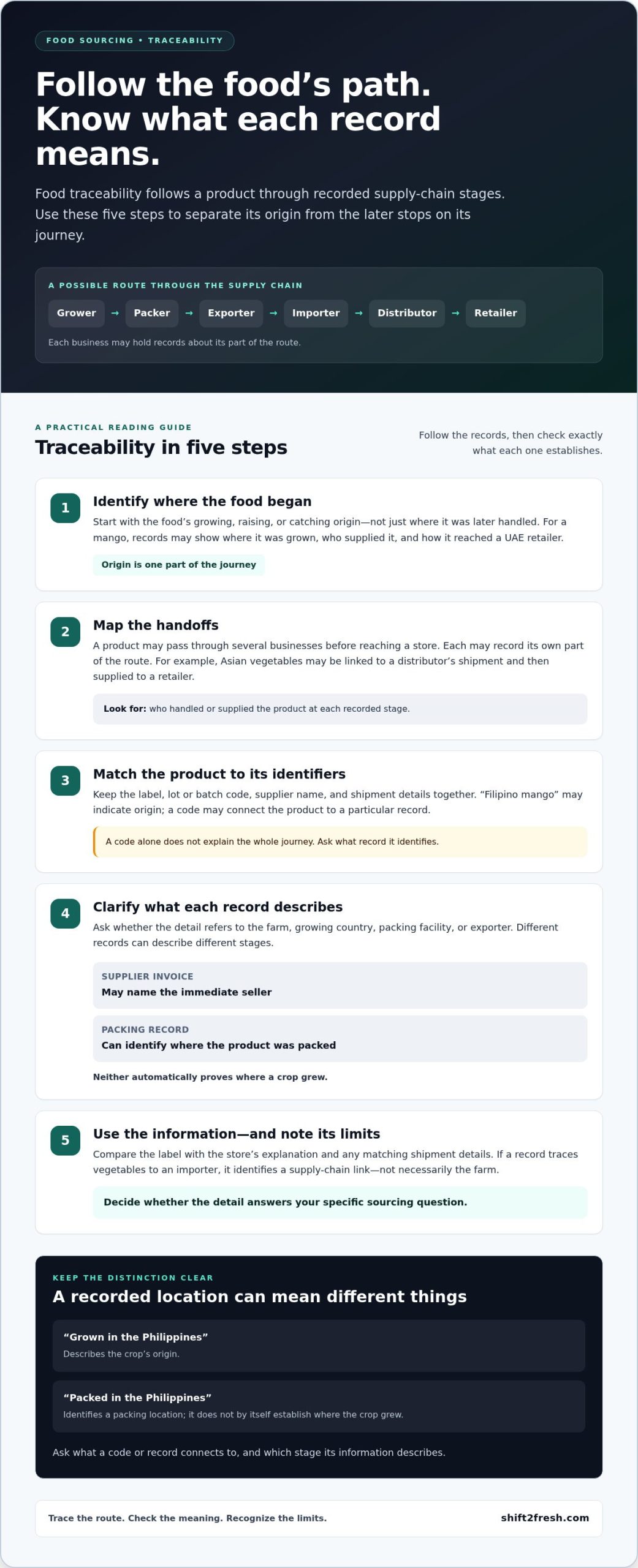
- Begin by identifying the food’s origin. Traceability follows food through recorded stages of its supply chain. For a mango, records may show where it was grown, who supplied it, and how it reached a UAE retailer. To find peace of mind knowing where my food comes from, first distinguish where it was grown from the later stops in its journey.
- Map the handoffs in the supply chain. Food may pass from a grower to a packer, exporter, importer, distributor, and retailer. Each business may hold records about its part in that route. For example, a carton of Asian vegetables may be linked to a shipment received by a distributor and then supplied to a store.
- Match the product with its identifiers. Read the label and keep any lot or batch code, supplier name, and shipment details together. “Filipino mango” may indicate origin, but a code can help connect the product to a particular record. Ask what the code identifies instead of assuming it reveals the whole journey.
- Clarify what each record describes. A supplier invoice may name the immediate seller, while a packing record can identify where the product was packed. Neither automatically proves where a crop grew. Ask whether a record refers to the farm, growing country, packing facility, or exporter. That distinction grounds peace of mind knowing where my food comes from in specific details.
- Use the information to understand its limits. Compare the label with the store’s explanation and any matching shipment details. If a record traces vegetables to an importer, it identifies a supply-chain link, not necessarily the farm. Note what each detail establishes, then decide whether it answers your sourcing question.
How can I verify the origin of meat, seafood, fruits, and vegetables?
- Read the meat label carefully. Look for a stated country of origin, then distinguish it from the place of packing or processing. These locations may differ. For example, meat processed in one country may come from an animal raised elsewhere. Ask which location the origin statement describes and whether the package identifies the supplier or batch.
- Ask how seafood was sourced. Find out whether the fish was wild-caught or farmed, and ask for the catch area or farm location. A landing port or processing site may not be where it was caught or raised. For packaged fillets, compare the origin details with the product description and ask the retailer to explain unclear terms.
- Check fruit and vegetable packaging. Look for a country-of-origin statement on the label, carton, or store display. A packer’s address can show where produce was packed, not necessarily where it grew. For example, ask whether a mango’s listed location refers to its growing country or only its packing facility.
- Keep identifying details together. Save the receipt and photograph the label, including any batch or lot code. These details can help a retailer identify the shipment or supplier linked to your purchase. A code alone doesn’t explain origin, so ask what record it connects to and whether that record identifies the farm, fishing area, or supplier.
- Ask one precise follow-up question. Instead of asking only, “Where is this from?”, name the food and the detail you need: “Where were these tomatoes grown?” or “Was this fish caught or farmed?” Then clarify whether the answer refers to growing, catching, raising, packing, or processing. This separates a food’s origin from later handling locations.
What questions should I ask a grocery store or restaurant about food sourcing?
- Ask for the growing, raising, or catching origin. Be specific: “Where were these oranges grown?” or “Where was this fish caught?” At a grocery store, ask whether the answer refers to the farm, fishing area, packing site, or supplier. At a restaurant, name the dish and ingredient. This separates origin from later processing or handling.
- Ask how the store identifies its supplier. For packaged meat or vegetables, ask whether the label or batch code connects to a supplier record. For loose produce, ask what information accompanies the shipment. A clear answer distinguishes the supplier’s location from the food’s origin, such as a UAE-based distributor handling fruit grown abroad.
- Ask restaurants about ingredients in a specific dish. “Which country does the lamb in this dish come from?” is more useful than asking where the entire menu is sourced. If a dish has several ingredients, ask about the one that matters most to you. Then clarify whether the country named refers to where it was raised, grown, or processed.
- Ask whether sourcing changes. A retailer or restaurant may use different suppliers as products and shipments change. Ask how staff identify the current source for today’s mangoes or a seafood dish on the menu. If they name a country, ask whether it applies to the product currently sold or describes a usual source.
- Listen for details you can act on. Useful answers identify the food, its relevant origin, and the stage the information describes. “Packed in the Philippines” identifies a packing location, while “grown in the Philippines” describes crop origin. If the answer uses broad terms such as “imported,” ask which country and supply-chain stage it refers to.
For people experiencing food insecurity, sourcing questions may be less urgent than getting enough to eat. Prioritize access to food and resources for nutrition. When sourcing details are useful, asking clearly about ingredients and origins can help you make choices with the information available.
Calm suggests writing down things you’re excited about or grateful for to start the day positively. It also recommends noting personal strengths and imagining what a best friend would say when self-appreciation feels difficult. These practices offer a separate way to begin the day and approach self-appreciation.
What are the benefits and limitations of knowing where food comes from
- Use origin details to guide your choices. Knowing where tomatoes were grown can help you choose ingredients associated with a particular cuisine or growing region. A clear origin can also make shopping feel more informed. Treat it as one useful factor alongside food quality, your preferences, and what you can access.
- Separate origin from other assurances. A country name tells you where food was grown, raised, caught, or processed only if the label clarifies which. By itself, it doesn’t answer every question about handling, freshness, or production methods. Knowing a fish’s catch area, for example, doesn’t reveal every stage between landing and sale.
- Weigh advantages and drawbacks before deciding. Sourcing details can help you compare products, but may not resolve every concern. A named origin adds useful context, while a broad description such as “imported” may leave key details unclear. Decide which information matters most for the meal you plan to prepare.
- Keep access and nutrition in view. Food insecurity can limit access to nutritious choices, so origin preferences may not always be practical. If your usual vegetables are difficult to find, focus first on nutritious foods you can obtain and use. A sourcing preference should support your decisions, not make eating well feel less attainable.
- Set a realistic standard for reassurance. Clear sourcing information can contribute to peace of mind, but it cannot answer every question about a product. For a bag of leafy greens, you might learn the growing country yet have limited details about each handling stage. Use the information available to make a considered choice, and don’t treat origin alone as a complete measure of quality.
Pause before letting a sourcing detail shape your decision. Consider what it clarifies and what it leaves unanswered, then weigh both before reacting. An origin clue can inform a choice without settling every concern. The aim is neither to dismiss the information nor rely on it alone, but to judge how relevant it is to the decision at hand.
Shift 2 Fresh: Seasonal Filipino Fruits
Shift 2 Fresh offers seasonal Filipino fruits, Asian vegetables, Filipino pantry items, and Mobile App Ordering for shoppers in the UAE. If you’re looking for familiar Filipino ingredients or produce from the Philippines and South Asia, these offerings can help you find options that fit your cooking preferences. Use the sourcing questions from this guide as you shop: distinguish a food’s origin from where it was packed or handled, and look at the details provided for the specific item. Knowing the product category and origin can help you make choices that suit your meals, while access and personal needs remain part of the decision.
Explore the available options or visit Shift 2 Fresh online.
Make Your Next Food Choice With Intention
Let sourcing questions support your decisions without becoming another burden. Choose the details that matter most to your household, then use them to guide your next meal or grocery shop. Peace of mind knowing where my food comes from can start with a simple habit: notice what helps you feel informed, and keep asking clear, practical questions as your needs change.
If Filipino ingredients are part of your cooking, Shift 2 Fresh offers seasonal Filipino fruits, Asian vegetables, and Filipino pantry items. Exploring these options can help you plan meals around familiar ingredients and the foods you enjoy. Keep your priorities in view, including access to nutritious choices, and make each decision at a pace that feels manageable.
For a next step, contact Shift 2 Fresh to explore its grocery options. A thoughtful choice today can make your next meal feel more connected to your preferences and needs.
0 comments