

The key to how to cook saluyot is getting the timing right: a complete vegetable recipe takes around 15 minutes, while one version cooks the saluyot mixture for 10 minutes. Saluyot leaves soften as they cook, so pay attention to their texture rather than relying on the clock alone.
It’s easy to focus on the leaves, but the ingredients around them shape the dish just as much. This guide explains how to tell when saluyot is done, how to make dinengdeng with smoked fish, and what goes into adobong saluyot. You’ll also find a simple way to cook the leaves with garlic, onion, and tomatoes, so you can choose a preparation that suits the meal you have in mind.
Key Takeaways
- Judge doneness by the leaves’ texture, and add them at the right stage so they soften without losing their character.
- For dinengdeng, combine saluyot with smoked galunggong, bagoong monamon, and vegetables for a savory broth.
- Adobong saluyot brings together saluyot, garlic, soy sauce, vinegar, salt, and bagoong monamon.
- For a tomato-and-onion version, boil the vegetables briefly, then add the washed, salt-water-soaked leaves with the remaining ingredients.
Cooking time
- If you’re learning how to cook saluyot, prepare the vegetables before heating the pot. In one recipe, sitaw, okra, and ampalaya cook first. Add saluyot after those vegetables have cooked for 3 minutes. The full recipe takes around 15 minutes, so have everything ready before cooking.
- Cook the saluyot mixture for 10 minutes in that recipe. Stir gently so the leaves mix with the vegetables and broth. Check a leaf near the end. It should be softened; stop cooking when its texture suits you.
- This sequence shows how to cook saluyot with soy sauce and vinegar: combine the seasonings with the leaves and cook the mixture for 10 minutes. One adobo version uses 1 pack of saluyot, 1 tablespoon of soy sauce, and 2 tablespoons of vinegar, alongside garlic, salt, and bagoong monamon.
- To reduce saluyot’s slimy texture, avoid vigorous stirring and prolonged cooking. Add the leaves after firmer vegetables, then stir gently to distribute them. Their natural slippery texture will remain, but stopping when the leaves soften helps prevent them from becoming more cooked than you prefer.
- Prepare frozen or dried leaves before cooking. Thaw frozen saluyot and drain off excess water. Soak dried leaves until pliable, then drain them. Add either in place of fresh leaves, and judge doneness by softness rather than assuming fresh leaves’ cooking time applies.
- Store leftover cooked saluyot promptly in a covered container in the refrigerator. Reheat only the portion you plan to eat until hot throughout. As a basic precaution, wash the leaves and remove damaged pieces before cooking. Consider the seasonings and accompanying ingredients when choosing a dish to suit your dietary needs.
The recipe calls for combining the washed saluyot leaves with all the ingredients, bringing the components together in one dish.
Dinengdeng with saluyot and smoked fish
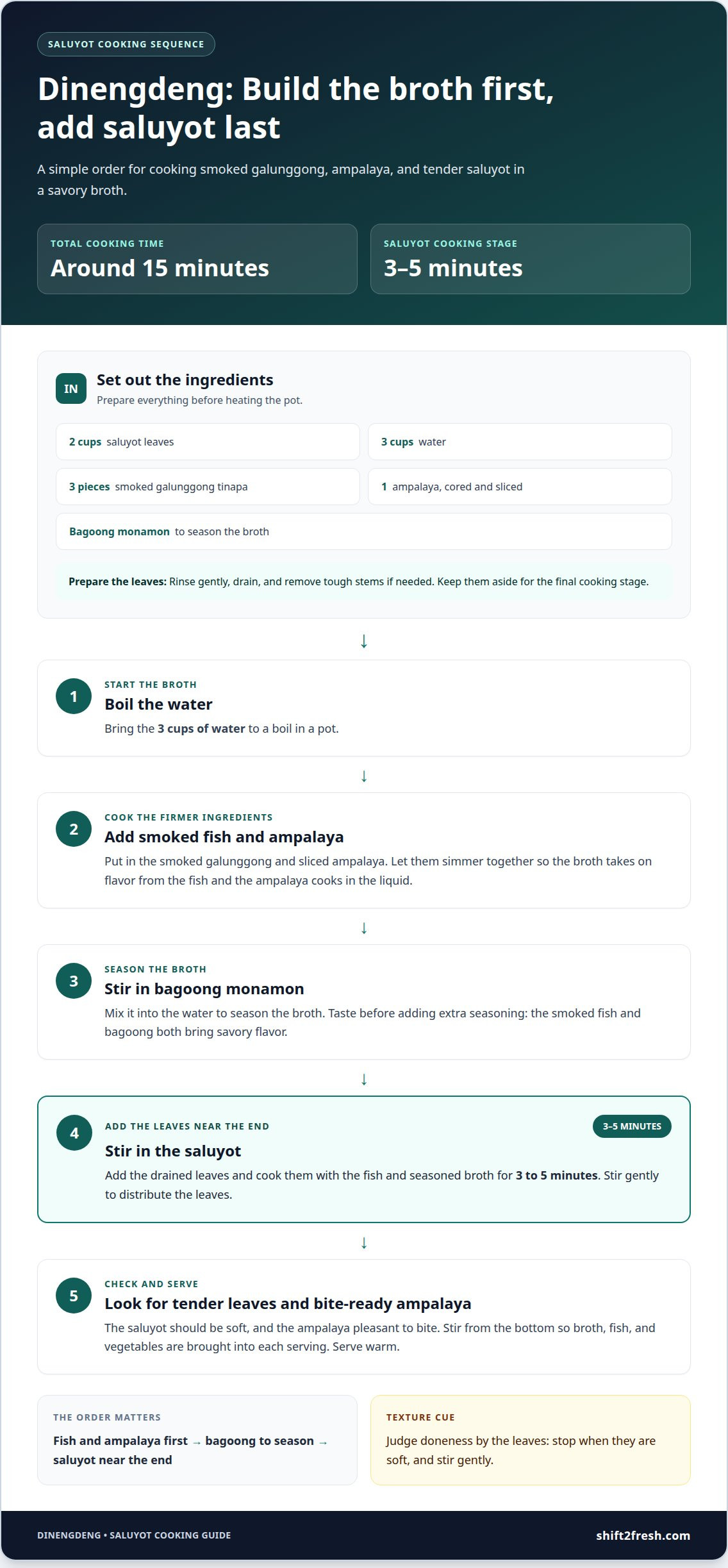
- For anyone learning how to cook saluyot in dinengdeng, start by measuring the ingredients. Set out 2 cups of saluyot leaves, 3 cups of water, 3 pieces of smoked galunggong tinapa, and 1 ampalaya, cored and sliced. Prepare everything before heating the pot.
- Rinse the saluyot leaves gently and drain them. Remove tough stems if needed, then set the leaves aside for the final cooking stage. Keep the sliced ampalaya and smoked galunggong beside the pot too, ready to add in sequence.
- Bring the 3 cups of water to a boil, then add the smoked galunggong and sliced ampalaya. Let them simmer together as the broth takes on flavour from the fish. Keep the ampalaya pieces in the liquid so they cook evenly.
- Stir bagoong monamon into the water to season the broth. Its savoury saltiness complements the smoked galunggong. Taste the broth before adding extra seasoning, since both ingredients already contribute distinct savoury flavours.
- Stir in the saluyot leaves and cook them with the smoked galunggong and bagoong monamon for 3 to 5 minutes. This is how to cook saluyot in this dinengdeng: add the leaves after the broth and other ingredients are prepared, then stir gently.
- Check the ampalaya and saluyot before serving. The ampalaya should be pleasant to bite, and the leaves should be soft and distributed through the soup. Stir from the bottom of the pot to bring broth, fish, and vegetables into each serving.
- Allow around 15 minutes to cook everything. Keep the order practical: prepare the ingredients, simmer the fish and ampalaya, then add the leaves near the end. Serve the dinengdeng warm, with smoked galunggong and vegetables divided among the portions.
Ingredients for adobong saluyot
Measure the adobo ingredients before cooking, and prepare the tomato-and-onion variation separately. Both dishes use saluyot, but their seasonings and cooking steps differ.
Prepare the Adobong Saluyot Ingredients
- Set out 1 pack of saluyot and 1/4 cup of bagoong monamon. Measure 1 tablespoon of soy sauce, 2 tablespoons of vinegar, and 1 tablespoon of salt. Keep each ingredient separate until you’re ready to combine them.
- Prepare 3 garlic, mashed, for the adobo mixture. Mash the garlic before cooking so it’s ready to mix with the measured seasonings. Keep the saluyot and seasonings close by, making it easier to add everything without interrupting the cooking sequence.
- Combine the adobo ingredients with the saluyot, then cook the mixture for 10 minutes. Stir so the bagoong monamon, soy sauce, vinegar, garlic, and salt spread through the leaves. The measured salt and bagoong both season the dish, so distribute them evenly rather than leaving concentrated patches.
Cook with Garlic, Onion, and Tomatoes
- For a tomato-and-onion preparation, set aside 3 medium ripe tomatoes and 1 medium yellow onion, cut into wedges. Wash the saluyot leaves, then soak them in salt water. This preparation is distinct from the adobo ingredient list above, so don’t assume its tomatoes and onion replace the adobo seasonings.
- Put the tomatoes and onion in water and bring them to a boil. Cover the pot and cook them for 3 minutes. This gives the vegetables their own brief cooking stage before you add the leaves.
- Combine the washed, soaked saluyot with the ingredients for this tomato-and-onion method. Stir gently to distribute the leaves through the pot. Keep the methods distinct: adobo uses measured vinegar, soy sauce, and bagoong monamon, while this variation starts with tomatoes and onion.
How do you cook saluyot with garlic, onion, and tomatoes?
- Gather 3 medium ripe tomatoes and 1 medium yellow onion. Cut the onion into wedges, then prepare the garlic and saluyot. Keep these ingredients separate until their cooking stages begin. This makes it easier to follow the sequence without leaving vegetables unattended.
- Wash the saluyot leaves carefully, then soak them in salt water. Drain them before adding them to the pot. This preparation helps remove grit and excess water that could otherwise dilute the tomato-and-onion broth.
- Place the tomatoes and onion in a pot with water. Bring the water to a boil, then cover the pot and cook the vegetables for 3 minutes. Keep the lid on during this short stage, so the tomatoes and onion cook together.
- Add the prepared garlic with the other ingredients for this variation. Let it join the tomato and onion mixture before adding the leaves. This keeps the aromatics in the broth rather than adding them after the saluyot has cooked.
- Combine the washed, drained saluyot with the ingredients and stir gently to distribute the leaves through the pot. Avoid leaving a compact clump in the centre, so they mix evenly with the tomatoes, onion, and garlic.
- Check the leaves as they soften, and serve once they’re tender. The recipe gives a 3-minute covered cook for the tomato and onion stage; it doesn’t give a separate timed finish for the leaves. Use their texture to judge when the combined dish is ready.
- For this preparation, use fresh saluyot and Asian vegetables suited to Filipino cooking. Explore Asian vegetables for ingredients to make this tomato, onion, and saluyot dish.
Shift 2 Fresh
Shift 2 Fresh helps UAE readers find ingredients for Filipino cooking, including saluyot and pantry staples that bring familiar flavours to the kitchen. Its Asian Vegetables and Filipino Pantry Items can support recipes such as dinengdeng or adobong saluyot, while Seasonal Filipino Fruits offer more options for everyday meals. Mobile App Ordering provides a way to browse and order groceries. Turn to Shift 2 Fresh when you’re planning a Filipino dish and want relevant produce or pantry ingredients in one place. Choose the recipe first, then select the ingredients that suit its preparation. For ingredients to make your next saluyot dish, contact Shift 2 Fresh.
Make Your Next Saluyot Dish Your Own
After trying one preparation, adjust the balance to your taste in the next meal. A little more tomato can add brightness, while using less salty seasoning lets the leafy flavour stand out. Make small changes to discover which combination works best for your table. That’s a satisfying way to make how to cook saluyot part of your regular home cooking, rather than following one fixed recipe every time.
For your next Filipino meal, choose the dish first, then gather ingredients that suit its flavour and method. Shift 2 Fresh offers ingredients for Filipino cooking, including Seasonal Filipino Fruits, Asian Vegetables, and Filipino Pantry Items.
Contact Shift 2 Fresh today to discuss ingredients for your next meal. Enjoy experimenting, and let each pot help you find your favourite version.
Frequently Asked Questions
What is saluyot and how do you prepare it for cooking?
Saluyot, commonly known as jute leaves, is used in Filipino soups and cooked vegetable dishes. Before cooking, separate the leaves from any tough stems and remove wilted or damaged pieces. Rinse them to remove grit, then drain well. This simple sorting step helps keep debris out of the broth and seasonings.
How do you cook fresh saluyot leaves step by step?
For fresh saluyot, sort and rinse the leaves, then drain them. Prepare the broth, vegetables, or seasonings for your chosen recipe before adding the leaves. If other ingredients need more cooking, add saluyot near the end and stir gently to distribute it. Taste a leaf before serving to judge whether it has reached your preferred softness.
How long should saluyot be boiled or sautéed?
Cooking time depends on the recipe and the other ingredients. In one vegetable recipe, firmer vegetables cook for 3 minutes before the saluyot mixture cooks for 10 minutes; the full recipe takes around 15 minutes. In dinengdeng with smoked fish, the leaves cook with the fish and bagoong for 3 to 5 minutes. For sautéing, cook until the leaves soften.
What ingredients and seasonings are commonly used in Filipino saluyot recipes?
Filipino preparations pair saluyot with ingredients that give each dish its character. Dinengdeng can combine the leaves with smoked fish, ampalaya, and bagoong monamon. Adobong saluyot uses vinegar, soy sauce, garlic, salt, and bagoong monamon. Another approach builds flavour with tomatoes and onion. Choose a combination to suit your preference for savoury broth, tangy seasoning, or a vegetable-forward dish.
How do you make Ilocano dinengdeng or laswa with saluyot?
For dinengdeng, simmer vegetables in broth seasoned with bagoong, then add saluyot near the end. Smoked fish, such as galunggong, adds a savoury note. Laswa is another vegetable-soup style preparation: add saluyot to a pot of mixed vegetables and season the broth to taste. Your choice of vegetables shapes the texture and flavour of either dish.
Can you cook saluyot with dried fish, shrimp, or meat?
Yes, you can pair saluyot with dried fish, shrimp, or meat for a more substantial dish. Build the flavour with the protein and broth first, then add the leaves so they don’t cook in the pot for the entire time. Account for dried fish’s saltiness before adding extra seasoning. Add shrimp or meat according to your recipe.
0 comments