

Did you know the average resident in the UAE consumes between 70kg and 80kg of rice every single year? For many Filipinos living abroad, rice isn’t just a side dish; it’s the heart of every meal. Yet, even the most experienced home cooks struggle with grains that turn out too mushy, stubbornly dry, or burnt at the bottom of the pot. It’s frustrating when you’re craving a comforting bowl of “Sinaing” but the results don’t match your memories. Learning how to cook perfect filipino rice shouldn’t feel like a roll of the dice every time you turn on the stove.
We understand that achieving that ideal fluffy texture is a point of pride and a connection to heritage. This guide provides a foolproof walkthrough of the traditional finger method, a cultural technique passed down through generations that eliminates the need for clunky measuring cups. You’ll master the art of starch management and heat control to ensure consistent results with every batch. We’ll also explore how to find authentic Filipino rice varieties in the UAE, including popular pantry staples like Pinoy’s Gold Jasmine Rice, so you can stock your kitchen with confidence. Get ready to serve perfect rice that tastes exactly like home.
Key Takeaways
- Understand the cultural heart of “Sinaing” and why proper preparation is the secret to elevating every Filipino meal.
- Choose between fragrant Jasmine or classic Sinandomeng varieties to get the exact texture and aroma you’re looking for.
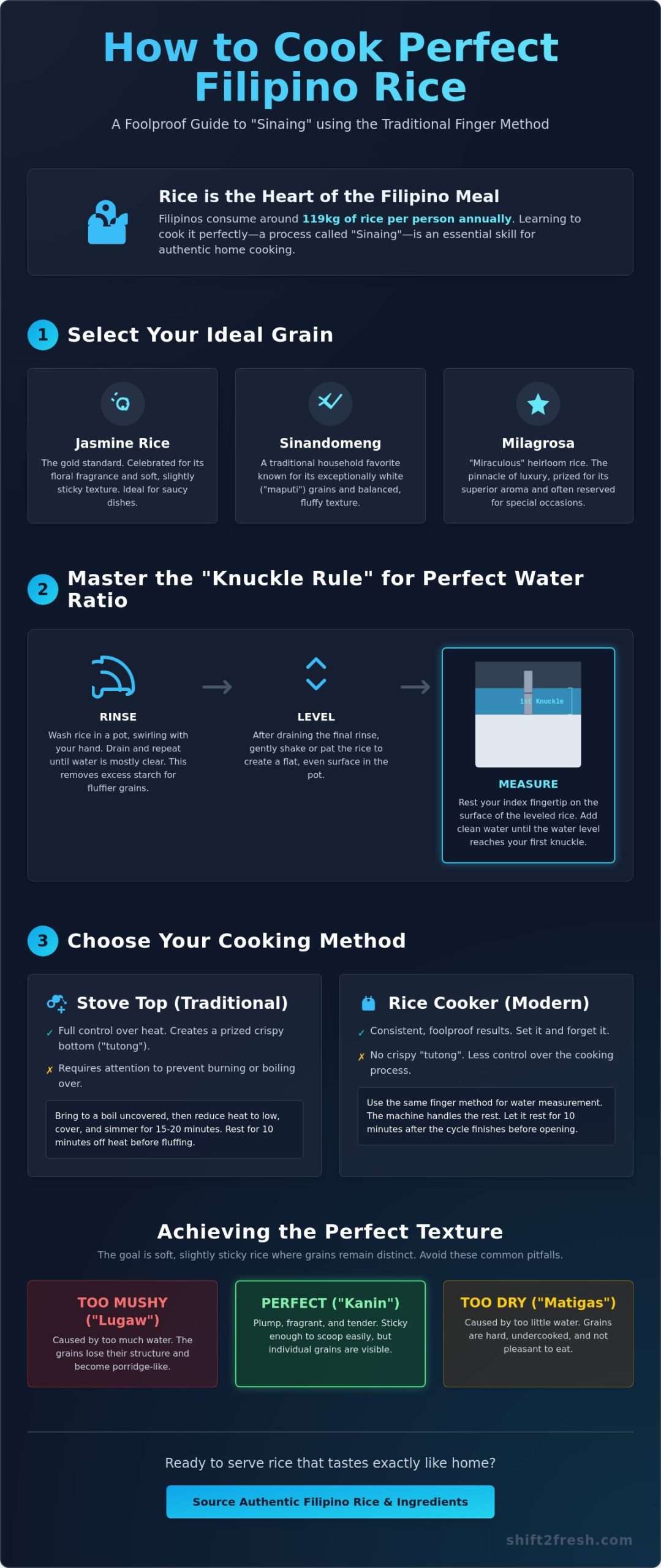
- Master the traditional “knuckle rule” to learn how to cook perfect filipino rice every time without ever needing a measuring cup.
- Compare stove top and rice cooker techniques to manage heat effectively and avoid the common mistake of burnt or dry grains.
- Discover how to easily source authentic Filipino pantry items in the UAE using convenient mobile app ordering for your next meal.
Understanding “Sinaing”: The Heart of the Filipino Meal
In the Philippines, rice is more than just a side dish. It’s the center of the plate, the anchor of the table, and the primary metric of a successful meal. The average Filipino consumes about 119kg of rice every year, a statistic that underscores why mastering the pot is a non-negotiable skill. The word “Sinaing” refers to the traditional Filipino process of steaming rice until it reaches a specific, comforting consistency. Whether it’s the base for a savory breakfast of garlic-fried Sinangag or the neutral companion to a rich dinner stew, rice is the constant. Learning how to cook perfect filipino rice starts with understanding this deep cultural connection.
Unlike the dry, separate grains of Basmati often found in Middle Eastern dishes, or the extremely clumped nature of Japanese sushi rice, Filipino rice occupies a unique middle ground. It should be soft and slightly sticky so you can easily scoop it with a spoon or your hands, yet the grains must remain distinct and visible. Achieving this balance is what separates a novice from a seasoned home cook. If the rice is too dry, it won’t soak up the sauces of a classic Adobo; if it’s too mushy, it loses its soul.
The Role of Rice in Filipino Culture
“Kanin” (cooked rice) is treated with a level of respect that borders on the sacred. Wasting even a single grain is often frowned upon in traditional households. This respect is most visible during a “Boodle Fight,” a communal feast where banana leaves serve as the table and a long mound of rice acts as the canvas for various grilled meats and vegetables. Within the context of Filipino cuisine, Sinaing is the essential act of Filipino home cooking that turns raw grains into the soul of the meal. It’s the first thing put on the stove and the last thing to leave the table.
Texture Goals: What Makes it “Perfect”?
A perfect pot of rice requires a delicate balance between moisture and structure. You want enough water to hydrate the grain so it’s tender, but not so much that it turns into a mushy “lugaw” (porridge). The aroma, or “Amoy,” is equally vital. High-quality varieties release a subtle, sweet scent as the steam escapes the pot. It’s also vital to distinguish everyday table rice from “Malagkit,” which is glutinous rice used specifically for desserts. Knowing how to cook perfect filipino rice means hitting that sweet spot where the grain is plump, fragrant, and ready for your favorite viands.
Choosing Your Grain: Essential Filipino Rice Varieties
Success in the kitchen begins long before you turn on the stove. If you want to master how to cook perfect filipino rice, you must start with the right raw material. Not all white rice is created equal. Some varieties are prized for their perfume, while others are chosen for their snowy white appearance or their ability to stay soft even after cooling down. Selecting the wrong grain can result in a texture that feels “matigas” (hard) or lacks that signature home-cooked aroma.
- Jasmine Rice: This is widely considered the gold standard. It’s celebrated for its floral fragrance and a soft, slightly sticky texture that pairs beautifully with saucy dishes.
- Sinandomeng: A traditional favorite in many households, this variety is known for being “maputi” or exceptionally white. It offers a balanced texture that isn’t too mushy.
- Milagrosa: Often reserved for holidays or special family gatherings, this heirloom aromatic rice is the pinnacle of luxury in a Filipino pantry.
Identifying high-quality grains is a skill in itself. Look for translucent, whole grains with minimal “chalky” spots. Dust at the bottom of the bag often indicates older, broken rice that will cook unevenly. Learning these nuances at a philippine supermarket helps you choose a bag that will actually behave the way you expect it to in the pot.
Aromatic vs. Non-Aromatic Varieties
Jasmine rice is the most accessible choice for Filipinos in the UAE. However, the secret to the best pot is seeking out “New Crop” labels. Freshly harvested rice contains more natural oils and moisture, leading to a superior scent. Older rice loses these oils over time, which can lead to a duller taste. This variation in moisture is exactly why many cultures ditch conventional measuring rules in favor of more intuitive techniques that account for the grain’s age.
Staple Pantry Items for the Perfect Pot
While the rice is the star, a few additions can elevate the experience. Some families tuck a fresh pandan leaf into the water to infuse the grains with a grassy, sweet aroma. Beyond the pot, having the right Filipino Pantry Items on hand, like high-quality soy sauce or vinegars, makes the rice even more satisfying. To keep your supply fresh in the UAE’s humid climate, store your rice in an airtight container to prevent weevils. You can easily find these essentials and more through our mobile app ordering, ensuring your pantry is always ready for the next meal.
Mastering the Filipino Finger Method (The Knuckle Rule)
Once you’ve selected your preferred variety, the real work begins. The legendary finger method is the ultimate secret for anyone wondering how to cook perfect filipino rice without relying on plastic measuring cups or digital scales. It’s an intuitive skill that relies on the unique proportions of your own hand. While it might seem like magic to outsiders, it’s a reliable technique that ensures the rice to water ratio is always in harmony with the size of your pot.
Follow these five essential steps to achieve consistent results every time:
- Step 1: Hugas-Bigas (Washing). Place your rice in the pot and add water. Swirl the grains gently with your hand and drain. Repeat this at least three times to remove excess surface starch.
- Step 2: Leveling. After the final rinse, shake the pot gently or use your palm to level the rice surface perfectly. An uneven surface will lead to an inaccurate measurement.
- Step 3: The Measure. Place the very tip of your middle finger so it just barely touches the surface of the leveled rice. Do not push your finger down to the bottom of the pot.
- Step 4: Adding Water. Slowly pour in water until the level reaches the first joint or knuckle of your middle finger. This is the “sweet spot” for most standard white rice varieties.
- Step 5: Resting. Once the rice is cooked, resist the urge to open the lid immediately. Let it rest for 10 minutes to allow the residual steam to finish the job.
The Science of Hugas-Bigas (Washing Rice)
Hugas-Bigas is more than just a chore. The first wash is always the “dirtiest” because it carries away dust and debris from the milling process. You must discard this initial water quickly so the grains don’t absorb any impurities. However, don’t over-scrub the rice. Excessive friction can break the grains and strip away essential nutrients. There’s a common myth that the water must be 100% transparent before you stop washing. In reality, a slight milkiness is fine; it’s the sign of a grain that still has its character intact.
Why the Finger Method Works for Everyone
It might feel imprecise, but there’s actual physics involved. Because the surface area of the rice increases proportionally with the pot size, the finger method creates a consistent 1:1.25 ratio regardless of pot size. This ratio is ideal for many Philippine traditional rice varieties that need just enough water to soften without becoming waterlogged. If you’re using “old rice” that has been in the pantry for months, you can add a tiny splash of water above the knuckle to compensate for the lost moisture. This simple adjustment is why how to cook perfect filipino rice becomes second nature once you trust your hands over a measuring cup.
Cooking Techniques: Stove Top vs. Rice Cooker
The biggest mistake people make in both methods is curiosity. Opening the lid to check the progress lets the essential steam escape. This drops the internal temperature and often results in rice that is “hilaw” (undercooked) in the center. Keep that lid sealed tight until the very end. The steam is what actually finishes the cooking process, ensuring every grain is tender from the core to the surface.
How to Cook Rice on a Stove Top Without Burning It
Cooking on a stove requires active heat management. Start with high heat until the water begins to boil and foam. As soon as the water levels drop below the surface of the rice, immediately turn the heat to the lowest possible setting. This “Boil then Simmer” technique allows the grains to swell slowly without scorching. If you find the rice is still a bit hard after the water has evaporated, sprinkle a tablespoon of water over the top and cover it again for five minutes. A tight-fitting lid is your most important tool; if your lid is loose, place a piece of foil over the pot before putting the lid on to create a better seal.
The Mystery of Tutong (The Burnt Bottom)
In many Filipino households, the most sought-after part of the meal isn’t the fluffy top layer, but the “Tutong” at the bottom. This is the toasted, crispy layer of rice that forms when the heat is left on just a minute too long. While beginners often see this as a mistake, many crave it for its nutty flavor and crunch. To intentionally create a golden crust, leave the heat on low for an extra two to three minutes after the water is gone. If you overdo it and end up with black, stubborn rice, don’t scrub immediately. Soak the pot in hot water with a spoonful of dish soap for at least 30 minutes to lift the residue easily.
To ensure you have the best grains for your next pot, you can explore our full range of Filipino Pantry Items and enjoy the convenience of mobile app ordering today.
Where to Find Authentic Filipino Rice in the UAE
Finding that specific “Home Taste” in a standard online supermarket dubai can be a challenge. While generic long-grain options are everywhere, they often lack the distinct fragrance and texture of traditional varieties like Sinandomeng or Jasmine. If you have spent time learning how to cook perfect filipino rice using the finger method, the last thing you want is for the grain quality to let you down. Shift 2 Fresh is the preferred choice for those seeking authentic Philippine produce and pantry staples, ensuring you never have to settle for “close enough” when it comes to your daily meals.
A steaming bowl of rice is the foundation, but it truly shines when paired with fresh Asian Vegetables. Imagine a vibrant Pinakbet or a comforting Ginisang Monggo served alongside your perfectly steamed grains. Through our mobile app, you can have everything from bulky rice bags to delicate calamansi and ube delivered straight to your kitchen. This ensures your pantry is always stocked with the flavors you grew up with, without the need to visit multiple stores to find specialized items.
Delivery to Dubai, Sharjah, and Beyond
We prioritize convenience for Filipino expats across the Emirates. Ordering via the Shift 2 Fresh mobile app allows you to manage your grocery list on the go. We take pride in ensuring your rice and seasonal fruits arrive in peak condition, maintaining the freshness required for authentic cooking. UAE residents can also take advantage of free delivery thresholds, making it more economical to bundle your rice order with your weekly vegetable haul. Whether you are in a high-rise in Dubai or a villa in Sharjah, getting your “Sinaing” essentials has never been easier.
Creating the Complete Filipino Dining Experience
Mastering how to cook perfect filipino rice opens the door to a variety of traditional dishes. Whether it’s the base for a rich Beef Kaldereta or a simple meal of fried fish and tomatoes, the rice is the constant. Don’t forget that any leftovers are a gift for the next morning. Cold, slightly firm rice is the secret to the best garlic Sinangag. Because the grains have had time to dry out slightly in the fridge, they won’t turn into a mushy mess when they hit the hot oil and toasted garlic in your pan.
Order your authentic Filipino rice and pantry staples from Shift 2 Fresh today and bring the true taste of the Philippines to your table.
Bring the Taste of Home to Your Table
You’ve now mastered the traditional “knuckle rule” and understand why washing your grains correctly is the secret to that ideal “Sinaing” texture. Whether you’re using a rice cooker for daily convenience or a stove top to achieve that classic “tutong” crust, you have the tools to succeed. Learning how to cook perfect filipino rice isn’t just about following a set of measurements; it’s about connecting with a rich culinary heritage that treats every meal with deep respect. By selecting the right Jasmine or Sinandomeng variety, you ensure that every scoop is fragrant, soft, and exactly as it should be.
Great results in the kitchen always start with the right ingredients. With over 45 years of food industry experience, Shift 2 Fresh specializes in authentic Philippine imports to ensure you get the high quality your family deserves. We provide direct delivery to Dubai and Sharjah, bringing seasonal fruits, Asian vegetables, and essential pantry staples right to your door. Start your authentic Filipino cooking journey with fresh ingredients from Shift 2 Fresh. Your next perfect pot of fluffy, fragrant rice is just a few clicks away. Happy cooking!
Frequently Asked Questions
Does the finger method work for brown rice or glutinous rice?
No, the finger method is specifically designed for white long-grain or medium-grain rice varieties. Brown rice requires significantly more water and a longer cooking time to soften the tough outer bran layer. Glutinous rice, or “Malagkit,” is typically soaked for several hours and then steamed to achieve its signature sticky texture rather than being boiled in a pot.
Why is my Filipino rice always mushy even when I use the knuckle rule?
Mushy rice often happens if you push your finger through the grains instead of resting it lightly on the leveled surface. You must ensure the rice is perfectly flat before measuring. If you’ve mastered how to cook perfect filipino rice but the results are still soft, try using slightly less water for “new crop” rice, which naturally contains more moisture than older grains.
How many times should I really wash my rice before cooking?
Washing your rice three times is the ideal balance for most varieties found in the UAE. The first rinse removes dust and debris, while the second and third rinses wash away excess surface starch that causes gumminess. Stop when the water is slightly cloudy; it doesn’t need to be perfectly clear to produce a pot of fluffy, separate grains.
Can I use the finger method if I have very large or very small hands?
Yes, the finger method is remarkably adaptable because the distance to the first knuckle is surprisingly consistent for most adults. If you have exceptionally large or small hands, you might need a small calibration period during your first few attempts. Once you learn how to cook perfect filipino rice with your own hand, you’ll know if you need to go exactly to the line or a hair above it.
What is the best type of rice to buy for authentic Filipino Sinangag?
Use day-old Jasmine or Sinandomeng rice for the best garlic fried rice results. Freshly cooked rice contains too much moisture and will clump together in the pan. By using rice that has been refrigerated overnight, the grains dry out and stay separate. This creates that iconic texture where every grain is coated in garlic oil without becoming a mushy mass.
How do I prevent rice from sticking to the bottom of my rice cooker?
You can prevent sticking by adding a tiny drop of neutral oil to the pot before you start the cooking cycle. Another trick is to let the rice sit undisturbed for at least 10 minutes after the cooker clicks to the “warm” setting. This resting period allows the steam to redistribute, which naturally releases the bottom layer of rice from the pot’s surface.
Is it safe to leave cooked rice in the rice cooker on “warm” mode all day?
It’s best to avoid leaving rice on the “warm” setting for more than four hours. While the setting keeps rice at a safe temperature, the quality degrades quickly as the grains dry out and turn yellow. For the best food safety and flavor, move leftovers to an airtight container and refrigerate them as soon as they reach room temperature.
Where can I buy Jasmine rice in bulk in Dubai?
You can source Jasmine rice in bulk through specialized suppliers of Filipino pantry items. While many local stores carry small bags, ordering through the Shift 2 Fresh mobile app allows you to buy larger quantities without the hassle of carrying heavy bags. We deliver these staples directly to homes across Dubai and Sharjah for your convenience.
0 comments