

What if the secret to the ultimate Filipino breakfast isn’t the fresh rice you just steamed, but the cold bowl sitting in the back of your fridge? Most home cooks in Dubai or Abu Dhabi struggle with mushy, clumped-together grains or bitter, burnt garlic when trying to recreate that Manila morning magic. It’s frustrating when your kitchen smells incredible but the texture feels like a heavy mash instead of a light, fragrant masterpiece. You’ve likely dealt with the disappointment of garlic turning acrid before the rice even gets warm.
Mastering how to cook garlic fried rice (sinangag) is actually a lesson in moisture control rather than just heat management. This 2026 guide promises to help you achieve those legendary individual grains and golden, crispy garlic bits using authentic techniques adapted for the UAE. We’ll explore the essential “knuckle method” for the initial boil, the best rice varieties found in local markets, and the exact timing secrets that ensure your “Silog” experience is nothing short of perfection.
Key Takeaways
- Learn why day-old Jasmine rice is the best choice for getting that authentic aroma and the fluffy structure you’ll love.
- Master the “Swirl and Drain” rinsing technique and the “Knuckle Method” so your water levels are spot on every time.
- Discover the professional secret for how to cook garlic fried rice (sinangag) by starting with cold oil to draw out flavor without any bitter burnt bits.
- Pick up quick fixes for common kitchen mishaps like mushy rice or garlic that’s browned too fast.
- Explore how to build a full “Silog” breakfast by pairing your rice with fresh Asian vegetables and classic proteins.
The Foundation: Choosing and Preparing Your Rice
Sinangag is more than just a side dish. It’s the heartbeat of a traditional Filipino breakfast. At its core, Sinangag (garlic fried rice) is a simple yet soulful preparation of stir-frying cooked rice with a generous amount of toasted garlic. While it sounds basic, the texture is where most home cooks struggle. You want grains that dance individually in the pan, not a clump of sticky mush that feels heavy on the palate. Achieving that restaurant-quality finish starts long before you turn on the stove.
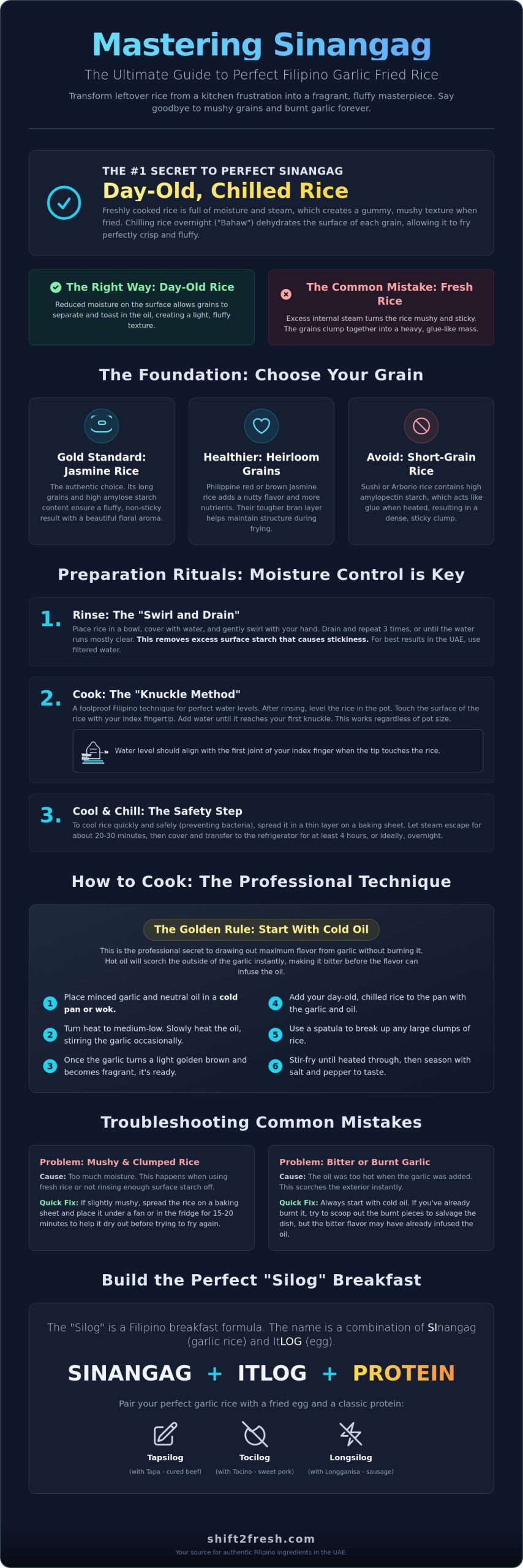
Jasmine rice is the undisputed gold standard for this dish. Its floral aroma and long grains provide the perfect canvas for the pungent, savory garlic. However, the most critical secret in learning how to cook garlic fried rice (sinangag) isn’t the heat; it’s the age of the rice. Freshly steamed rice is packed with moisture. If you toss it into a hot pan immediately, the steam trapped inside the grains will turn your fry-up into a gummy mess. Authentic Sinangag requires “Bahaw,” or day-old rice that has been chilled in the fridge. This cold storage dehydrates the surface of the grain, allowing it to crisp up in the oil while remaining fluffy inside.
Starch Profiles: Fluffy vs. Sticky
The science behind the perfect grain comes down to starch. Long-grain varieties like Jasmine are high in amylose. This specific starch doesn’t gelatinize as easily as the amylopectin found in short-grain or sushi rice. If you use sushi rice, the grains will cling to each other, creating a texture that’s far too dense for a proper stir-fry. To get the balance right, many residents in the UAE rely on high-quality Filipino Pantry Items to ensure their base ingredients are authentic and behave correctly under high heat.
Specialty Grains and Healthier Options
While white Jasmine rice is traditional, the 2026 culinary trend focuses on heirloom and unpolished varieties. If you want a nuttier, more nutrient-dense version, Philippine red rice or brown Jasmine rice are excellent alternatives. These grains have a tougher bran layer, which actually helps them maintain their structural integrity during the stir-frying process. They don’t break apart as easily as overcooked white rice might.
When you use these specialty grains, you’ll need to adjust your cooling time. Because they’re denser, they can hold onto internal moisture longer than white rice. Spread them out on a flat tray before refrigerating to ensure even drying. Finding these specific varieties in Dubai or Sharjah is easier when you visit a dedicated Philippine supermarket or use mobile apps that deliver authentic imports directly to your door. Using these unpolished grains adds a complex, earthy flavor that pairs beautifully with the sharp bite of toasted garlic.
Preparation Rituals: Rinsing and Moisture Control
The physical preparation of your grains is just as vital as the rice variety you choose. Before you even think about the stove, you must master the “Swirl and Drain” technique. This involves placing your dry rice in a bowl, covering it with water, and using your hand to gently agitate the grains in a circular motion. You should repeat this process exactly three times. This ritual isn’t just about cleanliness; it’s about stripping away the excess surface starch that causes rice to become a sticky block during the frying process.
In the UAE, the quality of your water can change the final flavor profile of your Jasmine rice. Many residents find that the mineral content in tap water can leave a slight aftertaste in delicate grains. For the most authentic taste, use filtered or bottled water for both rinsing and cooking. For measuring, skip the plastic cups and use the traditional “Knuckle Method.” Add enough water so that when the tip of your index finger touches the surface of the rice, the water level reaches the first joint of your finger. It’s a foolproof Filipino technique that works regardless of the pot size.
Why We Always Rinse Our Rice
Surface starch is the enemy of the perfect fry. If you don’t rinse, that starch turns into a glue-like coating when heated. Rinsing also addresses hygiene, as imported grains can carry dust or debris from the milling and shipping process. You’ll know your rice is ready for the cooker when the rinsing water runs mostly clear rather than milky white.
The Cooling Process: Fridge vs. Freezer
Living in the UAE’s high humidity means you have to be extra careful with food safety. You shouldn’t leave cooked rice sitting on the counter for hours. To prevent the growth of Bacillus cereus, a common bacteria associated with rice, follow the 2-hour safety rule. Once the rice is cooked, spread it out in a thin layer on a large baking tray to let the steam escape quickly. This ensures even cooling and prevents the bottom layer from becoming soggy.
If you are short on time and need to know how to cook garlic fried rice (sinangag) for an impromptu lunch, pop that tray in the freezer for 15 to 20 minutes before moving it to the fridge. This “shock” method dries the exterior of the grains rapidly. For the best results, you can find high-quality rice and other Filipino pantry items through mobile app ordering to ensure you always have the right base for your morning meal.
How to Cook Garlic Fried Rice: Step-by-Step Instructions
The transition from raw ingredients to a fragrant bowl of Sinangag requires a specific sequence of heat and movement. Most home cooks make the mistake of dropping minced garlic into a screaming hot pan, which leads to bitter, blackened bits that ruin the dish. To truly master how to cook garlic fried rice (sinangag), you must begin with a cold pan. Place your oil and garlic in the skillet together before you even turn on the burner. This cold-start method allows the garlic to slowly infuse the oil with its essence as the temperature rises, creating a flavor base that reaches every single grain of rice.
As the garlic begins to sizzle, keep the heat at a medium-low setting. You’re looking for a gentle fry that turns the garlic into a pale, golden tan. This infusion stage is the foundation of the dish’s aroma. Once the garlic reaches that perfect toasty color, you’ll transition to the high-heat stir-fry. This is where the texture is defined and the “fried” element of the rice truly comes to life.
The Golden Garlic Stage
Achieving the perfect “toasty” garlic without the bitterness of burnt cloves is a fine art. A professional hack is to remove exactly half of the garlic from the pan once it turns golden and set it aside on a paper towel. This reserved garlic stays crispy and serves as a premium topping later. When choosing your fat, stick to neutral oils with high smoke points like canola or corn oil. Avoid olive oil; its distinct flavor profile clashes with the garlic, and it will smoke and break down before the rice reaches the necessary temperature.
The High-Heat Stir Fry
Once your garlic oil is ready, crank the heat to high. You’ll know the pan is ready for the rice when you see a faint wisp of smoke or when a test grain of rice sizzles and “jumps” immediately upon contact. Add your chilled, day-old rice and immediately begin the “Toss and Press” technique. Use the flat side of your spatula to gently press down on any stubborn clumps, then quickly toss the grains to coat them in the infused oil. This method breaks up the rice without mashing the grains into a paste.
In a professional kitchen, this high-heat movement creates “Wok Hei,” or the breath of the pan, which adds a charred, smoky dimension to the dish. While difficult to fully replicate on a standard home stove, keeping the rice moving constantly over the highest possible heat is your best substitute. The rice should be stir-fried for approximately 5 to 7 minutes until every grain is piping hot and has absorbed the savory oil. Finally, season with a generous pinch of sea salt and optional cracked black pepper to balance the richness. The salt doesn’t just add flavor; it helps to further draw out any remaining moisture, ensuring your Sinangag stays light and fluffy.
Troubleshooting: Fixing Common Sinangag Mistakes
Even seasoned home cooks encounter hurdles when perfecting how to cook garlic fried rice (sinangag). If your grains start to clump or feel mushy, don’t reach for the oil bottle. Adding more fat to moisture-heavy rice is a common error that results in a greasy, unappetizing mess. Instead, spread the rice in a thin layer across the pan and reduce the heat to low. Allow the indirect heat to draw out the moisture over several minutes. This slow evaporation process can often rescue the structural integrity of the dish without turning it into a paste.
Burnt garlic is perhaps the most frustrating issue. Because the bitter flavor of scorched garlic is so potent, it’s difficult to mask. If the garlic has turned black, it’s safer to discard the batch and start fresh. If it’s merely a deep brown, you might save it by adding more plain rice or serving it with a vinegary side dish to cut through the bitterness. On the opposite end, if the rice feels too hard or “stale,” don’t add oil. Sprinkle a small amount of water over the pan and cover it with a lid for one minute. The trapped steam will gently soften the grains. If you find the rice under-seasoned at the end, dissolve a pinch of salt in a teaspoon of warm water before drizzling it over the pan to ensure even distribution.
Salvaging “Failed” Batches
Overly mushy rice doesn’t have to go to waste. You can easily transform it into a comforting bowl of Lugaw by adding chicken broth, ginger, and extra toasted garlic. If your rice has stuck to the bottom of the pan, embrace it. These crispy, browned bits are a delicacy and add a wonderful crunch to your meal. Use a clean paper towel to blot the surface of the rice while it’s still in the pan if you find the dish has become too greasy.
Safe Reheating and Storage
In the UAE, the high humidity can accelerate spoilage if rice isn’t handled correctly. Follow these guidelines to keep your leftovers safe and delicious:
- Shelf Life: Fried rice should be consumed within 48 to 72 hours when stored in an airtight container in a standard household fridge.
- Reheating: Use a dry pan over medium heat instead of a microwave to preserve the garlic’s crunch and prevent the rice from becoming rubbery.
- Safety: Never leave rice at room temperature for more than two hours to avoid the growth of heat-resistant bacteria.
To ensure you always have the best ingredients on hand, you can order Filipino pantry items through a mobile app for convenient delivery to your doorstep. Always move your leftovers to the fridge as soon as they have cooled to ensure every breakfast remains as safe as it is flavorful.
Authentic Pairings: Creating the Perfect Filipino Breakfast
A bowl of Sinangag is rarely served in isolation. In Philippine food culture, it serves as the savory foundation for the “Silog” family of meals. The term is a portmanteau of sinangag and itlog (egg), representing a breakfast tradition that fuels millions every morning. Whether you’re pairing your rice with cured beef (Tapsilog) or sweet pork (Tocilog), the key is balance. The heavy, garlicky notes of the rice need acidity and freshness to truly shine. This is where “Sawsawan” comes in. A small dish of spicy vinegar or calamansi juice with crushed bird’s eye chilies provides a sharp contrast that cuts through the richness of the fried grains.
To round out the plate, traditionalists often include sliced Asian Vegetables such as chilled cucumbers or vine-ripened tomatoes. These aren’t just garnishes; they provide a necessary crunch and hydration that balances the dry-fry texture of the rice. Once you’ve finished your savory meal, a few slices of Seasonal Filipino Fruits like sweet Davao pomelo or ripe mango serve as the perfect palate cleanser. This combination of salt, fat, acid, and sweetness is what makes the experience authentic.
The Complete “Silog” Experience
The crowning glory of any Silog is the egg. To get it right, fry your egg in the same pan you used for the rice to pick up any leftover garlic oils. Use enough oil to achieve those signature crispy, lacy edges while keeping the yolk runny. When the yolk breaks, it creates a rich sauce that coats the individual grains you’ve worked so hard to separate. Sourcing the right cured meats to complete your breakfast is simple when using an online supermarket dubai service. Having these staples delivered ensures you can recreate a Manila-style breakfast even on a busy Tuesday morning in the Emirates.
Sourcing Ingredients in Sharjah and Dubai
Knowing how to cook garlic fried rice (sinangag) is only half the battle; the other half is ingredient quality. Shift 2 Fresh specializes in delivering the specific types of Jasmine rice and pungent garlic required for this dish directly to your kitchen in Dubai or Sharjah. By using a specialized gourmet food delivery dubai service, you avoid the hit-or-miss quality of generic supermarket bins. For those looking to expand their pantry further, our Asian Supermarket Near Me guide offers local tips on finding the most authentic condiments and seasonal produce across the UAE. Using the Shift 2 Fresh mobile app allows you to schedule your rice and garlic deliveries so you’re always ready for a weekend brunch.
Bring the Taste of Manila to Your UAE Kitchen
By focusing on moisture control and the cold-start garlic infusion, you’ve unlocked the secret to a professional-grade breakfast. Remember that the journey to perfect grains begins with high-quality Jasmine rice and ends with the high-heat stir-fry that gives Sinangag its legendary texture. Mastering how to cook garlic fried rice (sinangag) is a simple way to turn a humble bowl of leftovers into a fragrant masterpiece that brings family together.
The quality of your ingredients makes all the difference in achieving that authentic aroma. With 45+ years of food industry expertise, Shift 2 Fresh serves as a specialized importer of fresh Philippine produce directly to your doorstep. Whether you need premium Jasmine rice or pungent garlic, we ensure you have the very best for your kitchen. We even offer free delivery across the UAE on all orders over AED 500.
Order Authentic Filipino Rice and Fresh Garlic from Shift 2 Fresh Today and start your next morning with the perfect Silog. Your kitchen is about to smell incredible.
Frequently Asked Questions
Can I use freshly cooked rice for Sinangag?
Fresh rice is generally too moist for a good stir-fry. Using it often results in a sticky, gummy texture that lacks the individual grains seen in professional kitchens. If you’re in a hurry and need to know how to cook garlic fried rice (sinangag) without day-old rice, spread the fresh grains on a tray. Place them in the freezer for about 15 minutes to quickly dehydrate the surface starch before frying.
What is the best type of oil for Filipino garlic fried rice?
Neutral oils like canola, corn, or sunflower are the best choices. These oils have high smoke points, which are necessary for the high-heat stage of the frying process. Avoid using extra virgin olive oil or butter as they burn at lower temperatures and can overwhelm the delicate aroma of the Jasmine rice. A neutral base ensures the toasted garlic remains the star flavor of your breakfast.
How do I prevent the garlic from burning?
Preventing burnt garlic is all about heat management. Start by placing your minced garlic and oil in a cold pan before turning on the burner. This cold start method allows the garlic to infuse the oil as the temperature rises. If you’re learning how to cook garlic fried rice (sinangag), remember to pull the pan off the heat the moment the garlic turns a light tan color to avoid bitterness.
Is Sinangag healthy for a daily breakfast?
Sinangag is a high-energy staple that’s part of a balanced Filipino diet. While it’s carbohydrate-heavy, you can boost its nutritional value by using brown or red rice varieties. Pairing your rice with fresh Asian vegetables like tomatoes or salted eggs helps balance the meal. It’s a great way to fuel up for a busy day in Dubai or Abu Dhabi when eaten in moderation.
Can I make garlic fried rice with brown rice?
Yes, brown rice is an excellent alternative to white Jasmine rice. It has a lower glycemic index and a naturally nuttier flavor that stands up well to heavy garlic. Because brown rice grains are firmer, they are actually easier to fry without clumping. Just make sure the rice is fully cooked and chilled before you start the stir-frying process in your pan.
How much garlic should I actually use for 2 cups of rice?
For two cups of cooked rice, you should use at least five to six large cloves of garlic. Authentic Sinangag is famous for its bold, pungent flavor, so there is no such thing as too much garlic. If you want a more gourmet finish, mince the garlic finely to ensure it distributes evenly, providing a savory crunch in every single forkful of rice.
Why is my fried rice sticking to the pan?
Sticking usually points to two culprits: too much starch or a cold pan. If you skip the rinsing stage, the starch acts like glue once it hits the heat. Ensure you rinse your grains until the water is clear. Additionally, wait until the oil is shimmering before adding the rice. A hot pan creates an immediate sear that prevents the grains from adhering to the surface of your skillet.
Can I freeze Sinangag for later use?
You can definitely freeze Sinangag for up to one month in an airtight container. This is a great time-saving hack for busy UAE households. Ensure the rice is completely cold before freezing to prevent ice crystals from forming. When reheating, skip the microwave and use a frying pan with a teaspoon of water to steam the grains back to their original fluffy texture.
0 comments