

Daikon is a practical radish for sinigang, but timing matters: add it with the eggplant and cook it for 5 minutes in a pork sinigang method that uses this timing. Recipes call for 1 piece or ½ lb of daikon, so the amount can vary with the recipe and the size of the radish.
It’s easy to assume a firm root vegetable should go into the pot early with the pork. But adding daikon later lets it cook alongside the other vegetables instead of simmering for the entire time. This guide explains how to prepare radish for sinigang, when to add it, and how to check its texture as it cooks.
You’ll also learn how daikon fits into sinigang’s sour, savory broth and how to time it for your pork recipe. A few practical steps help you add radish while keeping the vegetables’ textures in balance.
Key Takeaways
- Use the recipe’s stated amount of daikon, which may be 1 piece or ½ lb, rather than assuming every radish is the same size.
- Follow the recipe’s vegetable timing: some methods simmer radish with onion and tomato for 5 minutes, while others add it with eggplant.
- Cut the radish into evenly sized pieces so they cook at a similar pace, then taste a piece to judge its texture.
- Plan when to add the radish around the pork’s cooking stage and the vegetables in your chosen sinigang method.
Daikon radish as an ingredient in pork sinigang
Daikon gives pork sinigang tender vegetable pieces and a mild, peppery taste. Prepare it separately, then add it at the stage your recipe specifies for vegetables.
Peel and Cut the Radish
Rinse the daikon under running water and trim both ends. Peel it if the skin looks tough, damaged, or dirty; otherwise, scrub it well before cutting. Slice the root into evenly sized pieces so they soften at a similar pace. Thick rounds stay firmer longer, while thinner pieces soften sooner.
Turnip can replace daikon, but its texture and flavor will differ. Other vegetables can fill the space, but they won’t give the soup daikon’s mild, peppery character. Daikon itself doesn’t make sinigang sour; the souring ingredient, such as tamarind, provides that taste. Pork sinigang commonly pairs radish with other vegetables.
Cut only as much as you’ll add to the pot, and keep the pieces similar in thickness. This makes doneness easier to judge and helps prevent some pieces from turning soft while others remain firm. Use the amount stated in your recipe rather than assuming one large root equals one small piece.
Add Radish to the Pork Soup
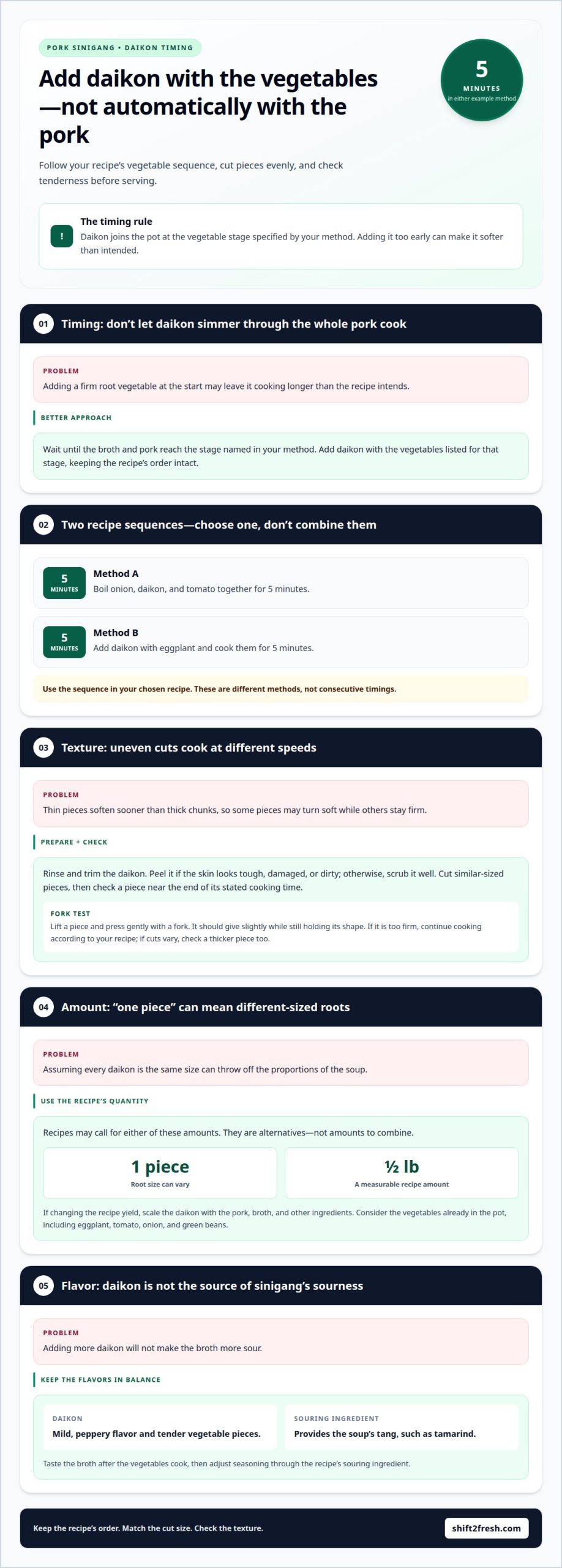
Add the daikon at the point specified by your pork sinigang method. One recipe method boils onion, radish, and tomato for 5 minutes. Another adds daikon with eggplant and cooks them for 5 minutes. Follow the sequence for your recipe instead of combining timings from different methods.
Check a piece with a fork as it cooks. It should reach your preferred tenderness while still holding its shape in the broth. If the pork needs longer, follow the recipe’s pork instructions, then use its vegetable sequence. Adding daikon too early can make it softer than intended.
Common pork sinigang recipes include daikon alongside ingredients such as onion, tomato, and eggplant. The amount varies by recipe: examples use 1 piece or ½ lb of daikon. Use the measurement attached to your chosen method, then adjust the cut pieces to cook evenly. Taste the broth after adding radish, but adjust sourness through the recipe’s souring ingredient, not by adding more daikon.
When to Add Radish to the Soup
Use your pork sinigang recipe’s vegetable sequence to time the daikon. Add it once the broth and pork have reached the stage specified in the method.
- Follow the recipe’s sequence before adding vegetables. Some methods add onion, radish, and tomato together, while others add radish with eggplant. In either case, daikon joins the vegetables at the stated stage, not automatically at the start of the pork’s cooking time. Keep the method’s order intact.
Check the ingredient list and cooking steps first. If the recipe groups certain vegetables together, prepare them to go into the pot at the same time. This prevents the radish from simmering longer than intended while the pork cooks.
- Add daikon at the vegetable stage shown in your method. In one approach, onion, radish, and tomato boil together for 5 minutes. Another cooks radish with eggplant for 5 minutes. Choose the sequence your recipe gives rather than combining both methods into one timing.
Keep the broth simmering as you add the vegetables. Lowering the heat too much can interrupt cooking; a steady simmer lets the ingredients cook in the same broth. Follow the recipe’s heat instructions.
- Check a piece of radish near the end of its stated cooking time. Lift it from the broth and press gently with a fork. It’s ready to serve when it gives slightly but still holds its shape. If it’s too firm, continue cooking according to your recipe.
Cut the pieces evenly before cooking. Similar sizes make the fork test more useful, since thin slices soften sooner than thick chunks. If the cuts vary, check a thicker piece too.
- Coordinate daikon with the other vegetables. If green beans or eggplant go into the pot later, follow the recipe’s listed order. Don’t add every vegetable together unless the instructions say to. This makes it easier to track each ingredient’s cooking stage.
Taste the broth after the vegetables cook. Daikon adds a mild flavor, while the souring ingredient gives the soup its tang. Adjust the seasoning according to your recipe, then serve when the pork and vegetables reach their intended texture.
How much radish should I add to sinigang?
- Start with the amount your pork sinigang recipe names. Examples use 1 piece of daikon or ½ lb. These are alternative measurements, not amounts to combine. The right amount of radish for sinigang depends on the recipe’s yield and measurement. Since “1 piece” can describe roots of different sizes, use the recipe’s weight when it provides one.
If the recipe calls for one piece, choose a daikon that suits the amount of the other ingredients. Use the listed measurement as your starting point.
- Keep the recipe’s proportions when changing the yield. If you scale the pork and broth, scale the daikon too. This preserves the original balance instead of adding the full amount to a smaller pot.
For example, don’t increase only the radish while leaving the pork, broth, and other vegetables unchanged. Adjust the ingredients together to maintain their proportions.
- Consider the vegetables already planned for the pot. Eggplant, tomato, onion, and green beans each contribute texture and take up space. When portioning radish for sinigang, follow the recipe’s stated amount, especially if the pot includes several vegetables.
If you want daikon to stand out more, adjust the overall vegetable balance rather than adding radish without considering the other ingredients.
- For a first attempt, follow the recipe’s quantity, then note your preference after serving. A recipe calling for ½ lb gives a measurable starting point; one calling for 1 piece depends on the root you select.
Note any change beside the recipe for next time. Adjust the daikon in proportion to the full recipe so the balance of pork, broth, and vegetables stays consistent.
How do I prepare and cut radish for sinigang?
- Rinse the daikon under cool running water before cutting. Rub the surface to remove soil, especially around grooves. Trim the root tip and stem end with a clean knife. Peel away the skin if it looks dry, damaged, or tough. If it’s clean and tender, thorough scrubbing may be enough.
Set the cleaned daikon on a stable cutting board. Keep your fingers clear of the knife as you trim and peel. A firm, steady surface helps you make controlled cuts.
- Choose a cut that suits how you want to serve the soup. Rounds are simple to prepare and easy to spot in the bowl. Half-moons work well for wider daikon, while chunks make larger pieces to serve with pork.
Use the same shape throughout the root. Consistent cuts cook more evenly than a mix of thin slices and thick chunks. Avoid very small pieces if you want the radish to remain distinct in the broth.
- Cut the daikon into pieces of similar thickness. If making half-moons, place each round flat before slicing it in half. For chunks, divide the root into sections, then cut each section to a similar size.
Check the pieces before adding them to the pot. Set aside unusually thin slices, which may soften sooner than thicker ones. This simple step helps you judge doneness more accurately.
- Prepare the daikon close to cooking time. Keep the cut pieces together in a clean bowl while you prepare the pork sinigang ingredients. Follow your recipe’s order for adding vegetables rather than leaving the radish in the broth from the start.
Before cooking, check the bowl for uneven cuts or leftover peel. Add the prepared pieces at the recipe’s vegetable stage, then check their texture with a fork as they cook. A piece that holds its shape is easier to lift and serve with pork.
Shift 2 Fresh
Shift 2 Fresh helps UAE home cooks bring Filipino ingredients into meals like pork sinigang. Its Asian vegetables and Filipino pantry items can support your next grocery list, while Mobile App Ordering offers a way to place an order. Choose the ingredients that fit your recipe, then follow its directions for preparing and cooking the radish. Seasonal Filipino fruits are also available for planning other meals.
If you’re organizing a Filipino meal and want to browse relevant grocery offerings, turn to Shift 2 Fresh. For questions about its offerings or ordering, contact Shift 2 Fresh.
Make Your Next Pot Your Own
Let your next batch reflect how you like your soup: choose vegetables you enjoy, prepare them carefully, and adjust the balance to suit your table. Radish for sinigang can be part of that personal approach, adding a vegetable to serve alongside the pork and broth.
Planning the rest of a Filipino meal can be just as enjoyable as cooking the soup. Shift 2 Fresh offers ingredients for Filipino home cooking, including seasonal Filipino fruits, Asian vegetables, and Filipino pantry items. Use them to shape a meal around your sinigang, whether you’re preparing a familiar favourite or trying a new combination.
For help with your grocery plans, contact Shift 2 Fresh today. Then bring your chosen ingredients together and enjoy making the next pot your own.
Frequently Asked Questions
What type of radish is used in sinigang?
Daikon, also called white radish, is commonly used in sinigang. Its mild taste suits the soup without overpowering the pork or sour broth. Choose a firm root, then trim away damaged areas before preparing it. If your recipe specifies daikon, use it rather than assuming small red radishes will cook or taste the same.
When should I add radish to sinigang while cooking?
Add daikon at the vegetable stage in your recipe rather than automatically putting it in with raw pork. This lets you coordinate it with vegetables that need a similar cooking time. Prepare the radish before the pot reaches that stage, then add it in the sequence your recipe gives. Don’t combine timings from different recipes.
How long does radish take to cook in sinigang?
In the recipe methods described here, daikon cooks for 5 minutes with the vegetables. Treat that as the recipe’s timing, not a guarantee for every cut or pot. To judge your own batch, lift out a piece and test it with a fork. If it’s still firmer than you prefer, continue cooking and check again.
Can I use daikon or white radish in sinigang?
Yes. Daikon is also known as white radish, so either name can refer to the same ingredient in a sinigang recipe. Use it in place of the radish named in the instructions and keep the recipe’s vegetable sequence. For example, add it with the specified vegetables instead of changing the pork’s simmering stage to accommodate it.
0 comments