

Organic produce isn’t essential for fresh food for my family’s health. A variety of fruits and vegetables can be part of nutritious family meals whether they’re organic or conventionally grown, so choosing produce needn’t feel like an all-or-nothing decision.
It’s understandable to want nourishing options for your family, especially when children have strong preferences and groceries need to work for everyday meals. This guide explains how to choose fresh, frozen or canned produce, build balanced meals, encourage children to try different foods and stock useful staples. You’ll also find practical ways to bring more colourful fruits, vegetables and other nourishing ingredients into your family’s routine.
Key Takeaways
- Organic produce isn’t essential for nutritious family meals; learn how to choose a variety of fruits and vegetables that suits your household.
- Fresh, frozen and canned produce can all help build balanced meals. Simple label choices can help you select options with less added salt or sugar.
- Make family meals a chance to introduce children to different foods and involve them in age-appropriate food choices.
- Stock versatile staples to round out meals, and remember that fatty fish such as salmon, sardines and mackerel are high in omega-3 fatty acids, according to the American Heart Association.
1. Building nutritious family meals and healthy eating habits
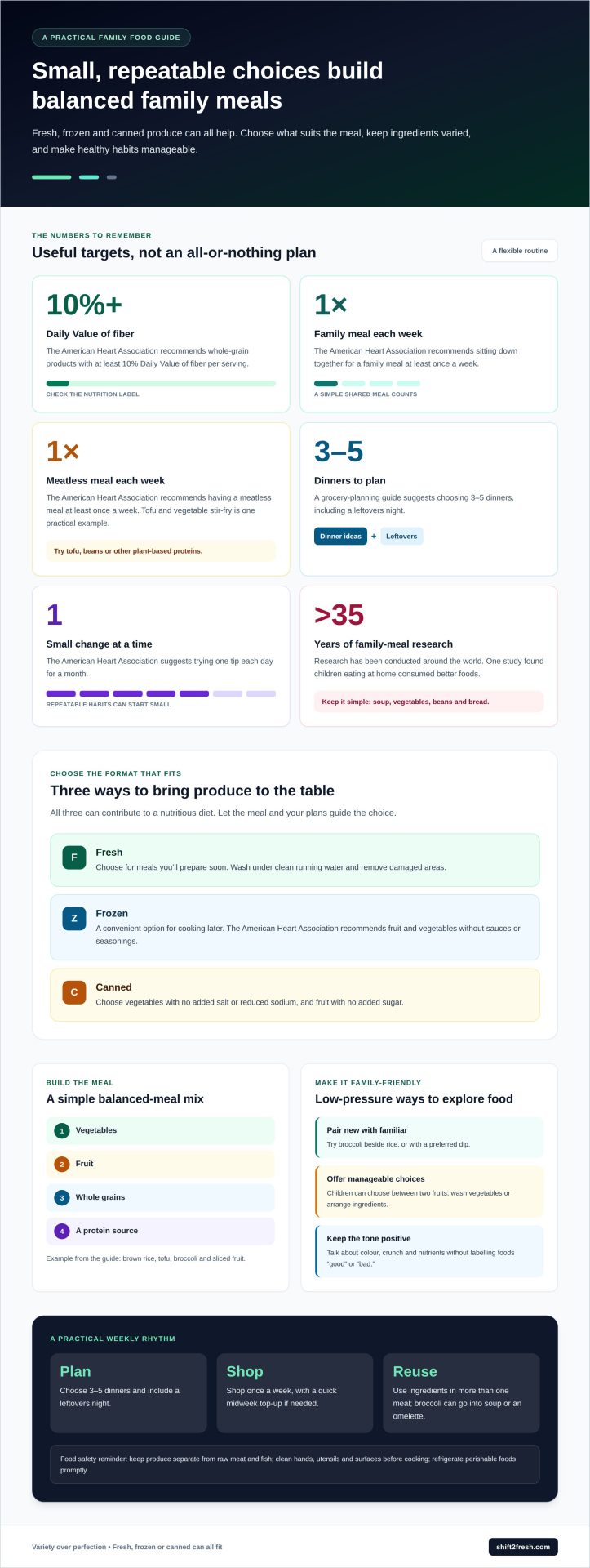
Build meals around vegetables, fruit, whole grains and a protein source. For example, serve brown rice with tofu, broccoli and sliced fruit. A healthy eating pattern limits added sugar, sodium and saturated fat over time. Planning fresh food for my family’s health can mean varying ingredients across meals rather than seeking one “ideal” plate. This supports children’s growth and adults’ long-term health.
Nutrition matters beyond the plate, too. A balanced breakfast of whole-grain toast, eggs and fruit can support a child’s morning routine. Nutritious eating can support children’s focus, memory and emotional regulation. For adults, it can help reduce the risk of chronic diseases, including heart disease, diabetes and obesity.
Choose colourful fruits and vegetables across meals, such as leafy greens, orange sweet potato and berries. Their phytonutrients may offer health benefits, including supporting heart health. Whole grains such as oats and brown rice provide more fiber, vitamins and minerals than refined grains. Wheat germ can add a nutty flavour and a different texture to porridge or yogurt.
Broccoli is a useful addition to meals, but no single vegetable ensures that every nutrient is absorbed. Serve it with a variety of foods, such as beans, tofu or whole grains, rather than relying on one ingredient. Edamame, soybeans and tofu provide plant-based protein, fiber, antioxidants, vitamins and minerals. Some plant-based proteins also contain less saturated fat than certain animal-based sources.
Make one manageable change at a time. The American Heart Association suggests trying one tip each day for a month and recommends having a meatless meal at least once a week. A tofu and vegetable stir-fry is one practical option. Cooking at home more often also makes it easier to adjust ingredients, flavour and portions to suit family preferences.
Growing food can build skills as well as provide produce. The Fresh Food for Families initiative guides immigrant families in growing local, nutrient-rich plants. Its program encourages home gardens and sustainable gardening, helping families learn to grow and use plants in their communities. These skills can support a practical approach to fresh food for my family’s health.
2. Choosing fresh, canned or frozen produce
Fresh, frozen and canned fruits and vegetables can all contribute to a nutritious diet. Choose fresh produce for meals you’ll prepare soon, or frozen vegetables for convenient cooking later. The American Heart Association recommends frozen fruits and vegetables without sauces or seasonings. For canned produce, choose vegetables with no added salt or reduced sodium, and fruit with no added sugar.
Wash fresh produce under clean running water, remove damaged areas, and keep it separate from raw meat and fish. Clean your hands, utensils and food-preparation surfaces before cooking, and refrigerate perishable foods promptly. Produce can carry contamination, while raw meat, fish and dairy can spoil or spread germs if handled poorly. Keep them separate and cook animal foods thoroughly.
Drinks matter too. The American Heart Association identifies sugar-sweetened beverages and soft drinks as the number one source of added sugars for most people. Replace soda with water more often, and check labels for added sugar in drinks and flavored yogurt. Plain yogurt with fruit offers a way to add flavor without relying on sweetened drinks.
For whole grains, check the fiber on the nutrition label. The American Heart Association recommends whole-grain products with at least 10% Daily Value of fiber per serving. Oats, brown rice and whole-grain bread can add fiber and nutrients to meals. The Dietary Guidelines for Americans 2020-2025 recommend a daily variety of fruits, vegetables, dairy, grains and protein foods.
Adapt choices to allergies, family preferences and health needs. For example, a meal with rice, vegetables and beans can suit a family seeking a plant-based option; another household might add fish or dairy. Portion size and overall eating patterns also matter when managing weight. Filipino pantry items can bring familiar ingredients into home cooking; explore Filipino pantry items as you plan varied meals.
Family meals and children’s food choices
A shared meal lets children see different foods enjoyed without pressure. The American Heart Association recommends sitting down together for a family meal at least once a week. Start with a familiar dish, then add a small serving of something new, such as broccoli beside rice or sliced fruit after dinner.
More than 35 years of research on family meals has been conducted around the world. One study found that children eating at home consumed better foods, while eating out was often associated with more fat and calories. Family meals don’t need elaborate recipes: soup with vegetables, beans and bread can make a simple shared dinner.
Help children explore food through manageable choices. Let them choose between two fruits, wash vegetables or arrange ingredients on their plates. Pair a new taste with a familiar option, such as broccoli with a preferred dip. Repeated, low-pressure exposure can make unfamiliar textures and flavours easier to approach.
Keep the conversation positive and focused on what food does. Explain that fruits and vegetables provide vitamins and other nutrients, without labelling foods as “good” or “bad.” Invite children to notice a fruit’s colour or crunch. Avoid turning a meal into a test of how much they eat.
For affordable family shopping in the UAE, plan meals around seasonal choices and use frozen or canned produce when it helps reduce waste. Choose several dinners before shopping, reuse ingredients across meals, and include leftovers. A grocery-planning guide suggests selecting 3-5 dinners, including a leftovers night, and shopping once a week with a quick midweek top-up if needed.
Broccoli bought for one meal, for example, can also go into soup or an omelette. Keep a short list of family favourites, then rotate fruits and vegetables to add variety. Small planning steps make it easier to serve balanced meals without making every dinner a new recipe.
4. Food groups and healthy grocery staples
A practical grocery list combines fruits and vegetables, grains, protein foods, and dairy or suitable alternatives. Rotate colours and textures across meals: add carrots to soup, berries to breakfast and leafy vegetables to a rice bowl. Variety helps families get nutrients and minerals from different food sources instead of relying on one “superfood.”
For fresh foods with useful nutrients, include berries, sweet potatoes, vegetables, beans, nuts, seeds and fish. A 3/4-cup serving of fresh blueberries contains 2.7 grams of fiber and 10.8 milligrams of vitamin C. Chia seeds add fiber, while unsalted almonds provide vitamin E. Choose staples that fit your family’s meals and dietary needs.
Protein options can include beans, lentils, tofu, eggs, nuts and fish. Fatty fish such as salmon, sardines and mackerel are high in omega-3 fatty acids, according to the American Heart Association. It recommends serving oily fish such as salmon, mackerel, trout or albacore tuna twice a week. Pair fish with vegetables and a whole grain for a balanced plate.
Check labels on grocery staples. For canned vegetables, choose no-added-salt or reduced-sodium options. Select unsalted whole almonds or almond butter without added salt or sugar. For vegetable juice, choose 100% juice made from whole vegetables and check its sodium content. These small label choices can help limit sodium and added sugars.
Plan ingredients around meals you already cook. Keep oats, brown rice, beans, nuts and frozen vegetables ready for quick combinations. Store sweet potatoes outside the refrigerator in a cool, dry area with good airflow. For fresh fruit in your grocery rotation, explore seasonal Filipino fruits and pair them with familiar staples for breakfasts or snacks.
Shift 2 Fresh
Shift 2 Fresh helps UAE households find ingredients for family meals through its online grocery store. Its range includes Seasonal Filipino Fruits, Asian Vegetables and Filipino Pantry Items, with Mobile App Ordering for convenient shopping. These options can add familiar flavors and new ingredients to a varied household menu, alongside the other foods your family enjoys.
Turn to Shift 2 Fresh when you’re planning meals and want Filipino or South Asian produce and pantry ingredients as part of your grocery choices. Seasonal fruits can complement breakfasts and snacks, while Asian vegetables and pantry staples can bring variety to home cooking. Choose what fits your family’s preferences and the meals you plan to prepare.
For help with your grocery choices, contact Shift 2 Fresh.
Make your next grocery choice count
Think of family food choices as a practice, not a perfect plan. As routines shift, children’s tastes change and schedules get busy, make the next grocery decision small and deliberate. Choose one ingredient your household is curious about, then decide how it could fit into a familiar meal. Notice what gets enjoyed, what remains and which flavours invite another try. That feedback can guide future choices without turning meals into a scorecard.
Choosing fresh food for my family’s health isn’t about chasing one ideal ingredient. It’s about creating a routine that works for your household. Stay curious in the kitchen and let each meal help you learn what suits your family. Over time, flexible choices can make food decisions feel more familiar and less like another task on a busy day.
For ingredients that bring variety to your family’s meals, contact Shift 2 Fresh today. Take the next step at your own pace, one meal and one thoughtful choice at a time.
Frequently Asked Questions
Is organic produce necessary?
No. Organic produce isn’t essential for a nutritious family diet. Choose fruits and vegetables your household enjoys and can use in meals, whether they’re organic or conventionally grown. When deciding between options, consider freshness, condition, taste, availability and how you plan to prepare them. Produce your family will eat is more useful than food that goes unused.
What are the healthy staples every family kitchen should have?
Keep versatile basics that work across several meals: oats, brown rice, beans, lentils, nuts or seeds, and a few frozen vegetables. Eggs, tofu or plain yogurt can add protein, depending on your family’s preferences and dietary needs. Oats, for example, can serve as breakfast or a porridge topping, while beans can go into soups, salads or rice dishes.
What should be on a healthy family grocery list?
Build your grocery list around meals rather than individual ingredients. Include fruits and vegetables, whole grains, protein foods and dairy or suitable alternatives, then add what you need for familiar recipes. A soup plan, for example, might call for carrots, beans, rice and seasoning. Add snacks such as fruit or unsalted nuts, and choose canned options with less sodium or no added sugar.
What are the health benefits of eating fresh foods?
Fresh fruits and vegetables provide vitamins, minerals and fiber, and including them in a varied diet can support overall health. Colourful produce also supplies phytonutrients that may offer health benefits. Fresh food isn’t the only nutritious choice: frozen and canned produce can contribute, too. Build meals from different food groups rather than relying on one ingredient for every nutrient.
How can I choose fresh, ripe, and nutritious produce?
Choose produce that looks and feels appropriate for its variety, without visible bruising, mold or leaking. A ripe fruit should have the aroma, colour and slight give expected for that type; don’t judge every fruit by the same texture. Buy quantities your household can use, and choose produce for its intended purpose, such as firmer fruit for lunchboxes or softer fruit for blending.
How can I plan balanced meals using fresh ingredients for the whole family?
Start with a grain or starchy food, add a protein source, then include vegetables or fruit. Adjust ingredients for allergies, preferences and appetite: a rice bowl, for example, can include tofu and vegetables, with fruit on the side. Let children choose between two toppings or help wash produce. This gives them a role while keeping the meal flexible for different tastes.
0 comments