

Last Tuesday, a home cook in Dubai opened her grocery order only to find her Ampalaya was already yellowing and soft. It is a common frustration for residents across the Emirates who rely on a fresh bitter melon delivery to maintain their traditional recipes or health routines. You know the disappointment of produce that lacks the signature snap and vibrant green hue needed for a perfect Ginisang Ampalaya. We agree that sourcing high-quality Asian vegetables shouldn’t feel like a gamble every time you shop online.
This guide will show you how to identify the crispest produce and ensure your kitchen is always stocked with the best superfoods. You’ll learn exactly how to distinguish between the bumpy Philippine Ampalaya and the smoother Indian Karela while mastering a 10-minute salt-soak method to manage that intense bitterness. We are covering everything from local UAE sourcing secrets to the specific nutritional perks that make this vegetable a staple for over 1.5 billion people globally.
Key Takeaways
- Understand the distinct differences between Ampalaya and Karela varieties to choose the right flavor profile and texture for your traditional UAE recipes.
- Unlock the health secrets of this Asian superfood, including its unique ability to support blood sugar management through natural insulin-like compounds.
- Master professional kitchen techniques like the “salt and squeeze” method to expertly balance the vegetable’s signature bitterness for a more palatable experience.
- Ensure peak quality for your kitchen by choosing a reliable fresh bitter melon delivery service that sources authentic produce directly from the Philippines to Dubai and Sharjah.
- Learn how to properly prepare and incorporate this nutrient-dense vegetable into your diet to boost your intake of Vitamin C, Vitamin A, and essential folate.
What is Bitter Melon and Why Is It a UAE Kitchen Staple?
Scientifically known as Momordica charantia, bitter melon is a tropical vine fruit that most chefs and home cooks treat as a versatile vegetable. If you are curious about its origins and botanical properties, What is Bitter Melon? provides a deep dive into its classification. In the United Arab Emirates, this unique ingredient has transitioned from a niche ethnic item to a mainstream grocery essential. The UAE imports over 80% of its food, and a significant portion of the fresh produce trade focuses on meeting the demands of the country’s diverse population. With the rise of fresh bitter melon delivery services, residents can now access premium produce that mirrors the quality found in markets across Manila or Mumbai.
The sensory profile of a premium bitter melon is unmistakable. It features a waxy skin with distinct ridges and a flavor defined by a sharp, cooling bitterness caused by the compound momordicin. When it’s fresh, the texture is crisp and crunchy, similar to a green bell pepper. As it cooks, it softens and absorbs the savory fats and spices of the dish, making it a favorite for those who appreciate complex flavor layers. Because the UAE market relies heavily on imports from the Philippines and South Asia, the demand for high-quality, firm, and vibrant green specimens remains constant throughout the year.
The Cultural Significance of Ampalaya and Karela
For the nearly 700,000 Filipino expatriates in the UAE, Ampalaya is a nostalgic connection to home. It’s the centerpiece of Ginisang Ampalaya, a beloved dish where the melon is sautéed with eggs, tomatoes, and shrimp. Similarly, for the millions of South Asian residents, “Karela” is a dietary pillar. It’s often prepared as Karela Gosht or stuffed with aromatic spices to balance its natural bite. Beyond traditional households, gourmet chefs in Dubai’s high-end dining districts are increasingly using bitter melon to add edge to fusion plates. It’s no longer just a traditional ingredient; it’s a culinary tool used to create balance in modern Emirati gastronomy.
Freshness Indicators: How to Spot Quality
Identifying the best produce is vital when you’re looking for fresh bitter melon delivery. High-quality melons should exhibit specific traits that guarantee a better cooking experience:
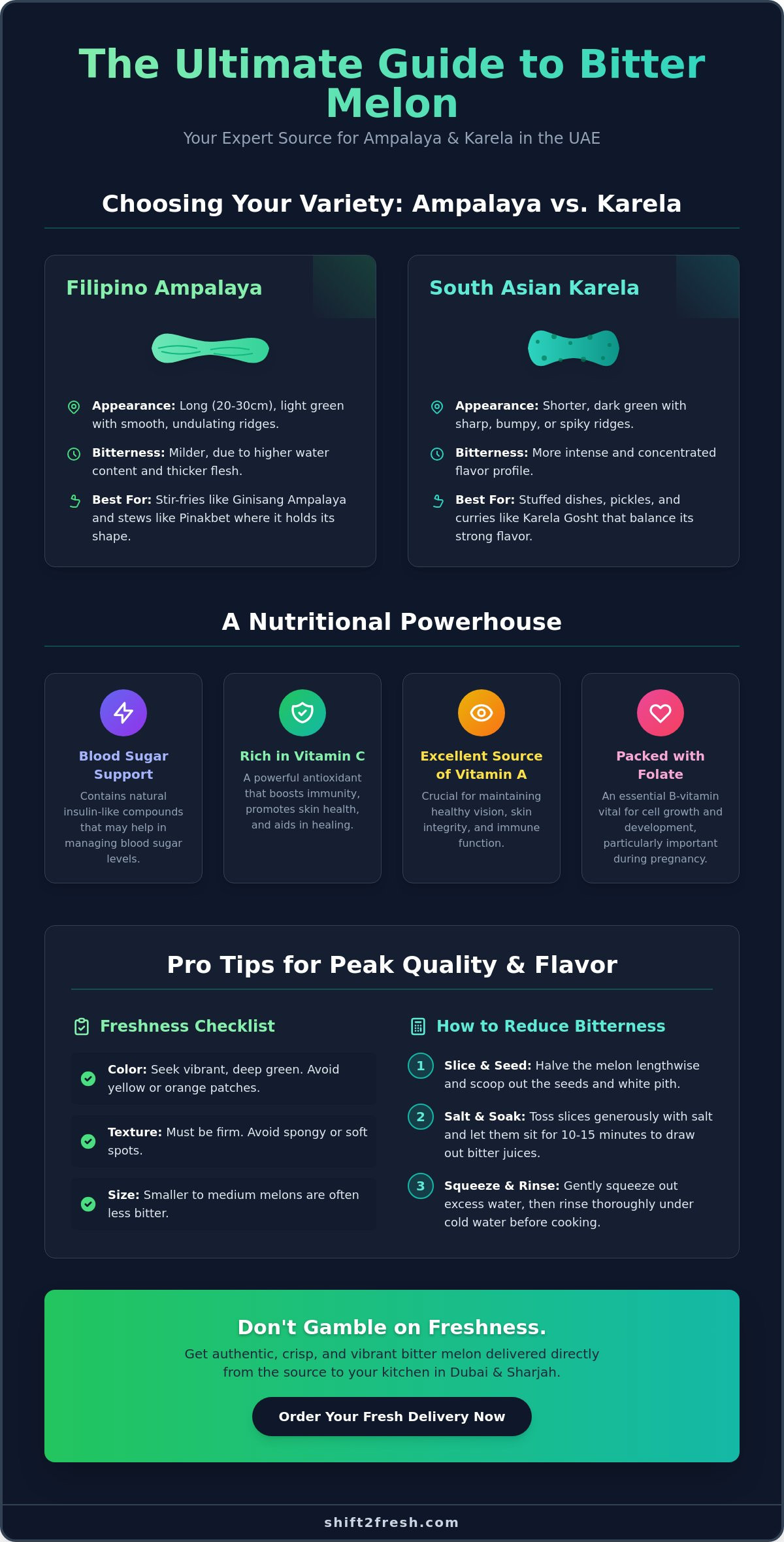
- Visual Cues: Seek out a vibrant, deep green color. Avoid any melons with yellow or orange patches, as these are signs of over-ripeness and will be excessively bitter and mushy.
- Tactile Cues: The fruit must be firm to the touch. If the skin feels spongy or gives way under light pressure, it’s likely been sitting on a shelf too long.
- Size Selection: Smaller or medium-sized melons are generally preferred. They tend to have smaller seeds and a more manageable level of bitterness compared to the oversized, pale varieties.
Choosing the right provider ensures these standards are met before the produce even reaches your kitchen. Freshness isn’t just about taste; it’s about the nutritional integrity of a vegetable that has been a staple in global wellness traditions for centuries.
Choosing the Right Variety: Ampalaya vs. Karela
Walking through a vegetable market in Dubai or browsing for fresh bitter melon delivery online reveals two distinct types of this gourd. While they belong to the same family, their physical traits, bitterness levels, and culinary applications differ significantly. Choosing the wrong one can lead to a dish that’s either too bitter for your palate or lacks the structural integrity needed for your specific recipe.
Filipino Ampalaya: Smooth and Elongated
The Filipino variety, commonly called Ampalaya, is easy to spot due to its size and texture. These gourds typically grow between 20 and 30 centimeters in length. They feature a light green hue and relatively smooth, undulating ridges rather than sharp spikes. Because of its higher water content and thicker flesh, the Ampalaya offers a milder bitterness compared to its South Asian counterparts.
This variety is a staple in Essential Asian Vegetables because it holds its shape well during quick high-heat cooking. It’s the ideal choice for Filipino classics like Ginisang Ampalaya (stir-fried with eggs) or Pinakbet. If you’re sensitive to bitter flavors, soaking sliced Ampalaya in salted water for 10 minutes before cooking removes a large portion of the sharp notes without making the vegetable mushy.
South Asian Karela: Dark and Bumpy
South Asian Karela, favored in Indian and Pakistani kitchens, is much smaller, usually measuring between 10 and 15 centimeters. Its skin is a deep, vibrant green and covered in jagged, tooth-like bumps. This variety packs a much more intense bitter punch. This concentrated flavor is exactly why it’s the preferred choice for those seeking the medicinal properties of the plant. Scientific studies on the Health Benefits of Bitter Melon highlight its high antioxidant content and role in metabolic health, qualities often most potent in these darker, more bitter varieties.
- Best for Stuffing: The hollow center of the Karela is perfect for Bharwan Karela, where it’s stuffed with spices and pan-fried.
- Crispy Textures: Its low moisture content allows it to become incredibly crispy when sliced thin and deep-fried into chips.
- Juicing: Because of its potency, Karela is the standard variety used for morning health tonics.
At Shift 2 Fresh, we prioritize sourcing authentic Filipino Ampalaya. We understand that many of our customers in the UAE are looking for that specific home-cooked taste that requires a milder, crunchier gourd. Our fresh bitter melon delivery service ensures that the produce arriving at your doorstep in Abu Dhabi or Sharjah maintains the firm texture and pale green color characteristic of top-tier Ampalaya. If you’re planning a weekend feast, you can order your fresh vegetables today to ensure you get the best of the current harvest.
Matching the variety to your cooking style saves time and prevents kitchen mishaps. While Karela requires longer cooking or salting to manage its intensity, the Filipino Ampalaya is ready for the wok with minimal prep. This makes it the more versatile option for busy households across the Emirates looking for a quick, nutritious addition to their weekly meal plan.
Nutritional Powerhouse: Health Benefits of Bitter Melon
Bitter melon is a cornerstone of functional nutrition in the Middle East. It isn’t just a vegetable for stews; it’s a potent source of bioactive compounds. Many UAE residents prioritize fresh bitter melon delivery to access these nutrients at their peak. It’s a staple for the growing community of clean-eating enthusiasts in cities like Sharjah and Dubai. This fruit contains active substances with anti-diabetic properties, making it a top choice for those following calorie-controlled or low-glycemic diets.
Bitter Melon for Blood Sugar Management
The science behind bitter melon focuses on its insulin-like effects. It contains polypeptide-p, a phytonutrient that helps lower blood glucose levels. Research shows this compound mimics the way insulin works in the body by moving sugar into the cells for energy. This makes it a favorite for diabetic-friendly diets across the UAE. You’ll often see bitter melon juice served as a morning health tonic in organic cafes in Jumeirah. It’s a sharp, refreshing way to kickstart the metabolism. You must be careful, though. If you’re on glucose-lowering medication, speak with a doctor. The combination can cause blood sugar to drop too low.
Vitamins and Minerals for Daily Vitality
Bitter melon offers a dense profile of micronutrients. Its Vitamin C levels are remarkably high. A single 100-gram serving provides about 84 milligrams of Vitamin C, which is nearly 93% of the daily recommended intake. This supports the immune system and collagen production for healthy skin. The Nutritional benefits of bitter melon also include significant amounts of Vitamin A and folate, which are essential for cell repair and vision.
The fruit’s role in digestive health is equally impressive. It helps regulate the gut and supports the body’s natural filtering processes. Key benefits include:
- High Fiber Content: It contains about 2.8 grams of fiber per 100 grams, which aids gut motility and prevents bloating.
- Potent Antioxidants: It’s rich in catechin and epicatechin, compounds that fight inflammation and protect cells from damage.
- Traditional Detox: It’s frequently used in traditional liver-cleansing routines due to its bitter compounds that stimulate bile production.
Adding this vegetable to your weekly meal plan is easy with a reliable fresh bitter melon delivery service. This ensures you get the firm, dark green pods that contain the highest concentration of these vital minerals. Whether you’re stir-frying it with garlic or blending it into a green juice, the nutritional payoff is worth the distinct bitter taste.
Mastering the Prep: How to Reduce Bitterness
Bitter melon, often called Ampalaya in the UAE’s Filipino and South Asian communities, is a polarizing vegetable. While its health benefits are widely recognized in traditional medicine, the sharp flavor can be overwhelming if you don’t prepare it correctly. The goal isn’t to remove the bitterness entirely, as that’s part of its unique charm, but to mellow it so the other ingredients can shine. When you order fresh bitter melon delivery, the quality of the produce makes a difference, but your kitchen technique determines the final taste.
The first rule of prep is thorough cleaning. After splitting the melon lengthwise, you’ll see a white, spongy pith surrounding the seeds. This part contains the highest concentration of momordicin, the compound responsible for the bitter taste. Use a sturdy metal spoon to scrape every bit of this white lining away. If you leave even a thin layer, the dish will likely be too aggressive for most palates.
Step-by-Step: The Salting Technique
This is the most reliable method used by home cooks across Dubai to tame the vegetable. It uses osmosis to draw out the bitter juices before the melon even hits the pan. It’s a simple process that takes less than 30 minutes but significantly improves the flavor profile.
- Slice it thin: Use a sharp knife to create uniform, 3-millimeter slices. Thinner pieces have more surface area for the salt to work.
- The Salt Toss: Place the slices in a bowl and toss them with 15 grams of sea salt per medium-sized melon.
- The Wait: Let the melon sit for exactly 20 minutes. You’ll notice it starts to “sweat” as moisture beads on the surface.
- The Rinse and Squeeze: Rinse the slices under cold running water to remove excess salt. Finally, place them in a clean kitchen towel and squeeze firmly to wring out the dark, bitter liquid.
For those making cold salads, blanching is a better alternative. Drop the slices into boiling water for 60 seconds, then immediately plunge them into an ice bath. This sets the vibrant green color and softens the texture without losing the crunch. It’s a technique often used in high-end restaurants in the UAE to ensure the vegetable looks as good as it tastes.
Cooking Tips for Beginners
If you’re new to cooking this vegetable, remember that balance is everything. Pair it with “umami” heavy hitters. In the UAE, many cooks use fermented black beans or shrimp paste (Bagoong) to create a savory contrast. These salty, fermented flavors wrap around the bitterness and make it much more palatable. You can find excellent pairing ideas through Gourmet Food Delivery Dubai to elevate your home-cooked meals.
Avoid overcooking the melon. It should stay on the heat for no more than 4 to 6 minutes. If it becomes mushy, the bitterness seems to spread through the entire dish. A final pro tip involves adding a teaspoon of honey or local date syrup at the very end of the cooking process. This doesn’t make the dish sweet, but it rounds off the sharp edges of the flavor.
Why Choose Shift 2 Fresh for Your Bitter Melon Delivery?
Finding high-quality Ampalaya in the UAE requires a supplier that understands the specific needs of tropical produce. Shift 2 Fresh fills this gap by sourcing directly from farms in the Philippines. This direct relationship ensures you get the authentic, sharp flavor profile that characterizes true Filipino bitter melon. We don’t rely on third-party wholesalers who might let produce sit in transit for too long. Instead, our team manages the supply chain to ensure every piece meets strict export standards before it ever reaches our warehouse.
Quality control starts before the fruit even leaves the farm. Our trained staff hand-pick each melon, looking for specific indicators of health and taste. They select for deep green color and consistent firmness, ensuring the fresh bitter melon delivery you receive is never spongy or overripe. By the time it reaches your kitchen in Dubai or Sharjah, it’s as close to farm-fresh as possible in the Middle East. Our mobile app makes this process even easier, allowing you to set up recurring orders so your pantry stays stocked without constant manual effort.
Our Commitment to Freshness in the UAE Heat
The UAE climate presents a significant challenge for delicate vegetables. We’ve solved this by investing in a robust cold chain system. From our central warehouse in Sharjah, we utilize temperature-controlled vehicles to maintain a steady climate during transit. This prevents the rapid wilting that often occurs with standard delivery services. Farm-to-table speed matters because Ampalaya loses its nutritional potency and crunch the longer it stays in the heat. For households looking to stock up on essentials, we provide free delivery on orders over AED 500, making it easier to manage your bulk pantry needs efficiently.
A Complete Asian Pantry at Your Fingertips
Your cooking doesn’t stop at vegetables. To get the best out of your meal, you can pair your bitter melon with Filipino Pantry Items like savory bagoong or premium soy sauce. We’ve built a one-stop shop where you can find everything from calamansi to ube in a single transaction. This saves you the trouble of visiting multiple specialty stores across the city. Whether you’re in Sharjah, Dubai, or the wider UAE, we bring the market to you.
Experience the difference that professional handling and direct sourcing make for your home cooking. Order your fresh Ampalaya today from Shift 2 Fresh!
Bring Authentic Flavors to Your UAE Kitchen Today
Eating healthy across the Emirates shouldn’t mean compromising on the authentic flavors of home. You’ve discovered how to distinguish between Philippine Ampalaya and South Asian Karela, along with the specific techniques needed to balance that iconic bitterness. Shift 2 Fresh brings 45+ years of food industry experience directly to your doorstep, ensuring every harvest meets the highest standards. We utilize specialized cold-chain delivery systems to maintain freshness during transit, providing you with premium Philippine and South Asian imports that stay crisp. Choosing our fresh bitter melon delivery means you get nutrient-dense vegetables without the hassle of searching through local markets. Our commitment to quality ensures your family enjoys the best ingredients for traditional recipes like Pinakbet or stir-fries. It’s time to elevate your cooking with produce that’s as fresh as the day it was picked.
Shop Fresh Filipino Ampalaya for Delivery Now
Your journey toward a healthier, more flavorful lifestyle starts with a single click. Happy cooking!
Frequently Asked Questions
How long does fresh bitter melon stay good in the fridge?
Fresh bitter melon typically stays good for 4 to 7 days when stored correctly in the refrigerator. You should wrap the unwashed vegetable in a paper towel and place it inside a perforated plastic bag in the vegetable crisper drawer. Maintaining a temperature between 4 and 7 degrees Celsius prevents the skin from becoming soft or slimy. If you order through a fresh bitter melon delivery service in Dubai, ensure you refrigerate the produce immediately upon arrival to maintain its crispness.
Can you eat the seeds of the bitter melon?
You can eat the seeds of a bitter melon if they’re white and soft. These immature seeds blend easily into stir-fries or soups without affecting the texture. However, you should discard seeds that have turned bright red or feel hard to the touch. Red seeds indicate the fruit is overripe, which changes the flavor profile and makes the seeds difficult to chew. Most chefs in the UAE remove the pith and seeds entirely to reduce the overall bitterness of the dish.
Is it safe to eat bitter melon every day?
Eating bitter melon every day is generally safe for healthy adults when consumed in moderate amounts, such as one small melon or 50 to 100 milliliters of juice. People taking glucose-lowering medications must consult a healthcare professional first. Clinical studies indicate that bitter melon can significantly lower blood sugar levels, which might interfere with prescribed treatments for diabetes. It’s best to limit daily intake to 2 servings to avoid potential digestive issues like stomach cramps or diarrhea.
What is the difference between green and white bitter melon?
The primary difference lies in the intensity of flavor and texture, as green bitter melon is significantly more bitter than the white variety. Green types, common in UAE markets, have a firm skin and a sharp, pungent taste. White bitter melon features a creamier color, a milder flavor, and a crunchier texture that holds up well in salads. While both varieties offer similar nutrients, the white version is often preferred by those who find the traditional green ampalaya too overwhelming.
How do I know if my bitter melon has gone bad?
You know your bitter melon has gone bad if it feels soft, slimy, or shows visible signs of mold. A fresh melon should feel firm and heavy for its size. While a change from green to yellow indicates ripening, actual spoilage involves dark brown indentations or a foul odor. If you notice any liquid leaking from the skin or a fuzzy white growth, you should discard the vegetable immediately to avoid foodborne illness. Check your produce every 48 hours for these signs.
Can bitter melon be frozen for later use?
You can freeze bitter melon for up to 6 months if you blanch it first. To do this, slice the melon and boil the pieces for 2 minutes before plunging them into an ice bath. This process preserves the nutrients and prevents the texture from becoming excessively mushy after thawing. Using a reliable fresh bitter melon delivery ensures you start with high-quality produce, which yields better results when you’re stocking up your freezer for future traditional recipes.
Why is my bitter melon turning orange or yellow?
Your bitter melon is turning orange or yellow because it’s reaching full maturity. As the fruit ripens, the chlorophyll breaks down and the interior seeds often turn a vibrant red. While the melon is still edible at this stage, the texture becomes much softer and the flavor profile changes significantly. Most people in the UAE prefer to harvest or buy the vegetable while it’s still green and firm to ensure the best culinary results in savory dishes.
Does cooking bitter melon remove its health benefits?
Cooking bitter melon doesn’t remove all its health benefits, though high heat can reduce the levels of Vitamin C and certain antioxidants. Research suggests that quick cooking methods, such as stir-frying or steaming for 5 to 7 minutes, help retain most of the plant’s medicinal properties. Boiling the vegetable for extended periods may cause water-soluble nutrients to leach into the cooking liquid. To maximize health gains, avoid overcooking the melon until it loses its structural integrity and vibrant color.
0 comments