

Freshness and ingredient lists are more useful clues to authenticity than a broad “Asian” label. Finding authentic Asian ingredients is hard when familiar staples sit beside unfamiliar produce, sauces and regional specialties. Start by looking for fresh vegetables, whole spices, traditional sauces and clear ingredient lists.
It’s easy to feel unsure when several versions of a staple look similar or a recipe calls for an ingredient you rarely see. This guide will help you make more confident choices in Asian markets and restaurants across the UAE, from assessing specialty produce to reading pantry labels.
You’ll learn what to look for in fresh ingredients, how to choose rice, noodles and fermented staples, and which signs can help distinguish regional cooking from a generic “Asian” menu. The goal is practical: find ingredients that suit the dish you want to make and understand why they belong in it.
Key Takeaways
- Use freshness, condition and clear ingredient lists to assess specialty produce and pantry staples.
- Choose rice, noodles, sauces and fermented ingredients based on the dish and the flavour you want.
- Look for regional specialties, fresh vegetables, whole spices and traditional sauces when judging food in restaurants.
- In the UAE, Shift 2 Fresh offers Asian vegetables, seasonal Filipino fruits and Filipino pantry items, with mobile app ordering.
1. Fresh produce and specialty market ingredients
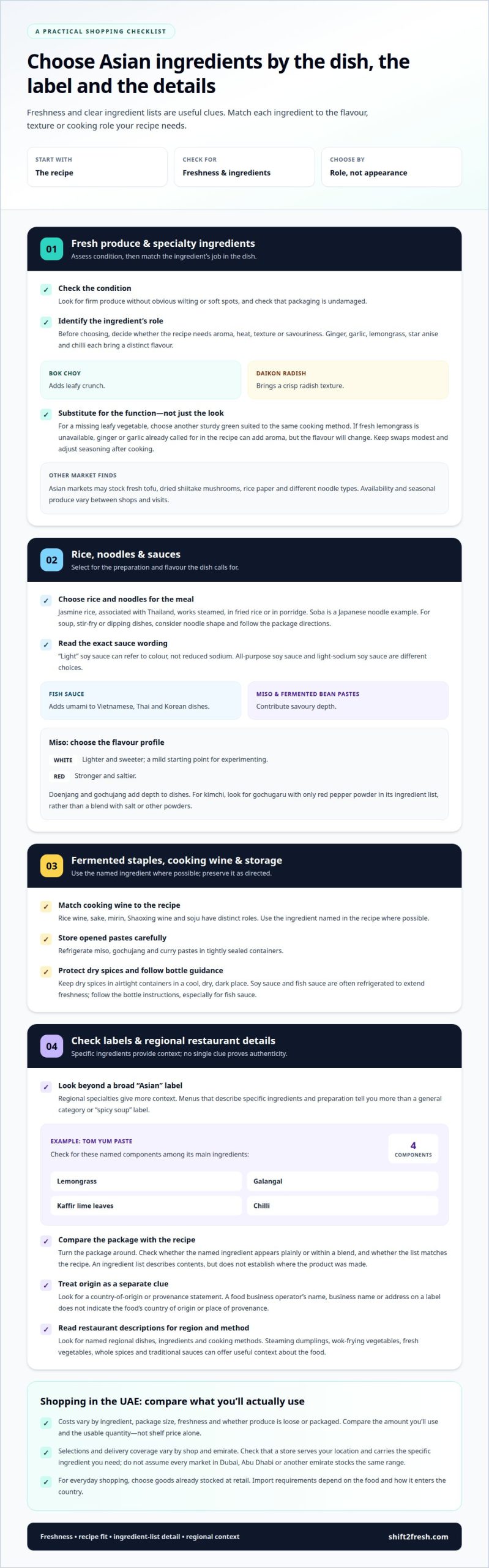
Start with the recipe, then identify the ingredient’s role: aroma, heat, texture or savouriness. Ginger, garlic, lemongrass, star anise and chilli peppers each bring a distinct flavour. For fresh produce, look for firm pieces without obvious wilting, soft spots or damaged packaging.
Asian markets may stock bok choy, daikon radish, fresh tofu, dried shiitake mushrooms, rice paper and different noodle types. These ingredients are not interchangeable: bok choy adds leafy crunch, while daikon brings a crisp radish texture. Choose a substitute by matching what the original ingredient contributes, not just its appearance.
Good substitutes depend on the dish. If fresh lemongrass is unavailable, use another aromatic already called for in the recipe, such as ginger or garlic, knowing the flavour will change. For a missing leafy vegetable, choose another sturdy green suited to the same cooking method. Keep the swap modest, then adjust the seasoning after cooking.
In UAE stores, costs vary with the ingredient, package size, freshness and whether it is sold loose or packaged. Compare the amount you’ll use and the usable quantity, rather than judging two items by shelf price alone. Specialty produce can also be seasonal, so a recipe’s fresh ingredient may not appear in every shop at every visit.
Import requirements depend on the food and how it enters the country, so a general list of rules would be misleading. For everyday shopping, choose from goods already stocked at retail instead of arranging an import yourself.
Which Asian grocery stores or online shops deliver across the UAE depends on the emirate and each seller’s delivery coverage. Look for a store that serves your location and carries the specific ingredient you need; Asian produce and pantry selections can differ between shops.
Recipe-specific fresh items, such as lemongrass or daikon, and regional pantry staples may take extra searching. Asian markets may carry these alongside familiar produce, but the range varies. In Dubai, Abu Dhabi and other emirates, check each market’s selection rather than assuming every location stocks the same items.
2. Rice, noodles, soy sauce, and fermented ingredients
Choose rice and noodles for the dish you’re preparing, not just their appearance. Jasmine rice, associated with Thailand, works steamed, in fried rice or in porridge. Soba noodles are a Japanese example. For a soup, stir-fry or dipping dish, consider the noodle’s shape and follow its package directions so the texture suits the meal.
Finding authentic Asian ingredients is hard when a recipe names a specific sauce but shop shelves group bottles by broad style. Read the label: “light” soy sauce can refer to colour, not reduced sodium. All-purpose soy sauce and light-sodium soy sauce are different choices. Fish sauce adds umami to Vietnamese, Thai and Korean dishes, while miso and fermented bean pastes contribute savoury depth.
Choose fermented pastes according to the flavour you want. White miso is lighter and sweeter, while red miso tastes stronger and saltier. White or yellow miso offers a mild starting point for experimenting. Doenjang and gochujang add depth to dishes. For kimchi, select gochugaru with only red pepper powder in its ingredient list, rather than a blend containing salt or other powders.
Cooking wines have distinct roles in recipes. Options include rice wine, sake, mirin, Shaoxing wine and soju, so use the named ingredient where possible. After opening, refrigerate miso, gochujang and curry pastes in tightly sealed containers. Soy sauce and fish sauce are often refrigerated to extend freshness; follow the bottle instructions, especially for fish sauce.
Finding authentic Asian ingredients is hard if you shop without a recipe’s exact wording. Make a short ingredient list before browsing, including the required sauce or paste and its intended dish. Check that powders and pastes are in intact packaging, then store dry spices in a cool, dry, dark place in airtight containers. These steps help preserve aroma and make pantry choices more purposeful.
Sushi offers another way to use rice: it is made with vinegared rice paired with raw fish or vegetables and is often served with soy sauce and wasabi. I use soy sauce in almost every Asian dish, and Asian grocery stores may offer dozens of varieties.
3. Identifying authentic food in restaurants and markets
Authenticity isn’t a single flavour or presentation style. Look for signs that connect a dish to a particular region, its ingredients and its cooking methods. A menu with regional specialties gives you more context than one that groups every dish under a broad “Asian” label. Fresh vegetables, whole spices and traditional sauces can also indicate attention to ingredient quality.
Read the menu description for specific ingredients and preparation. Tom Yum, for example, is associated with a paste featuring lemongrass, galangal, kaffir lime leaves and chilli among its main ingredients. A description naming those components tells you more than a general “spicy soup” label. Regional names and ingredient details help you understand what the dish is meant to taste like.
At a market, turn the package around and read the ingredient list. Check whether the named ingredient appears plainly or sits within a blend, then compare that list with the recipe. For a Tom Yum paste, look for lemongrass, galangal, kaffir lime leaves and chilli among its main ingredients. An ingredient list gives useful detail about contents, but it doesn’t establish where the product was made.
For origin, look for a country-of-origin or provenance statement rather than relying on a company name or address. According to EUR-Lex, a food business operator’s name, business name or address on a label doesn’t indicate the food’s country of origin or place of provenance. Treat those label details as separate clues.
In restaurants, compare the menu’s regional description with the ingredients and method described. Steaming dumplings, wok-frying vegetables or serving a named regional specialty offers more specific context than a generic dish title. These clues don’t prove a restaurant’s identity, but they help you judge whether its food reflects a particular cuisine. Combine menu detail, ingredient quality and preparation rather than relying on one signal alone.
Fresh ingredients, traditional methods and regional context can offer useful clues when assessing Asian food. Menus that name regional specialties offer more useful context than those listing only generic “Asian” dishes.
4. Where can I find authentic Asian ingredients in the UAE?
In the UAE, explore specialty grocery shops and Asian food markets in your emirate. Their selections differ, so a shop in Sharjah might not carry the same range as one in Dubai or Abu Dhabi. Finding authentic Asian ingredients is hard when specialty selections vary between stores, but searching by the exact ingredient name can narrow your options.
Before shopping, write down the ingredient as it appears in your recipe, including its regional name if given. Search for each item separately rather than relying on a broad “Asian food” category. This makes it easier to distinguish a particular noodle, vegetable or pantry staple from similar products.
Online grocery catalogues offer another way to search. Enter the exact ingredient, read the product description, and note whether it is fresh, dried or packaged. Check delivery coverage for your emirate before building a meal plan around a listed item. A catalogue can help you compare formats without travelling between shops.
For fresh produce, consider how you’ll use it before choosing an alternative. A leafy vegetable for quick cooking needs a different texture from a firm vegetable intended for a longer stew. Pantry staples also vary by form, so match the product description to the recipe’s instructions instead of relying on a familiar-looking package.
Finding authentic Asian ingredients is hard if you expect every store across the UAE to carry the same range. Keep a flexible recipe option in mind when a specialty item isn’t available, and choose a substitute for the role it plays, such as texture or aroma. The result may taste different, so adjust the dish to suit the ingredient you find.
Make your search more efficient by planning around recipes that share ingredients. Note which items need to be fresh and which can be kept in the pantry, then browse shops or online listings with that list. This helps you choose ingredients for actual meals while adapting to the selection available in your emirate.
Look to specialty grocery shops and Asian food markets, as well as online grocery catalogues. Check the delivery coverage for your emirate before relying on a listing.
You may find Asian noodles, vegetables and pantry staples, but the selection varies between stores and emirates. Search by the ingredient’s exact name and check whether it is fresh, dried or packaged.
Shift 2 Fresh: Asian Vegetables
Shift 2 Fresh offers Asian Vegetables for home cooks seeking ingredients for regional recipes. Turn to this range when a dish calls for produce that may be harder to find in a general grocery selection. You can also explore Seasonal Filipino Fruits and Filipino Pantry Items to complement meals with specialty ingredients.
Mobile App Ordering gives you a way to browse and place grocery orders. Use it to look for ingredients that match your planned dishes, whether you’re preparing a vegetable stir-fry or stocking up on Filipino pantry staples. The selection connects this guide’s advice with practical grocery shopping in the UAE.
For ingredients suited to your cooking plans, contact Shift 2 Fresh.
Make your next recipe your starting point
If finding authentic Asian ingredients feels hard, take one recipe at a time. Pick a dish you’re excited to cook, then let its ingredients guide your shopping choices. You don’t need to build a complete pantry before trying something new; one well-chosen ingredient can open the door to a new flavour or cooking tradition.
As you explore, keep a short list of ingredients you’d like to try and note which dishes use them. That gives each shopping trip a purpose and helps turn unfamiliar names into practical choices for your kitchen. Let curiosity lead, and give yourself room to adapt as you discover what you enjoy cooking.
For specialty ingredients suited to home cooking in the UAE, take the next step with Shift 2 Fresh. Contact Shift 2 Fresh today to explore your options and plan your next meal. A new dish can start with one ingredient, and your next discovery could become a favourite.
Frequently Asked Questions
How can I identify authentic Asian ingredients and avoid substitutes?
Match the ingredient to the cuisine and dish named in your recipe, rather than choosing a broad-category substitute. For example, Filipino recipes calling for tablea or black glutinous rice need those specific pantry ingredients, not ordinary cocoa or rice. If you’re unsure which form the recipe means, use its exact ingredient name and preparation instructions to guide your choice.
0 comments