

What if you could bring the flavours of a Filipino street-food stall into your kitchen without complicated equipment or a long list of unfamiliar ingredients? Filipino street food at home can be simpler than it sounds. Start with an approachable snack, then build its familiar balance of sweet, salty and sour flavours with ingredients you can find or sensibly substitute.
Deep-frying can feel messy, and grilling may be tricky in a home kitchen. This guide helps you choose favourites to suit your time, ingredients and cooking setup, with beginner-friendly ideas such as turon, banana cue, kwek-kwek and Filipino pork barbecue. You’ll find basic techniques, practical adaptations and serving ideas for merienda. For cooks in the UAE, we’ll also cover Filipino pantry staples and seasonal produce to look for, while keeping in mind that availability can vary.
Key Takeaways
- Choose a first recipe by matching its ingredients and steps to the time and equipment you have.
- Group ingredients by purpose, then use practical substitutes when needed. Keep in mind that swaps can change flavour or texture.
- For filipino street food at home, work in small batches and prepare everything before cooking to make serving easier.
- Frying, baking and grilling can each suit a home kitchen, but the finished texture will differ. Avoid overcrowding pans and handle hot oil carefully.
- Plan a relaxed UAE merienda with savoury and sweet bites, sauces and fresh accompaniments, plus components prepared ahead.
Which Filipino Street Foods Are Easiest to Make at Home?
Filipino street food is made for relaxed, satisfying snacking: a few crisp or sweet bites shared during merienda, the informal break between meals. Options range from savoury rolls and battered snacks to sticky, caramel-coated treats, and they don’t all require the same effort or equipment. For a first attempt, choose a dish with familiar ingredients, a manageable preparation process and a cooking method that suits your kitchen.
In a home kitchen, Filipino street food means approachable snacks prepared for sharing, with familiar Filipino flavours and techniques adapted to the equipment you have. To explore the variety, see this list of popular Filipino street foods, which includes fish balls, squid balls and kwek-kwek. For your first cooking session, focus on one manageable dish instead of trying to recreate an entire street-food stall.
Start with kwek-kwek, lumpia, or turon
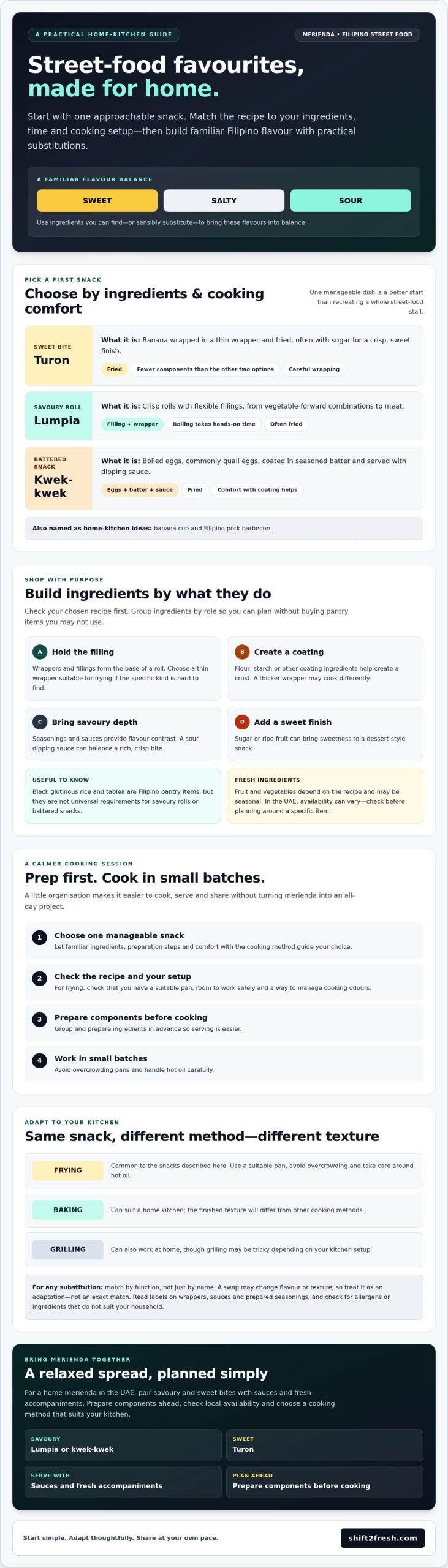
Kwek-kwek pairs boiled eggs, commonly quail eggs, with seasoned batter and a dipping sauce. It’s a good choice if you’re comfortable preparing a coating and frying small pieces. Lumpia are crisp rolls with flexible fillings, from vegetable-forward combinations to meat. Rolling each one takes hands-on time, but you can choose a filling to suit your household. Turon is a sweet snack of banana wrapped in a thin wrapper and fried, often with sugar for a crisp, sweet finish. It’s a straightforward option if you’d rather make dessert than a savoury snack.
Choose a dish to match your time and equipment
Consider the steps before you begin. Kwek-kwek requires eggs, batter and sauce; lumpia adds filling preparation and rolling. Turon has fewer components, but still calls for careful wrapping and frying. All three are often fried, so check that you have a suitable pan, enough room to work safely and a way to manage cooking odours. Don’t assume every Filipino street-food favourite will be equally easy to make at home.
Start with one snack, not a multi-dish spread. Choose lumpia if you want a savoury option that can be adapted for vegetarian or meat-eating households. Pick kwek-kwek if eggs and dipping sauce appeal, or choose turon for a sweet finish. Your preferred flavours, available ingredients and comfort with frying are better guides than popularity alone. That’s a practical way to enjoy filipino street food at home without turning merienda into an all-day project.
Which Filipino Ingredients Do You Need, and What Can You Substitute?
You don’t need to stock an entire Filipino kitchen to make a snack. Start with the ingredients your chosen recipe calls for, grouped by what they do: hold a filling, create a crisp coating, add savoury depth or bring a sweet finish. This makes it easier to plan Filipino street food at home without buying ingredients that may sit unused in the pantry.
Build a practical starter pantry for street-food recipes
Check your recipe first, then sort its ingredients by role. Wrappers and fillings form the base; flour, starch or other coating ingredients create a crust; seasonings and sauces provide flavour contrast; and sugar or fruit may supply sweetness. This Filipino pantry essentials guide can help with general pantry planning, but not every pantry staple is needed for street-food recipes.
Keep pantry goods separate from fresh ingredients. Filipino pantry items can include specialty staples such as black glutinous rice and tablea, but these aren’t universal requirements for savoury rolls or battered snacks. Fresh fruit and vegetables depend on the recipe and may be seasonal. For a dish such as pork barbecue, compare your ingredient list with a trusted reference like the Filipino Pork Barbecue recipe before shopping.
Adapt ingredients while keeping the dish recognisable
Substitute by function, not just by name. If a particular wrapper is hard to find, look for a thin wrapper suitable for frying. A thicker one may cook differently. For a savoury filling, use vegetables or meat that can be finely chopped and seasoned. A sour dipping sauce can balance a rich, crisp bite, while sugar or ripe fruit can bring sweetness to a dessert-style snack. Each swap may change the final flavour or texture, so treat it as an adaptation rather than an exact match.
Read ingredient labels carefully, especially for wrappers, sauces and prepared seasonings, and check for allergens or ingredients that don’t suit your household’s dietary needs. If a pantry term is unfamiliar, this guide to must-have Filipino cooking ingredients offers more background. Shift 2 Fresh’s online selection also includes Filipino pantry items and relevant produce. Check current availability before planning a recipe around a specific item.
How Do You Make Filipino Street Food at Home?
A little organisation makes frying less hectic. Choose one tested recipe, read it through and gather the ingredients and tools before you start. Prepare the filling, sauces and wrappers first, then cook in manageable batches and serve the snacks promptly while their texture is at its best.
Preparing ingredients before heating the oil helps home cooks focus on frying safely and serving each batch while it’s crisp. Keep raw ingredients separate from ready-to-eat food, and follow the recipe’s handling instructions. For filipino street food at home, clear stages are more useful than trying to cook several dishes at once.
Prepare kwek-kwek with clear stages
Prepare the eggs as directed in your chosen recipe, then make the batter and dipping sauce. If the recipe calls for annatto, use it as a colour ingredient rather than assuming it’s essential to every version. Coat each egg evenly, lower it carefully into the hot oil and fry in batches so the coating can cook without crowding. Look for a set, crisp exterior, then serve with the prepared sauce.
Use tested quantities and follow the recipe’s specific oil-safety and food-handling instructions. Don’t guess at cooking times or temperatures, since egg size, batter and equipment can affect the result.
Make lumpia or turon in manageable batches
For lumpia, prepare and cool the filling as the recipe directs before wrapping. Add enough filling to make a neat roll without overstuffing, fold the sides in and seal the edge so the wrapper stays closed during cooking. Fillings vary, so make sure yours is cooked through as appropriate before serving. Fry a small batch first and check for an evenly crisp, golden wrapper.
Turon follows the same prepare-then-wrap rhythm, with banana as a sweet filling inside a thin wrapper. Some versions add other ingredients or sugar, so check a reliable recipe for the exact combination and quantities rather than treating every variation as standard. Keep wrapped pieces covered while you work, then cook in batches and serve once the exterior is crisp.
If you’d like to try a grilled savoury option another time, the Auguste Escoffier School of Culinary Arts shares a BBQ Pork on skewers recipe. Shift 2 Fresh’s online selection is another place to explore Filipino pantry items and produce; check current availability before planning your dish.
How Can You Adapt Street-Food Cooking to Your Home Kitchen?
You don’t need a street stall’s setup to make Filipino snacks, but the cooking method affects the result. A recipe designed for frying relies on direct contact with hot oil for its crisp coating and even browning. Baking or air-frying may use less oil, but can produce a drier or less uniformly crisp texture. Grilling suits skewered foods, not every wrapped or battered snack.
| Method | Equipment | Texture to expect | Practical trade-off |
|---|---|---|---|
| Frying | Deep, stable pan or suitable fryer | Usually the crispest, most evenly browned coating | Needs careful oil handling, ventilation and space for small batches |
| Baking or air-frying | Oven tray or air fryer | Can be crisp, though often drier or different from fried | Convenient for some dishes, but follow a recipe tested for this method |
| Grilling | Indoor grill pan or outdoor grill | Charred edges and a grilled surface | Best for suitable skewers; less useful for delicate wrappers or wet batter |
Choose a cooking method that suits the dish
Before choosing a method, check the recipe and your kitchen setup. Consider whether you have the right pan or appliance, enough ventilation and confidence handling hot oil. If frying feels unfamiliar, select a tested baked or air-fried recipe rather than converting one by guesswork. For Filipino street food at home, adapting the method is reasonable, but expect the texture to change.
Troubleshoot texture, wrapping, and batch cooking
Soggy coating? Let excess batter drip off and avoid overcrowding, which can interfere with even cooking. If wrappers leak, use less filling and seal the edge securely. For more even browning, leave space between pieces and turn them as the recipe directs. Prepare and arrange ingredients before heating oil so you aren’t wrapping in a rush beside a hot pan.
Keep hot oil attended, lower food gently to reduce splashes and never add water to it. Follow recipe-specific cues for doneness, especially for fillings that need to cook through. For food-handling and safety details, consult current guidance from the relevant UAE authorities rather than relying on guessed temperatures or timings. To plan your next batch, explore Filipino pantry items and check availability before you shop.
How Do You Serve Filipino Street Food at Home in the UAE?
A good merienda spread doesn’t need to be elaborate. Choose a savoury snack and a sweet one, then serve them in the middle of the table so everyone can sample both. Pair crisp lumpia with turon, for example, or offer kwek-kwek alongside a simple fruit-based dessert. A small menu keeps preparation manageable and lets each snack arrive fresh, without leaving you juggling several dishes at once.
Plan a simple Filipino merienda spread
Set dipping sauces out separately so guests can choose their preferred flavour and heat level. Add a fresh accompaniment, such as sliced fruit or a salad that suits the dishes, to provide a lighter contrast to fried bites. You can prepare sauces, fillings and other components ahead, then cook the snacks closer to serving time. Clearly tell guests what each dish contains, including common allergens and any ingredients relevant to their dietary needs.
Plan the serving sequence, too. Bring out hot or crisp items in small batches and replenish as needed, rather than piling everything onto one platter to sit. Keep serving utensils handy and sauces separate so guests can choose what they enjoy. This simple approach makes Filipino street food at home feel relaxed and welcoming, whether you’re sharing merienda with family or hosting friends.
Find relevant ingredients through UAE grocery options
Plan your menu around ingredients you can confirm, especially if a recipe depends on fresh fruit or vegetables. Filipino produce can be seasonal and availability may change, so check current online listings before choosing a dish or substituting an ingredient. Filipino pantry staples can round out your shopping list, but only buy what your selected recipes need.
For broader sourcing ideas, browse this guide to Filipino and Asian groceries online. Shift 2 Fresh offers Filipino produce and pantry items through its online selection, but check current listings before planning your spread. Choose your recipes first, then compare their ingredient lists with what’s available.
For a starting point, explore Filipino ingredients in Shift 2 Fresh’s online selection and check whether they suit your menu.
Make Your Next Merienda a Filipino Favourite
Great Filipino street food at home starts with a manageable plan, not a crowded menu. Pick one snack that suits your time and kitchen, group ingredients by their purpose, and remember that substitutions can affect the finished flavour and texture. Preparing everything before cooking, working in batches and serving snacks fresh can make the experience smoother and more enjoyable.
For a relaxed merienda, pair a savoury bite with something sweet, offer sauces on the side and let guests know what’s in each dish. If a recipe calls for fresh produce or a specialty pantry ingredient, check current UAE listings before planning around it. Shift 2 Fresh’s online selection includes Filipino pantry items and seasonal produce, though specific availability may vary.
Ready to plan your first snack? Explore Filipino ingredients online and choose a recipe that feels achievable. Start simple, enjoy the process and make the next batch your own.
Frequently Asked Questions
What Filipino street food can beginners make at home?
Beginners can try kwek-kwek, lumpia or turon, choosing a tested recipe that suits their cookware and comfort level. For filipino street food at home, start with one snack, read the method through and gather the ingredients before cooking. Preparation varies: lumpia requires filling and wrapping, while kwek-kwek involves battering eggs. Follow the recipe’s quantities and doneness cues, since versions differ and aren’t all equally simple.
Can you make Filipino street food without deep-frying?
Some Filipino street-food recipes can be adapted for baking or an air fryer, while others depend on frying for their characteristic crispness. Use a recipe tested for your chosen method rather than assuming the results will be identical to a fried version. Check that fillings are cooked appropriately, and follow safe handling practices for raw ingredients and hot equipment. Expect changes in texture, browning and possibly moisture.
How do you make kwek-kwek at home?
Kwek-kwek is made by coating eggs in batter, frying them and serving them with a dipping sauce. Recipes vary, so use a reliable source for ingredient quantities, preparation steps and cues for doneness instead of relying on a guessed time or temperature. Prepare the ingredients before heating oil, then cook in manageable batches and handle hot oil carefully. Some versions use annatto to give the coating colour.
What is the difference between kwek-kwek and tokneneng?
Kwek-kwek and tokneneng are both names associated with battered, fried egg snacks, but usage can vary between sources and households. Kwek-kwek is commonly linked with quail eggs, while tokneneng is often described as using larger eggs. The names aren’t applied consistently everywhere. If you’re cooking or serving one, explain which version you’ve made and identify the egg used so guests know what to expect.
Can I find Filipino street-food ingredients in the UAE?
Some UAE grocery retailers offer Filipino pantry goods and produce, but selection can change, and fresh items may be seasonal. Check current listings before choosing a recipe, then consider substitutions only if they suit the dish. Shift 2 Fresh sells Filipino and South Asian produce and pantry items online in the UAE, but don’t assume a particular ingredient is currently available. Confirm what’s listed before planning your shopping.
What should I serve with Filipino street food at home?
Serve a small mix of savoury and sweet snacks, such as one fried bite with a sweet option, rather than preparing a large spread. Put dipping sauces on the side so guests can choose, and share clear ingredient information, including allergens and relevant dietary considerations. Prepare fillings or sauces ahead, then cook or finish snacks close to serving so their texture holds up and the meal stays relaxed.
0 comments