

Last Friday, Maria stood in a crowded Dubai supermarket aisle, searching for the exact noodles she needed for her son’s birthday pancit. Instead of the familiar yellow packaging she grew up with, she found herself confused by generic labels and missing the fresh calamansi that gives the dish its signature zing. Finding the right Filipino noodle pantry staples shouldn’t feel like a difficult hunt when you’re just trying to recreate a taste of Manila in the UAE.
It’s a common struggle for many of the 780,000 Filipinos living in the Emirates who crave the comfort of a home-cooked meal but can’t find the specific brands or fresh finishers they need. You shouldn’t have to compromise on flavor just because you’re miles away from the Philippines. This guide will help you build the ultimate pantry checklist, explaining the differences between bihon, canton, and sotanghon so you always choose the right base for your dish. We’ll also show you how to source the freshest Asian vegetables and authentic pantry items through a simple mobile app, making your next kitchen session completely stress-free.
Key Takeaways
- Learn how to distinguish between Bihon and Canton noodles to ensure you have the right base for every occasion from merienda to celebrations.
- Build a reliable kit of Filipino noodle pantry staples including the essential sauces and aromatics that provide authentic umami flavor.
- Understand why fresh Asian vegetables like sayote and Baguio beans are necessary to transform dry noodles into a complete, traditional meal.
- Discover how to skip the supermarket search by using a dedicated mobile app to deliver both pantry items and fresh produce directly to your UAE home.
- Master the art of the “emergency meal” by keeping versatile noodle varieties ready for quick cooking whenever cravings strike.
The Foundation of Filipino Comfort: Why Noodles are Pantry Essentials
In every Filipino household across the Emirates, you’ll likely find a dedicated shelf for noodles. Pancit isn’t just a dish; it’s a cultural safety net. It’s the ultimate emergency meal because dried noodles can sit patiently for months, ready to be transformed into a feast in under thirty minutes. Whether it’s a quick merienda for the kids after school or an impromptu gathering with friends in Sharjah, noodles provide the bulk and satisfaction that few other ingredients can match. They’re the versatile workhorse of the kitchen, transitioning easily from a light breakfast to a heavy celebratory lunch.
The true magic happens through “Pantry Synergy.” This is the strategic practice of combining long-lasting Filipino noodle pantry staples with fresh, crisp vegetables. While the noodles provide the structure, items like sayote, carrots, and cabbage bring the dish to life. It’s this balance between the dry goods in your cupboard and the fresh produce from your latest delivery that creates an authentic home-cooked taste. Having these items ready means you’re always one step away from a meal that tastes like home.
The Role of Noodles in Filipino Culinary Heritage
Filipino noodle culture traces its roots back to early trade with China, where “pancit” originated from the Hokkien word for something conveniently cooked. Over centuries, these recipes evolved into uniquely Filipino expressions of hospitality. Today, noodles symbolize long life and health, which is why they’re mandatory at every birthday party from Dubai to Fujairah. For busy professionals in the UAE, this heritage offers a practical benefit: speed. You don’t need hours of prep to honor tradition; you just need the right Filipino noodle pantry staples on hand to whip up a familiar comfort meal after a long shift.
Why Dried Noodles are Perfect for UAE Pantries
The UAE climate can be tough on fresh food, but dried Filipino noodles are incredibly resilient. They handle the humidity and fluctuating temperatures of a home kitchen without losing their texture or quality. Stocking up is also a smart financial move. When a 500g pack of bihon is priced affordably around AED 4.99, it’s significantly more cost-effective than ordering frequent restaurant takeout. Pancit Bihon has earned its permanent staple status in expat kitchens because it is the reliable, versatile foundation of the Filipino-Emirati culinary experience.
The ‘Big Three’ Filipino Noodle Pantry Staples
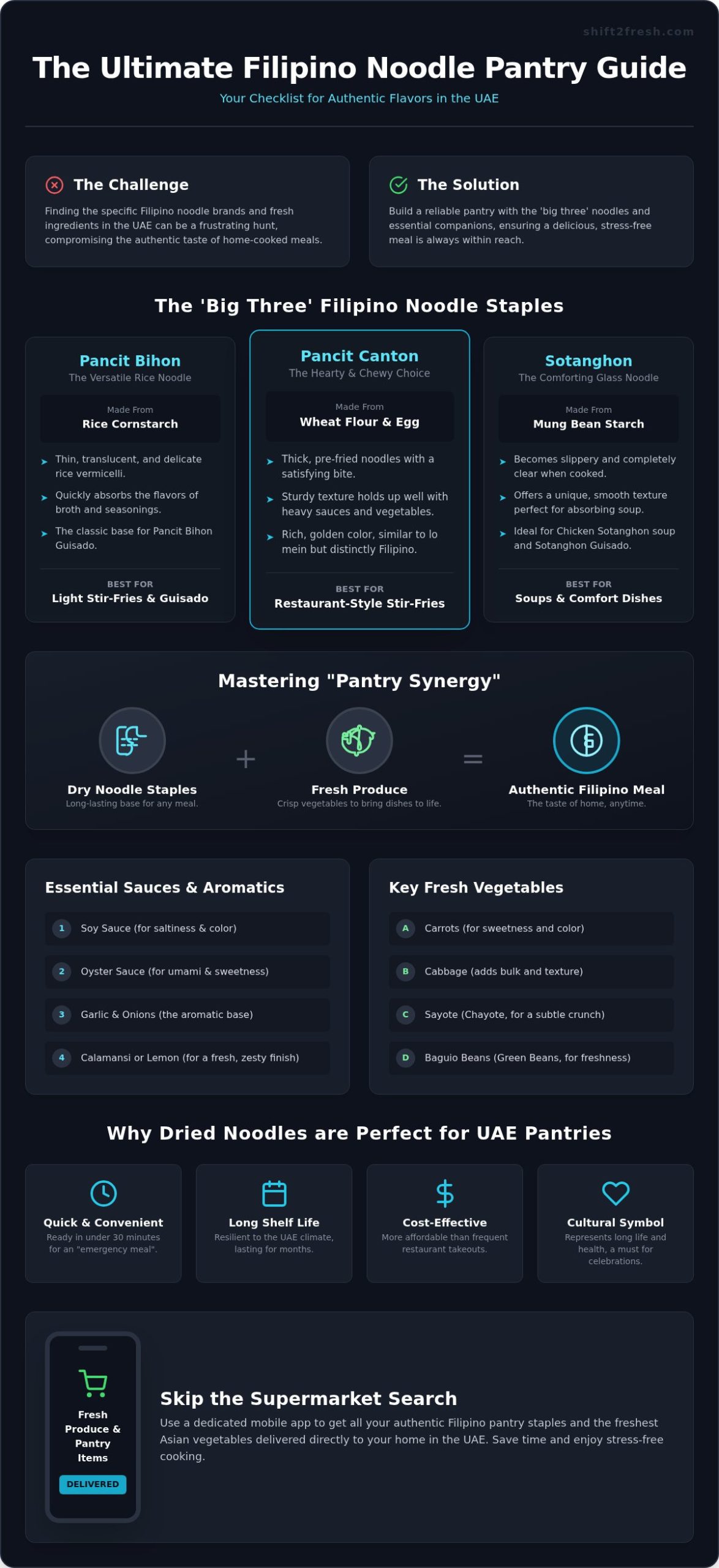
Walking into a Filipino grocery section in Dubai can be overwhelming if you aren’t sure which noodle fits your specific recipe. While they might all look like “pancit” at a glance, the texture and cooking method vary wildly between varieties. Building a reliable collection of Filipino noodle pantry staples starts with understanding the big three: Bihon, Canton, and Sotanghon. Each serves a distinct purpose, from the light, flavor-absorbing rice strands of a classic bihon to the thick, satisfying bite of flour-based canton noodles.
Pancit Bihon: The Versatile Rice Noodle
Pancit Bihon is arguably the most famous rice vermicelli in the Philippines. These thin, translucent noodles are made primarily from rice cornstarch and are prized for their ability to soak up broth and seasonings almost instantly. They are the backbone of the traditional Pancit Bihon Guisado. Because they are so delicate, it’s best to store them in airtight containers once opened; this prevents the dry strands from becoming brittle and breaking in the UAE’s air-conditioned environments. You can often find a 500g pack of Super Q Golden Bihon for around AED 4.99, making it a budget-friendly base for large family meals.
Pancit Canton: The Hearty Choice
If you prefer a noodle with more “chew,” Pancit Canton is your best bet. These are thick, pre-fried egg noodles made from wheat flour. They are similar to lo mein but have a distinct Filipino profile. High-quality canton noodles are easily identified by their rich, golden color and uniform thickness. They are ideal for stir-fries with heavy vegetable loads because they don’t turn mushy as easily as rice noodles. When you Stock Your Pantry with Essential Filipino Ingredients, ensuring you have a pack of Canton allows you to create a more filling, restaurant-style dish at home.
Sotanghon and Misua: The Specialty Staples
While Bihon and Canton dominate the stir-fry scene, Sotanghon and Misua are the kings of comfort. Sotanghon, or glass noodles, are made from mung bean starch. They become slippery and completely clear when cooked, offering a unique texture that’s perfect for chicken soups or “Sotanghon Guisado.” On the other hand, Misua is the most delicate of all Filipino noodle pantry staples. These extremely thin wheat noodles cook in mere seconds. They’re traditionally used in “Almondigas” or simple ginger-based soups, providing a silky finish that’s incredibly soothing during the cooler months in the UAE. If you’re looking for these specific varieties, you can easily order Filipino pantry items through a mobile app to have them delivered directly to your kitchen in Sharjah or Dubai.
Essential Sauces and Aromatics to Complete Your Noodle Kit
Noodles provide the structure, but the soul of any pancit dish lies in the seasoning kit. You can’t achieve that authentic “lasang Pinas” with generic supermarket substitutes. To truly round out your collection of Filipino noodle pantry staples, you need a specific set of liquid seasonings and dry aromatics that work in harmony. These ingredients transform plain starch into a complex, savory meal that captures the salty, sour, and umami notes characteristic of Filipino home cooking.
The Liquid Gold: Toyo and Patis
Filipino soy sauce, or Toyo, is fundamentally different from Japanese or Chinese varieties. It’s generally saltier and darker, providing the deep mahogany color essential for a visually appealing Pancit Canton. While some cooks might reach for any soy sauce, using a Filipino brand ensures the salt-to-flavor ratio is correct for traditional recipes. Patis, or fish sauce, acts as the secret umami booster. Instead of using it only as a dipping sauce, try adding a few splashes during the stir-frying process. Authentic fish sauce is created through a long-term fermentation process where salted fish are aged for several months until they release a rich, savory liquid. This depth of flavor is what separates a mediocre noodle dish from one that tastes like it came from a Manila kitchen. Keeping these two liquids in your UAE pantry allows you to season your noodles with precision and authenticity.
Calamansi: The Fresh Element Your Pantry Needs
No plate of pancit is complete without a squeeze of citrus, and in the Philippines, calamansi is the undisputed king. Many expats in Dubai or Sharjah try to substitute it with bottled lemon juice or lime, but these often lack the unique, floral aroma of the real thing. Calamansi provides a bright, acidic finish that cuts through the richness of the oil and soy sauce. Because it’s a fresh fruit, it can be the hardest part of your kit to source regularly. Shift 2 Fresh solves this by delivering fresh, imported calamansi directly to your doorstep across the UAE, ensuring your Filipino noodle pantry staples are always accompanied by their essential fresh partner. You can learn more about how to use these unique citrus gems in The Ultimate Guide to Seasonal Filipino Fruits in the UAE. Beyond the citrus, don’t forget to stock up on fried garlic bits and whole black peppercorns. A generous sprinkle of golden, crispy garlic right before serving adds a necessary crunch and a pungent aroma that defines the pancit experience.
Pairing Staples with Fresh Filipino Produce for Authentic Flavor
While your Filipino noodle pantry staples provide the foundation, the fresh vegetables you add are what Filipinos call the “sahog” or the soul of the dish. A common mistake in many UAE kitchens is using generic supermarket vegetables like frozen peas or standard lettuce, which lack the specific texture needed for an authentic pancit. To recreate the taste of a Manila fiesta, you need a specific crunch that only certain Asian vegetables can provide. The right mix doesn’t just add nutrition; it provides the structural contrast to the soft, savory noodles.
There are five essential fresh items you should always order alongside your dry goods: cabbage, carrots, sayote, Baguio beans, and celery. While regular celery works, try to source Chinese celery, known as Kintsay. It is much thinner and more pungent than the large stalks found in Western supermarkets. A small handful of chopped Kintsay stirred in at the very end provides an aromatic punch that defines the flavor profile of traditional Pancit Bihon. Because these vegetables can wilt quickly in the UAE’s heat, it’s vital to store them correctly. Wrap your greens in dry paper towels before placing them in airtight containers in the fridge to combat humidity and keep them crisp for up to a week.
The Essential ‘Sahog’ (Ingredients)
Sayote, or chayote, is perhaps the most overlooked ingredient for expats. Unlike watery squash varieties, sayote maintains a firm, crisp texture even after being sautéed with heavy noodles. It acts as a perfect foil to the softness of the starch. When prepping, ensure you julienne your carrots and shred your cabbage into uniform strips. This ensures every ingredient cooks at the same rate, preventing a dish where the noodles are done but the vegetables are still raw. You can find a detailed breakdown of these items in our Essential Asian Vegetables: A Complete Guide for Your Kitchen.
Pantry to Table: A 20-Minute Pancit Strategy
Cooking with Filipino noodle pantry staples is designed for speed. Start by soaking your bihon or sotanghon in a bowl of room-temperature water while you prep your fresh aromatics. By the time you’ve sautéed your garlic and onions, the noodles will be pliable and ready for the pan. This “one-pan” philosophy is a lifesaver for busy professionals in Dubai who want a home-cooked meal without the mountain of dishes. An authentic home-style pancit should maintain a ratio of roughly one part cooked noodles to one and a half parts fresh vegetables to ensure every bite has a crunch. To get started on your next meal, order your fresh vegetable bundles today and have them delivered directly to your kitchen.
Sourcing Filipino Noodle Staples in the UAE with Shift 2 Fresh
Finding authentic Filipino noodle pantry staples in a local UAE supermarket often feels like a game of chance. You might find one specific brand but miss the essential fresh calamansi or the correct soy sauce needed to finish the dish. Shift 2 Fresh bridges this gap by offering a curated selection of genuine Filipino products delivered directly to your home. With 45 years of industry experience, the team understands exactly which brands offer the best texture and flavor. This expertise ensures you never have to settle for generic substitutes that don’t quite hit the mark of a home-cooked meal.
The logistics of moving food across the Emirates can be tricky, especially when balancing dry goods with fresh produce. Shift 2 Fresh operates from a base in Sharjah with a specialized delivery fleet that covers the entire UAE. This means your bihon arrives in the same shipment as your fresh sayote and carrots, all maintained at the optimal temperature. It’s a level of convenience that busy expats in Dubai and Abu Dhabi often struggle to find in traditional retail environments.
Why Shop with Shift 2 Fresh?
Choosing a specialist importer means authenticity is guaranteed. You won’t find “similar” products here; you’ll find the exact labels you remember from the Philippines. The convenience of getting your Asian vegetables and dry goods in one delivery saves hours of searching through multiple aisles. Our trained delivery staff understands how to handle fragile items, ensuring your noodles aren’t crushed and your fresh greens aren’t bruised during transit. If you ever have a question about an order, our dedicated customer support is ready to help, providing a personalized experience that large-scale supermarkets simply can’t match.
How to Build Your First Noodle Pantry Order
If you’re new to the UAE or just starting to build your kitchen, we recommend a “Noodle Starter Kit.” This should include a 500g pack of Golden Bihon, a bottle of premium Toyo, and a fresh vegetable bundle. Navigating our mobile app is the easiest way to manage your stock. You can browse categories, check current availability, and see the latest imports as they arrive. For larger pantry restocks, check the app for current free shipping thresholds to make your shopping even more cost-effective. Ready to get started? Download the Shift 2 Fresh app and start your pantry restock today!
Bring the Taste of Home to Your UAE Kitchen
Recreating the perfect pancit in the Emirates is about more than just grabbing any noodle off a generic supermarket shelf. It’s about understanding the specific textures of bihon and canton while ensuring you have the right “sahog” like sayote and fresh calamansi to finish the dish. By stocking up on high-quality Filipino noodle pantry staples, you’re always ready to serve a meal that tastes exactly like the ones from home. You don’t have to compromise on flavor when you have a reliable kit of sauces and aromatics ready in your cupboard.
Shift 2 Fresh leverages over 45 years of food industry expertise to bring you products directly imported from the Philippines. You don’t have to wander through multiple stores when you can get authentic sauces and crisp Asian vegetables delivered through one simple mobile app. Whether you’re in Dubai, Sharjah, or Abu Dhabi, the comfort of a traditional Filipino kitchen is just a few taps away. It’s time to fill your pantry with the ingredients your cooking deserves.
Shop Authentic Filipino Noodle Staples & Fresh Produce at Shift 2 Fresh today and take advantage of free delivery on orders over AED 500. Happy cooking!
Frequently Asked Questions
What is the difference between Pancit Bihon and Pancit Canton?
Pancit Bihon uses thin, translucent rice vermicelli that absorbs flavors quickly, while Pancit Canton consists of thick, flour-based egg noodles that have been pre-fried. Bihon is lighter and often served at merienda or as a quick snack. Canton is heartier and stands up better to heavy vegetable stir-fries. Both are essential Filipino noodle pantry staples that offer completely different textures for your home-cooked meals.
Can I use Italian spaghetti as a substitute for Filipino noodles?
You shouldn’t use Italian spaghetti as a substitute because it lacks the specific starch profile and porous texture required to absorb Filipino stir-fry sauces. Spaghetti is designed to be coated in sauce, whereas Filipino noodles are meant to soak up the broth during the cooking process. Using the wrong noodle will result in a dish that feels oily and lacks the authentic flavor depth found in traditional recipes.
How long do dried Filipino noodles last in the pantry?
Dried Filipino noodles typically have a shelf life of 12 to 24 months when stored in a cool, dry place. In the UAE’s humid climate, it’s vital to keep them in airtight containers or heavy-duty resealable bags once the original packaging is opened. This prevents the noodles from becoming brittle or absorbing moisture, ensuring your Filipino noodle pantry staples remain fresh and ready for an emergency meal anytime.
Do I need to soak all Filipino noodles before cooking?
You don’t need to soak every type of noodle before they hit the pan. Rice-based noodles like Bihon and Sotanghon usually require a 10-minute soak in room-temperature water to become pliable. However, Pancit Canton is typically added directly to the simmering broth and vegetables in the wok. The thick wheat strands soften as they absorb the liquid, which helps the flavors penetrate deep into the noodle itself.
Where can I find fresh calamansi in Dubai or Sharjah?
You can find fresh, imported calamansi through the Shift 2 Fresh mobile app for delivery across Dubai and Sharjah. While some local supermarkets carry limes or lemons, they don’t provide the floral acidity essential for pancit. Because Shift 2 Fresh imports directly from the Philippines, you can get these small citrus fruits delivered to your doorstep alongside your other grocery items, ensuring your dish has that authentic Filipino finish.
What are the best vegetables to add to a Filipino noodle dish?
The best vegetables for a traditional dish include cabbage, carrots, sayote, and Baguio beans. Adding Chinese celery, or kintsay, provides an aromatic depth that regular celery can’t match. These vegetables should be julienned or thinly sliced so they cook quickly alongside the noodles. Using fresh Asian produce instead of frozen mixes ensures your meal has the crisp texture and vibrant color seen in authentic Filipino kitchens.
Is it possible to make vegetarian Filipino pancit using pantry staples?
It’s definitely possible to make a delicious vegetarian version of pancit using standard pantry items. Simply swap the traditional fish sauce (patis) for a light soy sauce or a mushroom-based vegetarian sauce to maintain the umami profile. You can also use vegetable broth instead of chicken or pork stock. The combination of high-quality noodles and fresh, sautéed vegetables provides enough flavor and satisfaction without needing any meat products.
How can I get Filipino grocery items delivered to my home in the UAE?
Getting Filipino groceries delivered in the UAE is easy when you use the Shift 2 Fresh mobile app. Based in Sharjah, the service uses a specialized delivery fleet to transport fresh produce and pantry goods across the Emirates. You can browse a full selection of authentic brands, add seasonal fruits to your cart, and track your order in real-time. It’s a convenient solution for busy professionals who want quality ingredients without the supermarket crowds.
0 comments