

Your first Filipino meal doesn’t need to be complicated. If you’re cooking Filipino food for the first time, start with chicken adobo, arroz caldo or pancit bihon. Each is a welcoming way to explore familiar ingredients and Filipino flavours. Prefer a meat-free meal? Try a vegetable-centred dish or adapt a recipe with a fusion twist.
It’s understandable to wonder which dish to choose when Filipino cuisine spans comforting stews, savoury noodles, rice porridge and much more. This guide helps you find a beginner-friendly starting point, understand what each dish offers and choose an idea that suits your tastes and confidence in the kitchen.
Explore Filipino stews and pancit, learn why adobo makes a flexible first recipe, and see how arroz caldo becomes a warming meal. You’ll also find vegetarian options and fusion inspiration, so you can begin with an approachable dish and make it your own.
Key Takeaways
- Start with a dish that fits your comfort level, from a familiar tomato-based stew to savoury pancit noodles.
- Choose arroz caldo for a warming chicken-and-rice porridge that can be ready in about half an hour.
- Use adobo as a flexible starting point, adjusting the balance of vinegar, soy sauce and garlic to suit your taste.
- Explore vegetable-forward pancit and fusion ideas to make Filipino flavours work with your preferred ingredients.
- Build confidence by trying one recipe at a time and learning how its ingredients shape the final flavour.
1. Traditional Filipino stews and noodle dishes
If you’re cooking Filipino food for the first time, choose a dish with familiar ingredients and a clear method. Chicken afritada braises chicken in tomato sauce with potatoes and vegetables. Beef caldereta combines beef, tomato sauce and vegetables. Serve either stew with rice for a complete, approachable meal.
For noodles, pancit bihon is a useful introduction to Filipino flavours and Chinese influence. Rice vermicelli is cooked with shredded chicken, shrimp, carrots and cabbage, then seasoned with soy sauce, oyster sauce and fish sauce. Add ingredients in stages so the vegetables retain some texture and the noodles absorb the savoury seasoning.
Pancit palabok offers a different noodle experience: rice noodles topped with a savoury orange sauce made with shrimp and crushed pork rinds. Common garnishes include shrimp, crushed chicharron, hard-boiled egg, scallions and citrus wedges. Lumpia, filled with pork mince and vegetables and sometimes shrimp, is another familiar dish to serve alongside noodles.
Sinigang na hipon is a sour soup made with shrimp and vegetables. For a home version, simmer the vegetables in broth, add shrimp near the end and introduce a souring agent gradually. Tamarind gives the broth a rounded tang, while citrus brings a brighter edge. Taste as you go and stop when the acidity suits you.
Beef caldereta is a tomato-based stew, while bistek Tagalog uses thinly sliced beef marinated and braised with citrus juice, onions, garlic, soy sauce and pepper. These dishes demonstrate two useful techniques: slow simmering for tender stew meat and brief braising for thin slices. Serve both with rice to balance their savoury sauces.
For breakfast, arroz caldo is a chicken-and-rice porridge made with chicken broth and glutinous rice. It can be ready in about half an hour, making it a practical first rice dish. Filipino sweets can also be eaten at breakfast, as snacks or alongside a larger spread, so dessert needn’t wait for a formal occasion.
Coconut milk brings richness to Bicol Express, a dish that combines pork, coconut milk, cream and chillies. To prepare Filipino food safely, keep raw meat and seafood separate from ready-to-eat ingredients, and wash your hands and utensils after handling them. Cook animal proteins thoroughly and refrigerate leftovers promptly instead of leaving cooked food at room temperature.
Pancit palabok consists of rice noodles with shrimp-infused annatto sauce and garnishes such as shrimp, crushed chicharron, hard-boiled egg, scallions and citrus wedges. Pancit noodles were introduced to the Philippines by Chinese traders and symbolize prosperity, long life and good luck. Chicken tinola, made with chicken, papaya and chilli leaves, is commonly served with rice.
Traditional kare-kare uses oxtail and vegetables in peanut sauce, served with bagoong, or shrimp paste. Some cooks grew up eating chicken adobo, pork adobo or a combination of both. Pork menudo is a stew of pork, pork liver, potatoes, carrots, bell peppers and tomato sauce; the liver can be left out.
2. Arroz caldo chicken and rice porridge
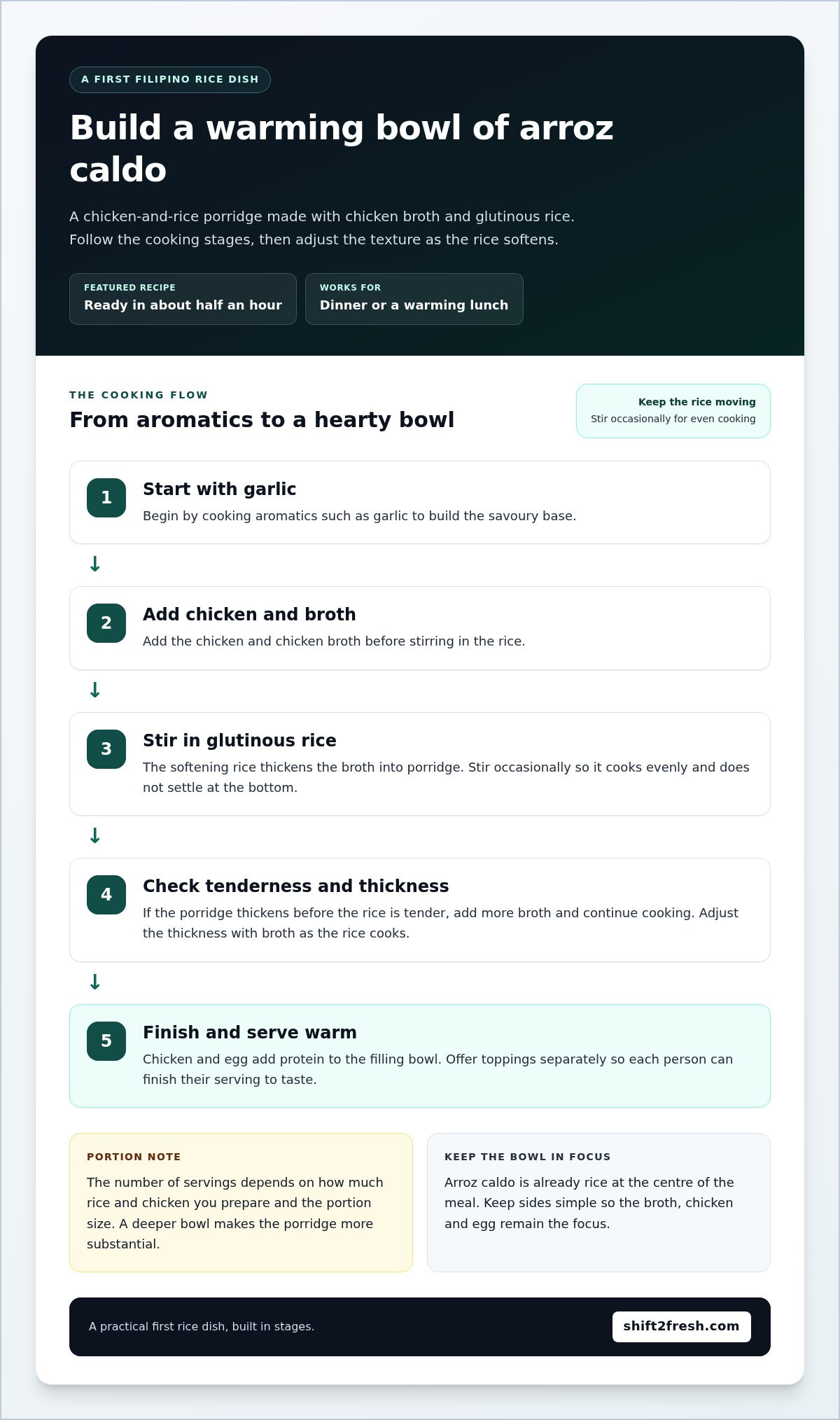
Arroz caldo is a comforting chicken-and-rice porridge made with chicken broth and glutinous rice. Chicken and egg add protein, while the soft rice thickens the broth into a filling bowl. It works for dinner or a warming lunch, and its familiar ingredients make this quick Filipino chicken and rice soup a practical starting point.
The featured arroz caldo recipe can be ready in about half an hour. The number of servings depends on how much rice and chicken you prepare and the portion size; a deeper bowl makes the porridge more substantial. For your first attempt, follow the recipe’s quantities, then adjust the thickness with broth as the rice cooks.
Build the flavour in stages. Start with aromatics such as garlic, then add the chicken and broth before stirring in the glutinous rice. Stir occasionally so the rice cooks evenly and doesn’t settle at the bottom. If the porridge thickens before the rice is tender, add more broth and continue cooking.
Rice is also an easy pairing for Filipino stews and braised dishes. Plain steamed rice balances savoury sauces, while garlic fried rice gives a meal a fuller, aromatic finish. To make it, warm cooked rice in a pan with garlic, breaking up clumps as you stir. Heat the grains through until fragrant, without letting them turn mushy.
For a dinner spread, serve arroz caldo as the main dish and add a small side of garlic fried rice only if you want extra texture. This puts rice at the centre twice, as soft porridge and distinct fried grains. If arroz caldo is already your favourite, keep the side simple so the broth, chicken and egg remain the focus.
Carrots can add colour and gentle sweetness to a home-style chicken soup, though they aren’t part of the core arroz caldo description. If using them, cut them evenly so they soften at a similar pace. Keep the amount modest; too many additions can shift the dish away from its rice-and-chicken character.
For another serving idea, offer toppings separately and let everyone finish their bowl to taste. A little garlic can sharpen the savoury flavour, while an egg makes the meal more substantial. Filipino pantry items can help stock your kitchen for dishes like this; choose staples that suit the recipes you plan to cook.
3. Filipino adobo with vinegar, soy sauce, garlic and bay leaves
Adobo is regarded as the national dish of the Philippines, yet recipes differ between regions and families. A common chicken version braises chicken in vinegar, soy sauce and garlic, with bay leaves for fragrance. Serve it over rice to soak up the savoury sauce. For a first Filipino recipe, adobo shows how a handful of ingredients can create a hearty meal.
Start by sautéing garlic until fragrant, then add the chicken and brown it. Pour in vinegar and soy sauce, add bay leaves, and simmer until the chicken is tender. Sautéing aromatics builds a savoury base; braising then cooks meat slowly in liquid, allowing it to absorb flavour. Keep the heat steady and turn the pieces occasionally for even cooking.
Taste the sauce as it simmers to balance its flavours. Soy sauce contributes saltiness and savouriness, while vinegar brings acidity. Add either in small increments if needed. Some cooks add a little sweetness to soften sharpness, but it isn’t essential to basic chicken adobo. Let the sauce reduce until its flavour is concentrated, without becoming overly salty or sour.
Regional and family variations make adobo adaptable without changing its central character. Some chicken versions include coconut milk for a richer sauce, while other households add potatoes. Potatoes absorb some of the flavourful sabaw, or cooking liquid, and make the dish more substantial. Add them while the chicken braises so they soften in the sauce.
Pork adobo uses the familiar combination of vinegar, soy sauce and garlic, but the cut affects the result. The featured pork recipe includes both slow-cooker and pressure-cooker methods. A slow cooker provides a gradual braise, while a pressure cooker speeds up the cooking. Follow the recipe’s directions for liquid and cooking time rather than switching settings mid-recipe.
Chicken and pork can also be combined, as some home cooks grew up eating both versions. If you try a mixed pot, cut the meat into similar-sized pieces and make sure each is cooked through before serving. Keep the bay leaves in the pot during braising, then remove them before plating. Serve adobo with rice and spoon a little sauce over each portion.
For your first batch, keep the ingredient list simple and change only one element next time. Compare a classic soy-and-vinegar sauce with a coconut milk variation, or try adding potatoes to the braise. Small adjustments show how family recipes differ while retaining adobo’s tender meat, aromatic garlic and distinctive sour-savoury balance.
4. Vegetarian pancit and Filipino-fusion recipes
Vegetarian pancit starts with rice vermicelli, vegetables and a savoury seasoning base. Pancit bihon commonly includes chicken, shrimp, soy sauce, oyster sauce and fish sauce. To adapt it, leave out animal ingredients and use vegetable broth. Add cabbage and carrots near the end, then toss until the noodles soften and absorb the seasoning.
Build a balanced bowl with vegetables that cook at a similar pace. Slice carrots and cabbage thinly, then add firmer vegetables before tender leaves. Use a vegetarian alternative to fish or oyster sauce if needed, and taste the noodles before adding more seasoning. These adjustments make the recipe suitable for a meat-free meal while keeping its focus on noodles and vegetables.
For another vegetable-centred dish, tortang talong uses grilled or roasted aubergine dipped in beaten eggs and fried. Pinakbet combines squash, string beans and courgette in a fermented vegetable broth. Traditional versions use shrimp paste, so adapt the seasoning for a vegetarian meal. These dishes show how to choose recipes by their main ingredient, from aubergine to noodles.
Filipino-fusion cooking can keep familiar flavours while changing the format. A lumpia bowl skips the wrappers, rolling and frying, bringing the idea of a filled spring roll to a bowl instead. For a home version, combine cooked vegetables with a savoury sauce and serve over rice. Treat it as an adaptable dinner rather than a strict traditional recipe.
Beginner-friendly Filipino recipes are easier to manage when grouped by cooking method. Try a one-pan noodle dish for quick tossing, tortang talong for grilling and frying, or a vegetable stew for simmering. Recipe categories can also guide your choice: noodles, rice meals, soups and stews each teach a different technique without requiring an elaborate menu.
Recipe videos can show how ingredients should look at each step, especially when softening rice noodles or grilling aubergine. Pause before adding liquid or seasoning, and compare the demonstrated texture with what’s in your pan. At home, prepare vegetables before heating the pan to keep the sequence clear and help prevent overcooking.
In the UAE, look for Filipino pantry ingredients through an online grocery store serving local households, then choose items that match the recipe. For pancit, the seasoning matters as much as the noodles; for vegetable dishes, select produce suited to the cooking method. This practical approach helps home cooks explore Filipino recipes with ingredients that support each dish.
5. Getting started with Filipino food
Start with a short pantry list: vinegar, soy sauce, garlic, bay leaves, rice and fish sauce. These ingredients appear in dishes such as adobo and pancit bihon, while tomatoes form the base of afritada and caldereta. Keep the ingredients for one recipe together to stay focused during preparation.
When substituting, match an ingredient’s role rather than its name. If a recipe calls for a particular vinegar, use another with similar sharpness and adjust the amount by tasting. Replace a hard-to-find vegetable with one that cooks at a similar speed, and taste the dish before replacing a salty sauce.
Choose your first recipe by its main technique. A tomato-based stew teaches simmering; pancit bihon practises tossing noodles with vegetables; tortang talong introduces grilling and frying. Pick one dish, read the recipe before cooking, and prepare each ingredient before turning on the stove. This simple order makes the timing easier to follow.
Set up your cooking space before you begin. Rinse rice, slice vegetables, measure sauces and put utensils within reach. For pancit, cut the carrots and cabbage before soaking or softening the noodles. For a stew, prepare the tomato, potatoes and meat first, then add ingredients in the order the recipe specifies.
Get into the habit of tasting as you cook. Sample the sauce before adding more soy sauce, vinegar or fish sauce, since each affects saltiness and acidity differently. If a tomato sauce tastes too sharp, let it simmer longer before adjusting the seasoning. Note what worked so it’s easier to repeat next time.
Filipino dishes can be served as a simple meal or alongside rice and another small dish. Try a bowl of pancit with sliced vegetables, or serve afritada with steamed rice. For a sweet finish, Filipino desserts can also be enjoyed at breakfast or as a snack, rather than saved for after dinner.
In the UAE, plan your shopping around the recipe instead of buying unfamiliar ingredients without a use in mind. Choose Filipino pantry items for the sauces and seasonings your first dish requires, then add other staples as you explore more recipes. This keeps your first attempt manageable and helps you build a useful kitchen collection gradually.
To begin, choose one recipe and gather its ingredients before cooking. Browse Filipino pantry items for staples that can support your first home-cooked dish.
Some dishes offer a chance to explore different ingredients and preparations. Sisig is traditionally made with grilled pig face or ears, though tofu, chicken or other cuts of meat can also be used. Adobong pusit is prepared with fresh squid and its ink, soy sauce, vinegar, garlic, salt, sugar, oil, onions and tomatoes. Paksiw na pata is made with pork hock and banana blossoms stewed in vinegar and soy sauce.
Filipino fiesta food dishes are mostly Spanish in origin and arrived with the colonial ruling class. When choosing what to cook, consider which ingredients and methods feel manageable, and keep the recipe and its sequence close at hand. A dish with several components may feel easier after you’ve practised preparing ingredients and tasting as you cook.
Shift 2 Fresh: Seasonal Filipino Fruits
Shift 2 Fresh is a natural next step when a recipe calls for Filipino ingredients you want to source for home cooking. Its Seasonal Filipino Fruits can add a fresh finish to a meal, while Asian Vegetables suit vegetable-forward dishes. Filipino Pantry Items help stock sauces and other staples for recipes such as adobo and pancit. Mobile App Ordering offers another way to browse these grocery categories.
Choose ingredients to match the dish you plan to make, rather than buying items without a recipe in mind. Seasonal fruit can also bring a distinctly Filipino touch to snacks or dessert after dinner. For your next home-cooked meal, visit Shift 2 Fresh to explore its offerings.
Make Your Next Meal Your Own
Your first Filipino recipe can be a starting point, not a one-time experiment. As you cook again, change one ingredient or seasoning at a time and note what you enjoy. This simple habit helps you build confidence and develop a version suited to your kitchen and tastes. Cooking Filipino food for the first time is also a chance to discover how new ingredients can shape familiar meals.
For your next recipe, choose ingredients with a clear purpose: Seasonal Filipino Fruits for a fresh finish, Asian Vegetables for vegetable-led cooking, or Filipino Pantry Items for Filipino flavours at home. Shift 2 Fresh brings these options together for UAE shoppers interested in cooking Filipino food.
Ready to plan your next dish? Contact Shift 2 Fresh today and take the next step toward your next home-cooked Filipino meal.
Frequently Asked Questions
What are the easiest Filipino dishes for beginners to cook?
Filipino picadillo is a practical first choice, with a featured recipe that cooks in under 30 minutes. Filipino spaghetti is another approachable option, using beef mince, hotdogs and sweet tomato sauce for a familiar flavour profile. Choose picadillo for a quick introduction to a home-style dish, or spaghetti if you want a meal built around ingredients you already recognise.
How do I make chicken adobo step by step?
Prepare the chicken, vinegar, soy sauce, garlic and bay leaves before heating your pot. Brown the chicken, then add the garlic, vinegar, soy sauce and bay leaves. Bring the liquid to a simmer and cook until the chicken is tender, turning the pieces for even cooking. Taste the sauce near the end, adjust its savoury and sour balance gradually, then serve with rice.
What Filipino recipes are good for a first-time cook with limited equipment?
Choose a recipe that needs only a sturdy pot or pan, a knife and a spoon. Chicken adobo can be made in one pot, while tortang talong needs a pan for frying after the aubergine is grilled or roasted. Prepare ingredients on a plate or board before cooking, and pick a recipe that doesn’t require several pans working at once.
0 comments