

Have you ever sliced into what you thought was a genuine purple yam, only to find a pale, starchy sweet potato that lacks that signature nutty aroma? It’s a common frustration for Filipino expats and home cooks in Dubai who are tired of settling for bottled extracts or woody, old tubers. If you want that vibrant, authentic violet hue that only a real harvest can provide, knowing exactly how to buy fresh ube in UAE is the first step toward dessert perfection.
We understand that finding consistent quality in local supermarkets is a major challenge, especially when the UAE relies on imports for over 95% of its fresh produce. You deserve ingredients that reflect decades of sourcing expertise, not just whatever happens to be left on the shelf. This guide teaches you how to identify premium tubers, navigate the latest import regulations, and spot the difference between a common root and a true ube. We will also explore how to use mobile app alerts to secure your batch the moment a fresh shipment arrives in Sharjah or Dubai, ensuring you get the best quality for your kitchen while qualifying for free shipping on orders over AED 500.
Key Takeaways
- Learn how to distinguish genuine Filipino purple yam from common sweet potatoes by checking for a dry, bark-like skin and firm texture.
- Discover the peak harvest windows to buy fresh ube in UAE, specifically during the primary import season from late Q4 through Q1.
- Master essential preparation techniques, including how to safely clean tubers and manage the sticky sap during the peeling process.
- Find out how to use mobile app notifications to track rare seasonal shipments and secure stock before it sells out in Dubai and Sharjah.
- Understand the benefits of direct sourcing and expert quality control to ensure you get authentic, nutrient-rich roots delivered to your door.
What is Fresh Ube? Understanding the Authentic Purple Yam
Ube is a bright purple, nutty-flavored tuber that is a staple of Filipino confectionery. Unlike the synthetic syrups or powders often found on supermarket shelves, the true What is Ube (Dioscorea alata) is a nutrient-dense root vegetable native to the Philippines. It’s packed with anthocyanins; these are the same powerful antioxidants found in blueberries that give the tuber its vivid violet pigment. Beyond its striking color, it provides a healthy dose of vitamins and dietary fiber, making it as functional as it is delicious.
When you choose to buy fresh ube in UAE, you’re opting for a superior culinary experience. Extracts might provide a quick color fix, but they can’t replicate the creamy, slightly earthy texture of a slow-cooked fresh tuber. The authentic flavor is subtle and complex, often described as a mix of vanilla and pistachio. It’s this unique profile that has made it a global sensation in the culinary world.
Ube vs. Purple Sweet Potato: How to Tell the Difference
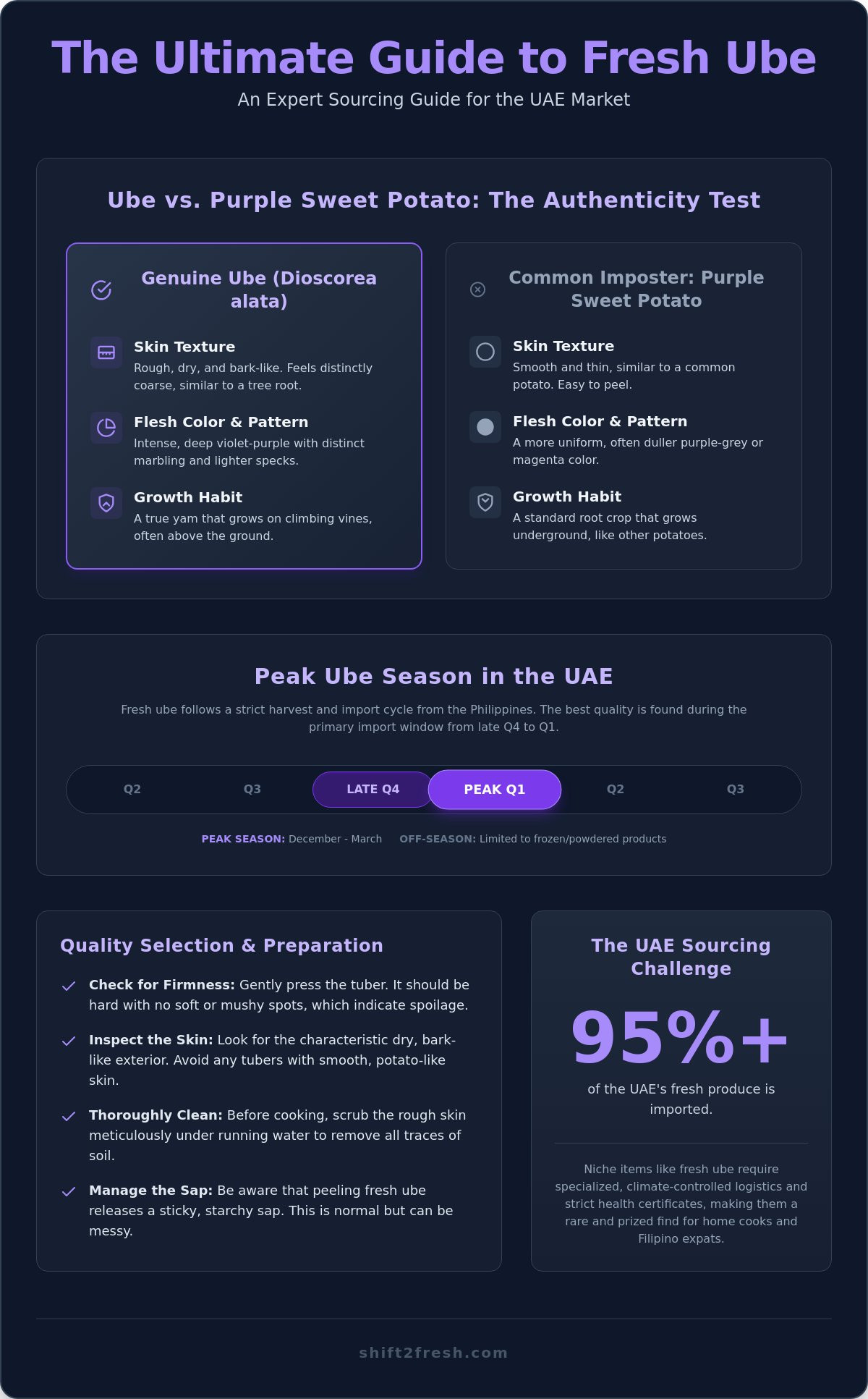
Many retailers in Dubai mistakenly label purple sweet potatoes as ube, but they aren’t the same species. To ensure you’re getting the real thing, look at the skin. Ube has a rough, bark-like exterior that feels almost like a tree branch. In contrast, purple sweet potatoes have smooth, thin skin similar to a standard potato. When you cut them open, ube reveals intense violet-purple marbling, whereas sweet potatoes are usually a more uniform, duller purple-grey. Even the way they grow is different; ube is a climber that grows on vines above the ground, while sweet potatoes are standard root crops.
Why Fresh Ube is the ‘Holy Grail’ for Expats in the UAE
For the Filipino community in the Emirates, finding fresh ube represents a powerful emotional connection to home. It’s considered one of the most prized Seasonal Filipino Fruits and vegetables because it’s notoriously difficult to import. While powders are easy to ship, fresh tubers require strict health certificates and climate-controlled logistics to meet Dubai Municipality standards. This scarcity makes every arrival of fresh stock a major event for home bakers.
Despite these hurdles, the effort is worth it. Fresh ube is the essential ingredient for authentic Ube Halaya, where the natural starch creates a thick, velvety jam that no processed substitute can match. Whether you’re baking a signature cake or preparing traditional holiday treats in Sharjah, the depth of flavor you get when you buy fresh ube in UAE is unmistakable. It transforms a simple dessert into a piece of cultural heritage.
The Fresh Ube Season in the UAE: When and Where to Buy
Ube isn’t like a standard potato that you can find sitting in a bin every day of the year. It follows a strict biological clock. In the Philippines, the primary harvest cycle typically begins in late Q4 and stretches through Q1. This means that if you want to buy fresh ube in UAE, your best window of opportunity starts as the year ends. Because these tubers are delicate and prone to spoilage, specialized importers must maintain a rigorous cold chain from the farms in Luzon or Mindanao all the way to the ports in Dubai.
The journey is complex. It involves rapid transit to ensure the roots don’t become woody or rot during the transition. For 2026, availability is particularly tied to climate conditions in Southeast Asia, where shifting weather patterns can delay the harvest by several weeks. Despite these challenges, the demand remains high because of the incredible nutritional benefits of purple yam, which include high levels of antioxidants and vitamins that processed versions often lose during manufacturing.
Best Months for Buying Fresh Ube in 2026
For the highest quality roots, mark your calendar for December through March. This is the peak season when the tubers are at their most vibrant and flavorful. Outside of these months, finding fresh stock becomes significantly harder. While you might find powders or frozen grated options year-round, they don’t offer the same textural integrity as a whole root. To stay ahead of the crowd, it’s wise to monitor an Online Supermarket for real-time stock updates rather than driving from store to store in the summer heat.
Sourcing Authentic Produce in Dubai and Sharjah
Most generic supermarkets in the UAE prioritize high-volume, local produce. Since the UAE grows less than 5% of its own fresh consumption, niche items like ube often get overlooked or mislabeled. This is where specialized knowledge becomes essential. Shift 2 Fresh leverages over 45 years of food industry experience to vet specific farm sources in the Philippines, ensuring that what reaches your doorstep is the real deal.
Instead of hoping to stumble upon a random shipment at a hypermarket, savvy shoppers in Dubai and Sharjah now use digital tools. You can download the Shift 2 Fresh mobile app to receive “Ube alerts” the moment a new shipment clears customs. This level of transparency helps you plan your baking projects around the actual arrival of the harvest, rather than relying on inconsistent shelf stock. It’s the most reliable way to secure this rare ingredient before it sells out.
Buying Guide: How to Select the Best Quality Ube Tubers
Selecting a tuber isn’t just about grabbing the first dark root you see on a shelf. Since these roots travel thousands of kilometers from the Philippines to reach the Emirates, you have to be extra vigilant. When you’re ready to buy fresh ube in UAE, the first thing you should do is the firmness test. Give the tuber a gentle but firm squeeze. If there’s any “give” or soft spots, put it back. Softness usually indicates internal rot or that the root has been sitting in storage far too long.
The exterior should have a dry, intact, bark-like texture. If the skin looks shriveled, the moisture has evaporated, leaving you with a woody and flavorless center. For those who want deeper botanical information on Dioscorea alata, you’ll find that the rough exterior is a natural defense for the vibrant flesh inside. If the store allows it, try the scratch test; use your thumbnail to gently nick a tiny bit of the skin. You’re looking for an immediate flash of bright violet or deep purple marbling. If it’s white or pale green, it isn’t ube.
Checklist for Freshness and Quality
Don’t be fooled by size. Giant tubers might look impressive, but they’re often the most fibrous and difficult to mash. Medium-sized roots are the sweet spot for home cooking. Use this quick checklist before you head to the checkout:
- Weight: Pick up two tubers of similar size. The heavier one is fresher because it still retains its natural moisture content.
- Crevices: Inspect the “nooks and crannies” of the root. These are prime spots for mold to grow during shipping.
- Skin Integrity: Avoid any roots with deep cuts, bruising, or punctures. These openings allow bacteria to enter, which ruins the flavor profile.
Avoiding Common Buying Mistakes
The most frequent error shoppers make in Dubai and Sharjah is confusing ube with taro or the common purple sweet potato. Taro is starchier and lacks the nutty sweetness, while purple sweet potatoes are much drier. You can significantly reduce this risk by sourcing from a dedicated Philippine Supermarket that understands the specific varieties of the Filipino harvest. Professionals there know that an “ugly,” gnarled root often hides the most intense internal color. Don’t let a bit of soil or an irregular shape scare you off; that’s often a sign of a truly authentic, farm-fresh tuber.
Preparation and Storage Tips for UAE Households
Once you successfully buy fresh ube in UAE, the real work begins in the kitchen. Unlike standard potatoes, these tubers require specific handling to maintain their quality and your own comfort. Start by scrubbing the roots thoroughly with a stiff brush under cold water. Since they are imported with their natural soil to preserve freshness, you must ensure every bit of debris is removed from the bark-like crevices before you start peeling.
Safety is paramount during this stage. You must wear kitchen gloves when peeling or cutting raw ube. The tuber contains a sticky sap known as mucilage, which often causes skin irritation or an intense “itchy” sensation upon contact. Use a sharp paring knife to remove the thick skin, revealing the vibrant violet flesh beneath. If you find the root too slippery, a clean kitchen towel can help you maintain a firm grip while you work.
When it comes to cooking, steaming is the preferred method for preserving that iconic purple hue. Boiling often leads to pigment leaching into the water, resulting in a duller finish for your desserts. If you choose to boil, leave the skin on during the process to lock in the color and nutrients, then peel the root once it has softened. This extra step ensures your Ube Halaya or cakes maintain the visual “wow” factor that defines Filipino sweets.
How to Store Fresh Ube in the Dubai Climate
Dubai’s high humidity and heat can cause fresh roots to sprout or rot quickly if left on a countertop. For short-term storage, find a cool, dark, and well-ventilated area in your kitchen. Avoid placing raw ube in the refrigerator immediately, as the cold can turn the starches into sugars and ruin the texture. If you aren’t planning to use your entire haul within a few days, the best strategy is to steam and mash the ube, then store it in airtight containers in the freezer. This method keeps the authentic flavor intact for several months and prevents the spoilage common in the Emirates’ climate.
Essential Kitchen Prep for Filipino Favorites
Most home cooks aim to create the perfect Ube Halaya. To achieve that professional consistency, you’ll need to pair your fresh mash with authentic Filipino Pantry Items like evaporated milk and high-fat coconut cream. Depending on your recipe, you might choose to grate the cooked root for a textured cake filling or mash it into a smooth paste for jams. If you want to enhance the violet color naturally, a tiny drop of citrus juice can help stabilize the natural pigments without the need for artificial dyes.
Ready to start your next baking project? You can order seasonal vegetables and pantry staples directly through our mobile app for delivery across Dubai and Sharjah.
Why Buy Fresh Ube from Shift 2 Fresh?
Finding a reliable source to buy fresh ube in UAE can feel like a gamble when you’re browsing generic supermarkets. Shift 2 Fresh eliminates the guesswork by acting as a direct bridge to the Philippines. We don’t just pick any root; we leverage over 45 years of food industry experience to identify the exact harvest conditions that produce the most vibrant tubers. This deep-rooted expertise ensures that the ube reaching your kitchen is 100% authentic and hasn’t been sitting in a third-party warehouse for weeks.
Our logistics network is specifically designed for delicate, seasonal items. We offer direct delivery across Dubai and Sharjah, maintaining a strict temperature-controlled environment from the moment the shipment arrives in 2026. By using our mobile app, you can track your order history and receive instant notifications the second new stock clears customs. This means you’ll never miss the short harvest window we discussed in earlier sections. It’s the most efficient way to secure premium produce without the stress of hunting through local markets.
The Shift 2 Fresh Quality Guarantee
Every single tuber undergoes a rigorous vetting process before it’s cleared for delivery. Our team checks for color density, skin integrity, and internal moisture to ensure you receive the “Holy Grail” quality we’ve described throughout this guide. For those with large baking projects or community catering needs, we provide free shipping on orders over AED 500. We also use specialized, breathable packaging to protect the roots from the UAE’s external heat during the final mile of delivery, ensuring they arrive firm and ready for your recipes.
Order Your Fresh Ube Today
Joining our community of home bakers and professional chefs means you get first access to the rarest Filipino imports. Check our user-friendly mobile app right now to see current availability and specific 2026 arrival dates for our latest shipments. Whether you’re making traditional jam or a modern ube cake, starting with the right root makes all the difference. Don’t settle for extracts when you can have the real thing delivered to your doorstep.
Shop Fresh Ube and Filipino Ingredients Now!
Bring the Authentic Taste of the Philippines to Your UAE Kitchen
Authentic Filipino baking starts with the right ingredients. You’ve learned how to distinguish genuine purple yam from common sweet potatoes and why timing your purchase during the peak harvest season is vital. By following proper storage and preparation techniques, you can enjoy the rich, nutty flavor of real tubers in every dessert you create. Knowing exactly where to buy fresh ube in UAE ensures your holiday treats have that unmistakable violet hue and creamy texture that extracts simply can’t match.
Shift 2 Fresh makes this process effortless by leveraging over 45 years of food industry experience to source only the finest authentic Filipino imports. Whether you’re in Dubai or Sharjah, our team handles the complex logistics so you don’t have to. You can even enjoy free shipping on orders over AED 500, making it easier to stock up for your next big celebration.
Order Fresh Ube and Authentic Filipino Groceries at Shift 2 Fresh today and start your journey toward dessert perfection. It’s time to bring those traditional flavors back to your dining table.
Frequently Asked Questions
Is fresh ube available year-round in the UAE?
Fresh ube isn’t available year-round because it follows the natural harvest cycle in the Philippines. You’ll typically find stock arriving in Dubai and Sharjah from late Q4 through Q1. Outside of these months, you’ll likely only find frozen grated options or pantry powders rather than the whole fresh root.
What is the price of fresh ube per kg in Dubai in 2026?
Retail prices for fresh vegetables in the UAE generally range between AED 2.64 and AED 17.40 per kilogram as of July 2026. However, fresh ube is a specialty import, so its cost fluctuates based on seasonal availability and shipping logistics. It’s best to check our mobile app for the most current rates when a new shipment arrives from our farm partners.
Can I use purple sweet potato as a substitute for fresh ube?
You can’t achieve the same results with purple sweet potatoes because they have a different starch content and flavor profile. While they look similar inside, sweet potatoes are drier and lack the creamy, nutty essence of true ube. For authentic Filipino desserts like Halaya, you really need to buy fresh ube in UAE during its peak season to get the right texture.
How do I know if my fresh ube tuber has gone bad?
A bad tuber will feel soft or spongy when squeezed rather than firm and solid. Look out for visible mold in the crevices or a foul, fermented smell. If the skin appears excessively shriveled, the root has lost too much moisture and will likely be woody and tasteless inside when you try to mash it.
Do I need to peel ube before boiling it?
You don’t need to peel it before boiling, and many chefs actually recommend leaving the skin on to preserve the vibrant violet color. Boiling with the skin on prevents the natural pigments from leaching into the water. Just make sure to scrub the root thoroughly with a brush to remove all soil before placing it in the pot.
Is fresh ube safe for people with yam allergies?
Fresh ube is a member of the yam family, specifically Dioscorea alata, so it isn’t safe for those with known yam allergies. While it’s different from the sweet potatoes commonly found in supermarkets, it shares the same botanical properties as other true yams. Always consult a medical professional if you’re unsure about specific food sensitivities before trying it.
How long does fresh ube last in the pantry?
Fresh ube typically lasts about one to two weeks in a cool, dark, and well-ventilated pantry. The high humidity in the Emirates can cause roots to sprout or rot faster than in cooler climates. If you don’t plan to use it immediately, it’s better to steam and freeze the mash to maintain its quality for several months.
Why is my ube greyish-purple instead of bright violet?
Your ube might look greyish due to oxidation after being peeled or because of the specific variety of the tuber. Some roots naturally have more white marbling than others. To keep the color bright, you can add a small amount of lemon juice or calamansi to your mixture, which helps stabilize the natural pigments that provide the purple hue.
0 comments