

Imagine you’ve spent the morning prepping a massive bowl of Buko Pandan for a weekend gathering in Dubai, only to realize the palm fruit you ordered is tough and the syrup is watery. It’s a common disappointment for many Filipinos in the UAE who struggle to find the exact textures they remember from back home. When you’re looking for authentic kaong and nata de coco online, the quality of the syrup and the bite of the fruit make all the difference between a mediocre dessert and a true taste of the Philippines.
We know that finding reliable pantry staples in a sea of international brands often feels like a gamble. This guide is designed to help you navigate the local market with confidence. You’ll learn the essential differences between these two ingredients, what to look for on labels according to 2026 UAE food regulations, and how to choose a source that delivers the consistency your recipes deserve. We’ll dive into the growing demand for these treats, which contributed to a 33.8 percent value growth for coconut products according to 2025 Nielsen data, and show you exactly how to stock your kitchen with the best Filipino essentials via mobile ordering.
Key Takeaways
- Learn the biological differences between sugar palm fruit and fermented coconut water to better manage your dessert’s texture and nutritional profile.
- Master the visual cues for quality when buying kaong and nata de coco online by identifying clear syrups and avoiding jars with signs of poor preservation.
- Discover the traditional layering techniques for Filipino favorites like Halo-halo and how to incorporate these ingredients into modern summer beverages.
- Streamline your grocery shopping with mobile app ordering to ensure your kitchen is always stocked with authentic Filipino pantry items and seasonal fruits in the UAE.
What are Kaong and Nata de Coco? The Essential Dessert Duo
In the humid, tropical climate of the Philippines, food preservation has always been a culinary necessity. Long before modern refrigeration became standard, native fruits and plant byproducts were preserved in thick sugar syrups to extend their shelf life. This practical tradition eventually birthed the most iconic duo in the Filipino pantry. Today, when you search for kaong and nata de coco online, you aren’t just buying toppings; you’re acquiring the foundational building blocks of Southeast Asian dessert culture.
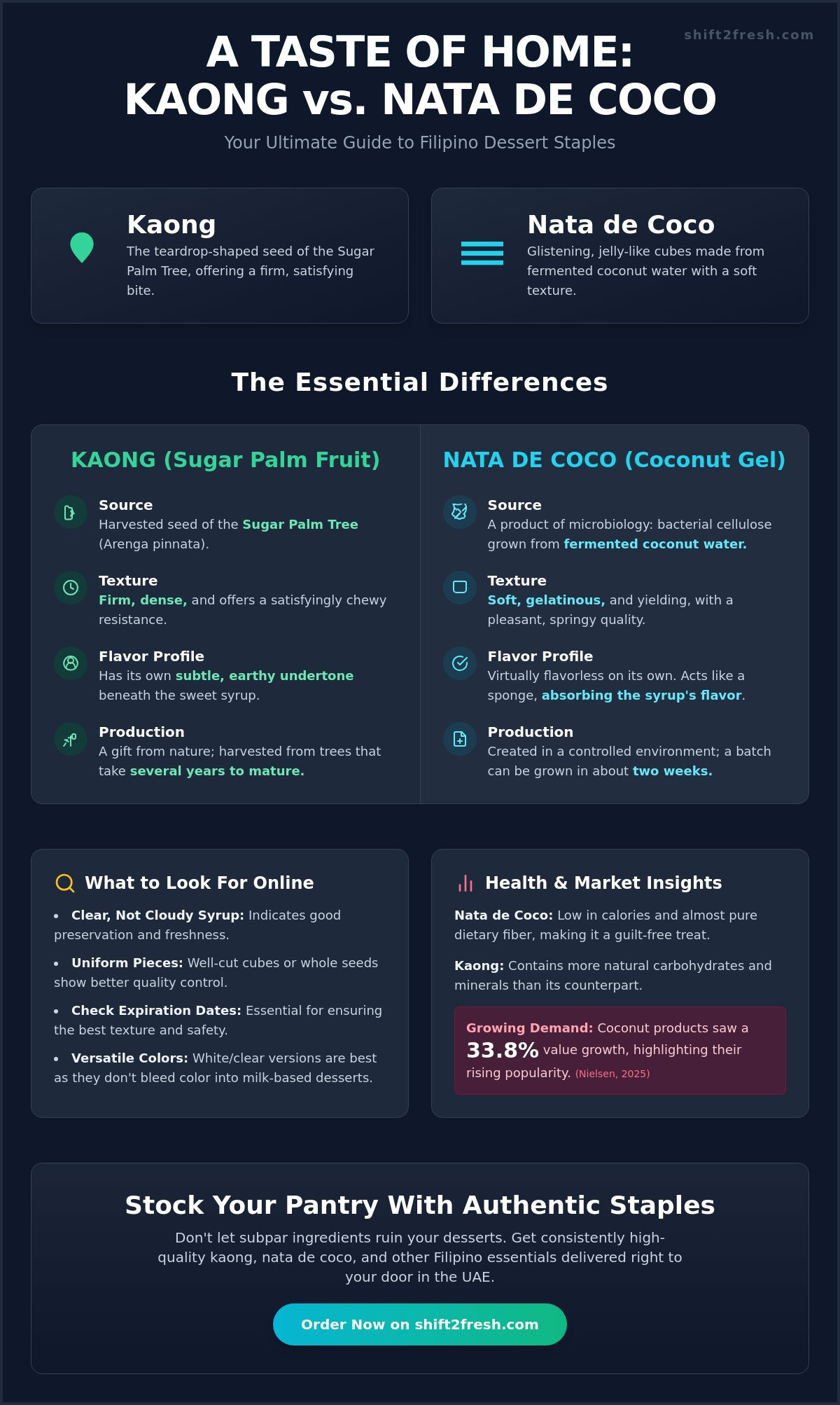
Visually, these two are easy to tell apart, yet they are almost inseparable in recipes. Nata de coco typically appears as glistening, translucent cubes with a jelly-like appearance. Kaong, on the other hand, is the seed of the sugar palm tree. It has a distinct teardrop shape and a more opaque, matte finish. They are mentioned together because they provide a contrast in “bite” that few other ingredients can replicate. While one is soft and yielding, the other offers a firm, satisfying resistance.
The Cultural Heart of Filipino Sweets
For the Filipino expat community in the UAE, these ingredients represent the “sweetness of home.” You’ll find them at the center of every major celebration, from milestone birthdays to the elaborate spreads of Noche Buena. In Filipino cuisine, the texture is often just as important as the sugar content. There is a specific appreciation for chewiness that defines the local palate. Whether it is mixed into a creamy fruit salad or layered at the bottom of a tall glass of shaved ice, these preserved treats provide a sense of nostalgia that fresh fruit alone cannot offer. Accessing authentic kaong and nata de coco online allows families in Dubai or Abu Dhabi to recreate these memories with the exact mouthfeel they remember from childhood.
Texture vs. Flavor: A Sensory Overview
Understanding the sensory profile of each helps in mastering your recipes. Nata de coco is a unique ingredient; it is actually a bacterial cellulose product made through the fermentation of coconut water. If you look into the history of What is Nata de Coco, you’ll find it was invented in the Philippines in 1949 as an alternative to pineapple gel. It is virtually flavorless on its own, acting like a sponge that absorbs the floral notes of the syrup it sits in.
Kaong offers a different experience. Harvested from the Arenga pinnata palm, it carries a very subtle, earthy undertone. It’s denser than its coconut gel counterpart. A perfect dessert relies on the “crunch-chew” balance. If the kaong is too tough, it disrupts the flow of the dish. If the nata is too mushy, it loses its structural appeal. Finding high-quality versions ensures that every spoonful of your dessert has the perfect, harmonious snap.
Kaong vs. Nata de Coco: Understanding the Differences
While they often share a jar or a dessert bowl, these two ingredients couldn’t be more different biologically. Kaong is a gift from nature, specifically the sugar palm tree. Nata de coco is a feat of microbiology. One is a seed harvested from a towering palm; the other is a cellulose gel grown in a controlled environment. When you browse for kaong and nata de coco online, you are looking at two distinct production worlds that happen to complement each other perfectly in Filipino cuisine.
From a health perspective, nata de coco is almost entirely pure fiber. It is low in calories because the human body cannot easily digest cellulose, making it a popular “guilt-free” addition to sweets. Kaong contains slightly more natural carbohydrates and minerals, but it remains a relatively light fruit option. Most of the caloric content in both products comes from the heavy syrup used for preservation. Because these are imported goods, 2026 UAE regulations require that all food products be registered in the ZAD electronic system, ensuring the syrups and dyes used meet strict safety standards.
Production timelines vary as much as their origins. A sugar palm tree takes several years to mature before it can yield harvestable seeds. In contrast, a batch of nata de coco can be grown in about two weeks. You’ll often see these items in vibrant reds and greens. Manufacturers use food-grade dyes during the boiling process to help these ingredients stand out in layered desserts. White or “clear” versions remain the most versatile, as they don’t bleed color into milk-based dishes like fruit salads.
The Science of Nata de Coco: Acetobacter Xylinum
Nata de coco is created through the fermentation of coconut water using a bacterium called Acetobacter xylinum. This “mother” culture feeds on the sugars in the coconut water, spinning out a thick, white mat of cellulose on the surface of the liquid. Because this process requires precise temperature and acidity, high-quality commercial production must happen in sterile environments. This ensures the resulting gel is firm, clean, and free from off-flavors. It is this high-fiber, healthy cellulose structure that gives nata its signature bouncy texture.
The Harvest of Kaong: From Palm to Jar
The Arenga pinnata, or Sugar Palm, is the source of every kaong seed. Harvesting is a labor-intensive craft that requires expert knowledge. Workers must climb the palms to retrieve the heavy fruit clusters. These seeds are then boiled for hours to soften the tough outer shell and neutralize irritating saps. Once softened, they are hand-peeled to reveal the smooth, teardrop-shaped fruit inside. Because it depends on the tree’s natural growth cycle, kaong is a seasonal product that requires careful sourcing. If you want to experience this authentic texture, you can find high-quality Filipino pantry items through specialized mobile apps that bring these traditions to your doorstep in the UAE.
Traditional and Modern Recipes Using Kaong and Nata de Coco
In the architecture of a classic Filipino Halo-halo, these ingredients occupy a vital space. They aren’t just tossed in; they form the heavy base that waits at the bottom of the glass, submerged under layers of shaved ice and evaporated milk. When you prepare this at home, ordering kaong and nata de coco online ensures you have the correct variety of colors to make the dessert visually striking. Traditionally, the red and green hues of the palm seeds and coconut gels provide a festive contrast to the purple ube halaya and yellow leche flan. These chewy morsels act as the “prize” at the end of the meal, offering a satisfying texture once the ice has melted.
Before adding them to any dish, many home cooks prefer to drain and rinse the ingredients. The heavy syrup used in the jars is extremely sweet. By rinsing the pieces under cold water, you can better control the sugar levels of your final creation. This is particularly useful if you’re making a light yogurt bowl or a fresh salad where you want the fruit’s natural flavor to shine rather than being overwhelmed by refined sugar.
Mastering the Buko Pandan and Fruit Salad
For a standard Filipino fruit salad, the ideal ratio is one part kaong to one part nata de coco. This 1:1 balance ensures that every spoonful has a mix of the firm palm seed and the bouncy coconut gel. If you’re making Buko Pandan, green-colored nata de coco is the non-negotiable standard. It reinforces the emerald theme of the pandan-flavored gelatin and cream. To elevate these creamy classics, try combining your pantry staples with Seasonal Filipino Fruits like fresh mango or papaya. Adding fresh, acidic fruits cuts through the richness of the condensed milk and cream, creating a more sophisticated flavor profile.
Innovative Drinks and Cocktails
Chewy textures are no longer reserved for solid desserts. In the UAE’s heat, “Samalamig” (chilled drinks) are a staple. You can easily transform a simple iced tea or a pitcher of coconut water by adding a handful of nata de coco. It serves as a fantastic, low-calorie alternative to tapioca pearls or boba. Don’t throw away the syrup from the jar, either. It’s infused with the subtle aroma of the fruit and makes an excellent sweetener for tropical cocktails or mocktails. Simply mix a splash of the kaong syrup with lime juice and soda water for a refreshing, Filipino-inspired spritzer. Finding kaong and nata de coco online makes it easy to keep these versatile ingredients on hand for spontaneous summer gatherings.
What to Look for When Buying Kaong and Nata de Coco Online
Shopping for kaong and nata de coco online in the UAE requires a different approach than browsing a physical aisle. Since you can’t hold the jar up to the light, you must rely on high-resolution product images and detailed descriptions. The first thing to inspect in any product photo is the clarity of the syrup. High-quality preserved fruits should sit in a liquid that is crystal clear. If the syrup appears cloudy or milky in the photos, it often indicates that the product was not processed correctly or has begun to degrade. Clear syrup is a sign of a stable, well-preserved batch that will maintain its flavor once opened.
Texture is the most important factor for a successful dessert, yet it’s the hardest to judge through a screen. You should look for brands that have a strong reputation within the Filipino community for consistency. Premium kaong should appear plump and uniform in its teardrop shape. If the seeds look shriveled or have irregular, jagged edges, they’ll likely be too tough or “woody” to chew. For nata de coco, the cubes should have sharp, clean edges. This indicates a firm, high-fiber structure that won’t turn into mush when mixed with heavy cream or condensed milk.
Checking the ingredient label is also vital. In 2026, UAE food standards remain strict about labeling, requiring ingredients to be listed in descending order. Look for products that use natural cane sugar rather than high-fructose corn syrup. While food coloring is standard for red and green varieties, the best brands use stable, food-grade dyes that won’t bleed excessively into your Buko Pandan or fruit salad.
Packaging and Shelf Life
When ordering kaong and nata de coco online, consider the packaging material. Glass jars are the gold standard for preservation as they don’t react with the acidic syrup, though they require careful handling during delivery. Pouches are becoming more common and are often lighter for shipping, but they’re more susceptible to temperature fluctuations. Always check the “Best Before” date before finalizing your purchase. Under UAE regulations, a product’s shelf life must not have lapsed by more than 50 percent at the time of import. Once you break the seal, move any leftovers to a clean glass container and keep them refrigerated to maintain that signature snap.
Sourcing Authentic Filipino Brands in the UAE
The “Product of the Philippines” label is a non-negotiable for many expats. The specific variety of sugar palm grown in the Philippines has a tenderness that is difficult to replicate in other regions. Using a dedicated philippine supermarket guide can help you identify which labels are favored by home cooks for their authenticity. To ensure you’re getting the best quality, it’s wise to source your Filipino Pantry Items from specialized vendors who understand the nuances of Asian food logistics. For the most reliable experience, you can order via a mobile app to get these essentials delivered directly to your doorstep with guaranteed freshness.
Why Order Kaong and Nata de Coco from Shift 2 Fresh?
Sourcing the perfect ingredients for a traditional Filipino dessert in the UAE shouldn’t feel like a compromise. At Shift 2 Fresh, we are committed to bridging the gap between your kitchen in Dubai and the authentic flavors of the Philippines. When you buy kaong and nata de coco online through our platform, you aren’t just getting a jar off a shelf. You’re accessing a curated selection of Filipino pantry items that meet the strict textural and quality standards we’ve discussed throughout this guide. We understand that the “snap” of a palm fruit and the “bounce” of a coconut gel are what make a recipe successful.
Our logistics team specializes in the safe delivery of glass-bottled goods across Sharjah and Dubai. We know how frustrating it is to receive a package only to find the seal broken or the syrup leaked. Our handling process is designed specifically for fragile pantry staples. To make your meal prep even more efficient, you can combine your preserved fruit order with fresh Asian Vegetables. This allows you to stock up on everything from sitaw and kalabasa to your favorite dessert toppings in a single, streamlined delivery.
The Convenience of Online Grocery Shopping in Dubai
Life in the UAE is fast-paced, and spending your weekend stuck in traffic just to find a specific brand of kaong isn’t ideal. Choosing an online supermarket dubai residents can rely on saves you both time and effort. We offer a mobile app that makes restocking your pantry as simple as a few taps on your screen. For those planning large gatherings or community events, our free shipping thresholds provide a cost-effective way to buy in bulk. Plus, our real-time order tracking ensures you know exactly when your ingredients will arrive, so you can time your dessert preparation perfectly.
Quality Assurance from Farm to Doorstep
With 45 years of experience in the food industry, our team has a deep understanding of what makes a product authentic. We don’t just list any brand; we choose those that use high-quality fermentation processes and traditional harvesting methods. When you browse our Online Supermarket, you’re seeing the result of decades of expertise in food logistics and quality control. We maintain strict temperature regulation during transit to ensure that the kaong and nata de coco online you receive is as fresh as the day it was bottled in the Philippines.
Stock your pantry with authentic Kaong and Nata de Coco today!
Bring the Taste of Home to Your Kitchen Today
Recreating the perfect Halo-halo or Buko Pandan in the UAE starts with choosing the right ingredients. You now know how to distinguish the earthy bite of sugar palm from the bouncy fiber of fermented coconut water. By looking for clear syrups and reputable brands, you can avoid the common pitfalls of online grocery shopping. Finding premium kaong and nata de coco online ensures your desserts have the exact texture your family expects during weekend celebrations or quiet weeknight treats.
Shift 2 Fresh leverages over 45 years of food industry expertise to bring you the finest Philippine imports. We take the guesswork out of your pantry restocking by ensuring every jar meets high quality standards. You’ll enjoy free delivery on orders over AED 500, making it easier than ever to stock up on all your favorite essentials at once. Shop Authentic Filipino Pantry Essentials at Shift 2 Fresh and start building your next culinary masterpiece today. Your journey to authentic Filipino flavors is just a few clicks away.
Frequently Asked Questions
Is nata de coco healthy for weight loss?
Nata de coco is a high-fiber, low-calorie food that can support weight loss when consumed without the heavy syrup. Since it’s made of bacterial cellulose, it helps you feel full longer without adding significant calories to your diet. However, most commercial versions are packed in sugar-rich syrup. Rinsing the cubes before eating is essential to reduce your calorie intake and remove excess refined sugars.
What is the difference between red, green, and white kaong?
The main difference between red, green, and white kaong is the food-grade dye used during the preservation process. While they all share the same earthy, subtle flavor of the sugar palm fruit, the colors are used to enhance the visual appeal of layered desserts. White kaong is the natural color of the seed, while red and green are staples for festive dishes like Halo-halo and Buko Pandan.
Can I make nata de coco at home?
While it’s technically possible to make nata de coco at home, it’s a complex process that requires a specific “mother” culture called Acetobacter xylinum. You must maintain a sterile environment and consistent temperature for about two weeks to allow the cellulose mat to grow on the coconut water. Most people prefer to buy high-quality kaong and nata de coco online to ensure safety and a consistent, bouncy texture.
How long does kaong last after opening the jar?
Once you break the seal of a jar, kaong typically lasts for one to two weeks if kept refrigerated in its original syrup. To maximize freshness, always use a clean spoon to prevent bacterial contamination of the liquid. If the syrup becomes cloudy or the fruit develops an off-smell, you should discard the remaining portion immediately to comply with food safety standards and avoid illness.
Is kaong the same as attap seed?
No, kaong is not the same as attap seed, though they look similar in desserts. Kaong comes from the sugar palm tree, Arenga pinnata, while attap seed comes from the nipa palm, Nypa fruticans. Kaong is generally firmer and has a distinct teardrop shape, whereas attap seeds are often softer and more translucent. Both are popular in Southeast Asian desserts but offer slightly different textures and structural roles.
Where can I find kaong and nata de coco online in the UAE with fast delivery?
You can find authentic kaong and nata de coco online through the Shift 2 Fresh mobile app, which specializes in Philippine imports for the UAE market. We offer reliable delivery across Dubai and Sharjah, ensuring your pantry staples arrive safely in their glass jars. Our platform provides a convenient way to skip the commute to physical supermarkets while guaranteeing the freshness and authenticity of your favorite Filipino ingredients.
Why is my nata de coco chewy or tough?
Nata de coco is naturally chewy because of its high cellulose content, but excessive toughness often indicates over-processing or a low-quality fermentation batch. If the cubes are too firm to enjoy, they may have been stored at incorrect temperatures or have a higher concentration of fiber than usual. High-quality brands focus on a “bouncy” snap rather than a rubbery resistance that’s difficult to chew or digest.
0 comments