

Imagine it’s a humid afternoon in Dubai, and you’re craving that specific, ice-cold creaminess of a fiesta-style dessert from back home, but the canned fruit cocktail from the local corner shop just tastes like tin and disappointment. You’ve likely struggled to find that perfect buko texture or watched your cream turn into a watery mess the moment it leaves the fridge. It’s frustrating when you want to share a piece of your heritage with friends in the UAE, only for the flavors to fall flat because of sub-par ingredients.
The good news is that mastering an authentic filipino fruit salad recipe is entirely possible with the right local sourcing. We’ll show you exactly how to achieve that signature thick consistency and where to find the freshest seasonal Filipino fruits and pantry staples across the Emirates. From selecting the best tropical imports to balancing the sweetness, this guide ensures your next dessert is a nostalgic triumph that tastes just like a celebration in Manila.
Key Takeaways
- Understand the cultural significance of this iconic dessert and why it remains the star of Filipino Noche Buena and fiesta celebrations.
- Master the perfect balance of sweetness and creaminess with our authentic filipino fruit salad recipe designed for UAE kitchens.
- Learn the essential draining technique that prevents a watery consistency and keeps your salad thick even in warmer climates.
- Discover how to source hard-to-find ingredients like fresh shredded buko and authentic pantry staples using mobile app ordering in Dubai.
- Get professional tips on temperature control and a clever “freezer hack” to repurpose your leftovers into refreshing summer treats.
The Heart of Filipino Celebrations: Why This Salad is Iconic
Filipino fruit salad isn’t your typical bowl of sliced apples and oranges. It’s a rich, cold, and intensely creamy dessert that serves as the centerpiece of every major Filipino gathering. Whether it’s a neighborhood fiesta or the midnight feast of Noche Buena, this dish is a non-negotiable tradition. While many families have their own secret filipino fruit salad recipe, the core remains a lush mixture of tropical fruits bound together by a thick, sweetened cream dressing. It’s more than just a sweet treat; it’s a symbol of celebration and community for the 780,000 Filipinos living in the UAE.
The magic lies in the specific textures that create a party in your mouth. You have the soft, syrup-soaked fruit cocktail pieces alongside chewy nata de coco (coconut gel) and the slight crunch of kaong (sugar palm fruit). Many variations, particularly the Buko salad, prioritize shredded young coconut for an even more authentic tropical profile. While it often starts with pantry staples, adding fresh elements like longan or shredded buko can transform it into a gourmet experience that impresses any guest.
The Evolution of the ‘Pinoy’ Fruit Salad
The dish originated from American colonial influences when canned goods first became accessible in the Philippines. Filipinos took these imported fruit cocktails and localized them with what was available. Today, it has evolved into a versatile masterpiece. Some regions add savory elements like grated cheddar cheese for a salty-sweet contrast, while others include kernels of sweet corn. It has transitioned from a strictly holiday-only luxury to a refreshing everyday comfort food that brings a taste of home to Dubai.
Why Creaminess is the Golden Rule
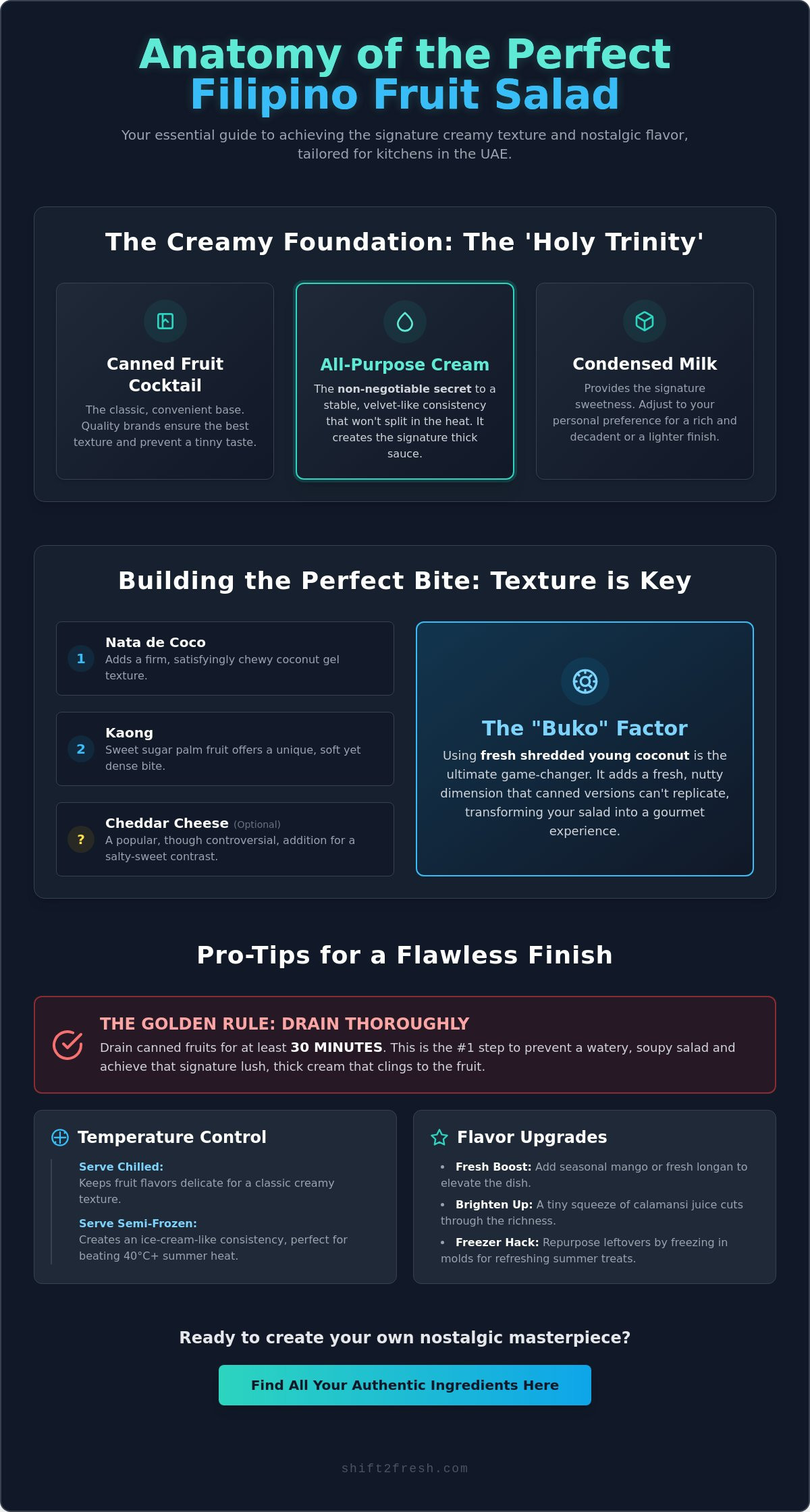
In any authentic filipino fruit salad recipe, the sauce texture is vital. Most households use “All-Purpose Cream” for a specific velvet mouthfeel that heavy cream can’t replicate. When mixed with condensed milk, it creates a thick, luxurious coating. There’s also a debate on serving: chilled or semi-frozen? Chilling keeps fruit flavors delicate, while freezing it slightly creates an ice-cream-like texture, perfect for the UAE’s 40°C+ summers.
Essential Ingredients: Sourcing the ‘Taste of Home’ in the UAE
The foundation of every legendary filipino fruit salad recipe starts with what we call the “Holy Trinity” of the Pinoy pantry. You’ll need high-quality canned fruit cocktail, a tin of sweetened condensed milk, and thick all-purpose cream. While these sound simple, the specific brands matter. Most Filipinos in the UAE search for Nestle Cream because its unique fat content provides that stable, velvet-like consistency that doesn’t split in the heat. It’s the secret to a sauce that clings to the fruit rather than pooling at the bottom of the bowl.
Beyond the base, texture is everything. You can’t achieve that authentic mouthfeel without nata de coco (coconut gel) and kaong (sugar palm fruit). These add a delightful chewiness that contrasts with the soft fruit. However, the real game-changer is the “Buko” factor. Using shredded young coconut adds a fresh, nutty dimension that canned versions simply cannot replicate. If you want to get adventurous, try adding cubes of mild cheddar cheese. It’s a popular, though sometimes controversial, addition that provides a salty-sweet balance many families swear by.
The Pantry Staples You Need
Sweetness levels are personal, so choose your condensed milk carefully. Some prefer a lighter touch, while others want a rich, decadent finish. One professional secret to a perfect salad is the “drain rule.” You must drain your canned fruits for at least 30 minutes. If you skip this, the residual syrup will thin out your cream, leaving you with a watery soup instead of a lush dessert. To make your prep even easier, you can find all these essentials through mobile app ordering for quick delivery.
Fresh vs. Canned: Finding the Balance
While the canned cocktail provides the base, adding seasonal Filipino fruits like ripe mango or longan fruit elevates the dish to a gourmet level. Fresh longan adds a floral sweetness that cuts through the heavy cream beautifully. A tiny squeeze of fresh calamansi juice can also brighten the entire flavor profile, preventing it from feeling too cloying in the Dubai sun.
Sourcing these specific Filipino pantry items in Sharjah or Dubai used to require multiple trips to specialty markets. Now, you can easily stock up on everything from kaong to all-purpose cream online. This ensures your ingredients are fresh and ready for the weekend fiesta without the stress of navigating supermarket crowds.
Step-by-Step: How to Make the Perfect Creamy Filipino Fruit Salad
Executing a flawless filipino fruit salad recipe is less about a complicated cooking process and more about patience and preparation. Most people make the mistake of simply dumping cans into a bowl, which results in a thin, soupy mess. To get that thick, restaurant-quality consistency in your UAE kitchen, you need to follow a specific sequence that respects the ingredients and the climate.
- Step 1: The Great Drain. Empty your canned fruit cocktail, nata de coco, and kaong into a large colander. Let them sit for at least 30 minutes. If you’re in a hurry, you’ll regret it later when the syrup thins out your cream.
- Step 2: Fresh Prep. While the cans drain, prepare your fresh tropical imports. Shred your young coconut into thin, uniform strips and peel your longan, removing the seeds.
- Step 3: The Cream Fold. In a separate chilled bowl, whisk your all-purpose cream and condensed milk until the mixture is completely smooth and slightly aerated.
- Step 4: The Assembly. Gently fold the fruit into the cream mixture. Use a rubber spatula and move in a circular motion to avoid bruising the softer fruit pieces.
- Step 5: The Big Chill. This is the hardest part. Place the salad in the coldest part of your fridge for 12 to 24 hours. This allows the flavors to meld and the cream to set firmly.
Prep Work: The Secret to a Thick Sauce
If you want to go the extra mile, don’t just drain the fruit; pat it dry. Use a few sheets of heavy-duty paper towels to gently soak up any remaining moisture from the fruit cocktail. This ensures the cream sticks to every surface. When dealing with buko, aim for thin strips. If the strips are too thick, they become rubbery and difficult to eat. Remember that the syrup from kaong and nata de coco is particularly heavy; rinsing them quickly under cold water before draining can help you control the final sweetness and viscosity of your filipino fruit salad recipe.
Mixing and Flavor Balancing
Balance is key to a dessert that isn’t cloyingly sweet. Start by adding only half of your condensed milk to the cream. Taste as you go. You can always add more, but you can’t take it out once it’s mixed. A tiny pinch of salt or a teaspoon of vanilla extract can add a sophisticated depth that makes your salad stand out from basic versions. If you’ve decided to include cheese or sweet corn, add these at the very last second before chilling. This keeps the cheese from softening too much and ensures the corn retains its snap, providing that essential texture contrast.
Pro Tips for the Best Texture and Flavor
Serving a cream-based dessert when the outdoor temperature hits 40°C in Dubai requires a bit of strategy. If you leave your salad out on a buffet table for too long, the cream will lose its structure and become unappealingly thin. To prevent this, place your serving bowl inside a larger bowl filled with ice. This keeps the dessert at a safe, refreshing temperature throughout the entire party. If you’re planning an outdoor gathering, consider serving the salad in individual chilled glasses rather than one large bowl to minimize exposure to the heat.
Presentation can also elevate your filipino fruit salad recipe from a simple family treat to a dinner party showstopper. For a truly tropical feel, serve the salad inside a hollowed-out coconut shell. This not only looks impressive but also provides a natural insulation that helps keep the contents cool. If you have leftovers, don’t let them go to waste. The “Freezer Hack” is a favorite among Filipino households: simply pour the remaining mixture into small plastic pouches or ice candy molds and freeze them. These “Buko Salad Ice Candies” are the perfect way to cool down during a humid UAE afternoon.
Avoiding Common Mistakes
One of the most frequent errors is using “table cream” or light cream substitutes. These don’t have the fat content required to stay thick when mixed with fruit juices. Stick to all-purpose cream for the best results. If you decide to add ube (purple yam) or colored jellies, be careful; these can bleed and give your entire salad a muddy purple tint. To avoid this, rinse colored ingredients thoroughly and pat them dry before folding them in. If your salad still turns out too thin, you can whisk in a little more chilled cream or let it sit in the freezer for 30 minutes before serving to firm up the texture.
Customizing for Modern Palates
While the traditional filipino fruit salad recipe is quite sweet, many people now prefer lighter versions. You can swap half of the condensed milk for Greek yogurt or thick coconut cream for a tangier, less sugary profile. For a vegan-friendly version, use condensed coconut milk and chilled cashew cream. To add a sophisticated “crunch” that contrasts with the soft fruit, sprinkle some toasted pinipig (pounded rice) or crushed graham crackers on top just before serving. Ready to start your dessert prep? Order your Filipino pantry items and fresh fruits today to get everything delivered straight to your home.
When stored in an airtight container in the back of the fridge, your fruit salad will stay fresh for 3 to 5 days. Just remember that the longer it sits, the more the fruits will release their natural juices, which may slightly thin the sauce over time. Give it a gentle stir before serving to redistribute the cream.
Where to Find Authentic Filipino Fruit Salad Ingredients in Dubai and Sharjah
While major UAE supermarket chains stock basic fruit cocktails, they often lack the specific cream brands or the high-quality kaong and nata de coco required for a truly nostalgic filipino fruit salad recipe. Generic substitutes often lead to a flavor that’s too bland or a texture that’s too thin. For the 450,000 Filipinos living in Dubai, finding that exact taste of home means looking beyond the local corner shop to specialized sources that understand the nuances of Pinoy cuisine.
This is where the convenience of an online supermarket Dubai service becomes a lifesaver. Lugging heavy tins of condensed milk, large glass jars of coconut gel, and kilos of fresh buko through a crowded mall is a significant hassle. Ordering online allows you to focus on the prep while the heavy lifting is handled for you. Shift 2 Fresh serves as a premier source for imported, fresh fruits and vegetables directly from the Philippines, ensuring your dessert has the authentic tropical profile it deserves.
Why Shift 2 Fresh is the Expat’s Choice
With over 45 years of experience in sourcing authentic Asian produce, Shift 2 Fresh understands the specific requirements of a Pinoy kitchen. They don’t just offer standard items; they provide direct imports of specialty fruits like lansones, durian, and even ube for those who want to add a unique twist to their dessert. Their mobile app ordering system is specifically designed for busy families in Sharjah and Dubai. It’s the easiest way to ensure you have all the “Holy Trinity” ingredients ready for your next weekend gathering without navigating multiple stores.
Planning Your Party Grocery List
Timing is everything when you’re preparing for a big celebration. You can use the Shift 2 Fresh app to track seasonal fruit availability, ensuring your filipino fruit salad recipe features the freshest possible ingredients. If you’re hosting a large Noche Buena or fiesta, it’s wise to bulk buy Filipino pantry items like all-purpose cream and kaong well in advance of the holiday rush.
To ensure maximum freshness, their delivery standards include trained staff who understand how to handle delicate tropical produce. This means your longan and young coconut arrive in peak condition, not bruised or wilted from the heat. Best of all, many orders qualify for free delivery across the UAE, making it both convenient and cost-effective to get all your party ingredients delivered straight to your doorstep.
Bring the Taste of the Philippines to Your UAE Table
Creating a dessert that truly tastes like home is about more than just mixing ingredients; it’s about respecting the process. By mastering the “drain and dry” technique and choosing the right cream base, you ensure your salad stays thick and luxurious even in the desert heat. Adding fresh tropical imports like longan or shredded buko transforms a simple pantry dish into a gourmet centerpiece that your guests won’t forget.
Mastering this filipino fruit salad recipe is much easier when you have access to the right supplies. You don’t have to settle for bland substitutes when authentic flavors are just a click away. With over 45 years of food industry expertise, Shift 2 Fresh provides direct imports from the Philippines to ensure your kitchen is always stocked with the best.
Shop Fresh Filipino Fruits & Pantry Staples for Your Salad at Shift 2 Fresh today and enjoy free delivery on orders over AED 500. It’s time to stop craving and start creating. Your next celebration deserves that perfect, creamy bite of nostalgia.
Frequently Asked Questions
Can I use fresh fruit instead of canned fruit cocktail?
Yes, you can substitute canned items with fresh produce, but it requires more preparation to manage moisture. Use ripe mangoes, longan, or even papaya for a vibrant flavor. Since fresh fruits aren’t preserved in syrup, they may not be as sweet, so you might need to adjust the condensed milk in your filipino fruit salad recipe to achieve the desired taste.
How do I stop my Filipino fruit salad from being too watery?
The most effective way to prevent a watery salad is to drain all canned ingredients for at least 30 minutes. Use a colander and gently pat the fruit dry with paper towels before mixing. Also, ensure you use thick all-purpose cream instead of lighter table creams, which tend to thin out quickly when combined with fruit juices.
What is the difference between Buko Salad and Fruit Salad?
While both are creamy desserts, the primary difference lies in the main ingredient. Buko salad focuses heavily on shredded young coconut as the star of the dish, often featuring a simpler mix of cream and nata de coco. Traditional fruit salad uses a diverse fruit cocktail as the base, resulting in a more colorful and varied flavor profile.
Can I freeze Filipino fruit salad?
You can freeze the salad, but it’s best enjoyed as a semi-frozen treat rather than being thawed. Freezing changes the texture of the cream and can make the fruit slightly mushy once it melts. If you have leftovers, follow the “freezer hack” mentioned earlier and turn them into ice candy for a refreshing snack during the UAE summer.
Where can I buy Nestle Cream and Nata de Coco in Dubai?
You can find these essential filipino fruit salad recipe ingredients through specialized online grocery services like Shift 2 Fresh. They deliver authentic Filipino pantry items and fresh tropical fruits directly to homes in Dubai and Sharjah. This is often more convenient than searching through local supermarkets that might not carry specific Pinoy brands.
How long can I store fruit salad in the refrigerator?
When kept in an airtight container, the salad stays fresh for 3 to 5 days. It’s important to keep it in the coldest part of the fridge to maintain the cream’s consistency. If you notice the sauce becoming a bit thin after a few days, simply give it a gentle stir before serving to redistribute the flavors.
Is Filipino fruit salad healthy?
Traditional versions are considered a decadent dessert rather than a health food due to the high sugar and fat content in condensed milk and cream. However, you can make a lighter version by using Greek yogurt or coconut cream. Adding more fresh, seasonal fruits instead of syrup-soaked canned varieties also increases the fiber and vitamin content of the dish.
Why do Filipinos add cheese to their fruit salad?
Cheese provides a savory “umami” element that cuts through the intense sweetness of the condensed milk. This salty-sweet combination is a hallmark of many Filipino desserts and snacks. Usually, mild cheddar cubes are used because they maintain their shape and provide a pleasant textural contrast to the soft fruit and chewy nata de coco.
0 comments