

Why does your home-cooked Sinigang in Dubai never quite hit the mark, even when you follow your family recipe to the letter? Replicating an authentic filipino food taste in the Middle East is notoriously difficult because our flavors rely on the unique terroir of the Philippines. The volcanic soil and tropical climate back home produce a specific acidity and sweetness that generic substitutes simply can’t match. You’ve likely felt the disappointment of using lemon instead of calamansi, only to find the dish’s balance is completely ruined.
It’s a challenge shared by many of the 700,000 Filipinos currently residing in the UAE. This article will show you how to bridge that gap by mastering the Holy Trinity of Pinoy flavors and identifying the ingredients that are absolutely non-negotiable for authenticity. We’ll also look at how the UAE Ministry of Economy’s April 2026 price platform helps you monitor costs for essential goods. Finally, you’ll discover how to use our mobile app to source fresh seasonal fruits and Asian vegetables that bring the true taste of home to your Sharjah or Dubai kitchen.
Key Takeaways
- Learn how the unique balance of heavy salt and sharp acid creates the foundation of “Malinamnam,” the Filipino version of umami.
- Identify why specific ingredients like calamansi and coconut vinegar are non-negotiable for achieving an authentic filipino food taste in your kitchen.
- Understand the role of Philippine terroir and why volcanic soil chemistry is the secret behind the world-leading sugar content in Carabao mangoes.
- Master the professional techniques for balancing Adobo and Sinigang using fresh souring agents rather than processed alternatives.
- Discover how to access seasonal Philippine imports in the UAE through a streamlined mobile app supported by 45 years of food logistics expertise.
What Defines the Authentic Filipino Food Taste?
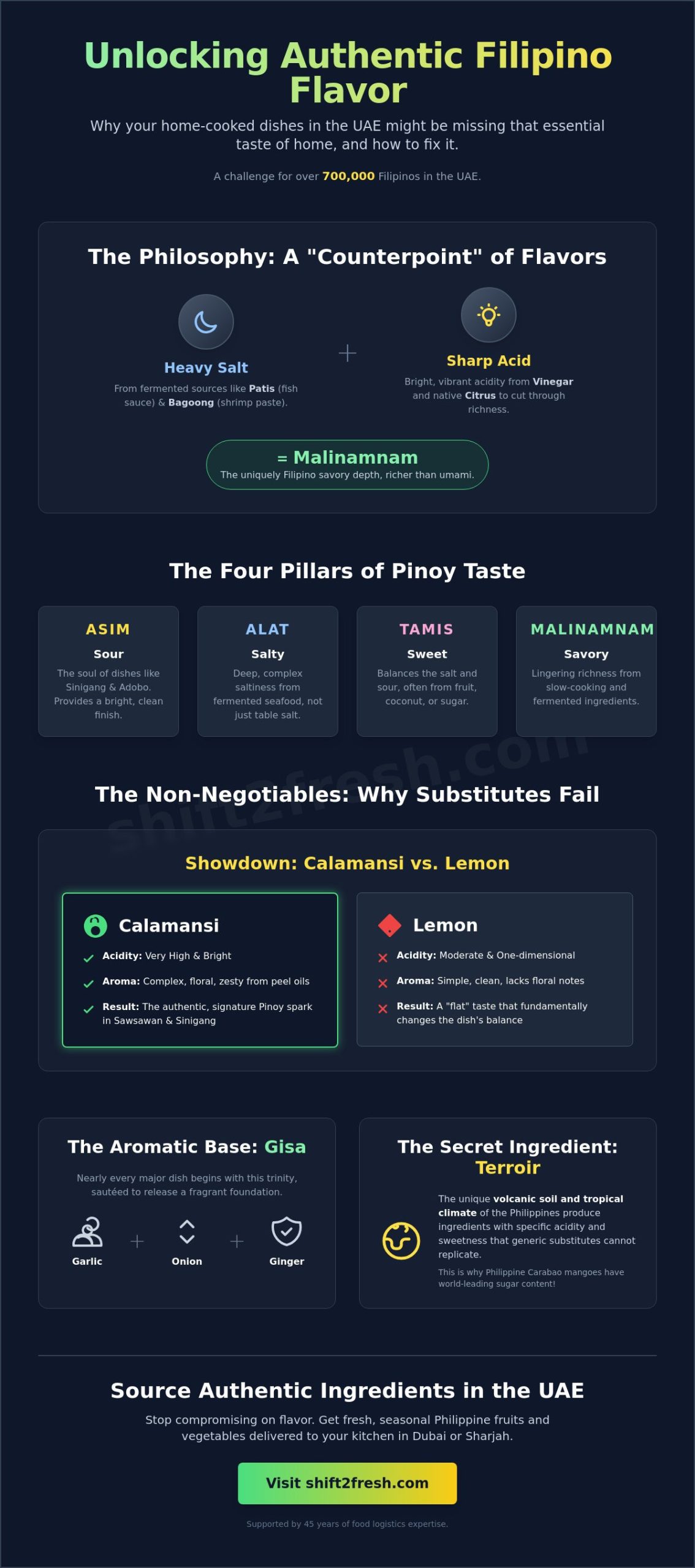
Achieving an authentic filipino food taste starts with understanding the “counterpoint” system. For the 700,000 Filipinos living in the UAE, this balance is the key to curing homesickness through cooking. Unlike cuisines that aim for a singular, harmonious note, Pinoy cooking thrives on the tension between contrasting profiles. Most notably, it balances heavy salt with sharp, bright acidity. This isn’t just a preference; it’s a culinary philosophy that defines how we season our food. Instead of hiding the saltiness of fermented fish or shrimp, we use vinegar or citrus to cut through it, creating a vibrant finish that generic substitutes can’t replicate.
A critical element often missed by outsiders is “Malinamnam.” Malinamnam is the savory depth achieved through slow-cooking and fermentation. While often compared to Japanese umami, our version is distinctly tied to the sea and traditional preservation methods. It comes from the strategic use of bagoong (fermented shrimp paste) or patis (fish sauce), which provide a complex, lingering richness. This savory backbone is further enhanced by “Gisa,” the aromatic foundation of sautéed garlic, onion, and ginger that begins almost every major dish. These three ingredients are the non-negotiable starting point for a true taste of home.
The Four Pillars: Sour, Salty, Sweet, and Savory
Within the broader scope of Filipino cuisine, four main pillars dictate the palate. First is “Asim,” or sourness, which is the soul of dishes like Sinigang and Adobo. Second is “Alat,” the saltiness provided by fermented condiments that act as seasonings rather than just side sauces. Third is “Tamis,” or sweetness, often introduced through fruit or sugar to balance the salt in savory stews. Finally, there’s the savory depth of Malinamnam. These pillars work together to ensure no single flavor dominates the plate, creating a multi-layered experience in every bite.
Filipino vs. Other Southeast Asian Flavors
While neighboring countries might focus on intense chili heat, Pinoy food is characterized by “vinegar brightness.” We prioritize the tang of cane or coconut vinegar over the burn of peppers. This preference stems from centuries of Spanish and Chinese influence, which integrated European braising techniques with Asian ingredients. For example, the use of “Gata” (coconut milk) is highly regional. It’s a staple in Bicol but less common in the Tagalog regions. Understanding these nuances helps explain why your home-cooked meals might feel “off” if you use generic Southeast Asian pastes instead of specific Philippine pantry items. Pinoy food is about clarity of flavor, where the primary ingredient is supported, not masked, by its seasonings.
The Essential Ingredients for Genuine Pinoy Flavor
Achieving an authentic filipino food taste isn’t just about following a recipe; it’s about the specific chemistry of the ingredients. Many home cooks in the UAE reach for lemons when they can’t find calamansi, but this small swap fundamentally changes the dish. While international supermarkets in Dubai and Sharjah carry generic Asian staples, they often lack the regional varieties that provide the exact flavor profiles needed for traditional stews and sawsawan (dipping sauces). To get that true taste of home, you need to look beyond common substitutes and prioritize the specific acids and ferments unique to the archipelago.
Calamansi vs. Lemon: Why Substitutes Fail
Calamansi is the undisputed king of Philippine citrus. Unlike lemons, which have a clean, sharp acidity, calamansi possesses high citric acid levels paired with potent floral oils in its thin peel. When you squeeze calamansi into a dipping sauce, those oils emulsify with the juice, creating a complex aroma that a lemon simply cannot match. Lemons often taste “flat” or overly one-dimensional to a Filipino palate trained on the zesty brightness of our native fruit. Using lemon in a Sinigang broth or as a garnish for Pancit is the fastest way to lose that signature Pinoy spark.
| Fruit | Acidity Level | Aroma Profile | Best Use |
|---|---|---|---|
| Calamansi | Very High | Floral, Zesty, Complex | Sawsawan, Marinades, Sinigang |
| Lemon | Moderate | Clean, Sharp, Simple | Garnish, Western Seafood |
| Lime | High | Punchy, Slightly Bitter | Cocktails, Latin Cuisines |
The Fermentation Factor: Bagoong and Guinamos
Fermentation provides the “Malinamnam” or savory depth discussed in the previous section. While table salt only adds saltiness, fermented products like bagoong (shrimp paste) and patis (fish sauce) add layers of protein-rich flavor. There’s a significant difference between regional pastes; for instance, understanding how Guinamos paste provides a deeper salt profile than standard table salt is vital for Visayan dishes. When cooking Kare-Kare, a sweet, pink bagoong alamang is essential, whereas a dark, salty bagoong monamon is better suited for seasoning vegetable stews like Pinakbet.
Vinegar, or Suka, is another non-negotiable pillar. Cane vinegar offers a mild, mellow sweetness ideal for Adobo, while coconut vinegar (Sukang Paombong) provides a sharp, cloudy acidity that defines authentic dipping sauces. Finally, don’t forget the earthy, floral notes of ube and pandan for desserts. These aren’t just colors; they are distinct flavors that define the Philippine sweet tooth. If you’re struggling to find these specific items, you can order authentic Filipino pantry items and fresh produce through our mobile app to ensure your kitchen stays stocked with the real thing.
The Terroir Factor: Why Origin Matters for Taste
Why does a mango bought in a generic Dubai supermarket taste like a completely different fruit compared to one from a roadside stall in Zambales? The answer lies in terroir. This term describes how a region’s specific soil chemistry, climate, and geography impact the flavor of its produce. For an authentic filipino food taste, the volcanic soil and high tropical humidity of the Philippines are essential components that cannot be manufactured elsewhere. When crops are grown in their native environment, they develop specific chemical profiles that define our national palate.
Consider the “Mango Test.” The Philippine Carabao mango is globally recognized for its superior sugar content, frequently hitting higher brix levels than varieties grown in South America or Africa. This concentrated sweetness is a direct result of the mineral-rich soil found in provinces like Guimaras and Zambales. When these fruits are subjected to long-term cold storage or grown in different climates, they lose their signature velvet texture and intense aroma. This is why Seasonal Filipino Fruits must be sourced directly from their native environment and air-freighted quickly to keep their integrity intact.
Volcanic Soil and Tropical Humidity
The Philippines’ unique geography, characterized by over 20 active volcanoes, creates a soil profile that concentrates flavors in root crops like Ube (purple yam). While you might find “fresh-frozen” Ube in many UAE stores, the freezing process often breaks down the starch structure, leading to a watery consistency that ruins desserts. Truly fresh Philippine vegetables carry a higher concentration of aromatic oils. You’ll notice that “native” varieties of garlic and onions are significantly smaller than their international counterparts, yet they’re far more potent. You only need a few cloves of native garlic to achieve the same aromatic punch as a whole head of a larger, milder variety.
The Problem with “Generic” Asian Groceries
Many expats make the mistake of thinking all Asian ingredients are interchangeable. Thai ginger (galangal) has a woody, citrusy profile that clashes with the warm, peppery bite of Philippine “Luya.” Similarly, the long, slender Philippine eggplant (Talong) has a thin skin and creamy flesh designed to absorb sauces, unlike the tougher, seedier Mediterranean varieties. Sourcing from a dedicated Philippine supermarket guide ensures you’re getting the right variety for your specific dish. Using the correct cultivar is often the final step in achieving an authentic filipino food taste in your UAE kitchen, as it respects the biological origins of the recipe.
How to Replicate Manila’s Best Dishes in Your UAE Kitchen
Bringing an authentic filipino food taste to your dining table in Dubai or Abu Dhabi requires more than just following a recipe card. It demands a specific approach to technique and timing that many generic cooking guides overlook. For example, the secret to a world-class Chicken Adobo isn’t just the ratio of soy sauce to vinegar. While most recipes suggest simmering until done, the traditional “Manila style” involves a crucial secondary step: removing the meat once tender and pan-frying it in its own rendered fat and reduced sauce. This creates a caramelized exterior that contrasts beautifully with the savory, vinegar-rich interior.
Sinigang follows a similar rule of authenticity. While instant mixes provide convenience, they often lack the “bright” top notes of a fresh souring agent. To achieve an authentic filipino food taste, use fresh calamansi or kamias (bilimbi) to provide a sharp, natural acidity that clears the palate. This freshness is particularly important when you’re dealing with the rich, fatty cuts of meat used in traditional stews. If you’re looking to stock up on these essentials, you can order Filipino pantry items and fresh produce directly through our mobile platform for doorstep delivery.
Pancit is another dish where ingredient quality is the deciding factor. The success of a Pancit Bihon or Cantab depends entirely on the crispness of your Asian Vegetables, such as Baguio beans, carrots, and cabbage. Authentic Sinangag is achieved by slowly toasting day-old rice in a generous amount of golden, fried garlic oil until every grain is fragrant and separate.
Mastering the Sawsawan (Dipping Sauce)
No Filipino meal is complete without the “Big Three” dipping sauces: Patis-calamansi, Suka-sili (vinegar and chili), and Toyo-mansi (soy sauce and calamansi). These aren’t just side items; they’re essential tools that allow each diner to customize the dish’s balance to their personal preference. For an authentic kick, always use siling labuyo (bird’s eye chili). These small peppers provide a clean, sharp heat that cuts through the richness of fried fish or grilled meats without lingering too long on the tongue.
The Art of Slow-Cooking and Layering
Patience is the final ingredient for dishes like Kare-Kare and Bulalo. Authentic Kare-Kare relies on real toasted peanut paste rather than sugary peanut butter to achieve its signature earthy depth. Similarly, a true Bulalo broth must be simmered for hours to extract the richness from the bone marrow, punctuated by the sweetness of fresh corn on the cob. For dessert, skip the processed cocoa and use traditional Tablea. Its slightly grainy, unrefined texture is the hallmark of an authentic Pinoy hot chocolate, providing a nostalgic finish to your meal.
Sourcing Authenticity: Shift 2 Fresh in the UAE
Finding the right ingredients shouldn’t be a struggle when you’re 5,000 kilometers away from home. At Shift 2 Fresh, we’ve dedicated ourselves to bridging that gap for the Filipino community in the UAE. Achieving an authentic filipino food taste is only possible when you have access to the same varieties of produce you’d find in a Manila wet market. We don’t settle for generic substitutes because we know that the wrong variety of ginger or citrus can change the entire soul of a dish. Our mission is to ensure that your Sinigang or Adobo tastes exactly as it did in your childhood kitchen.
Our “Freshness Guarantee” isn’t just a marketing slogan; it’s backed by 45 years of expertise in food logistics. This deep industry knowledge allows us to navigate complex import regulations and air-freight delicate items like Lanzones, Durian, and Calamansi before they lose their peak flavor. While other stores might rely on long-term cold storage that dulls the taste of fruit, our process ensures that the sweetness and aroma remain intact from the Philippine farm to your UAE doorstep. We handle the heavy lifting so you can focus on the cooking.
Freshness from Farm to UAE Doorstep
Our direct import process is designed specifically for specialty Filipino produce. We maintain a strict selection process, choosing only the “native” varieties that expats in Dubai and Sharjah crave. Delicate items like Ube and fresh calamansi are handled with extreme care to maximize their shelf life without compromising their chemical profile. We understand that a bruised calamansi or a fibrous ube can ruin a recipe. This attention to detail is why our customers trust us as their go-to Online Supermarket for everything from heavy pantry staples to seasonal rarities.
Shop the Taste of Home via Our Mobile App
We’ve made it easier than ever to track the arrival of seasonal favorites. Our mobile app allows you to browse fresh arrivals and place orders with just a few taps. Whether you’re in the heart of Dubai or the residential areas of Sharjah, you can have a true authentic filipino food taste delivered directly to your kitchen. You’ll never have to miss out on the short window for seasonal fruits like Santol or Marang again. Our app provides real-time updates so you’re always first in line for the best of the harvest. Experience the authentic taste of the Philippines today—shop our fresh arrivals!
Start Cooking Like You Never Left Home
Reclaiming the flavors of the Philippines in the UAE is a journey of understanding balance, technique, and origin. You now know that the secret to an authentic filipino food taste lies in the specific acidity of calamansi and the mineral-rich terroir of the islands. By moving beyond generic substitutes and focusing on the counterpoint system of salt and acid, you can transform your kitchen into a true Manila-style sanctuary. Whether you are simmering a slow-cooked Bulalo or perfecting your Adobo’s caramelization, the right ingredients make the difference.
With over 45 years of food industry expertise, we specialize in direct imports of seasonal Philippine fruits like Lansones and Durian to ensure you never miss a harvest. We also offer free shipping on UAE orders over AED 500, making it easier to stock your pantry with essential Asian vegetables and staples. There is no reason to settle for “close enough” when the real thing is just a few taps away on our mobile app. Bring the authentic taste of home to your kitchen—Order Fresh Filipino Produce Now. Your next family feast deserves the genuine spirit of the Philippines.
Frequently Asked Questions
Why is Filipino food so sour compared to other Asian cuisines?
Sourness was historically a method of preservation in the tropical heat of the 7,104 islands. Before refrigeration, acids from vinegar and citrus prevented spoilage while providing a refreshing contrast to the humidity. This reliance on “asim” evolved into a cultural preference that defines the authentic filipino food taste today, separating it from the spice-heavy profiles of neighboring countries.
Can I use regular white vinegar for Chicken Adobo?
You should avoid using distilled white vinegar because its high acetic acid content is too harsh and lacks the necessary depth. Authentic Adobo relies on the mellow, slightly sweet undertones of cane vinegar or the cloudy richness of coconut vinegar. If you use standard white vinegar, the dish will taste sharp and one-dimensional rather than having the balanced, savory finish expected in Pinoy cooking.
What is the secret to making a ‘bright’ and clear Sinigang broth?
The secret lies in using fresh souring agents and proper temperature control. Instead of boiling everything at once, simmer your tamarind or kamias separately to extract the juice and strain it into the pot. This prevents the broth from becoming cloudy. Adding your leafy greens like kangkong only in the final 60 seconds of cooking ensures the broth stays vibrant and doesn’t take on a muddy, overcooked flavor.
Where can I find fresh Calamansi in Dubai or Sharjah?
Fresh calamansi is available through specialized importers that prioritize air-freight over sea cargo. You can find these through dedicated mobile apps like Shift 2 Fresh, which bridge the gap for the 700,000 Filipinos in the UAE. Because calamansi has a thin skin, it loses its aromatic oils quickly; sourcing from a supplier with a direct farm-to-doorstep pipeline is the only way to ensure the fruit hasn’t dried out in long-term storage.
Is there a difference between Thai shrimp paste and Filipino Bagoong?
Yes, the two are not interchangeable due to differences in moisture and fermentation. Thai shrimp paste (kapi) is typically drier, saltier, and more concentrated, designed to be fried into curry pastes. Filipino bagoong alamang is saucier and often sautéed with aromatics and sugar. Using the Thai version in a dish like Kare-Kare will result in an overly pungent, dry texture that misses the signature sweet-salty balance of the Philippines.
How do I know if a Philippine mango is actually authentic?
Look for the distinct elongated kidney shape and a skin that is thin and smooth rather than waxy. Authentic Carabao mangoes from the Philippines have a specific fiber-free flesh that melts easily. If the mango has a thick, reddish-green skin or a fibrous interior, it is likely a variety from South America or Africa. True Philippine mangoes also possess a unique floral aroma that is detectable even before you slice the fruit.
What are the must-have pantry items for a beginner Filipino cook?
Every beginner needs four core items: silver swan-style soy sauce, cane vinegar, patis (fish sauce), and a jar of bagoong. These staples allow you to create the base for 80% of common stews and marinades. Having these on hand ensures you can achieve an authentic filipino food taste without having to substitute with ingredients that lack the correct sodium or acidity levels required for Pinoy recipes.
Why does ‘fresh’ produce matter more than ‘frozen’ for Filipino taste?
Fresh produce is essential because the aromatic compounds in tropical vegetables are highly volatile. When vegetables like sitaw (long beans) or talong (eggplant) are frozen, their cell walls collapse, leading to a mushy texture that cannot hold up in long-simmered stews. Freshly harvested Philippine produce retains the crunch and natural sugars that are vital for the structural integrity and flavor profile of traditional dishes like Pinakbet or Chop Suey.
0 comments