

Last Tuesday, Maria spent 45 minutes scouring three different supermarkets in Dubai Investment Park only to find brittle, vacuum-sealed substitutes instead of the soft, yellow strands her family’s Lomi recipe requires. You’ve likely faced this same struggle when trying to recreate a taste of home in the Emirates. Finding authentic fresh miki noodles online that don’t arrive dry or past their prime can feel like a gamble in a market saturated with processed alternatives.
We agree that a bowl of Pancit Miki is only as good as the texture of its dough. You shouldn’t have to settle for anything less than that signature chewy bite. This guide reveals exactly where to source premium noodles in 2026, ensuring your 35 AED grocery spend results in a restaurant-quality meal. You’ll learn how to verify delivery freshness, store your batch for up to 7 days, and master the quick-blanch technique for the perfect finish. Let’s bring the true flavor of the Philippines to your UAE kitchen.
Key Takeaways
- Learn why authentic, lye-treated fresh miki is essential for achieving the perfect springy texture in your Filipino pancit.
- Discover how to identify high-quality fresh miki noodles online by checking for vibrant color and specific freshness markers.
- Master the professional secret of quick-blanching to prevent overcooking, ensuring your stir-fry and soup dishes remain firm and flavorful.
- Understand how to preserve your noodles against the UAE heat with immediate handling and storage techniques for maximum shelf life.
- Explore why sourcing directly from experts with 45 years of industry experience guarantees the freshest imports for your kitchen.
What Are Fresh Miki Noodles and Why Do They Matter?
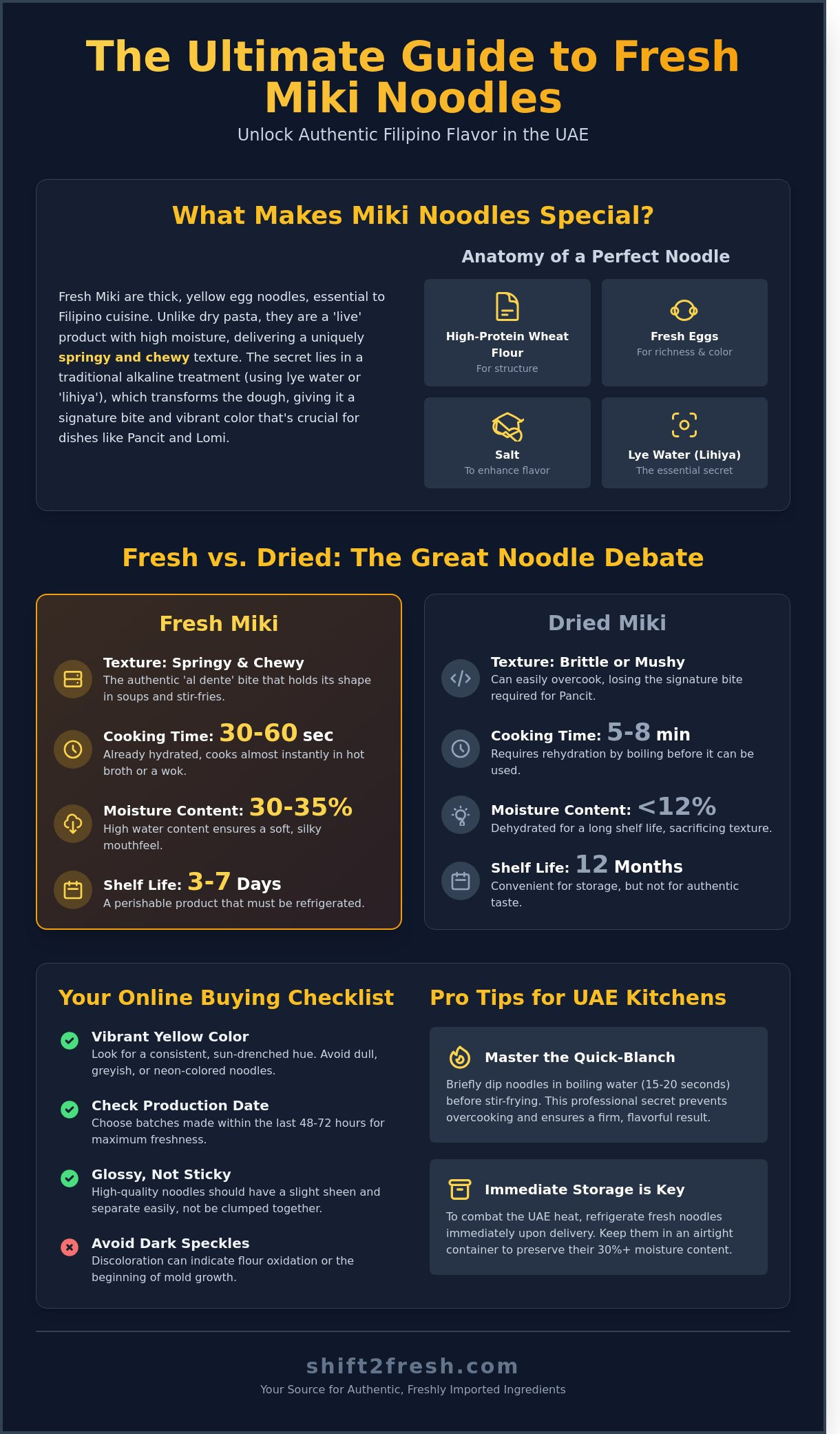
Fresh Miki noodles are thick, yellow egg noodles that serve as the backbone of Filipino culinary tradition. Unlike standard Italian pasta or thin vermicelli, these noodles undergo a specific alkaline treatment using lye water. This process transforms wheat proteins into a springy, chewy masterpiece that holds its shape under heat. To understand What Are Fresh Miki Noodles, you have to look at their role in the Pancit family, where they represent longevity and celebration. In the UAE, where the Filipino expat population reached approximately 700,000 in 2024, finding high-quality fresh miki noodles online has become a priority for home cooks wanting to recreate the authentic taste of Manila or Batangas. These noodles are live products. They retain a high moisture content and a soft texture that shelf-stable alternatives can’t replicate. They’re essential for dishes like Lomi, a thick noodle soup, and Pancit Miki Guisado, where the noodle must absorb savory broth without becoming mushy or losing its structural integrity.
The Anatomy of a Perfect Miki Noodle
The base of a premium Miki noodle consists of high-protein wheat flour, fresh eggs, and salt. The vital ingredient is the alkaline solution, often called lihiya in Tagalog. This raises the pH level of the dough, creating a distinct yellow color without needing excessive artificial dyes. It also gives the noodle its signature bite or resistance. When you’re browsing for fresh miki noodles online, look for a glossy, vibrant finish. High-quality noodles shouldn’t feel sticky or clumped together in the bag. In local UAE markets, a standard 500g pack usually costs between 6 AED and 11 AED, reflecting the premium nature of fresh production over mass-produced dry goods. Visual cues are everything; a dull or greyish tint often indicates the noodle is past its prime or lacked the proper alkaline balance during the kneading stage.
Fresh Miki vs. Dried Miki: The Great Debate
The primary difference between these two varieties lies in hydration and cooking physics. Fresh miki contains roughly 30% to 35% moisture, while dried versions are stripped down to less than 12% to ensure shelf stability for up to a year. This moisture gap changes everything in the kitchen. Fresh noodles cook in 30 to 60 seconds because they’re already hydrated and soft. Dried noodles require 5 to 8 minutes of boiling, which often results in a loss of that specific elasticity required for a traditional Guisado. Fresh noodles act like a sponge, soaking up soy sauce, fish sauce, and calamansi juice while maintaining a silky mouthfeel. For an authentic Filipino feast in Dubai or Abu Dhabi, the fresh variety is the non-negotiable choice. While dried noodles are convenient for storage, they cannot provide the rich, eggy aroma that defines a freshly made batch of Miki. Consider these factors before making your choice:
- Shelf Life: Fresh noodles last 3 to 5 days in the fridge, whereas dried noodles last 12 months in the pantry.
- Texture: Fresh offers a slippery, springy “al dente” feel; dried can become brittle or overly soft.
- Absorption: Fresh noodles integrate with sauces instantly, creating a cohesive flavor profile in the wok.
Choosing the right noodle determines the success of your dish. Because fresh Miki is a perishable item, the logistics of temperature-controlled delivery are crucial. Most specialty groceries in the Emirates now offer same-day delivery to ensure the noodles arrive with their moisture levels intact. This ensures that when you finally toss them into a hot pan with shrimp, chicken, and vegetables, they deliver the exact texture you would find at a roadside eatery in the Philippines.
How to Identify High-Quality Fresh Miki Noodles Online
Shopping for fresh miki noodles online requires a sharp eye because you cannot physically touch the product before it arrives at your Dubai or Abu Dhabi doorstep. High-quality miki must have a production date within the last 48 to 72 hours. Since these noodles carry a moisture level often exceeding 30%, they are highly perishable. You should prioritize vendors who provide clear, high-resolution photos of the actual batch rather than generic stock images. Freshness is the single most important factor for achieving that signature chewy texture in your pancit dishes.
Color serves as your primary visual cue for quality. You want to see a consistent, sun-drenched yellow hue. This color typically comes from egg yolks or riboflavin. Avoid any packs that show greyish spots or dark speckles. These discolorations usually indicate flour oxidation or the early stages of mold growth. If the yellow looks neon or artificial, the manufacturer might be overusing dyes to hide low-quality flour. A natural, vibrant yellow suggests a balanced recipe that will hold up well during the boiling process.
Packaging standards in the UAE market are strict, but you must still be vigilant. Look for noodles that are vacuum-sealed or housed in heavy-duty, air-tight plastic. This prevents the “crusting” effect where the noodle edges become brittle and snap. When you receive your fresh miki noodles online, the strands should feel supple through the bag. They should separate with a gentle squeeze rather than sitting as a solid, compressed brick. If the noodles look like a singular mass of dough, they were likely packed while too hot or stored under heavy weight.
Reading the Label Like a Pro
Check the ingredient list for 2026 “clean label” standards. Modern consumers in the UAE are shifting away from heavy chemical stabilizers. Look for natural acidity regulators like lactic acid or simple salts instead of complex potassium compounds. You also need to verify allergen icons. Traditional miki relies heavily on wheat flour and fresh eggs, making them unsuitable for gluten-free or vegan diets. High-quality brands will clearly highlight these ingredients to ensure food safety for sensitive diners.
Understanding the weight versus serving size helps you avoid over-ordering. A standard 500g pack of miki noodles typically costs between 8.50 AED and 13.00 AED in local online specialty shops. This amount generally serves four adults for a hearty Lomi. You can find deeper insights into the traditional preparation of these ingredients in The Culinary Culture of the Philippines, which explains how regional variations affect noodle thickness and density. Knowing these cultural benchmarks helps you choose a brand that stays true to authentic textures.
Red Flags When Buying Online
Moisture trapped inside the plastic bag is a major warning sign. If you see “sweat” or large droplets on the inner surface of the packaging, the cold chain was likely broken during transit. This condensation leads to rapid bacterial growth and a slimy texture. Fresh miki should have a clean, neutral scent of grain and eggs. If you open the bag and detect a sharp, sour, or fermented smell, the product has likely begun to spoil due to improper temperature control in the warehouse or delivery van.
Pricing often reveals the hidden age of the product. If a vendor lists a premium 500g pack for under 5.00 AED, it is frequently a sign that the noodles are within 24 hours of their expiration date. While you might save money, the noodles will likely be mushy when cooked. You can browse our curated selection to see what properly handled, mid-range priced noodles should look like. Quality miki should maintain its structural integrity even after a five-minute vigorous boil in a savory broth.
Mastering the Art: Top Recipes for Fresh Miki Noodles
Fresh miki noodles are the backbone of Filipino comfort food, prized for their soft, chewy texture and distinct yellow hue. Unlike dried noodles that require long soaking times, these egg-based strands are ready to absorb flavors almost instantly. When you choose to buy fresh miki noodles online, you’re securing an ingredient that works equally well in a dry stir-fry or a thick, hearty soup. A standard 500g pack usually retails for approximately 9.75 AED, making it a cost-effective base for a family dinner. This versatility makes them a favorite for busy households in Dubai and Abu Dhabi where a quick, nutritious meal is always in demand.
The most common mistake home cooks make is overcooking the dough. Because these noodles are fresh, they don’t need a long boil. A quick 45-second blanch in rolling boiling water is sufficient to remove excess starch and prep them for the pan. If you’re making a stir-fry, you can even skip the blanching and toss them directly into the sauce. This allows the noodles to soak up the savory liquids like a sponge; it ensures every bite is packed with umami. Always start your base with a generous amount of crushed garlic and sliced red onions. In the UAE heat, the acidity of a fresh calamansi squeeze is the perfect way to brighten the dish before serving. These small citrus fruits are readily available in local markets and provide a sharp contrast to the savory soy sauce or patis used in the base.
Pancit Miki Guisado: The Filipino Party Staple
This classic stir-fry is a crowd-pleaser that balances protein and crunch. Start by searing 250 grams of pork belly and 150 grams of medium-sized shrimp until they’re golden brown. Add your vegetables next. Shift 2 Fresh offers the perfect components for this dish, including 100 grams of crisp Baguio beans, 80 grams of julienned carrots, and a quarter head of shredded cabbage. These high-altitude vegetables provide a natural sweetness that complements the salty sauce. For the best results, sauté the noodles in the pan for exactly 120 seconds. This brief contact with high heat caramelizes the sugars in the sauce and locks the flavor into the core of each noodle strand.
Lomi: The Ultimate Comfort Soup
Batangas-style Lomi is famous for its thick, gravy-like consistency that stays hot until the very last spoonful. To achieve this, you’ll need to whisk two large eggs or a cornstarch slurry into 1.5 liters of chicken stock. Fresh miki is the only noodle variety with enough structural integrity to hold up in this heavy, starchy environment without turning into mush. The toppings are what truly elevate this dish. Aim for 50 grams of crushed chicharon, 100 grams of sliced pork liver, and several pieces of fried kikiam. Since you can source fresh miki noodles online and have them delivered to your doorstep in the UAE, recreating this regional specialty at home is now accessible for both expatriates and locals.
Handling and Storage: Keeping Your Noodles Fresh in the UAE
The UAE climate presents a unique challenge for home cooks. With outdoor temperatures often exceeding 45 degrees Celsius during summer months, maintaining the integrity of delicate Asian pantry staples is a priority. When you buy fresh miki noodles online, the delivery process relies on a strict cold chain to prevent spoilage. Once the package reaches your door in Dubai, Sharjah, or Abu Dhabi, your role in food safety begins immediately. You should transfer the noodles to a refrigerator within 120 seconds of receipt. Leaving them on a kitchen counter, even in an air-conditioned room set to 22 degrees Celsius, can trigger rapid bacterial growth due to their high moisture content and alkaline nature.
The cold chain is the backbone of food safety for fresh pasta. These noodles are typically made without heavy preservatives; this means they’re sensitive to fluctuations in temperature. If the internal temperature of the noodle rises above 5 degrees Celsius for more than 20 minutes, the texture begins to degrade. This degradation results in a mushy mouthfeel once cooked. If you aren’t planning to cook your entire 500g or 1kg pack within a couple of days, freezing is a viable solution. You can freeze miki for up to 90 days. To do this correctly, portion the noodles into airtight freezer bags and remove as much air as possible. This prevents freezer burn, which ruins the noodle’s elasticity.
The 48-Hour Rule for Freshness
Fresh miki reaches its peak flavor and texture within 48 hours of delivery. After this window, the alkaline salts and egg components begin to oxidize. You can perform a stretch test to check quality; a fresh strand should stretch by roughly 15 percent of its length before breaking. If it snaps instantly or feels slimy, the quality has compromised. Keep your refrigerator at a constant 3 degrees Celsius to inhibit microbial growth. This temperature is 2 degrees lower than many standard household settings but is essential for maintaining preservative-free dough.
Pre-Cooking Preparation
Don’t wash your noodles under the tap. This removes the light oil coating that prevents sticking and dilutes the authentic flavor. Instead, gently toss the strands with your fingers to loosen them while they’re still cold. If the noodles feel too firm from the refrigeration, let them sit at room temperature for exactly 10 minutes before they hit the pan. For those who prefer a cleaner taste, use the flash blanch technique. Drop the noodles into boiling water for 30 seconds, then drain immediately. This removes excess surface oil and starch without overcooking the core, ensuring your stir-fry remains vibrant and not greasy.
Why Buy Fresh Miki Noodles Online from Shift 2 Fresh?
Choosing the right source for your ingredients directly impacts the flavor and safety of your home-cooked meals. Shift 2 Fresh brings 45 years of deep-rooted food industry expertise to your digital shopping experience. This isn’t a new venture; it’s a legacy of food handling knowledge that started in 1979. We understand the science behind food preservation and the cultural importance of the perfect pancit. Our team applies this decades-long experience to every order we process.
Our direct-from-source import model sets us apart from standard supermarkets. Most retailers use multiple middleman distributors, which can add 4 to 6 days to the supply chain. We bypass these delays by working directly with producers. This streamlined process ensures that when you buy fresh miki noodles online from us, you get a product with the maximum possible shelf life. You won’t have to worry about noodles that feel sticky or smell sour because they’ve sat in a warehouse for too long.
Logistics in the UAE climate require specialized equipment. We don’t use standard delivery bikes or uncooled vans. Shift 2 Fresh operates a dedicated fleet of temperature-controlled vehicles. Our drivers maintain a consistent 4 degrees Celsius environment for all perishables. Whether you live in a high-rise in Dubai Marina or a villa in Sharjah, your noodles stay at the optimal temperature until the moment they reach your hands. This strict cold chain management prevents the rapid bacterial growth that often affects fresh egg-based products in the heat.
Digital convenience is at the heart of our service. The Shift 2 Fresh mobile app allows you to manage your pantry with a few taps. We’ve built a “Quick Re-order” feature specifically for busy families. If you cook Miki Guisado every Sunday, you can replenish your stock in under 30 seconds. It’s a modern solution for the traditional cook who values both quality and time.
From the Philippines to Your UAE Kitchen
We’re committed to supporting authentic Filipino brands and traditional noodle makers who respect the original craft. There are currently over 700,000 Filipinos residing in the Emirates, and we recognize that food is the strongest link to home. We bridge this gap by sourcing the exact textures and flavors you remember from local markets in Manila or Cebu. We only deliver noodles we would serve at our own family table.
Seamless Online Shopping Experience
Our website and app feature intuitive search tools. You can quickly find fresh miki noodles online along with essential seasonings like calamansi concentrate or soy sauce. We offer clear delivery windows so you aren’t stuck waiting all day. Free shipping is available for orders over 150 AED, making it easy to stock up on all your monthly essentials at once. Our delivery zones cover all major residential areas in Dubai and Sharjah. Shop our full range of Filipino Pantry Items here to find everything you need for your next family feast.
Elevate Your Home Cooking With Authentic Flavors
You’ve now got the tools to identify premium dough quality and store your noodles for maximum shelf life in the UAE climate. Choosing the right supplier makes the difference between a soggy meal and a perfect pancit lomi. Shift 2 Fresh brings 45 years of food industry expertise to your kitchen, ensuring you receive authentic Filipino specialty items that are imported directly to maintain their traditional texture. When you buy fresh miki noodles online through our platform, you’re tapping into a supply chain built on nearly half a century of heritage.
We’ve simplified the sourcing process for residents across the Emirates. You’ll enjoy free delivery on all orders over AED 500, making it easier than ever to stock up on your essential kitchen staples. Don’t settle for dried alternatives when the real taste of home is just a few clicks away. Your next family feast deserves the springy, rich texture that only high-quality ingredients provide. Order Your Fresh Miki Noodles for Delivery Today and start creating memories around the dinner table tonight.
Frequently Asked Questions
Can I use fresh miki noodles for ramen or other Asian dishes?
Yes, you can use fresh miki noodles as a versatile substitute for ramen or other Asian noodle dishes. Their chewy texture mimics traditional egg noodles used in 75% of Southeast Asian stir-fry recipes. While ramen typically uses specific alkaline salts for a distinct snap, miki works perfectly in soups like Lomi or thick gravy dishes. When you buy fresh miki noodles online, you’re getting a multi-purpose ingredient suitable for Chinese, Filipino, and Thai fusion cuisines.
How long do fresh miki noodles last in the refrigerator?
Fresh miki noodles typically last between 5 and 7 days when stored in a refrigerator at a temperature below 4 degrees Celsius. You should keep them in their original airtight packaging to prevent the dough from drying out or absorbing external odors. If you don’t plan to cook them within 1 week, you can freeze them for up to 3 months without losing significant texture quality or flavor profile.
Do I need to boil fresh miki noodles before stir-frying?
You don’t need to boil fresh miki noodles for a long time before adding them to a stir-fry. A quick 30-second blanch in boiling water is enough to loosen the strands and remove excess surface starch. If the noodles feel soft and oily straight from the pack, you can toss them directly into the wok. Over-boiling leads to a 20% increase in moisture absorption, which often results in a soggy, unappealing dish.
What is the difference between Miki and Canton noodles?
The primary difference is that miki noodles are fresh and moist, while Canton noodles are dried and usually deep-fried during factory processing. Miki contains roughly 30% more moisture, giving it a soft, chewy bite that fresh pasta lovers prefer. Canton noodles have a longer shelf life of 12 months and require more liquid during cooking to rehydrate. Miki is better for saucy dishes, whereas Canton excels in crispy stir-fries.
Are fresh miki noodles vegan-friendly?
Most traditional fresh miki noodles aren’t vegan-friendly because they contain chicken eggs as a primary binding ingredient. Eggs typically make up 10% to 15% of the total dough volume to provide that signature yellow color and rich flavor. If you’re following a 100% plant-based diet, look for specific labels that mention “egg-free” or check the ingredient list for yellow food coloring instead of whole egg solids.
How do I prevent my fresh miki noodles from becoming mushy?
To prevent mushiness, cook the noodles for no more than 2 minutes in boiling water. Always rinse them under cold tap water immediately after draining to stop the residual cooking process. This technique maintains the noodle’s structural integrity. When stir-frying, add them during the final 3 minutes of cooking so they don’t sit in hot sauces for too long and lose their firm, satisfying bite.
Does Shift 2 Fresh deliver fresh noodles to Abu Dhabi?
Yes, Shift 2 Fresh delivers fresh miki noodles online to all major residential areas in Abu Dhabi. Delivery fees typically range from 15 AED to 25 AED depending on your specific zone, with free shipping often available on orders exceeding 100 AED. You can expect your grocery delivery within 24 to 48 hours, ensuring the noodles remain fresh and chilled during transit across the Emirates.
Why do my fresh miki noodles have a slight chemical smell?
The slight chemical scent comes from potassium carbonate or “lye water” used to give the noodles their elasticity and yellow hue. This ingredient is safe and essential for the 100% authentic texture of fresh miki. To reduce the odor, rinse the noodles in cold water for 60 seconds before cooking. This simple step removes 40% of the surface alkalinity without affecting the final taste of your meal.
0 comments