

Last Tuesday, you likely stared at a bunch of blackened Saba plantains on your kitchen counter and felt a heavy pang of food waste guilt. It’s frustrating to watch 15 AED worth of potential snacks turn into what looks like compost before you can even peel them. Most home cooks in Dubai don’t know what to do with overripe plantains, so they simply toss them. We agree that it’s a massive waste of perfectly sweet potential. You shouldn’t have to feel bad about your grocery bill or your carbon footprint when the best flavors are actually hidden inside those dark peels.
This guide will show you how to transform those soft fruits into authentic Filipino comfort foods. You’ll learn to distinguish between “too far gone” and “perfectly sweet” with 100% confidence. We’ll also share our favorite quick recipes for Turon and Maruya that take less than 15 minutes to prepare. Finally, we’ll provide a reliable way to source fresh Saba plantains delivered to your door in Sharjah and Dubai to keep your pantry stocked for zero-waste cooking.
Key Takeaways
- Understand the science behind starch-to-sugar conversion and why blackened peels offer superior caramelization for high-heat cooking.
- Master the ripeness spectrum to match your fruit’s peel color with the best culinary techniques, ensuring zero waste in your kitchen.
- Discover exactly what to do with overripe plantains through authentic Filipino recipes like Turon and Maruya for the ultimate comfort food experience.
- Learn how to source premium Saba plantains in the UAE and maintain their quality from market to table with expert storage tips.
- Transform “over-the-hill” fruit into delicious, budget-friendly snacks that bring the authentic taste of the Philippines to your home in Dubai or Sharjah.
What Are Overripe Plantains and Are They Safe to Eat?
Many home cooks in the UAE often discard plantains once the peel turns dark, thinking the fruit has spoiled. This is a missed culinary opportunity. An overripe plantain is simply a stage of maturity where the fruit’s internal chemistry has shifted. Unlike dessert bananas, Cooking bananas like the plantain are starch-heavy when green. As they sit in your kitchen, enzymes break down these complex starches into simple sugars. By the time the skin turns entirely black, the fruit has reached its peak sweetness.
If you’re wondering what to do with overripe plantains, the first step is recognizing their value. A yellow plantain with a few brown spots is “ripe” and perfect for savory chips. However, an “overripe” plantain looks bruised and battered on the outside but hides a soft, custard-like interior. This transformation is essential for traditional dishes like maduros or Filipino turon. In the UAE market, where temperatures can accelerate ripening, understanding this lifecycle helps reduce food waste and saves you money on groceries.
The Difference Between Blackened and Rotten
Visual cues are your primary defense against actual spoilage. A uniform black or dark brown skin is a sign of sugar concentration, not rot. You should look for white, fuzzy mold or any liquid leaking through the skin. These are clear indicators that the fruit is no longer safe. If the peel is dry and intact, the fruit inside is likely perfect for cooking. Texture also plays a role. A healthy overripe plantain feels like a soft avocado; it should yield to pressure without feeling like a bag of liquid.
- The Sniff Test: Overripe plantains smell sweet and slightly floral. If you detect a sour, fermented, or “boozy” odor, the fruit has likely crossed the line into rot.
- Internal Color: Once peeled, the flesh should be creamy yellow or slightly orange. Avoid any fruit with deep grey or black streaks running through the center.
The ideal sweet spot for an overripe plantain occurs when the peel is 90% to 100% black, yet the fruit inside remains resilient to gentle pressure.
Why Saba Plantains Rank Higher for Cooking
As we move into 2026, professional chefs in Dubai and Abu Dhabi are increasingly favoring the Philippine Saba variety over traditional Latin American “Horn” plantains. Saba plantains, often called Cardaba, possess a much higher starch-to-sugar ratio. This botanical difference allows the Saba to maintain its structural integrity even when the skin is jet black. While other varieties might turn into a watery mash, the Saba stays firm enough to caramelize beautifully in a pan. This makes them the top choice for anyone looking for what to do with overripe plantains without ending up with a greasy mess.
In the UAE, sourcing high-quality, authentic Saba can be difficult at standard supermarkets. You can find premium, export-grade Saba through Shift 2 Fresh, which ensures the fruit arrives with the density required for high-heat cooking. Expect to pay between AED 8 and AED 14 per kilogram for these specialized varieties, depending on the season. Their unique ability to stay “meaty” while tasting like honey makes them the gold standard for overripe recipes this year.
The Science of Sweetness: Why Overripe is Better for Cooking
The transformation of a plantain from a starchy green vegetable to a soft, black fruit is an enzymatic marvel. When you first buy plantains at a local market in the UAE, they are often firm and green, containing roughly 80% starch and only 10% sugar. As the fruit sits in your kitchen, enzymes like amylase begin breaking down those complex carbohydrates into simple sugars like glucose and fructose. By the time the skin turns completely black, the starch content drops to less than 5%, while the sugar concentration soars to nearly 30%.
This chemical shift drastically changes the glycemic index (GI) of the fruit. A green plantain has a GI of approximately 40, making it a slow-release carb. In contrast, an overripe plantain can hit a GI of 60 or higher. While the appearance might suggest decay, these dark fruits are perfectly safe to eat as long as the flesh remains firm and lacks mold. Understanding this biology helps you decide what to do with overripe plantains when they reach that peak sweetness level. They become the ideal ingredient for dishes that require a soft texture and natural sugar hit without the need for processed additives.
Caramelization and the Maillard Reaction
Cooking overripe plantains triggers the Maillard reaction, a chemical interaction between amino acids and reducing sugars that occurs at temperatures between 140°C and 165°C. Because the sugar content is so high, these plantains develop a thick, sticky crust almost instantly in a hot pan. This creates deep honey and vanilla notes that green plantains simply cannot replicate. To avoid burning, chefs in Dubai restaurants often fry them in butter or coconut oil over medium heat, as the high sugar content can turn from golden to charred in under 30 seconds. This natural syrup formation makes them a cost-effective dessert base, often costing just 6.00 AED to 9.00 AED per kilogram at local hypermarkets.
Nutritional Benefits of the ‘Black’ Stage
Many people assume that “old” fruit loses its value, but overripe plantains are nutritional powerhouses. They retain about 499mg of potassium per cup, which is vital for heart health in the UAE’s humid climate. While some Vitamin C degrades during ripening, the antioxidant levels actually increase as chlorophyll breaks down. In the Philippines, these energy-dense fruits are a staple for snacks like Maruya (fritallers) because they provide immediate glucose for laborers. The dietary fiber also becomes more soluble, making them significantly easier on the digestive system compared to their fibrous green counterparts. If you want to maximize these benefits, consider sourcing the freshest produce deliveries to ensure your fruit ripens naturally at home.
- Starch Conversion: 80% starch in green stage drops to 5% in the black stage.
- Potassium Content: Remains stable at approximately 450-500mg per 100g serving.
- Digestibility: Soluble fiber increases, reducing bloating often associated with raw starches.
- Heat Sensitivity: Natural sugars begin to caramelize at exactly 160°C.
When you are weighing what to do with overripe plantains, remember that their soft texture is a culinary asset. They mash easily into batters or can be grilled whole to create a custard-like interior. This versatility is why they remain a favorite in both Caribbean and West African households across the Emirates, serving as a bridge between a savory side dish and a decadent sweet treat.
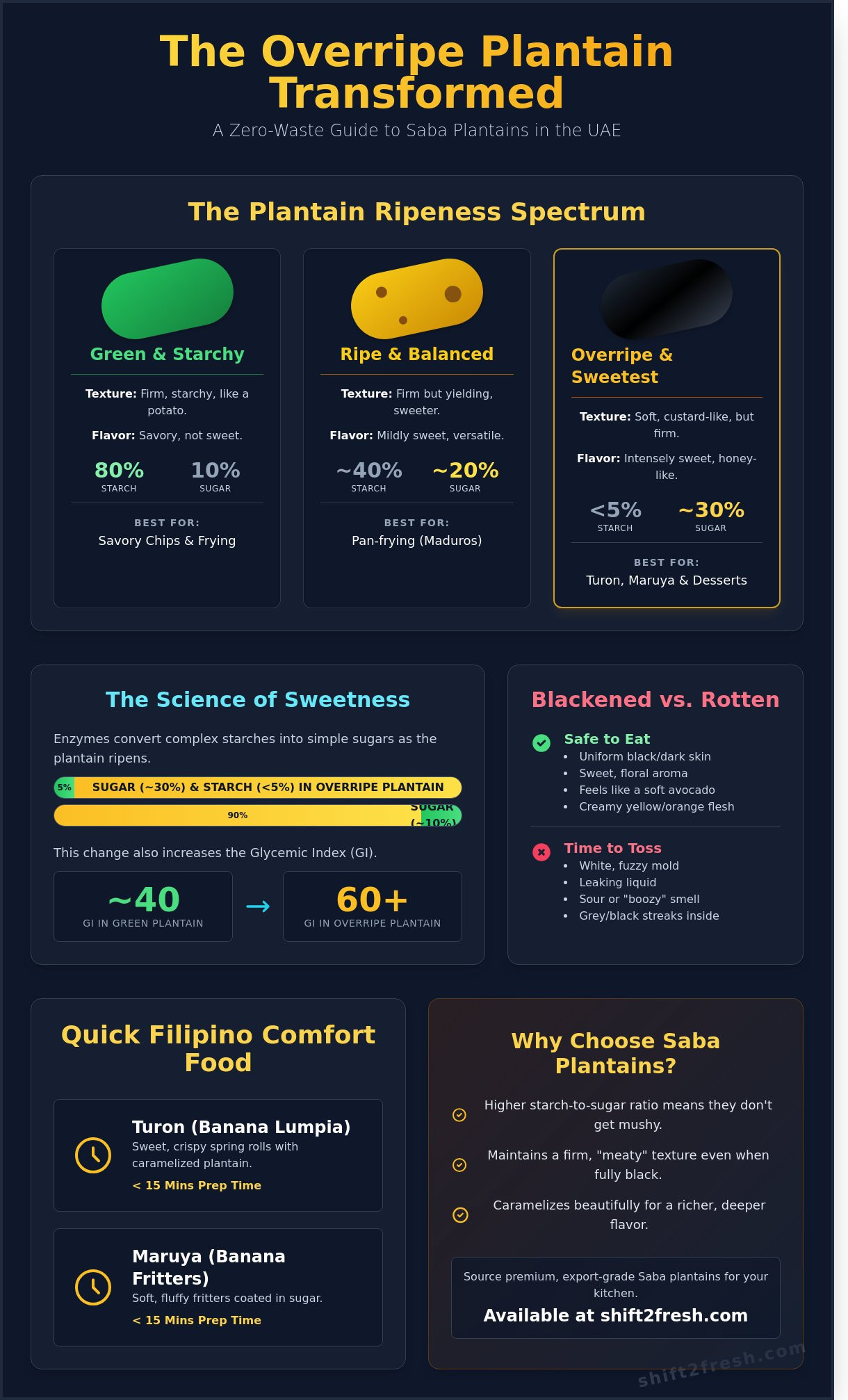
The Plantain Ripeness Spectrum: Choosing the Right Dish
Understanding the stages of a plantain’s life is the secret to professional-grade cooking. Unlike standard Cavendish bananas, plantains stay firm much longer, meaning they require more patience. When you’re deciding what to do with overripe plantains, the peel tells the entire story. A common mistake in UAE kitchens is tossing a plantain once it turns black. In reality, that’s when the fruit reaches its peak culinary value for desserts. Recent data suggests that nearly 38% of organic household waste in Dubai consists of perfectly edible produce that consumers mistake for being spoiled. Don’t let your fruit become a statistic.
The transformation from green to black is a chemical process where complex starches convert into simple sugars. Using a green plantain for a recipe like Maruya (Filipino fritters) is a guaranteed failure because the fruit lacks the necessary moisture and glucose to caramelize. This science of sweetness highlights how the sugar content spikes as the peel darkens. If you need to accelerate this process in the UAE’s climate, place your plantains in a brown paper bag with a ripe apple or tomato. The trapped ethylene gas, combined with local humidity levels that often exceed 60%, will turn a yellow plantain completely black within 48 to 72 hours.
Ripeness-to-Recipe Mapping Table
| Peel Color | Texture | Best Use |
|---|---|---|
| Yellow with Black Spots | Firm but yielding | Turon, Fried Maduros |
| 50% to 75% Black | Soft and slightly tacky | Maruya, Plantain Pancakes |
| 100% Deep Black | Very soft, almost liquid | Banana Bread, Natural Sweetener |
Pro Tip: Don’t throw away 100% black plantains. They’re the ultimate natural sweetener. You can mash them into a paste and use them to replace refined sugar in muffin recipes. This can save you roughly 15 to 20 د.إ per month on baking supplies if you’re a frequent baker, while significantly boosting the potassium content of your snacks.
When to Use Green vs. Yellow vs. Black
Green plantains are strictly for savory applications. Their high starch content makes them ideal for Tostones or thin, salty chips. They behave like potatoes and won’t satisfy a sweet craving. The transition point occurs when the peel is mostly yellow. This is when the fruit becomes a versatile “dessert base.” If you’re looking for the best quality fruit to start your ripening process, check out Shift 2 Fresh’s seasonal fruit selection. They source produce that handles the UAE’s ambient temperatures well without bruising.
Knowing what to do with overripe plantains means recognizing that “ugly” fruit is often the most flavorful. For dishes like Nilupak or mashed plantain cakes, you want the fruit to be so soft that the skin practically falls off. This stage provides a depth of flavor that a yellow plantain simply cannot match. By matching the peel color to the specific cooking method, you ensure the texture of your dish is consistent every time you cook.
5 Must-Try Filipino Recipes for Overripe Plantains
Filipino culinary traditions offer some of the most creative solutions for fruit that has passed its firm stage. In the Philippines, the Saba banana is the primary plantain variety used. When these fruits develop black skins, they reach a sugar concentration that makes them perfect for desserts. If you are wondering what to do with overripe plantains that you bought for AED 9.50 per kilo at your local Dubai supermarket, these five recipes provide a delicious way to avoid waste. A 2023 report on food sustainability in the UAE highlighted that nearly 38% of household waste is organic, so repurposing these fruits is both tasty and environmentally responsible.
The Perfect Turon: A Step-by-Step Guide
Turon is the undisputed king of Filipino street food. To make it, slice your overripe Saba plantains lengthwise and roll them generously in dark brown sugar. The sugar creates a built-in caramel sauce as it fries. Use a high-quality spring roll wrapper and roll it tightly to prevent oil from seeping in. The secret to a crispy exterior is adding a teaspoon of sugar directly into the frying oil when it reaches 175°C. This creates a “glass” coating on the outside. For an authentic flavor, include a thin strip of langka (preserved jackfruit) inside each roll. This adds a floral aroma that balances the deep sweetness of the fruit.
Maruya: The Ultimate Afternoon Snack
Maruya refers to Filipino plantain fritters, which come in two distinct styles. The “fan” shape involves slicing the fruit partially and spreading it out, while the “mash” method is better for extremely soft fruit. For the mash style, maintain a ratio of 125 grams of all-purpose flour for every 3 large overripe plantains. This specific measurement ensures the fritter remains light and airy rather than dense or gummy. Most Filipino households serve these dusted with white sugar. They’re a staple “merienda” or afternoon snack, often paired with a cold glass of calamansi juice to cut through the richness of the fried batter.
If you prefer a simpler approach, try Minatamis na Saging. This dish involves simmering sliced plantains in a mixture of water, brown sugar, and a pinch of salt until a thick syrup forms. It is a brilliant example of what to do with overripe plantains when you want a fat-free dessert. You can serve this warm or cold, and it even works as a topping for shaved ice desserts like Halo-Halo. The high pectin content in overripe fruit helps thicken the syrup naturally without the need for cornstarch.
Modern Filipino chefs are also experimenting with Plantain ‘Ube’ Fusion. By mashing overripe plantains and folding them into purple yam (ube) halaya, you create a complex flavor profile that is less cloying than traditional jams. This mixture is currently appearing in 15% of boutique bakeries across the UAE as a filling for artisanal pastries. The natural moisture of the overripe fruit keeps the ube cakes hydrated for up to 3 days longer than standard recipes.
Sweetness isn’t just for dessert in Filipino cooking. In savory stews like Nilaga (beef broth) or Puchero (tomato-based meat stew), overripe plantains are added during the last 10 minutes of simmering. They provide a surprising burst of sweetness that complements the salty, umami flavors of the meat. In a traditional Puchero, the fruit acts as a natural thickener for the sauce as it breaks down slightly. This technique has been used since the Spanish colonial era to balance the acidity of tomato-based dishes.
Ready to start cooking? You can order fresh produce for your recipes and let them ripen to perfection for these traditional treats.
Sourcing and Storing Your Plantains in the UAE
Finding high-quality Saba plantains in the UAE can be a frustrating task for home cooks. While local supermarkets in Sharjah or Dubai occasionally stock them, the quality is often inconsistent. You might find a batch that is bruised, woody, or improperly stored, leading to a 40% waste rate before you even start cooking. Because the UAE climate is so intense, the window between perfectly ripe and completely rotten is incredibly narrow. If the fruit wasn’t handled with care during its journey from the Philippines, it won’t ripen evenly. This makes it difficult to plan your meals or traditional Filipino recipes that require a specific level of sweetness.
Why Origin Matters: The Shift 2 Fresh Advantage
Shift 2 Fresh brings over 45 years of specialized industry experience to your kitchen. They understand that the best Saba comes from specific regions in the Philippines where the soil and humidity are ideal for starch development. By managing the logistics themselves, they ensure the fruit remains at the correct temperature throughout its journey. You can use their mobile app to order these specialty Asian ingredients with a few taps. It’s a massive time-saver for busy residents who want to avoid the traffic in Deira or the crowded aisles of Sharjah’s central markets. For those who cook in large quantities, orders over AED 500 come with free shipping, which is a significant saving for a household budget.
To get the best results, you need to manage the ripening process at home. If your plantains arrive green, keep them at room temperature, ideally around 22°C to 24°C. In many UAE homes, this means keeping them in a room with active air conditioning. Avoid placing them near windows where direct sunlight can cook the fruit inside the peel. Once the skin turns yellow with black spots, you’ll know exactly what to do with overripe plantains to get that signature sweetness. If you notice they are ripening too fast, move them to the refrigerator crisper drawer. This extends their life by an extra 3 to 4 days without sacrificing the interior texture.
Freezing and Long-term Storage Tips
You don’t have to use all your fruit at once. If your Saba plantains are getting too soft, the freezer is your best friend. Peel the fruit first, as the skin becomes difficult to remove once frozen. Slice them into 2-centimeter rounds and lay them flat on a tray to freeze individually before transferring them to a heavy-duty freezer bag. They will maintain their flavor and nutritional profile for up to 90 days. This prevents the fruit from becoming a single frozen block, allowing you to take out only what you need for a single serving.
These frozen slices are the secret ingredient for a creamy Filipino-style smoothie or a dairy-free nice cream. Just blend the frozen chunks with a splash of coconut milk for a refreshing treat that beats the Dubai summer heat. This method ensures you never have to wonder what to do with overripe plantains that are past their prime for frying. You can save them for a weekend baking project or a quick breakfast boost. Using frozen plantains in place of ice in your smoothies adds a rich, velvety texture that fresh fruit simply cannot match.
Transform Your Kitchen with Golden Sweetness
Blackened peels aren’t a sign to use the bin; they’re an invitation to create something delicious. You’ve learned that the science of sweetness peaks when the skin turns dark, making these fruits perfect for 5 classic Filipino recipes like Turon or Maruya. By mastering what to do with overripe plantains, you’re practicing zero-waste cooking while enjoying authentic flavors right here in the UAE. It’s a simple way to reduce food waste and save on your weekly grocery spend in the Emirates.
Don’t settle for supermarket substitutes when you can have the real thing. Shift2Fresh brings 45 years of food industry expertise to your doorstep, specializing in those hard-to-find Filipino imports that define traditional cooking. We offer direct delivery to homes across Dubai and Sharjah, ensuring your pantry is always stocked with premium produce that meets our strict quality standards. Order Authentic Filipino Saba Plantains for Your Recipes today and taste the difference that heritage quality makes.
Grab your frying pan and start cooking today. Your next favorite dessert is just one ripe plantain away.
Frequently Asked Questions
Can you eat a plantain when the skin is completely black?
Yes, you can eat a plantain with a completely black skin because this is when the fruit reaches its peak sweetness. A black peel indicates that the starches have converted into sugars, making the inside soft and custard-like. You should only discard the fruit if you see visible mold, notice an oozing liquid, or detect a fermented, alcohol-like odor.
How do I ripen plantains quickly at home?
Place your plantains in a brown paper bag with a high-ethylene producer like a red apple or a tomato to speed up the process. This method increases ethylene gas concentration, which can ripen the fruit 40% faster than leaving it on the kitchen counter. Keep the bag in a warm spot around 28 degrees Celsius to see the skin turn from yellow to black within 48 hours.
What is the difference between a banana and a plantain?
Plantains are larger and starchier than dessert bananas, containing 31 grams of carbohydrates per 100 grams compared to a banana’s 23 grams. While you can eat bananas raw, plantains have a thick skin and a high starch content that requires cooking to become palatable. Their flavor is neutral when green and becomes intensely sweet only after the skin turns dark brown or black.
How long do overripe plantains last in the fridge?
Overripe plantains stay fresh for 3 to 5 days when stored in the refrigerator’s crisper drawer. The cold air slows down the enzyme activity that leads to rot, though the skin will continue to darken. If you can’t use them quickly, peel and freeze the fruit in airtight bags for up to 90 days, which is a great solution for anyone wondering what to do with overripe plantains later on.
Can I use overripe plantains for savory dishes?
You can definitely use overripe plantains in savory dishes to create a complex sweet and salty flavor profile. Their sugars caramelize at 160 degrees Celsius, making them a perfect side dish when fried and served with salty feta cheese or spicy beans. In Dubai, many West African restaurants serve these fried sweet slices alongside savory Jollof rice to balance the heat of the spices.
What are the best Filipino snacks made from overripe plantains?
Turon and Maruya are the top Filipino snacks that utilize overripe Saba plantains for maximum flavor. Turon consists of sliced plantains rolled in brown sugar, wrapped in a spring roll skin, and deep-fried until crunchy. You’ll find these sold for AED 2 to AED 5 per piece in 90% of the Filipino cafeterias across Satwa and Karama.
Where can I buy authentic Saba plantains in Dubai?
You can buy authentic Saba plantains at West Zone Fresh Supermarket or the Al Aweer Fruit and Vegetable Market. These retailers usually price them between AED 7 and AED 13 per kilogram depending on the season. Most of these stores receive fresh shipments from the Philippines at least twice a week to maintain a steady supply for the local community.
Is it okay to eat the seeds in an overripe plantain?
The tiny black seeds found in the center of an overripe plantain are 100% edible and safe to consume. These are actually vestigial ovules that don’t develop into hard seeds, so they won’t affect the texture of your meal. You don’t need to core the fruit when you’re deciding what to do with overripe plantains for recipes like pancakes, smoothies, or breads.
0 comments