

That familiar pang of homesickness hits, and all you want is a comforting bowl of sinigang, rich with the sharp taste of tamarind and crisp greens. But then comes the challenge: wandering through aisles, searching for the right kangkong or sitaw, only to find the selection lacking or unfamiliar. For many Filipinos in the UAE, this search for authentic ingredients can feel discouraging. But what if we told you that finding fresh, high-quality Filipino produce in a vegetables Dubai market is easier than you think? You just need to know what to look for and where to find it.
This guide is your ultimate companion. We’ll walk you through the top Filipino vegetables you can find right here in Dubai, from the versatile talong to the essential gabi. You’ll learn exactly how to identify the freshest picks, get simple tips for storing them, and gain the confidence to cook up those beloved, authentic dishes that taste just like home. Get ready to bring the vibrant flavors of the Philippines into your Dubai kitchen.
The Heart of Filipino Cuisine: Essential Leafy Greens & Gourds
To truly understand Filipino cooking, you must start with its green foundations. Leafy greens and gourds are more than just ingredients; they are the soul of countless soups, stews, and sautés that form the backbone of the diet. For a comprehensive overview of Filipino cuisine, one must appreciate how these vegetables provide unique textures and foundational flavors, from the earthy notes of spinach to the subtle sweetness of gourds. Fortunately, navigating any vegetables Dubai market for these staples is simple once you know what to look for. They are staples in every Filipino kitchen because of their versatility, affordability, and the comforting, homegrown taste they bring to every meal.
Kangkong (Water Spinach): The Versatile Staple
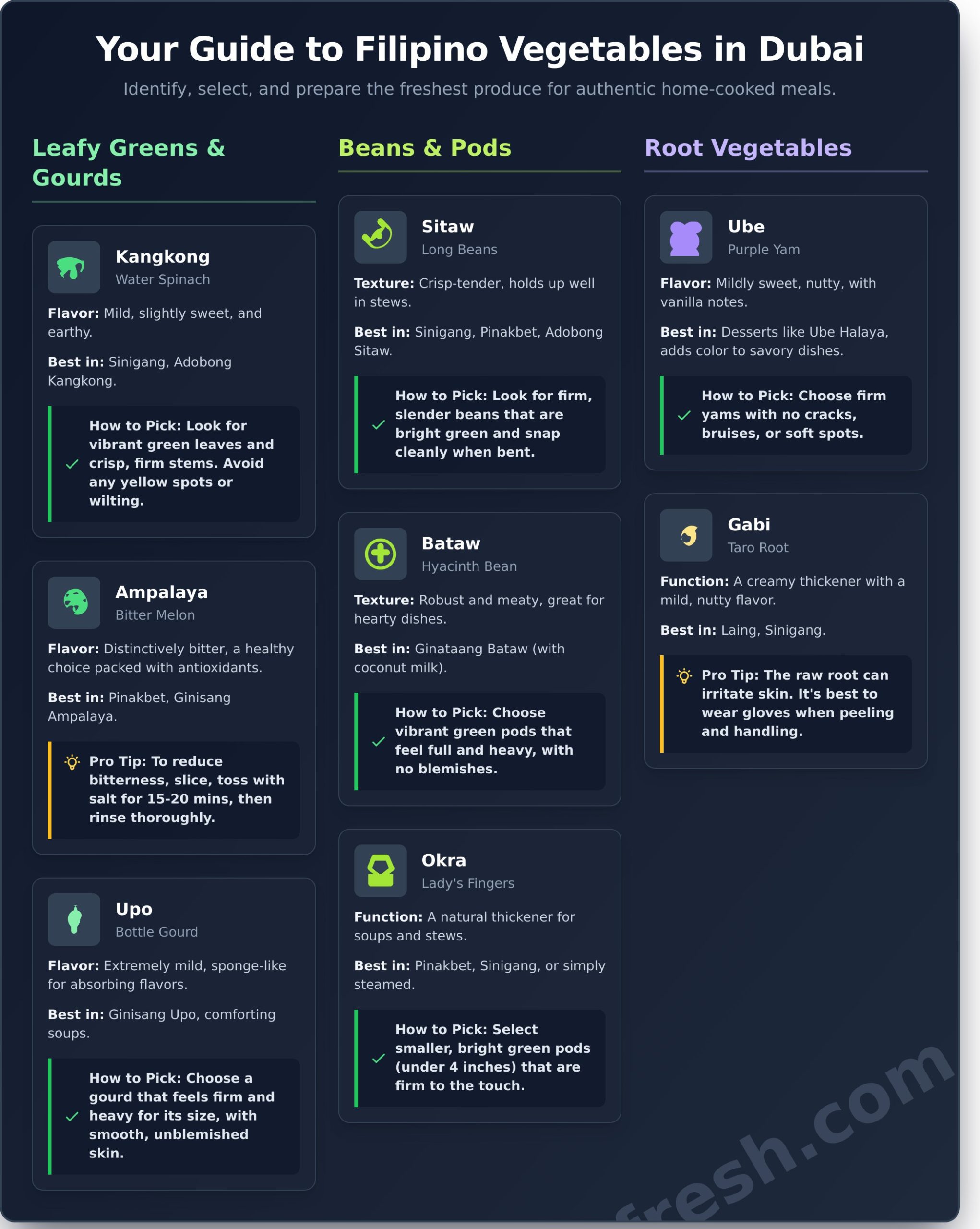
Easily identified by its long, hollow stems and tender, arrow-shaped leaves, Kangkong is a beloved staple. It has a mild, slightly sweet, and earthy flavor profile that shines in classic dishes. It is the signature green in the sour soup Sinigang and the star of the simple yet savory Adobong Kangkong. When shopping, always look for bunches with vibrant, deep green leaves and crisp stems. Avoid any that appear wilted or have yellow spots, as this indicates they are past their prime freshness.
Ampalaya (Bitter Melon): The Healthy Choice
Known for its distinctive bumpy green skin and assertive bitter taste, Ampalaya is prized for both its flavor and health benefits. It is packed with antioxidants and valued in traditional medicine. In the kitchen, it adds a complex, bitter counterpoint to rich dishes like Pinakbet (a mixed vegetable stew) and Ginisang Ampalaya (sautéed bitter melon with egg). Pro tip: To mellow its intense bitterness, slice the melon thinly, toss with salt, and let it sit for 15-20 minutes before rinsing thoroughly.
Upo (Bottle Gourd): The Mild & Tender Gourd
With its smooth, light green skin and soft white flesh, Upo is the ultimate team player. Its incredibly mild, almost neutral flavor allows it to act like a sponge, perfectly absorbing the tastes of the ingredients it’s cooked with. This quality makes it ideal for comforting soups and sautés, most famously in Ginisang Upo, often prepared with shrimp and tomatoes. When selecting one, choose a gourd that feels firm and heavy for its size, with unblemished, smooth skin.
The Backbone of Stews: Must-Have Beans & Pods
No Filipino stew feels complete without the hearty addition of beans and pods. These ingredients are the unsung heroes of the kitchen, providing satisfying textures, earthy flavours, and a crucial source of plant-based protein that makes a meal truly stick to your ribs. From the bustling kitchens of Luzon to the coastal homes of Mindanao, they transform simple broths into filling, nutritious meals. Understanding the nutritive value of indigenous Filipino vegetables shows why they are a cornerstone of the diet. When you’re searching for these essential vegetables in a Dubai market, knowing what to look for is the key to unlocking authentic Filipino flavour in your own home.
Sitaw (Long Beans): The Everyday Bean
Also known as yardlong beans, sitaw is a staple you’ll find in nearly every Filipino household and fresh produce aisle. More intense in flavour than a standard green bean, its crisp-tender texture holds up beautifully in simmering pots without becoming mushy. It’s an essential component in classics like the sour soup Sinigang, the iconic mixed vegetable stew Pinakbet, and the simple yet flavourful Adobong Sitaw. When shopping, look for firm, slender beans that are bright green and snap cleanly when bent.
Bataw (Hyacinth Bean): The Hearty Legume
The flat, curved pods of bataw offer a distinct, robust flavour and a wonderfully meaty texture, making them a fantastic addition to vegetarian and meat-based dishes alike. This hardy legume is the star of Ginataang Bataw, where it’s simmered in rich coconut milk, often with shrimp or pork. Its substantial bite adds a satisfying element to any meal. To pick the best ones, choose pods that are a vibrant green colour and feel full and heavy for their size, without any blemishes.
Okra: The Thickener for Soups and Stews
Instantly recognizable by its finger-like green pods, okra is prized in Filipino cooking for its unique ability to naturally thicken soups and stews. This mucilaginous quality is essential for achieving the perfect consistency in dishes like Pinakbet, lending a silky body to the sauce. It’s also delicious when simply boiled or steamed and served with bagoong (fermented shrimp paste). For the best texture, select smaller, bright green pods under four inches long that are firm to the touch at any good vegetables dubai market.
Earthy Delights: Foundational Filipino Root Vegetables
Beyond the leafy greens, the heart of many Filipino dishes lies underground. Root vegetables provide the comforting, starchy base that makes the cuisine so satisfying. Their dense texture is perfect for absorbing the rich sauces and broths of stews and soups, providing substance and a touch of natural sweetness. From vibrant desserts to hearty mains, these versatile roots are essential ingredients you can easily find at any well-stocked vegetables dubai market.
Ube (Purple Yam): The Iconic Sweet Root
Instantly recognizable for its stunning, deep purple flesh, ube is a global sensation for a reason. It has a mildly sweet, nutty, and vanilla-like flavor that makes it the star of Filipino desserts, most famously Ube Halaya (purple yam jam). But its use isn’t limited to sweets; it also adds a surprising color and creamy texture to savory dishes. When selecting, look for firm yams with no cracks, bruises, or soft spots.
Gabi (Taro Root): The Creamy Thickener
With its brown, fibrous skin and starchy white or purple-flecked flesh, gabi is the secret to the creamy, comforting consistency of many Filipino classics. It breaks down beautifully when cooked, lending its signature thickness to dishes like coconut-based Laing or the sour soup Sinigang. It has a mild, nutty flavor that complements stronger ingredients. Pro tip: The raw root can irritate the skin, so it’s best to wear gloves while peeling and handling it.
Kamote (Sweet Potato): The Versatile Staple
A familiar sight in markets worldwide, kamote is a beloved staple in the Philippines. This sweeter alternative to the regular potato comes in various colors, from orange to purple. It shines in savory stews but is equally famous as a street food snack, deep-fried and caramelized into Kamote Cue. Packed with fiber and essential vitamins like Vitamin A, it’s a nutritious choice. Always choose firm sweet potatoes with smooth, unblemished skin for the best quality.
Finding these foundational roots is key to recreating authentic Filipino flavors at home. Whether you enjoy the hunt at a local vegetables dubai market or prefer the ease of delivery, ensuring your produce is fresh makes all the difference. For a curated selection of high-quality produce, you can explore a fresh delivery service that brings the market to you.
Where to Find Authentic Filipino Vegetables in Dubai
Craving the authentic taste of sinigang or pinakbet? Finding the specific vegetables needed for classic Filipino dishes can sometimes feel like a treasure hunt in Dubai. While the city offers a vibrant food scene, sourcing items like kangkong, sigarilyas, or malunggay requires knowing exactly where to look. The journey from craving to cooking is now easier than ever, thanks to a mix of traditional markets and modern online solutions.
Physical Markets vs. Online Stores
For many, the traditional trip to a bustling vegetables dubai market like the Deira Waterfront Market or smaller specialty Filipino stores in Satwa and Karama is part of the experience. However, this often involves significant travel time, navigating crowds, and facing the disappointment of limited or sold-out stock. The quality can also be variable, depending on when shipments arrive. In contrast, online grocers offer unparalleled convenience, a curated selection, and direct-to-your-door delivery. Specialists like Shift 2 Fresh focus on importing these hard-to-find items, ensuring they are consistently available.
Why Online Delivery is Your Best Bet for Freshness
When it comes to delicate produce imported from the Philippines, a shorter supply chain is crucial. Online delivery services often work directly with suppliers to bring vegetables from the farm to your doorstep with fewer stops in between. This means your produce spends less time in transit and storage, arriving fresher and more vibrant. These services use specialized handling to protect exotic items, guaranteeing the quality you expect. Best of all, you can confirm stock availability instantly, saving you a wasted trip. Browse our selection of fresh Filipino vegetables now!
Tips for Shopping Online
To make the most of your online grocery shopping, keep these tips in mind. A good supplier will make it easy to find what you need and deliver quality you can trust every time.
- Check Logistics: Before you shop, look at the store’s delivery schedules, areas they cover in the UAE, and any minimum order value in AED.
- Read the Details: Pay attention to product descriptions. Reputable sellers will provide information on the origin and quality of their produce.
- Find a Specialist: Look for online stores that focus on Filipino or Asian produce, like Shift 2 Fresh. They are more likely to have a consistent supply of the items you need.
- Stay Updated: Sign up for newsletters to be the first to know about new arrivals, seasonal specials, and exclusive promotions.
Bring the Taste of the Philippines to Your Dubai Kitchen
From the sour tang of kangkong in Sinigang to the earthy comfort of gabi in stews, the essential ingredients of Filipino cuisine are closer than you think. This guide has shown that finding everything from vibrant leafy greens and gourds to foundational root vegetables is entirely possible right here in the UAE. You no longer need to endlessly search the local vegetables dubai market for a taste of home.
For the freshest and most authentic produce, there is a simpler way. As specialists in importing produce directly from the Philippines, Shift2Fresh brings over 45 years of food industry experience to your doorstep. With a wide selection of hard-to-find Asian vegetables and pantry items, creating your favorite dishes has never been more convenient.
Ready to start cooking? Shop for authentic, farm-fresh Filipino vegetables and get them delivered to your door!
Embrace the rich, diverse flavors of the Philippines and create unforgettable meals for your family and friends today. Happy cooking!
Frequently Asked Questions
Are Filipino vegetables expensive to buy in Dubai?
The price of Filipino vegetables in Dubai can be slightly higher than common local produce due to import costs, but they remain affordable. For example, a bundle of kangkong or pechay might cost between 5 to 10 AED. Prices fluctuate based on seasonality and the specific shop, so it’s wise to check Asian supermarkets or dedicated Filipino stores in areas like Satwa or Karama for competitive pricing and the freshest selection.
How can I keep my Filipino vegetables fresh for longer after buying them?
To keep your produce fresh after visiting a vegetables Dubai market, proper storage is key. For leafy greens like kangkong, wrap the stems in a damp paper towel and store them in a bag in your fridge’s crisper. Hardier items like sitaw (string beans) and ampalaya (bitter melon) should be kept in a breathable bag in the refrigerator. Root vegetables such as gabi (taro) are best stored in a cool, dark, and dry place outside the fridge.
Can I grow any of these Filipino vegetables myself in Dubai’s climate?
Yes, you can grow some Filipino vegetables in Dubai, especially during the cooler months from October to April. Hardy vegetables like kangkong (water spinach), ampalaya (bitter melon), and siling labuyo (chili peppers) can thrive in pots on a balcony with proper care. Ensure they get adequate sunlight but are protected from the intense midday summer sun. Using well-draining soil and consistent watering is crucial for success in the UAE’s climate.
What are some simple Filipino recipes for a beginner to try with these vegetables?
For a beginner, Adobong Kangkong is an excellent start. It’s a simple stir-fry of water spinach with soy sauce, vinegar, and garlic. Another easy dish is Ginisang Ampalaya, which is sautéed bitter melon with egg and tomatoes. These recipes require minimal ingredients and highlight the unique flavours of the vegetables, offering a perfect introduction to Filipino home cooking. You can find all the necessary ingredients easily across Dubai.
Are there any common vegetables I should avoid substituting in Filipino recipes?
While many ingredients can be substituted, you should avoid replacing key vegetables that define a dish’s character. In Sinigang, the gabi (taro) is essential as it thickens the sour broth and provides a unique texture. For Pinakbet, the distinct combination of ampalaya (bitter melon), okra, and kalabasa (squash) creates its signature flavour profile. Swapping these vegetables would fundamentally change the authentic taste and experience of these classic Filipino recipes.
Besides vegetables, what other Filipino ingredients are essential for my pantry?
Beyond fresh vegetables, a well-stocked Filipino pantry should include a few essentials. The foundational trio of soy sauce (toyo), cane or coconut vinegar (suka), and fish sauce (patis) is a must for creating authentic flavours. Additionally, having garlic, onions, and shrimp paste (bagoong) on hand will allow you to cook a vast range of classic Filipino dishes. These items are readily available in supermarkets across the UAE.
0 comments