

Last Saturday, Sarah spent four hours visiting five different hypermarkets across Dubai, searching for the vibrant purple yam needed for her family’s favorite Ube Halaya. Instead of fresh produce, she found empty shelves and overpriced frozen substitutes that cost 30% more than her usual grocery budget. It’s a common struggle for the 700,000 Filipinos living in the UAE who want to recreate the nostalgic flavors of home. You already know that the secret to a perfect dessert lies in the quality of your filipino dessert ingredients, but finding authentic, fresh items like Saba bananas or real macapuno often feels like an expensive treasure hunt.
We promise to simplify your kitchen prep by showing you exactly how to source these staples without the typical high-import markup. You’ll learn how to distinguish high-quality rice varieties and where to find the freshest produce arriving weekly in the local market. This guide provides a complete list of essential pantry items and a reliable sourcing strategy to ensure your next Leche Flan or Biko tastes exactly like it was made in a traditional kitchen in Manila.
Key Takeaways
- Understand why the volcanic soil of the Philippines produces the superior flavor profiles essential for authentic tropical dessert fruits.
- Master the selection of pantry staples and filipino dessert ingredients to achieve the perfect balance of chewiness and sweetness in your home cooking.
- Discover the architectural secrets to layering textures in Halo-Halo and the science behind the iconic “bite” of traditional Kakanin.
- Learn expert tips for sourcing fresh produce in the UAE and preserving ingredient quality against the challenges of the local climate.
- Explore how to bridge the gap between Philippine farms and your Dubai or Sharjah kitchen for high-quality, farm-to-doorstep results.
The Foundation of Pinoy Sweets: Essential Fresh Produce
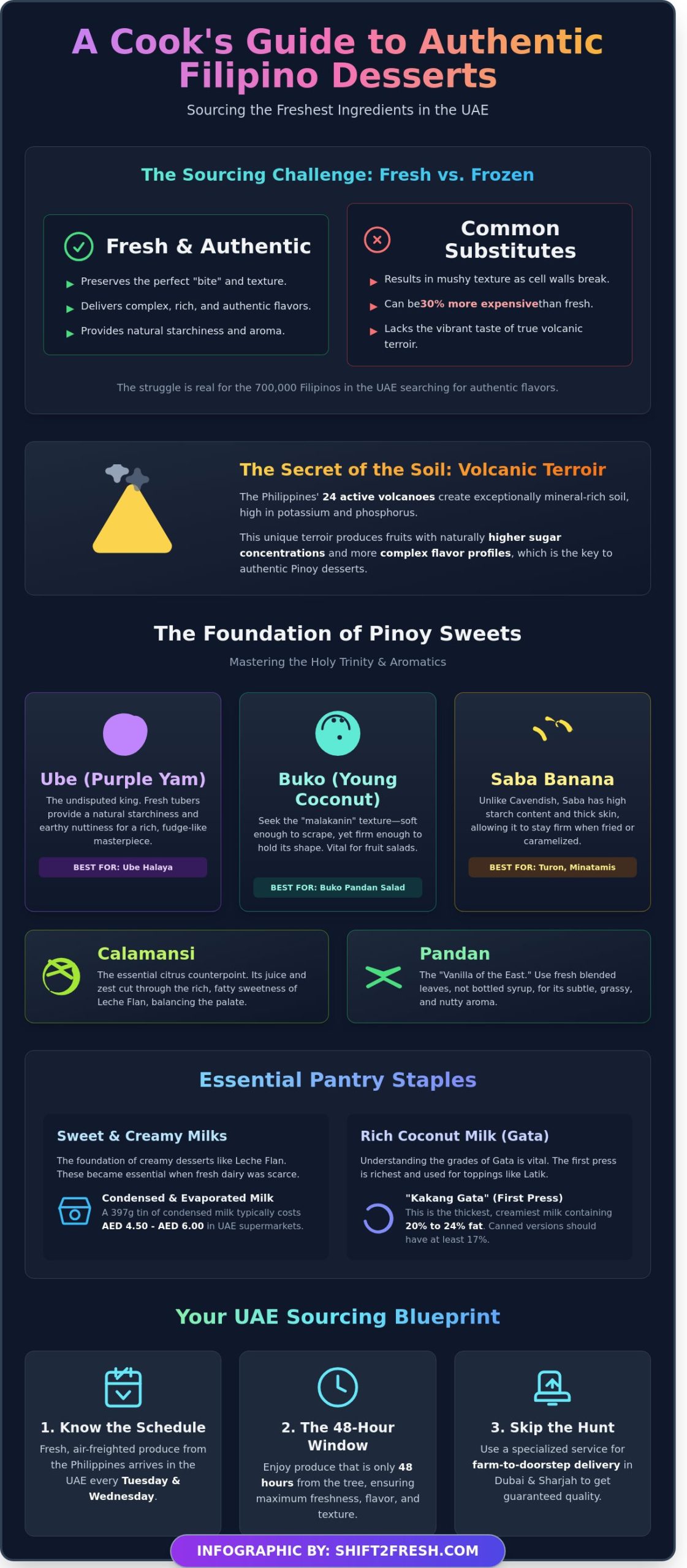
Panghimagas is the Tagalog term for dessert, but it carries a deeper meaning than just a final course. In Philippine culture, sweets are a celebration of the archipelago’s lush agricultural landscape. The secret to the distinct taste of traditional treats lies in the earth itself. The Philippines is home to 24 active volcanoes, and this volcanic activity creates soil exceptionally rich in minerals like potassium and phosphorus. This unique soil composition produces fruits with higher sugar concentrations and more complex flavor profiles than those grown in standard tropical climates. When you select your filipino dessert ingredients, you’re essentially choosing the concentrated essence of this volcanic terroir.
Texture is the most critical element in any Filipino kitchen. While frozen imports are convenient in the UAE, they often fail to deliver the structural integrity required for authentic recipes. Freezing breaks down the cell walls of tropical fruits, leading to a mushy consistency once thawed. If you browse a comprehensive list of Filipino desserts, you’ll notice that many rely on a specific “bite” or chewiness that only fresh produce provides. In the UAE market, fresh shipments typically arrive via air freight every Tuesday or Wednesday, ensuring that the produce on your table in Dubai or Sharjah is only 48 hours away from the tree.
The Holy Trinity: Ube, Buko, and Saba
Ube, or purple yam, is the undisputed king of Pinoy sweets. While many home cooks use ube extract for color, you can’t achieve the authentic, velvety texture of Ube Halaya without real tubers. Fresh ube provides a natural starchiness and earthy nuttiness that powders simply can’t replicate. It’s the difference between a synthetic syrup and a rich, fudge-like masterpiece.
Buko, or young coconut, is equally vital. Professional bakers look for the “malakanin” texture, a term meaning “like cooked rice.” This refers to coconut meat that’s soft enough to be scraped with a spoon but firm enough to hold its shape in a fruit salad. Finally, there’s the Saba banana. Unlike the common Cavendish banana found in every UAE supermarket, Saba has a high starch content and a thick skin. This allows it to remain firm and intact even after being caramelized in brown sugar for Minatamis na Saging or fried for Turon.
Tropical Aromatics: Calamansi and Pandan
Calamansi is often used in savory dishes, but its role in desserts is transformative. The juice and zest are essential for cutting through the heavy, fatty richness of egg yolks in Leche Flan. A few drops of fresh calamansi juice act as a bright counterpoint to the intense sweetness of the caramel. It provides a citrusy high note that balances the palate.
Pandan leaves are frequently called the “vanilla of the East.” To get the best results, you should avoid bottled green syrups. Instead, extract fresh juice by blending fresh pandan leaves with a little water and straining the mixture. This creates a subtle, grassy, and nutty aroma that defines the classic Buko Pandan salad. For those living in the Emirates, you can find these essential fresh items through Shift 2 Fresh, which specializes in delivering farm-fresh Philippine produce directly to homes in Sharjah and Dubai. Using these fresh filipino dessert ingredients ensures your kitchen smells exactly like a traditional bakery in Manila.
Pantry Staples: The Sweeteners and Texturizers
Filipino confectionery tells a story of trade and adaptation. You cannot achieve the velvety finish of a classic Leche Flan without evaporated and condensed milk. These shelf-stable milks became essential during the mid-20th century when fresh dairy was scarce in the tropical heat. Today, they remain the primary source of creaminess and sugar. In the UAE, a standard 397g tin of condensed milk typically retails for AED 4.50 to AED 6.00 at major supermarkets. This thick, syrupy liquid provides a weight that granulated sugar cannot replicate.
The foundation of most filipino dessert ingredients lies in the coconut. Understanding the different grades of "Gata" (coconut milk) is vital for success. The first press, known as "Kakang Gata," is the thickest and richest, containing about 20% to 24% fat. It’s used for toppings like "Latik" (fried coconut curds). The second press is thinner and used for simmering rice or tubers. This reliance on the fruit is deeply rooted in the Philippine coconut industry, which accounts for a massive portion of the country’s agricultural output. In Dubai or Abu Dhabi, you’ll find fresh grated coconut in specialized Asian groceries in Karama or Satwa, though canned versions with at least 17% fat content serve as a reliable pantry substitute.
Texture often comes from "Malagkit" or glutinous rice. This isn’t just a side dish; it’s the structural backbone of the "Kakanin" (rice cake) category. Unlike long-grain rice, Malagkit contains high levels of amylopectin, which creates a sticky, chewy consistency when steamed. To balance these heavy, sweet profiles, Filipino bakers use a surprising secret: salt and sometimes "Patis" (fish sauce). A 2022 survey of traditional home cooks found that nearly 85% use a pinch of salt to sharpen the flavor of coconut-based sweets. In some regional variations of Bibingka, a drop of Patis provides a savory "umami" depth that cuts through the richness of the cheese and salted egg toppings.
Rice and Flour Essentials
- Galapong: This is a traditional fermented rice dough. You can recreate this at home by soaking glutinous rice overnight and grinding it with a small amount of water. The slight fermentation adds a tangy note that dry rice flour lacks.
- Cassava: Grated cassava tubers are the star of the heavy-set Cassava Cake. In the UAE, frozen grated cassava is widely available for approximately AED 7.50 per 454g pack. It provides a dense, gelatinous bite that is unique to Southeast Asian sweets.
- Black Glutinous Rice: Locally called “Pirurutong,” this rice creates the deep purple hue and nutty flavor of authentic Champorado. It’s often mixed with white glutinous rice at a 1:3 ratio to manage the texture.
The Preserved Gems: Macapuno and Kaong
Authentic “Halo-Halo” or fruit salads rely on preserved ingredients to provide a variety of textures. “Macapuno,” a mutant coconut with jelly-like flesh, is the most prized. A 340g jar of Macapuno strings in syrup usually costs between AED 11.00 and AED 14.00 in the UAE. “Kaong” (sugar palm fruit) and “Nata de Coco” (fermented coconut water gel) provide the essential “chew” that contrasts with shaved ice or soft cakes. For chocolate lovers, “Tablea” is indispensable. These are roasted, ground cacao discs. Using 100% pure cacao Tablea ensures your chocolate porridge or drinks have the gritty, robust profile traditional to the islands. If you are looking to source high-quality components for your next baking project, you can explore curated pantry options that bring these island flavors to your kitchen.
Ingredient Pairings for Iconic Filipino Desserts
Creating authentic flavors requires understanding how filipino dessert ingredients interact on a structural level. Take Halo-Halo, for example. It isn’t just a random assortment of sweets; it’s a calculated architecture of textures. You start with a base of soft sweetened beans and chickpeas, move to the chewy bite of nata de coco and kaong, and finish with the creamy melt of ube halaya and leche flan. The shaved ice must be fine enough to bind these layers without diluting the evaporated milk. In UAE specialty markets like those in Al Karama, sourcing high-quality preserved fruits ensures the 10 to 12 distinct layers maintain their individual integrity until the first mix.
The science of the “Kakanin” bite relies heavily on the quality of glutinous rice. Achieving the perfect balance of chewiness and stickiness is a precise art. The cultural heritage of Filipino desserts is built on this foundation of rice and coconut. For a successful Biko or Sapin-Sapin, the rice must be soaked for at least 4 hours to ensure even hydration. This prevents the center from remaining hard while the exterior becomes mushy. Sweetness is then layered in using muscovado or brown sugar, which adds a deep molasses profile that white sugar lacks.
Latik, or toasted coconut curds, provides the essential salty-fatty contrast needed to cut through heavy sweetness. When you boil coconut cream until the oil separates, the solid curds that remain offer a concentrated nutty flavor. These curds represent about 15% of the original cream volume but provide 100% of the aromatic finish for dishes like Maja Blanca. Similarly, chefs never substitute Calamansi with lime. While both are citrus, Calamansi has a floral, sour-sweet profile that is 20% less acidic than standard limes. Using lime instead of Calamansi in a recipe like Leche Flan zest results in a harsh, biting aftertaste that ruins the delicate custard.
The Anatomy of a Perfect Buko Pandan
Success in Buko Pandan depends on the 2:1 ratio of fresh young coconut strips to heavy cream. This ensures every spoonful has a meaty texture. You must use gulaman (agar-agar) instead of gelatin because gulaman stays firm at room temperatures, which often reach 30 degrees Celsius in UAE kitchens. For authentic flavor, steep 5 to 7 fresh pandan leaves in the boiling gulaman water. Artificial green coloring provides the look, but it lacks the earthy, vanilla-like aroma that defines the filipino dessert ingredients used in traditional recipes.
Bibingka and Puto Bumbong: The Holiday Duo
Authentic Bibingka requires salted duck eggs to create a savory-sweet profile. These eggs, often priced around 12 AED for a pack of six in Dubai, provide a rich yolk that offsets the sugary rice cake. For Puto Bumbong, you must source “Pirurutong” rice. This naturally deep purple glutinous rice is the only way to achieve the traditional color without chemicals. Finally, always wrap these cakes in wilted banana leaves. When heated, the leaves release polyphenols that impart a distinct smoky aroma, a characteristic that 90% of Filipino traditionalists consider the hallmark of a true holiday dessert.
Sourcing and Storing Filipino Ingredients in the UAE
Maintaining a stocked Filipino pantry in Dubai or Sharjah presents unique environmental hurdles that differ significantly from the Philippines. The extreme desert heat, which often peaks at 45°C during the summer months, coupled with coastal humidity levels exceeding 60%, can ruin delicate produce in hours. Authentic filipino dessert ingredients like fresh Ube or Saba bananas require specific handling to survive the transition from a humid tropical climate to the dry, heavily air-conditioned interiors of UAE homes. Without proper care, your ingredients will lose the moisture content essential for that perfect texture in a Halaya or Biko.
Shift 2 Fresh leverages 45 years of specialized logistics experience to bridge the gap between Manila farms and Middle Eastern kitchens. Since 1979, the team has refined cold-chain protocols that ensure produce doesn’t sit on scorching tarmac for more than 20 minutes during transit. This expertise prevents the “old stock” syndrome where tubers look acceptable on the outside but arrive dry and fibrous inside. When you buy from an importer with decades of experience, you aren’t just buying fruit; you’re buying a supply chain that understands how to manage pressure and temperature fluctuations across 7,000 kilometers.
Identifying “fresh-from-the-source” produce requires a keen eye. To ensure you’re getting the best quality for your sweets, use this inspection checklist upon delivery:
- Fresh Ube: Press the skin firmly with your thumb. It must feel as hard as a stone. Any “give” or sponginess suggests the internal starch has already started to ferment.
- Saba Bananas: Look for a distinct angular, pentagonal shape. If the banana is perfectly round, it’s likely a different variety or past its prime for frying. The skin should be thick and free of large grey bruises.
- Grated Coconut: Smell is the primary indicator. It should have a sweet, nutty aroma. Any hint of sourness means the natural oils have oxidized in the heat.
The UAE Storage Guide for Tropical Produce
Tropical fruits often suffer from “chilling injury” when stored below 13°C. In UAE apartments where AC is typically set to 22°C, keep your Saba bananas on the kitchen counter to ripen naturally. Placing them in a 4°C refrigerator too early causes the skin to turn black while the starch remains hard and uncookable. For fresh coconut, portion it into 200g bags and freeze them immediately. This preserves the fat content of the “Gata,” ensuring your filipino dessert ingredients remain rich and creamy when thawed for cooking.
Digital Grocery Shopping in Dubai
The Shift 2 Fresh app simplifies sourcing by providing 24-hour alerts for seasonal arrivals like Lansones or Durian. You don’t have to spend hours searching for an “Asian grocery store near me” only to find wilted greens and old fruit. Instead, use the app to bundle your fresh produce with pantry staples like coconut milk or rice flour. Most orders exceeding 150 AED qualify for free delivery, which saves you the standard 25 AED courier fee common in the Emirates. This digital approach ensures you receive farm-to-table quality without leaving your home.
Elevate Your Home Baking with Shift 2 Fresh
Achieving the perfect consistency in a Bibingka or the precise velvet texture of a Leche Flan requires more than just technical skill. It demands the right components. When you source genuine filipino dessert ingredients, you aren’t just following a recipe; you’re recreating a specific sensory memory that local substitutes in the UAE often fail to replicate. Shift 2 Fresh bridges the 7,000 kilometer gap between Philippine agricultural hubs and your kitchen in Dubai, Abu Dhabi, or Sharjah. By sourcing directly from established farming cooperatives, we ensure that every jar of macapuno or bag of premium glutinous rice carries the exact flavor profile expected by those who grew up with these flavors.
Our commitment involves a rigorous supply chain that prioritizes freshness and authenticity. We’ve seen that using a generic purple yam powder instead of authentic Ube Halaya results in a 40% loss in flavor depth and a compromised, grainy texture. This is why we focus on high quality imports that maintain the integrity of the original fruit or grain. Shift 2 Fresh serves as the premier bridge to authentic Asian flavors for every household in Sharjah.
Why Authentic Imports Beat Local Substitutes
The emotional return on investment for the 700,000 Filipinos living in the UAE is significant. Using authentic ingredients provides a “taste of home” that provides comfort and connection to heritage. Beyond the flavor, choosing these imports supports sustainable farming practices across the Philippines. We work with suppliers who ensure farmers receive 15% to 20% higher margins compared to traditional export brokers. This direct relationship means the coconut milk you buy has the high fat content necessary for rich desserts, unlike the watered-down versions often found on local supermarket shelves. Every purchase contributes to a cycle of fair trade that keeps Philippine agriculture thriving while stocking your pantry with the best the islands have to offer.
Your First Order Checklist
If you’re ready to begin your baking journey, starting with these five essentials will allow you to create over 50 different traditional treats. These items are the backbone of the Filipino pantry and offer the most versatile applications for beginners and experts alike.
- Ube Halaya (Purple Yam Jam): The essential base for cakes, ice cream, and pastries.
- Macapuno Strings (Coconut Sport): Sweetened, thick coconut filaments used for toppings and fillings.
- Malagkit (Glutinous Rice): High grade sticky rice required for Biko and Suman.
- Evaporated and Condensed Milk (Philippine Brands): These have a specific sugar to fat ratio designed for tropical desserts.
- Calamansi Extract: A concentrated citrus punch to balance the sweetness in syrups and glazes.
Managing your pantry is simple with the Shift 2 Fresh mobile app. You can set up alerts for “Fresh Arrivals” to know exactly when a new shipment from Manila lands in our Sharjah warehouse. This real-time tracking ensures you never run out of staples before a big family gathering or a community potluck. We offer competitive pricing, with starter pantry bundles beginning at just 75 د.إ, making it affordable to stock up on the essentials you love.
Don’t settle for “close enough” when it comes to your family’s favorite treats. Whether you’re an expat longing for a nostalgic bite or a curious foodie exploring new culinary territories, the right ingredients make all the difference. Start your authentic baking experience today.
Bring Authentic Pinoy Flavors to Your UAE Kitchen Today
Creating genuine Halo-halo or Leche Flan requires more than just a recipe; it demands the right filipino dessert ingredients that carry the true taste of the islands. You’ve seen how essential fresh produce like Carabao mangoes and specific pantry staples like macapuno strings define these iconic sweets. Sourcing these items in the Middle East no longer requires searching multiple specialty stores when you have a direct line to the source.
Shift 2 Fresh leverages 45+ years of food industry expertise to ensure every fruit and sweetener meets strict quality standards. We manage direct imports from Philippine farms to guarantee freshness for home bakers across the Emirates. If you’re planning a large celebration, we offer free delivery on all orders over AED 500 to help you save. Order Fresh Filipino Fruits & Pantry Staples for Delivery and turn your next kitchen project into a nostalgic masterpiece. It’s time to share the authentic sweetness of home with your family and friends.
Frequently Asked Questions
What is the best substitute for fresh Ube in the UAE?
Frozen grated purple yam or ube halaya jam are the most reliable substitutes for fresh ube in the UAE. You’ll find 454g packs of frozen grated ube for approximately 12 AED to 15 AED at West Zone or Al Maya supermarkets. While fresh tubers are rare, these frozen alternatives provide the 100% authentic purple hue and earthy flavor required for filipino dessert ingredients.
Can I use regular bananas instead of Saba bananas for Filipino desserts?
You shouldn’t use regular Cavendish bananas as a direct replacement because they turn mushy and lose their flavor when cooked. Saba bananas have a much higher starch content, which allows them to hold their shape during frying or boiling. For authentic Turon or Minatamis na Saging, look for the 500g clusters of Philippine Saba often priced around 8 AED in local Filipino grocery stores.
Where can I buy fresh Pandan leaves in Dubai or Sharjah?
Fresh Pandan leaves are widely available at the Waterfront Market in Deira or specialized Asian aisles in Union Coop branches across Dubai and Sharjah. Expect to pay about 3 AED to 5 AED for a bundle of 10 to 12 leaves. If fresh stock is out, frozen Pandan leaves are a reliable backup found in the freezer section of most Carrefour hypermarkets for 6 AED.
What is the difference between glutinous rice and regular white rice?
The main difference lies in the starch composition; glutinous rice contains nearly 100% amylopectin, making it sticky when steamed. Regular white rice has about 20% amylose, which keeps the grains separate and fluffy. This stickiness is vital for filipino dessert ingredients like Biko or Suman, where 1kg bags of Thai or Philippine sweet rice typically retail for 9 AED in the UAE.
How long does fresh Macapuno last in the fridge?
Fresh Macapuno lasts for only 2 to 3 days in the refrigerator before it starts to sour and lose its jelly-like texture. If you buy the bottled preserved version, it stays fresh for 6 months in the pantry or 4 weeks once opened and chilled. A standard 340g jar of Macapuno strings costs roughly 11 AED and is a safer choice for long-term storage than the raw fruit.
Is Nata de Coco healthy for kids’ desserts?
Nata de Coco is a high-fiber snack made from fermented coconut water, but the high sugar syrup means it’s best served in moderation. A typical 100g serving contains about 20g of sugar, which is 80% of a child’s recommended daily intake. You should rinse the cubes under cold water for 30 seconds to remove excess syrup before adding them to fruit salads or jellies.
What is the secret to making the best Leche Flan texture?
The secret to a silky Leche Flan is straining the mixture 3 times through a fine-mesh sieve or cheesecloth to remove air bubbles. You must also steam the llaneras on a low heat for exactly 30 to 45 minutes. If the water boils too vigorously, the internal temperature rises above 85 degrees Celsius, which causes the unappealing tiny holes in the custard instead of a smooth finish.
How do I know if a Buko (young coconut) is “malakanin”?
You can identify “malakanin” Buko by tapping the shell; it should produce a dull, thudding sound rather than a hollow ring. The term refers to meat that has the consistency of cooked rice, which is soft but firm enough to scrape in long, thick strips. In UAE markets, these young coconuts usually sell for 6 AED to 9 AED per piece depending on the season and origin.
0 comments