

Ever found yourself wandering through the produce section of your local UAE supermarket, captivated by a colourful array of exotic greens and roots, only to walk away empty-handed? You’re not alone. For many, the world of Asian vegetables can seem both exciting and intimidating, a culinary adventure you’re not quite sure how to begin. That feeling of uncertainty, of not knowing a daikon from a taro, ends today.
This guide is your passport to confidently exploring the diverse and delicious world of Asian produce. We’ll demystify the most popular varieties, from crisp leafy greens to hearty root vegetables, and show you exactly how to select the freshest picks. You’ll learn the secrets to proper storage to avoid waste and discover simple cooking methods that will unlock their incredible, authentic flavours. Get ready to transform your home cooking and bring a new world of healthy, vibrant tastes to your kitchen table.
What Are Asian Vegetables? An Introduction to a World of Flavor
When we talk about Asian vegetables, we’re referring to a vast and diverse group of produce cultivated and celebrated across East, Southeast, and South Asia. More than just ingredients, they are the heart of authentic Asian cuisine, providing the distinct textures, aromas, and flavors that define countless iconic dishes. While a comprehensive list of vegetables is extensive, this unique category stands out for its incredible range-from the earthy bitterness of certain gourds to the crisp, peppery bite of fresh greens and the subtle sweetness of root tubers.
Beyond their culinary appeal, these vegetables are nutritional powerhouses, often packed with essential vitamins, minerals, and antioxidants. Incorporating them into your diet is a simple yet effective way to broaden your nutritional intake while embarking on a delicious culinary journey.
Key Categories of Asian Vegetables
Navigating the world of Asian produce is easier when you understand the main categories. Here are a few key types you’ll likely find in markets across the UAE:
- Leafy Greens: Often the foundation of stir-fries, soups, and salads. Think of tender Bok Choy with its crisp stems, or Kangkong (water spinach), which wilts beautifully in a hot wok.
- Root Vegetables & Tubers: These provide starch, sweetness, and a satisfying texture. Examples include the versatile Daikon radish, perfect for pickling or simmering, and the vibrant purple yam, Ube.
- Gourds & Melons: This category includes unique varieties used in stews, curries, and side dishes. The aptly named Bitter Melon is prized for its health benefits and distinctive taste that balances rich sauces.
- Legumes & Beans: Valued for their crispness and protein content. Chinese Long Beans, which can grow up to a foot long, offer a delightful crunch when stir-fried.
Why You Should Explore Asian Vegetables
Stepping outside your usual grocery list to try these exciting ingredients offers remarkable benefits. Here’s why you should make space for them in your kitchen:
- Nutritional Diversity: Adding new vegetables to your rotation introduces a wider array of vitamins, minerals, and phytonutrients to your diet.
- Authentic Flavor: To truly replicate the taste of your favorite Asian dishes at home, using the correct vegetables is non-negotiable.
- Quick & Convenient: Many Asian vegetables, especially leafy greens, cook in minutes, making them perfect for healthy and flavorful weeknight meals.
Must-Try Asian Leafy Greens
If you’re new to cooking with Asian vegetables, leafy greens are the perfect place to start. They are incredibly accessible, cook in minutes, and offer a fantastic introduction to the unique flavors and textures of the category. Most have a wonderfully mild, slightly sweet, or pleasantly bitter taste that shines in simple preparations. Their versatility is unmatched; you can toss them into a sizzling stir-fry, gently steam them, or wilt them into a nourishing soup. The sheer variety can be surprising, as detailed in the comprehensive University of Kentucky’s Guide to Asian Vegetables, but starting with these three popular greens will quickly build your confidence in the kitchen.
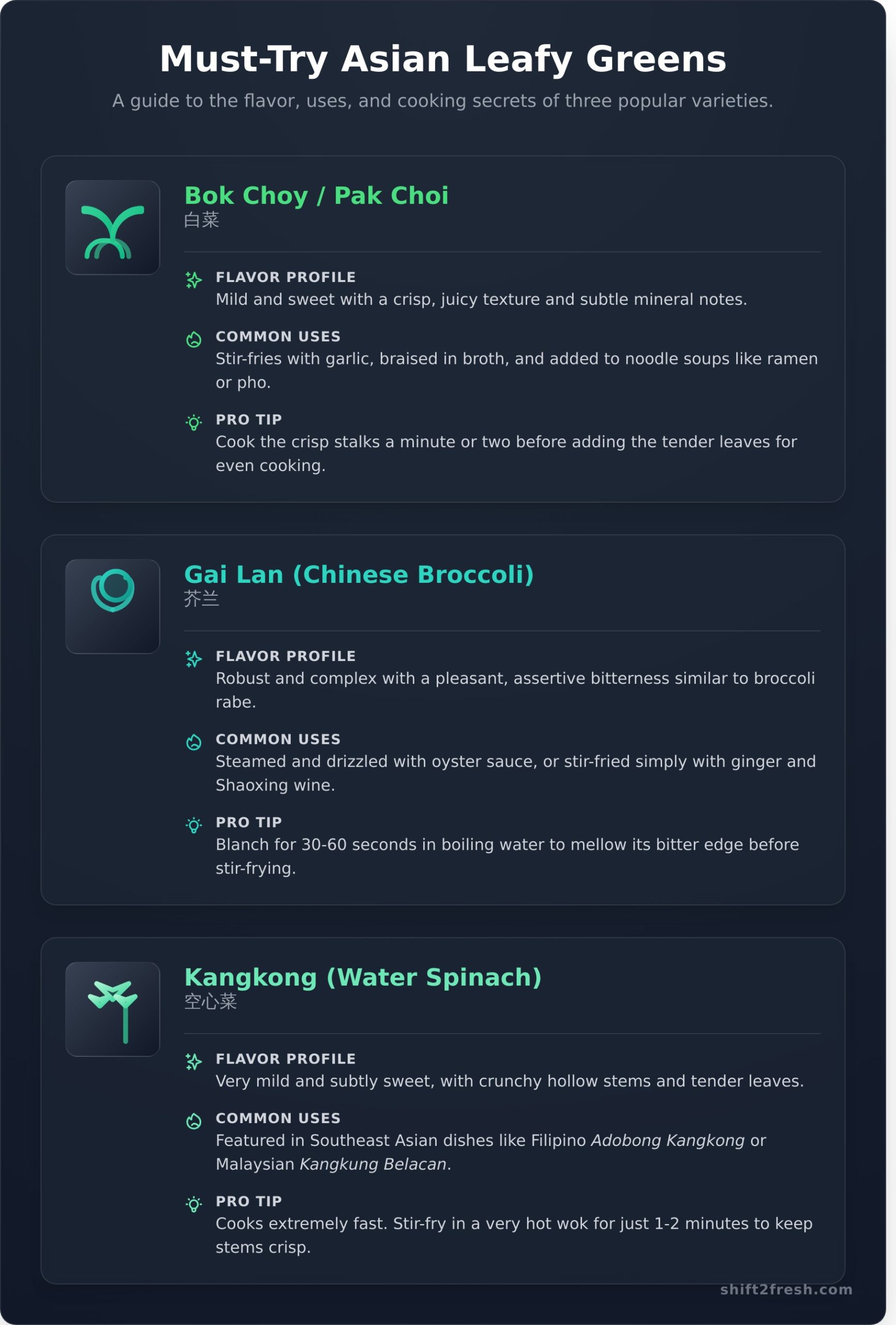
Bok Choy / Pak Choi (白菜)
Perhaps the most famous of the Chinese greens, bok choy is prized for its dual texture. The crisp, juicy white stalks provide a satisfying crunch, while the dark green leaves are soft and tender. Its mild, sweet flavor makes it a versatile ingredient that pairs well with bold sauces and aromatics.
- Flavor Profile: Mild and sweet with a subtle mineral note.
- Common Uses: Halved and braised in a savory broth, stir-fried with garlic and soy sauce, or added to noodle soups like ramen and pho.
- Pro Tip: For even cooking, separate the stalks and leaves. Add the chopped stalks to your wok a minute or two before adding the delicate leaves.
Gai Lan (Chinese Broccoli – 芥兰)
Don’t let the name fool you-gai lan is more assertive than its Western cousin. It features thick, succulent stems and large, dark leaves with a distinct, slightly bitter flavor that many find addictive. This pleasant bitterness balances rich sauces beautifully, making it a restaurant favorite.
- Flavor Profile: A complex taste that is robust and slightly more bitter than broccoli.
- Common Uses: Famously steamed and drizzled with oyster sauce, or stir-fried simply with sliced ginger and a splash of Shaoxing wine.
- Pro Tip: To mellow its bitter edge, blanch the gai lan in boiling water for 30-60 seconds, then shock it in ice water before stir-frying.
Kangkong (Water Spinach – 空心菜)
A beloved staple across Southeast Asia, kangkong is known for its uniquely hollow, crunchy stems and tender leaves. It has a very mild, slightly sweet flavor that makes it a perfect vehicle for powerful flavors like shrimp paste, garlic, and chili. It is widely available in markets across the UAE.
- Flavor Profile: Very mild and subtly sweet, with a texture similar to spinach but with a much crunchier stem.
- Common Uses: A star in Filipino Adobong Kangkong, Thai Pad Pak Boong Fai Daeng (stir-fried with chili and fermented beans), and Malaysian Kangkung Belacan.
- Pro Tip: Kangkong cooks extremely fast. Use a very hot wok and stir-fry it for just 1-2 minutes to keep the stems crisp.
Exploring Essential Roots and Tubers
While leafy greens provide freshness, roots and tubers are the hearty, starchy backbone of many classic dishes. This category of Asian vegetables is prized for its ability to add substance and comforting texture to everything from rich curries and slow-simmered stews to surprisingly decadent desserts. Unlike delicate leaves, these underground gems require longer cooking times, a worthy investment as they masterfully absorb the complex flavours of broths, sauces, and spices they are cooked with. Exploring them opens up a new dimension of culinary possibilities.
Daikon Radish (白萝卜)
Often found in the produce aisles of supermarkets across the UAE, daikon is a remarkably versatile giant white radish. Flavor Profile: When raw, it’s crisp with a refreshing, peppery zest perfect for salads. Cooking transforms it, mellowing its flavour to a mild sweetness. Common Uses: It’s a star in Japanese oden, Chinese turnip cakes, and as a tangy pickle (tsukemono). You can also grate it into sauces for tempura. Pro Tip: Always peel the thick outer skin before using, as it can be fibrous and slightly bitter, detracting from the radish’s delicate taste.
Taro (芋头)
Taro is a starchy root that has been a staple for centuries, beloved for its unique texture and taste. Flavor Profile: It has a distinctly nutty and slightly sweet flavour, with a texture similar to a potato but more complex. Common Uses: In savory cooking, it’s cubed and added to stews and coconut milk-based curries. It’s also famously mashed and sweetened to become the key ingredient in the popular bubble tea drinks seen all over Dubai and Abu Dhabi. Pro Tip: The raw root can cause skin irritation for some people. Wear gloves while peeling to be safe.
Ube (Purple Yam)
Not to be confused with taro, ube is famous for its breathtakingly vibrant purple flesh. It’s a cornerstone of Filipino cuisine, especially in sweets. Flavor Profile: Ube offers a mellow, gentle sweetness with unique notes of vanilla and pistachio. Common Uses: It is almost exclusively used in desserts. It’s boiled, mashed, and cooked into a sweet jam called ube halaya, which then becomes the base for cakes, pastries, and iconic ice cream. Pro Tip: Its stunning purple colour is completely natural and actually deepens when cooked, adding an incredible visual flair to your desserts without any artificial colouring.
Unique Gourds, Beans, and Eggplants
Venture beyond the familiar and you’ll discover a world of gourds, beans, and eggplants with incredible shapes, textures, and flavors. While many of these are botanically fruits, they are culinary staples used as vegetables across the continent. This category of Asian vegetables is particularly prominent in Filipino cuisine, forming the backbone of many beloved, traditional dishes. From the notoriously bitter to the subtly sweet, these ingredients add depth and character to any meal.
Ampalaya (Bitter Melon – 苦瓜)
Ampalaya, or bitter melon, is famous for its distinctively bitter taste. It’s an acquired flavor, but one that is prized in many cultures for its purported health benefits. In Filipino kitchens, it’s often stir-fried with eggs and tomatoes to make Ginisang Ampalaya or added to hearty soups.
- Flavor Profile: Intensely bitter with a crisp, watery texture.
- Common Uses: Stir-fries, soups, and stuffed dishes.
- Pro Tip: To mellow its sharp taste, slice the ampalaya, sprinkle it generously with salt, and let it sit for 20-30 minutes. Rinse thoroughly before cooking.
Sitaw (Long Beans / Yardlong Beans – 豆角)
Sitaw, also known as yardlong beans, are a versatile and essential ingredient. While they look like extra-long green beans, their texture is denser and provides a satisfying chew. They absorb flavors beautifully without turning mushy, making them a star in classic Filipino stews.
- Flavor Profile: Earthy and slightly sweet, similar to green beans but with a firmer bite.
- Common Uses: A key component in Adobong Sitaw (long beans in soy-vinegar sauce) and the sour soup, Sinigang.
- Pro Tip: Thanks to their robust structure, they are perfect for slow-cooked dishes and stews where regular green beans might fall apart.
Talong (Filipino Eggplant)
The Filipino eggplant, or talong, is long, slender, and vibrant purple. Unlike its larger, globe-shaped cousins, it has a thinner, more tender skin and fewer seeds. This results in a milder, sweeter flavor profile and a creamy texture when cooked.
- Flavor Profile: Mildly sweet and less bitter than other eggplant varieties.
- Common Uses: Famously grilled and mashed for Ensaladang Talong (eggplant salad) or pan-fried into a savory omelet called Tortang Talong.
- Pro Tip: Its slender shape is a major advantage, allowing it to cook much faster and more evenly, whether you’re grilling, roasting, or frying.
Exploring these unique gourds, beans, and eggplants is a fantastic way to expand your culinary horizons and bring authentic Filipino flavors right into your kitchen here in the UAE. Ready to try these versatile Asian vegetables? Shop for authentic Filipino vegetables now!
How to Select, Store, and Prepare Asian Vegetables
Stepping into the produce section filled with vibrant and unique vegetables can be exciting, but it can also feel a little overwhelming. How do you know what to look for? The good news is that selecting and storing most Asian vegetables is simple once you know a few basic principles. This guide will give you the confidence to pick the best produce and keep it fresh until you’re ready to create a delicious meal.
Selecting for Freshness
Choosing fresh produce is the first step to a flavourful dish. Your senses are your best guide. Whether you’re at a large supermarket in Dubai or a local market in Sharjah, look for these key signs:
- Leafy Greens (e.g., Bok Choy, Gai Lan): Leaves should be a vibrant green with a crisp, firm texture. Avoid anything with yellowing spots, wilting, or slimy patches.
- Root Vegetables (e.g., Daikon, Taro): They should feel firm, dense, and heavy for their size. The skin should be relatively smooth, without any deep cracks or soft, mushy spots.
- Gourds & Beans (e.g., Bitter Melon, Long Beans): Look for smooth, unblemished skin and a firm feel. They shouldn’t be limp or wrinkly. For beans, a good test is if they snap cleanly when bent.
Proper Storage for Longer Life
Once you get your beautiful produce home, storing it correctly will extend its life and preserve its flavour and nutrients. A common mistake is washing everything immediately.
- Wait to wash your vegetables until just before you use them. Excess moisture encourages faster spoilage.
- Most leafy greens do best in a plastic bag (perforated is ideal) in your refrigerator’s crisper drawer to maintain humidity.
- Hardy root vegetables like daikon and taro prefer a cool, dark, and dry place, such as a pantry, away from direct sunlight.
Basic Cooking Methods
The beauty of cooking with Asian vegetables is that simple preparation often yields the best results. Three fundamental techniques will cover most of your needs:
Stir-frying: This is the classic method for a reason. High heat, a little oil in a wok or large pan, and quick cooking (just a few minutes) keeps leafy greens and sliced vegetables like carrots and long beans crisp, colourful, and delicious.
Steaming: A wonderfully healthy option that preserves the natural flavour and nutrients. It’s perfect for delicate greens like choy sum, broccoli, or even firm gourds. Simply steam until tender-crisp and finish with a drizzle of soy sauce or sesame oil.
Braising/Simmering: For tougher root vegetables like daikon or winter melon, a gentle simmer in a flavourful broth (like chicken or vegetable stock with ginger and garlic) will make them incredibly tender and infuse them with flavour.
Where to Find Fresh Asian Vegetables in the UAE
You’ve explored the vibrant flavours and exciting recipes, but now you face the final hurdle: sourcing the key ingredients. While the UAE has a diverse food scene, finding a consistent, high-quality supply of specific Asian vegetables can be a real challenge for the home cook. This often means compromising on recipes or settling for less-than-perfect produce.
The Challenge of Sourcing Authentic Produce
Walking through the aisles of major chain grocery stores, you might find a small international section, but the selection is often limited and generic. Questions of freshness arise-how long has that bok choy been in transit? For a wider variety, you could travel to specialty markets in areas like Deira or Satwa, but this can be inconvenient, time-consuming, and doesn’t guarantee the quality you’re looking for.
Shift 2 Fresh: Your Online Asian Market
Imagine having a dedicated Filipino and Asian market at your fingertips. That’s the convenience we offer at Shift 2 Fresh. We eliminate the hassle by providing a seamless online shopping experience, delivering the authentic taste of home directly to you, anywhere in the UAE.
We believe that great meals start with great ingredients. That’s why we focus on:
- Authenticity and Freshness: We import our produce directly from farms in the Philippines, ensuring you receive seasonal, authentic, and incredibly fresh vegetables, from crisp kangkong to vibrant talong.
- Extensive Selection: Our online store is your one-stop shop. Browse a wide variety of vegetables, exotic fruits, and essential pantry staples that you won’t find in a typical supermarket.
- Convenience Delivered: Forget the traffic and long queues. Simply place your order online, and our fast, reliable delivery service will bring your groceries straight to your doorstep across the UAE.
Stop searching and start cooking. With Shift 2 Fresh, creating delicious, authentic Asian cuisine at home has never been easier. Ready to elevate your meals with the freshest ingredients?
Get the taste of home delivered to your door. Explore our vegetables!
Your Culinary Adventure with Asian Vegetables Awaits
You’ve now journeyed through the vibrant and diverse world of Asian produce, from the crisp bite of bok choy to the earthy depth of taro root. We’ve demystified how to select the very best produce, store it for lasting freshness, and prepare it in ways that unlock incredible new flavors. This exciting culinary landscape isn’t a world away; it’s right here in the UAE, ready to elevate your everyday meals from simple to sensational.
Ready to stop reading and start cooking? Shift2Fresh makes it easier than ever. With over 45 years of industry experience, we bring the authentic taste of home to you by directly importing the finest Asian Vegetables from the Philippines and South Asia. Experience the difference that true freshness makes, all with our fast and convenient online ordering and delivery service across the UAE.
Browse Our Full Selection of Fresh Asian Vegetables Now! Your next delicious discovery is just a click away. Happy cooking!
Frequently Asked Questions About Asian Vegetables
Are Asian vegetables healthier than Western vegetables?
Both types of vegetables are packed with essential nutrients. Neither is definitively “healthier,” but they offer different nutritional profiles. Many leafy Asian vegetables like choy sum and gai lan are exceptionally high in Vitamin K, calcium, and antioxidants. Incorporating a diverse range of both Asian and Western greens into your diet ensures you receive the widest possible spectrum of vitamins and minerals for optimal health and a balanced diet.
Can I substitute Asian vegetables in regular recipes?
Absolutely! Substituting with Asian vegetables is a fantastic way to add new textures and flavours to familiar dishes. Try using bok choy in place of spinach or chard in a stir-fry, or swap daikon radish for turnips in a hearty stew. For salads, napa cabbage offers a sweeter, more tender crunch than regular cabbage. Just be mindful of cooking times, as tender greens cook much faster than dense root vegetables.
What is the easiest Asian vegetable for a beginner to cook?
Bok choy is an excellent starting point for any beginner. It has a mild, sweet flavour and a delightfully crisp texture that is very forgiving. It cooks in just a few minutes, making it perfect for quick weeknight meals. A simple and delicious way to prepare it is to slice it in half lengthwise and pan-sear it with garlic, ginger, and a splash of soy sauce until the leaves are wilted and the stems are tender-crisp.
How should I wash and clean vegetables like bok choy or kangkong?
For leafy greens with layered stems like bok choy or hollow stems like kangkong (water spinach), it’s important to clean them thoroughly. First, separate the leaves or chop the stems into sections. Submerge them in a large bowl of cold water and swish them around to dislodge any sand or grit. Let them sit for a minute, then lift the vegetables out of the water, leaving the dirt settled at the bottom of the bowl.
Why are some Asian vegetables, like bitter melon, an acquired taste?
Vegetables like bitter melon (karela) possess a strong, pungent bitterness that is less common in many Western culinary traditions. This distinct flavour comes from natural compounds that are prized in many Asian cuisines for their perceived health benefits and ability to balance rich, fatty foods. For many, appreciation for this complex flavour profile grows with exposure, especially when prepared using traditional methods that help temper its intensity.
Can I grow any of these vegetables at home in the UAE climate?
Yes, you can successfully grow several Asian vegetables in the UAE with careful planning. Heat-tolerant varieties like long beans, okra, and some types of gourds thrive in the summer heat. For delicate leafy greens like bok choy and choy sum, it is best to plant them during the cooler months from November to March. Growing them in shaded containers on a balcony or using hydroponic systems are also very effective year-round solutions.
0 comments