

Diving into the world of Filipino cooking is an exciting culinary adventure, but it all starts with the right ingredients. The secret to those rich, comforting, and vibrant flavors you love isn’t a complicated technique-it’s a well-stocked pantry. This guide is your complete checklist of essential Filipino ingredients, explaining what they are and how to use them, so you can start cooking authentic dishes in the UAE today.
Why a Well-Stocked Pantry is the Secret to Filipino Cooking
A Filipino pantry is more than just a collection of sauces and spices; it’s a palette of flavors ready to create masterpieces. Having these staples on hand unlocks the ability to balance the core Filipino tastes: salty, sour, sweet, and savory. It’s the difference between simply cooking a meal and creating an authentic experience that tastes like home. We’ve designed this guide to make it easy for you to build your pantry from scratch, right here in the UAE.
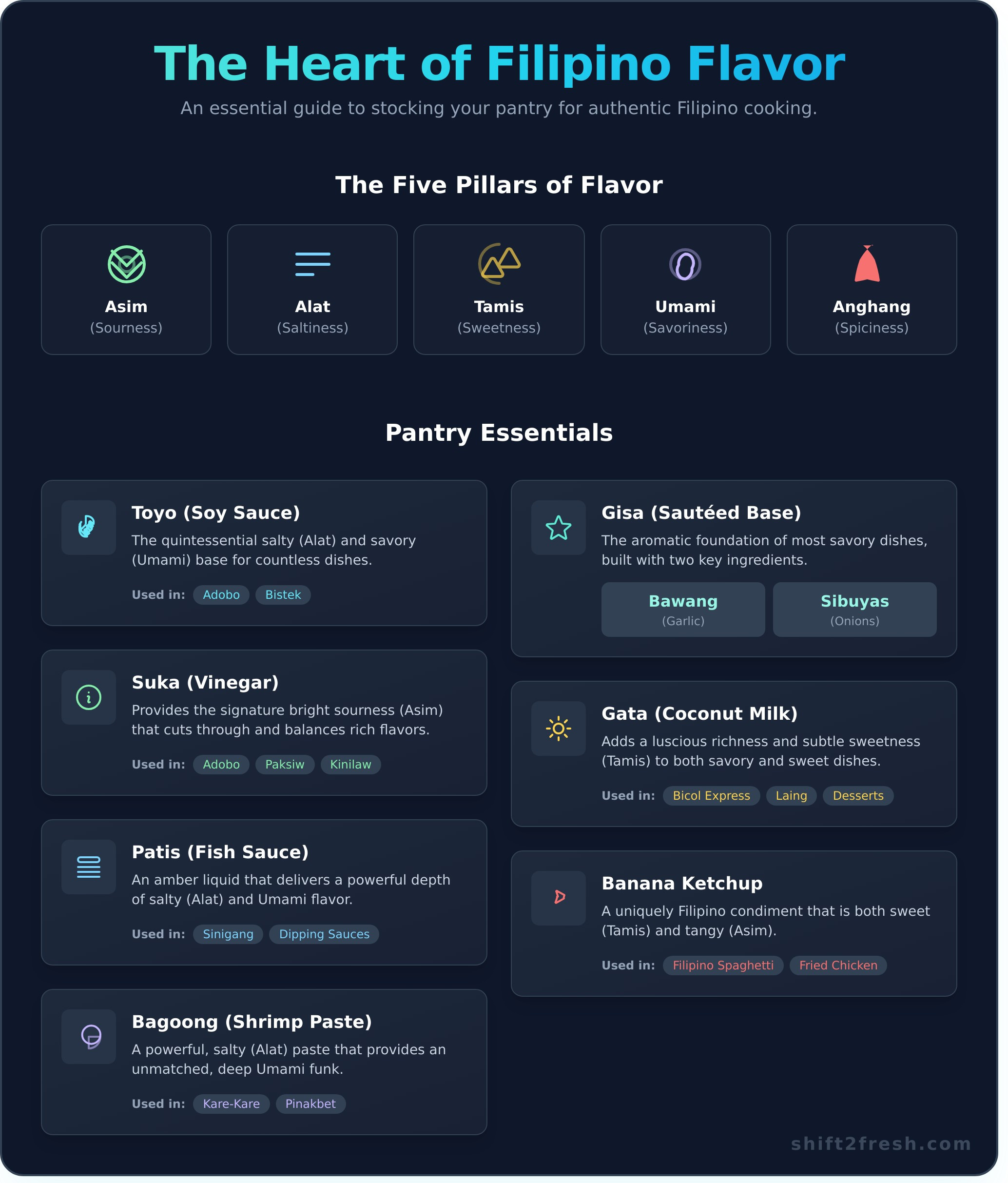
The Five Pillars of Filipino Flavor
To understand Filipino cooking, you need to know its foundational flavors:
- Asim (Sourness): This bright, tangy profile comes from vinegars and citrus fruits like calamansi. It cuts through richness and adds a refreshing kick.
- Alat (Saltiness): The deep, savory backbone of many dishes, delivered by essentials like soy sauce (toyo) and fish sauce (patis).
- Tamis (Sweetness): A balancing element that comes from ingredients like palm sugar, banana ketchup, or the natural sweetness of coconut.
- Umami (Savoriness): That satisfying, deep flavor that comes from fermented products like bagoong and rich, slow-cooked sauces.
- Anghang (Spiciness): While not all Filipino food is spicy, heat is often added fresh with local chiles (siling labuyo) to add an extra layer of excitement.
The Foundation: Essential Sauces and Vinegars (Sawsawan)
These liquids are the lifeblood of the Filipino kitchen. They form the base of iconic stews, marinades, and the all-important dipping sauces (sawsawan) that accompany nearly every meal. Learning the key players is your first step to mastering the cuisine.
Toyo (Soy Sauce)
Toyo is the quintessential salty, savory base for countless dishes. It’s used in everything from the national dish, Adobo, to Bistek Tagalog (Filipino beef steak) and countless marinades. Pro Tip: Filipino soy sauce is often lighter and saltier than its Japanese counterparts, so it’s best to use an authentic brand for the right flavor profile.
Suka (Vinegar)
Vinegar provides the signature sourness (asim) that defines and balances many rich, savory dishes. You’ll find several key types in a Filipino pantry, including cane vinegar, coconut vinegar, and palm vinegar, each with a slightly different character. It is absolutely essential for making Adobo, Paksiw (fish or meat poached in vinegar), and Kinilaw (the Filipino version of ceviche).
Patis (Fish Sauce)
Don’t be afraid of its pungent aroma! Patis is a salty, amber liquid that adds an incredible depth of umami flavor that salt alone cannot provide. Once cooked, the smell mellows into a complex, savory note. Use it to season soups like Sinigang or mix it with calamansi and chiles for a perfect dipping sauce.
Bagoong (Fermented Shrimp or Fish Paste)
Bagoong is a true flavor bomb. This powerful, salty paste made from fermented shrimp or fish is a cornerstone ingredient that provides an unmatched savory depth. It’s the secret to authentic Kare-Kare (oxtail peanut stew) and Pinakbet (mixed vegetable stew) and is famously served as a condiment with tart green mangoes.
The Aromatics and Spices: Building Blocks of Flavor
No Filipino dish begins without a fragrant base. These fresh and dried staples are the foundation of flavor, used in a process called gisa, or sautéing, which creates the aromatic start to most savory recipes.
Bawang (Garlic)
Garlic is arguably the most crucial aromatic in Filipino cuisine and is often used generously. Minced or crushed, it forms the fragrant base of nearly every savory dish. For the most potent and authentic flavor, always use fresh cloves rather than powder or paste.
Sibuyas (Onions)
Working in perfect harmony with garlic, onions provide a sweet, aromatic foundation. Both red and yellow onions are commonly used to add depth and a touch of sweetness to the gisa base.
Paminta (Black Peppercorns)
Whole black peppercorns are essential, especially for stews like Adobo and Tinola (chicken ginger soup). They release a mild, woody heat during the slow cooking process that is distinct from the sharp bite of chili.
Carbohydrates: The Heart of the Meal
Rice and noodles are the comforting canvas upon which the vibrant flavors of Filipino cuisine are painted. A meal is not considered complete without a generous serving of steamed rice to soak up every last drop of delicious sauce.
Bigas (Rice)
Steamed white rice is the ultimate staple. Long-grain varieties like Jasmine are preferred for their fluffy texture and fragrant aroma. Beyond being a side dish, glutinous or sticky rice (malagkit) is the star of many beloved Filipino desserts and snacks, known as kakanin.
Pansit (Noodles)
Noodles, or pansit, are a symbol of long life and a fixture at birthday celebrations and fiestas. The most common types are dried flour sticks (pancit canton) and thin rice noodles (bihon). They are stir-fried with meat, vegetables, and a savory sauce to create a beloved and versatile dish. Ready to celebrate? Find the perfect noodles for your next Pansit feast.
Pantry Exclusives: Unique Filipino Favorites
Once you have the basics, it’s time to add the ingredients that give specific dishes their unmistakable, authentic character. Stocking these items will take your cooking from good to truly special.
Banana Ketchup
This is not your average tomato ketchup! Banana ketchup is a uniquely Filipino condiment that’s sweet, tangy, and bright red. It’s the classic sauce served with Filipino-style spaghetti, fried chicken, and tortang talong (eggplant omelet).
Calamansi Products
Often called the Philippine lime, calamansi is a small, incredibly zesty citrus fruit that packs a powerful punch. Since fresh calamansi can be hard to find, having pure juice or extract in your pantry is a convenient way to add its signature tangy flavor to marinades, dipping sauces, and beverages.
Gata (Coconut Milk & Cream)
Coconut milk adds a luscious richness and subtle sweetness to both savory and sweet dishes. It’s the essential ingredient for regional specialties like Bicol Express (pork in a spicy coconut sauce), Laing (taro leaves in coconut milk), and a wide array of desserts. Canned versions are a convenient and reliable pantry staple.
Your Filipino Pantry Shopping List in the UAE
Ready to start cooking? Here is your essential checklist to build a complete Filipino pantry. At Shift 2 Fresh, we deliver all these authentic ingredients right to your doorstep, making it easier than ever to bring the taste of the Philippines to your home. Shop all your Filipino pantry essentials now at Shift 2 Fresh!
| Ingredient | Must-Have or Optional? | Common Dishes |
|---|---|---|
| Soy Sauce (Toyo) | Must-Have | Adobo, Bistek, Marinades |
| Vinegar (Suka) | Must-Have | Adobo, Paksiw, Kinilaw |
| Fish Sauce (Patis) | Must-Have | Sinigang, Arroz Caldo, Dipping Sauces |
| Garlic & Onions | Must-Have | Almost every savory dish (Gisa) |
| Rice (Bigas) | Must-Have | Served with every meal |
| Coconut Milk (Gata) | Must-Have | Bicol Express, Laing, Ginataan |
| Banana Ketchup | Optional (but highly recommended!) | Filipino Spaghetti, Fried Chicken |
| Shrimp Paste (Bagoong) | Optional (for advanced flavors) | Kare-Kare, Pinakbet |
Frequently Asked Questions
Do I need to buy everything on this list to start cooking Filipino food?
Not at all! You can start with the absolute must-haves: soy sauce, vinegar, garlic, onions, and rice. With just these five items, you can already make a delicious classic Adobo.
What’s the one ingredient I should buy first?
If you have to pick just one, get a good quality Filipino cane vinegar (suka). Its unique flavor is difficult to replicate and is fundamental to many signature dishes.
Can I use Italian or Japanese vinegar instead of Filipino suka?
While you can, it will change the flavor profile of the dish. Filipino vinegar is typically milder and has a different kind of sourness than Western grape-based vinegars or Japanese rice vinegars. For the most authentic taste, it’s best to use suka.
How should I store items like bagoong and patis?
Both fish sauce (patis) and shrimp paste (bagoong) are fermented and very salty, which makes them shelf-stable. You can store them in your pantry. However, many people prefer to refrigerate bagoong after opening to preserve its quality and contain its strong aroma.
Where can I find these Filipino pantry items in Dubai or Sharjah?
You no longer have to search multiple stores! Shift 2 Fresh offers a comprehensive selection of authentic Filipino pantry staples, along with fresh produce from the Philippines, all available for convenient online ordering and delivery across the UAE.
With a pantry stocked with these essentials, you’re well on your way to creating delicious and authentic Filipino meals that will impress your family and friends. It’s all about having the right building blocks to explore a world of incredible flavor. We provide authentic ingredients sourced directly from the Philippines, fast and reliable grocery delivery across the UAE, and a one-stop shop for both your fresh produce and pantry needs. Build your Filipino pantry today. Shop our collection!
0 comments