

Craving the comforting, sweet taste of a perfectly fried banana cue or the crispy delight of homemade turon? For many in the Filipino community and food enthusiasts alike, the search for authentic saba bananas in the UAE can often end in frustration. You spot a familiar-looking fruit in the supermarket, but is it the real deal? How do you know if it’s fresh, and what’s the secret to cooking it just right? That familiar feeling of home can seem just out of reach when you can’t find this essential, versatile ingredient.
Well, your search ends here! This ultimate guide is your key to unlocking everything about the beloved Saba banana. We’ll walk you through how to distinguish it from a regular Cavendish, share expert tips on choosing and ripening them, and reveal where you can reliably buy them fresh online. We’ll also dive into classic, easy-to-follow recipes that will transport your taste buds straight to the Philippines. Get ready to master the art of Saba and bring those cherished flavours right into your UAE kitchen.
Key Takeaways
- Understand why Saba is a unique cooking banana, prized in Filipino cuisine for its starchy texture and versatility, unlike the sweet bananas you eat raw.
- Discover how cooking unlocks the Saba banana’s true potential, transforming it into delicious snacks like Turon, savory dishes, and sweet desserts.
- Learn the simple visual cues to select the perfect Saba banana, whether you need a firm one for savory recipes or a softer, sweeter one for desserts.
- Pinpoint the best places to source high-quality, fresh saba bananas uae, moving beyond mainstream supermarkets to specialized importers for superior produce.
What Are Saba Bananas? The Unsung Hero of Filipino Kitchens
When you think of bananas, the long, yellow Cavendish variety likely comes to mind. But in Filipino kitchens and among savvy food lovers, another banana reigns supreme: the Saba. Far from being just a sweet snack, the Saba is a versatile cooking banana and a cornerstone of Filipino cuisine. Originating from the Philippines, this stout, angular banana is a cultural staple used in everything from sweet desserts to savory stews. As the demand for authentic Asian ingredients grows, finding quality saba bananas UAE has become easier, introducing this culinary hero to a wider audience. A deeper look into What Are Saba Bananas? reveals they are a hybrid cultivar, prized for their unique properties when cooked.
Saba vs. Cavendish: Spotting the Key Differences
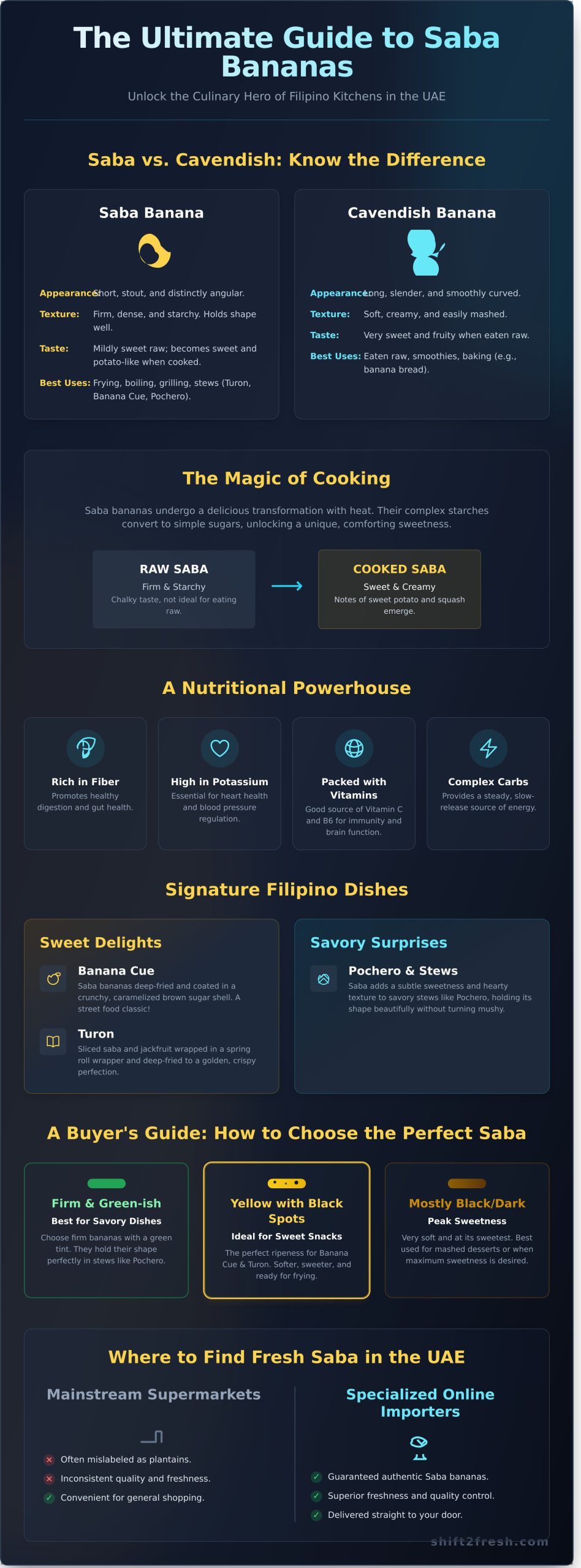
While both are bananas, the Saba and Cavendish are worlds apart in a culinary sense. Understanding their differences is key to using them correctly in your kitchen.
The Unique Taste and Texture Profile
Unlike its Cavendish cousin, a raw Saba banana is not particularly sweet. It has a starchy, almost chalky taste. However, the magic happens when heat is applied. Cooking transforms its complex starches into simple sugars, unlocking a mild, comforting sweetness with notes of sweet potato and squash. Its texture is equally unique; it is firm and dense, allowing it to hold its shape perfectly in soups, stews, and even when fried, developing a creamy, satisfying mouthfeel.
A Nutritional Powerhouse: The Health Benefits of Saba
Beyond its culinary flexibility, the Saba banana is packed with nutritional benefits, making it a healthy addition to any diet. They are a fantastic source of wholesome energy.
- Rich in Dietary Fiber: Promotes healthy digestion and helps maintain gut health.
- High in Potassium: Essential for regulating blood pressure, fluid balance, and overall heart health.
- Packed with Vitamins: A good source of Vitamin C for immune support and Vitamin B6 for brain function.
- Complex Carbohydrates: Provides a steady, slow-release source of energy, making it more filling and sustaining than simple sugars.
The Culinary Heart of the Philippines: How to Cook with Saba Bananas
While many bananas are enjoyed raw, the Saba banana truly shines when cooked. Its firm, starchy texture transforms with heat, unlocking a subtly sweet, complex flavor that makes it a versatile star in Filipino cuisine. From street food snacks to hearty stews, cooking with saba bananas in the UAE is a delightful way to explore new culinary horizons. Whether you’re craving something sweet or savory, this humble fruit delivers.
Sweet Delights: Mastering Banana Cue and Turon
Two of the most beloved Filipino street food snacks are incredibly easy to make at home. They are the perfect introduction to cooking with Saba.
- Banana Cue: Simply peel whole Saba bananas and deep-fry them in hot oil with a generous amount of brown sugar. As the sugar melts and caramelizes, continuously coat the bananas until they are covered in a crunchy, golden shell. Serve them on a bamboo skewer for an authentic touch.
- Turon (Banana Spring Rolls): Slice a Saba banana lengthwise. Place a slice, along with a strip of ripe jackfruit, onto a spring roll wrapper. Roll it tightly, seal the edge, and deep-fry until golden brown and crispy. For an extra caramel crunch, you can sprinkle brown sugar into the hot oil during the final moments of frying.
Savory Surprises: Saba in Pochero and Other Stews
Saba bananas add a wonderful, unexpected dimension to savory dishes. In stews, the banana holds its shape beautifully, contributing a creamy texture and a hint of sweetness that balances rich, meaty flavors. This structural integrity is partly due to its unique composition; a review of the Bio-properties of Saba banana highlights its high resistant starch content, making it cook more like a plantain or potato. It is a key ingredient in Pochero, a hearty tomato-based stew with beef or chicken, where it complements the other vegetables perfectly. You can also find slices of fried Saba served alongside Arroz a la Cubana.
Simple Preparations: Boiled, Steamed, or Grilled Saba
For a quick and healthy snack, simplicity is key. Nilagang Saging, or boiled Saba, is a comforting classic. Just boil the unpeeled bananas in water until tender (about 15-20 minutes). The skin will darken and split easily when it’s ready. You can also steam them for a similar result. Alternatively, slice the bananas and grill or pan-fry them with a touch of coconut oil until lightly caramelized. Enjoy them plain, with a sprinkle of salt, or paired with rich coconut jam.
A Buyer’s Guide: How to Choose, Store, and Ripen Saba Bananas
Walking through a supermarket in the UAE, you spot a bunch of stout, angular bananas. But which ones are right for the dish you have in mind? Unlike the common Cavendish banana, the perfect Saba depends entirely on your recipe. Whether you’re making a savory stew or a sweet snack, this guide will help you select, store, and ripen them like a pro.
Choosing the Perfect Saba for Your Recipe
The colour of the peel is your best indicator for taste and texture. Here’s a simple breakdown to help you find the perfect saba bananas UAE chefs and home cooks use for authentic Filipino dishes:
- Green Saba: Completely green and very firm to the touch. These are starchy and not sweet, making them the perfect potato-like addition to savory Filipino stews such as Pochero and Nilaga.
- Yellow with Green Tips: This is the ideal stage for frying. The banana has developed some sweetness but retains a firm texture that holds up well to heat. Grab these for making classic street food snacks like Turon or Banana Cue.
- Fully Yellow: Bright yellow, soft, and distinctly sweet. At this stage, the banana’s starches have converted to sugars, making it perfect for boiling, steaming, or mashing into desserts. As they ripen, their beneficial compounds also develop; in fact, a scientific study on Saba banana’s health benefits highlights its rich antioxidant properties.
- Yellow with Black Spots: Don’t be afraid of a few spots! These indicate peak ripeness and maximum sweetness. This is the best choice for desserts where the banana is the star, like Minatamis na Saging (sweetened bananas in syrup).
Storing for Maximum Freshness: Dos and Don’ts
Proper storage is crucial to prevent waste and ensure your bananas are ready when you are. Follow these simple rules:
- DO store them at room temperature, away from direct sunlight, until they reach your desired ripeness.
- DON’T put green Saba bananas in the refrigerator. The cold temperature will shock the fruit, halting the ripening process permanently. The peel will turn black while the inside remains starchy and unpleasant.
- DO refrigerate fully ripe Saba bananas. Once they are yellow, placing them in the fridge will press pause on further ripening for a few extra days. The peel may darken, but the fruit inside will remain delicious.
The Ripening Process: From Green to Golden
Patience is key. Left on your kitchen counter, green Saba will naturally ripen over several days. If you’re in a hurry, you can speed things up by placing them in a brown paper bag and closing it loosely. This traps the natural ethylene gas the bananas produce, accelerating the process. Check them daily until they reach the perfect golden hue for your recipe.
Where to Find Fresh Saba Bananas in the UAE
For many in the Filipino community and food lovers across the Emirates, the distinct, comforting flavour of Saba bananas is irreplaceable. Whether you’re planning to make sweet turon, a hearty banana cue, or a rich pochero, finding high-quality, fresh Saba is the crucial first step. However, sourcing them can often feel like a treasure hunt. Here’s a guide to navigating your options and finding the best saba bananas in the UAE.
The Challenge of Sourcing Authentic Produce
If you’ve walked through the produce aisle of major UAE supermarkets, you’ve likely noticed that the shelves are dominated by the common Cavendish banana. While great for a quick snack, they lack the starchy, firm texture needed for classic Filipino dishes. You might find Saba in smaller, neighbourhood groceries, but the quality can be unpredictable-either too green to use or already past their prime. This inconsistency stems from a supply chain not specialized in handling this unique fruit.
Why Online Delivery is Your Best Bet for Freshness
In recent years, online delivery has emerged as the most reliable and convenient solution for sourcing specialty produce. For those seeking authentic saba bananas uae wide, turning to a dedicated online importer offers significant advantages:
- Unmatched Convenience: Skip the hassle of driving to multiple stores. You can order authentic ingredients from the comfort of your home and have them delivered directly to your doorstep, whether you’re in Dubai, Abu Dhabi, or Sharjah.
- Superior Quality Control: Specialized importers understand the journey of Filipino produce. They ensure Saba bananas are harvested at the right time, transported under optimal conditions, and delivered to you at peak freshness.
- A Wider Selection: Online Filipino grocers often provide a one-stop-shop experience, allowing you to stock up on other essentials like calamansi, malunggay, and ube along with your Saba.
Shift 2 Fresh: Your Direct Source for Farm-Fresh Saba
At Shift 2 Fresh, we close the gap between you and the authentic flavours you love. We aren’t just a reseller; we are a direct importer dedicated to bringing the best of the Philippines to the UAE. We work closely with farms to source our Saba bananas, ensuring they are grown and harvested with care. Our expert team in the UAE meticulously inspects every shipment, guaranteeing that only the freshest, highest-quality produce makes it to your kitchen.
Stop searching and start cooking. Order with the confidence that you are getting a genuine taste of home, handled with expertise and delivered with care.
Shop for Fresh Saba Bananas Now and bring Filipino flavors to your kitchen!
Bring the Taste of the Philippines to Your UAE Kitchen
From sweet, caramelized Turon to savory stews, the humble saba banana is a true star of Filipino cuisine. Now that you know how to choose the perfect bunch, store them correctly, and unlock their culinary potential, you’re ready to bring these authentic flavors home. Finding high-quality saba bananas UAE has to offer is the final step in your journey to creating delicious, heartwarming meals for your family and friends.
Don’t just dream about those flavors-experience them. With over 45 years of expertise in the food industry, Shift 2 Fresh delivers guaranteed freshness right to your doorstep. Our saba bananas are directly imported from the Philippines, ensuring you get that authentic taste every single time. Order your fresh Saba Bananas today and explore our full range of Filipino produce! Get ready to cook, create, and enjoy the incredible versatility of this Filipino kitchen staple.
Frequently Asked Questions
Can you eat Saba bananas raw?
While you can technically eat Saba bananas raw once they are very ripe, they are primarily considered a cooking banana. Their high starch content gives them a firmer, less sweet, and slightly chalky taste compared to dessert bananas like the Cavendish. Cooking is what truly brings out their wonderful flavour, transforming their starchy texture into a soft, fluffy, and mildly sweet delight. For the best experience, it is highly recommended to cook them before eating.
Are Saba bananas healthier than regular bananas?
Saba bananas offer a unique nutritional profile that makes them a very healthy choice. They are particularly rich in resistant starch, which is excellent for gut health and helps in managing blood sugar levels more effectively than the simple sugars found in ripe Cavendish bananas. They are also a great source of Vitamin C, potassium, and Vitamin B6. While not necessarily “healthier,” their lower sugar and higher starch content make them a more filling and sustained energy source.
How do I make Minatamis na Saging (sweetened banana dessert)?
Making this classic Filipino dessert is incredibly simple and a favourite for those who buy Saba bananas in the UAE. First, peel and slice ripe Saba bananas. In a small pot, create a simple syrup by dissolving brown sugar in water over medium heat. Add the banana slices and a splash of vanilla extract for extra flavour. Allow the mixture to simmer for 10-15 minutes until the bananas are tender and the syrup has thickened slightly. Serve warm.
Why are my Saba bananas still hard after cooking?
The most common reason for hard Saba bananas after cooking is that they were not ripe enough. Unripe, green Saba are very firm and starchy, requiring a significantly longer cooking time to become tender. For most recipes, especially desserts, it is best to use bananas that have a fully yellow peel, perhaps with a few black spots. If your bananas were ripe but still turned out hard, you may simply need to extend the cooking time, ensuring they are simmering gently.
Can you freeze Saba bananas for later use?
Absolutely! Freezing is a fantastic way to preserve Saba bananas. For best results, peel them first. You can freeze them whole or slice them into coins, depending on your intended use. To prevent them from clumping together, place the pieces on a baking sheet in a single layer and freeze for an hour. Once solid, transfer them to a freezer-safe bag or airtight container. They can be used directly from the freezer for cooking or smoothies.
Is Saba banana good for people with diabetes?
In moderation, Saba bananas can be a good choice for people with diabetes. Due to their high resistant starch content, they have a lower glycemic index compared to many other types of bananas, meaning they are less likely to cause a rapid spike in blood sugar levels. However, portion control remains crucial. It is always recommended for individuals with diabetes to consult their doctor or a registered dietitian to determine how to best incorporate them into their diet.
0 comments