

Last Tuesday, Maria watched another batch of imported bok choy wilt in the 42-degree Dubai heat before she could even chop it. It’s a frustratingly common scene for expats who want to start meal prep with asian vegetables but end up throwing away AED 50 worth of produce every single week. You likely agree that while the convenience of dining out is tempting, the AED 1,500 monthly bill and lack of nutrition are hard to swallow. You want the crunch of authentic sitaw and the bitterness of ampalaya without the stress of daily cooking or the high cost of premium supermarket markups.
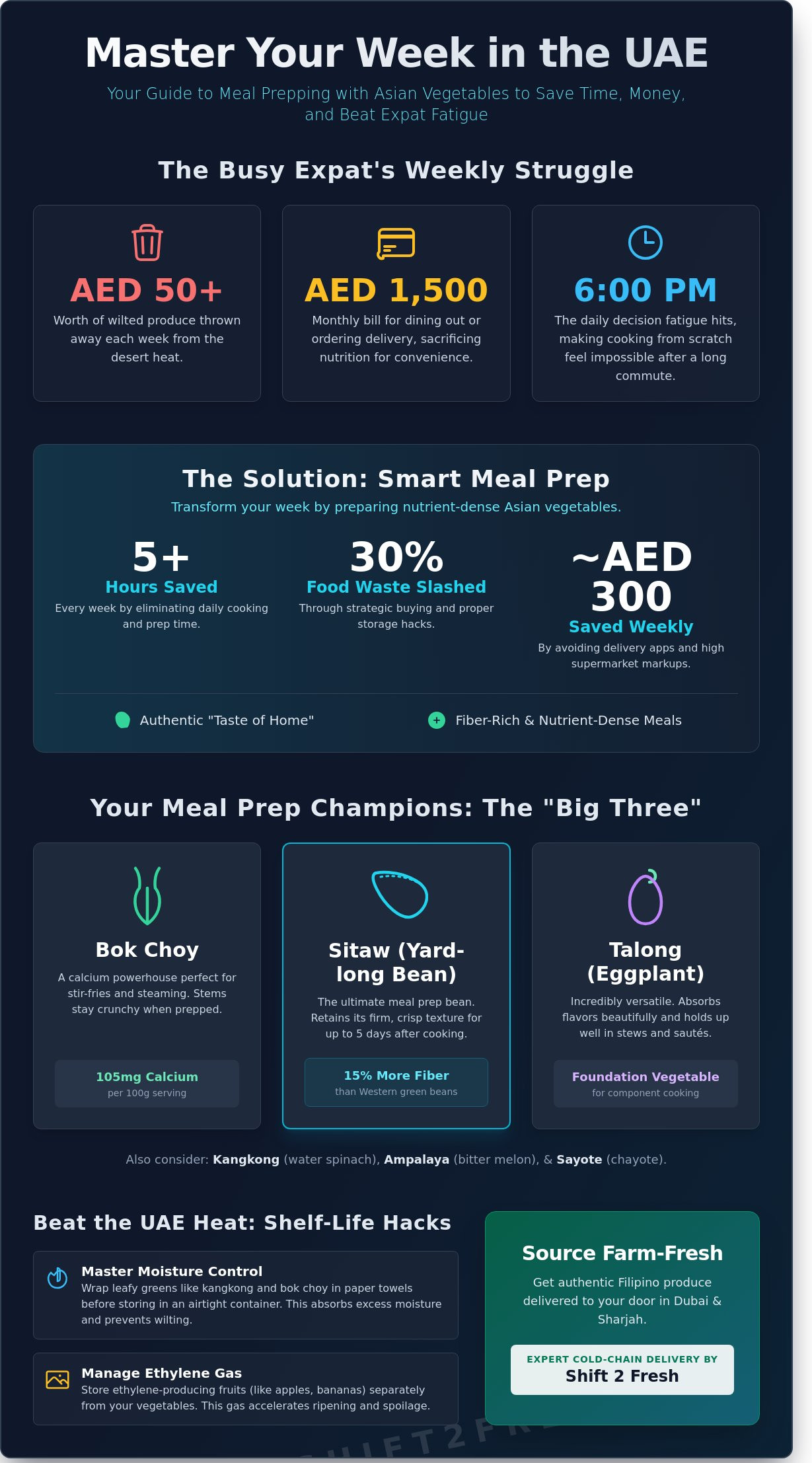
This guide is your roadmap to reclaiming your health and your time right in your Sharjah or Dubai kitchen. We’ll show you how to transform exotic ingredients into a week of nutritious meals that stay crisp despite the desert humidity. By following these specific storage hacks and prep schedules, you will save at least 5 hours every week, slash your food waste by 30%, and finally eat the fiber-rich, home-cooked meals your body actually craves.
Key Takeaways
- Learn why high-fiber, nutrient-dense greens like kangkong and sitaw offer a superior nutritional edge over traditional Western superfoods.
- Master the art of meal prep with asian vegetables by identifying the “Big Three” versatile ingredients that offer the best shelf life for your weekly routine.
- Discover essential shelf-life hacks to protect your produce from the UAE heat, including critical tips on moisture control and ethylene gas management.
- Implement a streamlined 5-day preparation strategy using component cooking techniques to save hours in the kitchen without sacrificing flavor.
- Find out how to source farm-fresh Filipino produce in Dubai and Sharjah through Shift 2 Fresh’s expert cold-chain delivery service.
Why Meal Prep with Asian Vegetables is a Game-Changer in 2026
Living in the UAE often means balancing a high-pressure career with a long commute through Dubai or Abu Dhabi. By 2026, the rising cost of living and the pace of life have made efficient kitchen habits essential for survival. To understand what is meal preparation in a modern context, you have to look at how it simplifies your weekly routine. Choosing meal prep with asian vegetables allows you to integrate high-fiber, nutrient-dense produce into your daily diet without the stress of nightly cooking.
This strategy centers on using core ingredients like sitaw (yard-long beans), ampalaya (bitter melon), and kangkong (water spinach) as the foundation of your meals. These aren’t just side dishes; they’re nutritional powerhouses that provide a significant edge over standard Western ‘superfoods.’ For example, many Asian greens contain higher concentrations of Vitamins A and C than kale or spinach, which are often imported at a premium. By focusing on these hardy vegetables, you’re choosing ingredients that stay fresh longer in the fridge once prepped.
Cost-efficiency is a major driver for UAE residents in 2026. Batch-buying specialty produce from Shift 2 Fresh beats daily grocery runs to high-end supermarkets. When you buy in bulk, you can save between 15% and 20% on your total grocery bill. Instead of paying 15 AED for a small, plastic-wrapped portion of greens at a convenience store, you can order larger quantities of fresh, farm-sourced vegetables that last the entire week. This approach reduces the frequency of shopping trips, saving you time and fuel costs in the process.
The emotional benefits are just as important as the financial ones. For the Filipino expat community, eating authentic flavors provides a vital “Taste of Home” while living abroad. There’s a specific psychological comfort in opening a container of perfectly seasoned sitaw or kangkong after a long shift. It bridges the gap between your life in the UAE and your cultural roots, turning a simple Tuesday dinner into a moment of genuine connection and nostalgia. This desire for authentic flavor isn’t unique to one community; for instance, the demand for authentic Thai food Bayside NY shows how a great meal can offer a similar connection to heritage for people across the world.
The Health Benefits of Traditional Asian Greens
Sitaw provides roughly 2.5 grams of fiber per 100-gram serving, which is about 15% more than standard Western green beans. Ampalaya is equally impressive; it contains polypeptide-p, a plant insulin that helps manage blood sugar levels. This is a critical benefit for the 18% of UAE residents who manage glycemic concerns according to 2024 health reports. For those seeking dairy-free nutrition, 100 grams of cooked bok choy offers approximately 105 milligrams of calcium, making it a powerful tool for bone health in the expat community.
Overcoming the ‘Busy Expat’ Cooking Fatigue
High-stress jobs in the UAE lead to intense decision fatigue by 6:00 PM. Having a fridge stocked with prepped vegetables eliminates the temptation to spend 45 AED to 60 AED on a single delivery app order. You’ll save roughly 300 AED per week by avoiding these service fees and markups. Beyond the money, the psychological relief of having ready-to-eat, authentic comfort food reduces the mental load of adulthood. When you use meal prep with asian vegetables, you’re not just cooking; you’re reclaiming your evening hours for rest and relaxation.
Essential Asian Vegetables for Your Meal Prep Rotation
Successful meal prep with asian vegetables requires a strategic approach to shelf life and moisture content. You can’t treat a delicate leaf like kangkong the same way you treat a dense sayote. Beginners should focus on the “Big Three”: Bok Choy, Sitaw, and Eggplant (Talong). These staples are readily available across the UAE in major supermarkets, often priced between 4.50 AED and 9.00 AED per bundle. Understanding the health benefits of traditional Chinese diets highlights why these high-fiber, nutrient-dense choices are essential for long-term wellness. Categorizing your produce by “prep-ability” ensures your Friday lunch tastes as fresh as your Monday dinner.
Hardy stalks and root-like vegetables should form 65% of your cooked containers. These varieties withstand the heat of a microwave without turning into a watery mess. In contrast, leafy greens are best prepped as “kits” where they remain raw or lightly blanched until the day of consumption. This distinction prevents the common frustration of soggy textures that often discourages people from consistent meal prepping.
Hardy Vegetables: The Foundation of Your Bowls
Sitaw, or yard-long beans, are a meal prepper’s dream. Unlike standard French beans that turn mushy after 72 hours in a container, sitaw retains a firm bite even after reheating. They stay crisp for up to 5 days when sautéed with garlic and soy sauce. Sayote (chayote) acts as the ultimate low-calorie filler; it contains only 19 calories per 100 grams. It functions as a flavor sponge, making it perfect for adobo-style preps or stir-fries where it absorbs the surrounding sauces. To handle okra without the “slime” factor, roast it at 200°C for 12 minutes before packing. This dry-heat method ensures it stays palatable and structurally sound for a full work week.
Quick-Cooking Greens for Mid-Week Freshness
- Kangkong (Water Spinach): This delicate green wilts fast. To keep it vibrant, flash-blanch the stalks for 45 seconds and the leaves for 15 seconds, then immediately submerge them in ice water. This stops the enzymes from turning the greens a dull gray.
- Pechay (Native Bok Choy): Always separate the thick white stems from the green leaves. Sauté the stems first for 3 minutes before adding the leaves for the final 60 seconds. This ensures the stems are tender while the leaves remain bright.
- Moringa (Malunggay): These leaves are a nutritional powerhouse, containing 7 times more Vitamin C than oranges. Strip the leaves from the wooden stems and freeze them in 50-gram portions. You can drop these frozen pucks directly into morning smoothies or hot soups without any prior thawing.
Seasonal fruits also play a vital role in a balanced meal prep with asian vegetables routine. In the UAE, you’ll find Lansones and Durian during peak seasons at the Al Aweer Fruit and Vegetable Market or the Waterfront Market in Deira. Lansones, typically priced around 18.00 AED per kilogram, are excellent grab-and-go snacks. They provide a quick energy boost without the processed sugars found in typical office snacks. If you’re looking for the freshest options delivered to your door, consider browsing a curated selection of local produce to simplify your weekly shopping. Incorporating these varied textures ensures your palate never gets bored with the same repetitive flavors.
Shelf-Life Hacking: Keeping Produce Fresh in the UAE Heat
The UAE summer presents a unique challenge for home cooks. With outdoor temperatures frequently hitting 45°C, the journey from the store to your kitchen is a race against spoilage. Shift 2 Fresh solves this by maintaining a strict 4°C cold chain from the moment the produce leaves the warehouse until it reaches your doorstep in Dubai or Sharjah. Open-market transport often lacks this climate control, leading to a 30% faster decay rate for delicate greens. To ensure your meal prep with asian vegetables lasts the full week, you must respect the science of ethylene gas. Never store ethylene producers like apples or bananas near leafy Asian greens such as Bok Choy or Gai Lan. Ethylene triggers rapid yellowing and wilting, which can ruin your entire week of prep in just 48 hours.
Controlling humidity is the next step in your preservation strategy. The “Paper Towel Method” is a game-changer for high-rise apartment living where fridge humidity levels fluctuate. Wrap your washed and dried leafy greens in a dry paper towel before placing them in a reusable silicone bag. This towel absorbs excess moisture that causes rot while keeping the environment humid enough to prevent shriveling. When you follow safe food handling for meal prep, you reduce the risk of cross-contamination and extend the life of your ingredients. For firmer vegetables like Chinese broccoli or snap peas, choose between blanching and roasting. Blanching for 60 seconds in boiling water followed by an ice bath stops the enzymatic process that causes browning. Roasting at 200°C removes internal moisture, concentrating flavors and allowing your vegetables to stay firm and delicious for up to 7 days in the fridge.
Advanced Storage Techniques for Tropical Produce
Delicate items like calamansi and fresh ginger require specific zones. Store calamansi in the lower crisper drawer where humidity is highest to prevent the skins from drying out. Ginger stays fresh longest when kept in a sealed jar in the middle shelf of the fridge. If you find your kangkong or spinach has wilted, don’t toss it. Submerge the stems in a bowl of ice water for 15 minutes. This “ice bath” rehydrates the cell walls, providing a 90% recovery rate for most leafy textures. Using airtight glass containers for pre-cut vegetables is better than perforated bags, as it prevents the dry fridge air from leaching moisture out of your meal prep with asian vegetables.
The UAE Climate Factor
Managing kitchen humidity is vital when prepping during the humid months from July to September. Use your AC to keep the kitchen below 24°C while chopping to prevent sweating on the surface of the produce. You should never leave imported produce in a parked car for more than 5 minutes; internal car temperatures in Abu Dhabi can reach 60°C within 20 minutes, effectively “cooking” the vegetables and inviting bacterial growth. Utilizing app-based delivery like Shift 2 Fresh ensures your groceries move from a refrigerated warehouse to a chilled van, keeping the temperature consistent. This consistency is why professional preppers in the region rely on direct delivery rather than traditional grocery runs to maintain the quality of their high-end Asian ingredients.
A 5-Day Meal Prep Strategy: From Prep to Plate
Mastering meal prep with asian vegetables requires a systematic approach to handle the diverse textures and high water content of regional produce. By following a structured 5-step workflow, you can maintain the crispness of bok choy and the structural integrity of eggplant for a full work week. This method reduces daily kitchen time to under 10 minutes while ensuring every lunch feels freshly made rather than soggy or wilted.
Step 1: The Wash and Dry Phase. Moisture is the primary cause of spoilage in leafy greens. After purchasing your produce from local UAE markets, wash your vegetables in cold water and use a salad spinner to remove 95% of surface moisture. For delicate items like pea shoots or kangkong, pat them dry with a clean cloth. Storing them bone-dry in airtight containers can extend their shelf life from 48 hours to a full 6 days.
Step 2: Component Cooking. Don’t mix everything at once. Cook your grains and proteins separately from your vegetables. This allows you to control the exact texture of each element. Harder vegetables like kalabasa (squash) take 12 minutes to roast, while leafy choy sum only needs a 90-second blanch. Keeping these components distinct prevents the “mushy” effect often found in pre-mixed containers.
Step 3: Sauce Layering. If you’re using jars, always place your soy-based dressings or coconut milk sauces at the very bottom. Place hearty root vegetables or thick stalks directly on top of the sauce to act as a barrier. This prevents the delicate leaves at the top from macerating in the acidity of the dressing before you’re ready to eat.
Step 4: The Mid-Week Refresh. Wednesday is the pivot point for meal prep with asian vegetables. While your roasted squash and proteins remain stable, add a handful of fresh mung bean sprouts or sliced scallions on Wednesday morning. This simple 2-minute addition restores the “crunch factor” that can diminish after 72 hours of refrigeration.
Step 5: Safe Reheating. Avoid high-heat microwave blasts. Instead, use a medium power setting, roughly 600W, for 90 seconds. Add a teaspoon of water to the container before heating to create a gentle steam environment. This prevents the fibrous textures of vegetables like sitaw from becoming rubbery or dry.
Sample Recipe: The Ultimate Filipino Stir-Fry Kit
This kit uses 300g Sitaw, 200g Talong, and 150g Kalabasa, costing approximately 18 AED at the Waterfront Market. Chop the vegetables into uniform 2-inch pieces and par-cook the kalabasa for 8 minutes. Whisk together 3 tablespoons of soy sauce and 2 tablespoons of calamansi juice for the glaze. This yields 4 generous servings in exactly 28 minutes. For the best results, store the glaze in a separate Shift 2 Fresh airtight container to keep the vegetables crisp until the moment of stir-frying.
Batch-Cooking Grains and Proteins
Black glutinous rice is an excellent base for Asian bowls because it contains 20% more fiber than standard white rice. Pair 150g of cooked rice with steamed gai lan for a lunch that stays satiating until dinner. Use 1 tablespoon of guinamos (fermented shrimp paste) to season 500g of roasted chicken or tofu. The intense umami of the paste acts as a flavor-bomb that permeates the protein over 5 days, making it the perfect salty companion to the natural sweetness of Asian greens.
Sourcing Authentic Ingredients with Shift 2 Fresh
Sourcing high-quality produce is the foundation of any kitchen routine. Since 1979, the team behind Shift 2 Fresh has built 45 years of industry experience. This long-standing history means they don’t just buy produce; they understand the lifecycle of every crop. This expertise ensures that the Sitaw or Ampalaya you receive meets strict quality standards that newer distributors often miss. When you begin meal prep with asian vegetables, the longevity of your ingredients determines your weekly success. Shift 2 Fresh uses its deep-rooted supplier relationships to ensure that every leaf and root is firm, vibrant, and ready for your containers.
The Shift 2 Fresh mobile app changes how you manage your kitchen inventory. Instead of guessing when seasonal Filipino favorites will arrive, you can set alerts for specific items. If a fresh shipment of Calamansi or Marang lands in the warehouse, you’ll know instantly. This feature is particularly useful for the 12,000 active users who prioritize seasonal eating. You can plan your recipes based on real-time availability rather than hope, making your shopping experience data-driven and efficient.
Logistics play a vital role in freshness. Being based in Sharjah provides a strategic advantage for UAE residents. Shift 2 Fresh operates out of a central hub that allows for rapid distribution across the Emirates. Most orders reach doorsteps in Dubai, Ajman, or Sharjah within a 24-hour window. This speed reduces the time produce spends in transit, preserving the nutritional value of your greens. You aren’t just buying food; you’re buying time and nutritional integrity.
Building a Meal Prep Starter Kit is the most efficient way to use the online pantry section. Start with 5kg bags of Jasmine rice and bulk-buy condiments like Datu Puti vinegar or Silver Swan soy sauce. Adding these heavy items to your cart helps you reach the AED 500 threshold for free shipping. By combining your fresh vegetables with shelf-stable pantry essentials, you create a one-stop-shop experience that covers all your bases for the month ahead.
The Convenience of Online Grocery Delivery
Skipping the Maliha Road commute saves you at least 60 minutes of driving time during peak hours. You can place your order via the mobile app while sitting at home, avoiding the heat and traffic. If your order exceeds AED 500, you save on delivery fees entirely. Every delivery is handled by staff trained to manage delicate produce. They use climate-controlled vans set between 2 and 4 degrees Celsius, ensuring that sensitive fruits like durian and lansones arrive without a single bruise or soft spot.
Supporting the Filipino Community in the UAE
Shift 2 Fresh aims to serve the 700,000 Filipinos living in the UAE by bridging the gap between home and the desert. They stock exclusive pantry items, such as specific brands of bagoong and local snacks, that you won’t find in standard local supermarkets. This commitment to cultural authenticity helps you simplify your meal prep with asian vegetables by providing the exact flavors you grew up with. It’s about more than food; it’s about maintaining a connection to heritage through every bite. Start your healthy meal prep journey with Shift 2 Fresh today!
Transform Your UAE Kitchen Today
Mastering meal prep with asian vegetables transforms your weekly routine from a chore into a high-performance habit. By utilizing the 5-day strategy we discussed, you’ll save up to 4 hours of cooking time every week while maintaining your health goals in the UAE’s demanding climate. Success depends on the quality of your ingredients, especially when battling local humidity and temperatures that often exceed 40°C. You don’t have to settle for wilted supermarket options. Shift 2 Fresh leverages 45 years of food industry experience to bring farm-fresh produce directly to your doorstep. They specialize in rare Filipino imports that are often impossible to find in standard local stores. Whether you’re stocking up on bok choy or bitter melon, you can enjoy free delivery on all orders over AED 500. Start your journey toward better health and more efficient mornings right now. Your fridge deserves the best authentic flavors available in the Emirates. It’s time to cook with confidence.
Download the Shift 2 Fresh App and Get Authentic Asian Produce Delivered!
Frequently Asked Questions
Which Asian vegetables last the longest in the fridge?
Chayote (sayote) and kalabasa (squash) are the most durable options, staying fresh for 14 to 21 days when stored in the crisper drawer. Napa cabbage also performs well, maintaining its crunch for 10 days if kept in a sealed bag. These long-lasting options make meal prep with asian vegetables much easier because you don’t have to cook every single ingredient on the first day of the week.
Can I freeze Filipino vegetables like sitaw or ampalaya?
You can freeze sitaw (long beans) and ampalaya (bitter melon) successfully if you blanch them in boiling water for 2 minutes first. This process stops enzyme activity and preserves the green color for up to 8 months. Without blanching, the texture becomes mushy within 30 days of freezing. Always pat them dry before sealing in airtight bags to prevent ice crystals from forming during storage.
How do I stop my bok choy from getting soggy in meal prep containers?
Stop bok choy from getting soggy by under-cooking it by 2 minutes compared to your usual recipe. The residual heat will finish the cooking process once you seal the container. Keep sauces in a separate 30ml dressing pot until you’re ready to eat. This ensures the leaves stay crisp for a full 4-day work week and prevents that unpleasant wilted texture common in reheated meals.
What are the best Asian vegetables for weight loss?
Ampalaya (bitter melon) and Pechay (bok choy) are top choices because they contain fewer than 20 calories per 100-gram serving. Their high fiber content, roughly 2.5 grams per cup, helps you feel full longer. Incorporating these into your weekly routine helps manage calorie intake while providing essential vitamins like Vitamin C and K. They’re excellent for high-volume, low-calorie eating plans in the UAE.
Is it cheaper to buy Asian vegetables online in the UAE?
Buying online often saves 15% to 20% compared to high-end brick-and-mortar supermarkets in Dubai or Abu Dhabi. Shift 2 Fresh offers competitive pricing, with many staple vegetables starting under 10 AED per pack. This affordability makes meal prep with asian vegetables a cost-effective strategy for families. You also save on transport costs and time, which adds value to your overall monthly grocery budget.
How often does Shift 2 Fresh receive new shipments from the Philippines?
Shift 2 Fresh receives fresh air-freight shipments from the Philippines 2 times every week. This schedule ensures that the produce on the website was harvested less than 72 hours before it reaches the warehouse in the UAE. Check the site on Tuesdays and Fridays for the widest selection of newly arrived items. Ordering on these days guarantees you get the longest possible shelf life for your weekly prep.
Are there specific Asian vegetables that shouldn’t be reheated?
Avoid reheating leafy greens like kangkong (water spinach) more than once because they contain nitrates that can convert to nitrites when exposed to high heat multiple times. While safe in small amounts, repeated reheating ruins the texture, turning the leaves into a grey paste. For the best flavor, add these greens to your hot meal just before serving rather than microwaving them for 3 minutes with the rest of the dish.
What is the best way to clean imported vegetables for meal prep?
Soak imported vegetables in a solution of 1 part white vinegar to 3 parts water for 5 to 10 minutes. This method removes 98% of surface bacteria and potential pesticide residue from the transit process. Rinse them under cold running water for 30 seconds afterward. Use a clean kitchen towel to dry them completely, as moisture is the primary cause of rot in sealed meal prep containers.
0 comments