

Last Friday, a home cook in Dubai spent 15 AED on three different cans of coconut milk, only to watch them simmer into a greasy puddle instead of forming those coveted golden curds. You’ve likely felt that same frustration when your kitchen fills with the scent of coconut but fails to produce the crunchy topping your Biko deserves. It’s disheartening to waste nearly an hour at the stove because the supermarket shelves in Sharjah or Abu Dhabi are often stocked with thin, low-fat liquids that lack the 24% fat content required for traditional Filipino recipes.
You can finally end the cycle of failed batches by sourcing the correct latik ingredients online from suppliers who understand the science of kakang gata. This guide shows you exactly where to find high-fat coconut cream for door-to-door delivery across the UAE and explains the precise 500ml-to-50g yield ratio you should expect. We will walk through the specific brands available for local delivery and the temperature secrets that ensure your next batch of Maja Blanca is a certified success.
Key Takeaways
- Learn how to transform high-fat coconut cream into golden-brown latik and fragrant oil to elevate your favorite Filipino desserts.
- Discover the secret to selecting the right fat percentage when sourcing latik ingredients online for perfect curd formation.
- Understand the critical differences between canned and fresh coconut cream, including how fat content impacts your total cooking time in the UAE.
- Master a foolproof, non-stick simmering technique that prevents scorching and ensures crunchy, professional-grade results every time.
- Find out why Shift 2 Fresh is the premier choice for UAE residents seeking authentic, high-quality ingredients backed by a 45-year legacy.
What is Latik? Understanding the Soul of Filipino Desserts
Latik is the aromatic heartbeat of Filipino confectionery. To understand What is Latik, you must look at the traditional process of thermal reduction. It consists of golden-brown, toasted coconut curds that emerge when you simmer pure coconut cream until the water evaporates. This process yields a dual reward. You get the crunchy, nutty solids and a clear, fragrant coconut oil known as langis ng niyog. In the UAE, where the Filipino community exceeds 700,000 residents as of 2024, making this from scratch is a nostalgic ritual. Finding high-quality latik ingredients online through reputable online sources like Shift 2 Fresh ensures you get the right fat content for perfect curdling.
The process is a labor of love that takes about 30 to 45 minutes. You start with a liquid and end with two distinct, shelf-stable products. The oil is often brushed onto the rice cakes to prevent sticking and add shine, while the solids provide the finishing touch. Authentic latik outclasses store-bought toasted coconut flakes every time. Flakes are often artificially sweetened and lack the deep, caramelized umami that comes from frying protein in its own fat. While a bag of desiccated coconut might cost 5.50 AED, the investment in fresh cream provides a texture that integrates into the dessert’s soul. It’s the difference between a flat sweetness and a multi-dimensional flavor profile.
The cultural weight of these curds cannot be overstated. In many Philippine provinces, the smell of rendering coconut cream signals the arrival of a town fiesta or a Christmas gathering. It’s a scent that fills the kitchen with a heavy, sweet musk. When you source your latik ingredients online, you’re not just buying food; you’re procuring the components for a tradition that spans generations. The golden color of the finished curd is often used as a visual cue for quality, indicating that the cook has the patience to monitor the heat without burning the delicate proteins.
Common Uses for Latik in Traditional Cooking
Traditional Filipino kakanin or rice cakes rely on these curds for a necessary salt-sweet balance. On Biko and Maja Blanca, the crunch offsets the soft, glutinous texture of the rice. For Sapin-Sapin and Kalamay, latik provides the finishing fatty richness that rounds out the sweetness. Modern fusion trends in Dubai’s Karama and Satwa districts now see chefs sprinkling these curds on ube-flavored lattes and artisanal coconut ice creams to add a savory depth that salt alone cannot provide. This versatility makes it a staple in both home kitchens and high-end Filipino bistros across the Emirates.
The Science of the Curd: Why Some Coconuts Fail
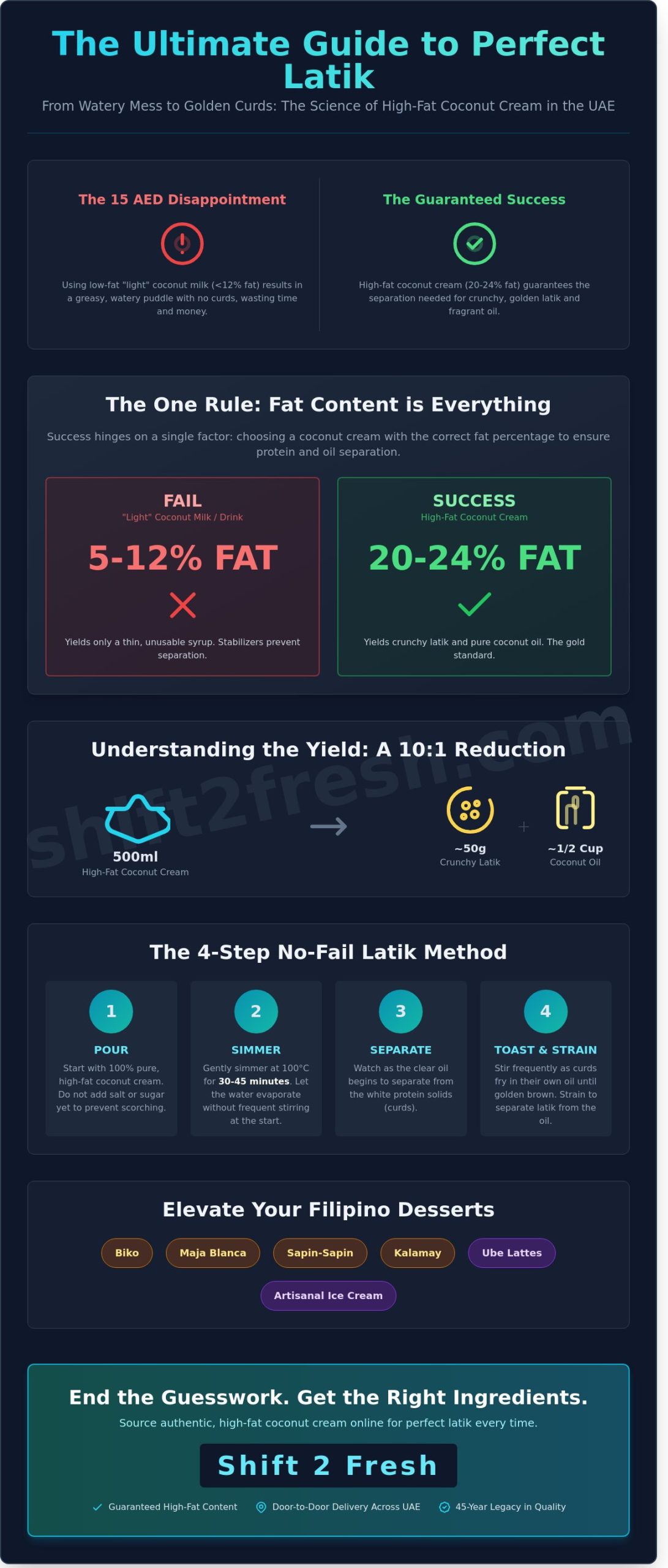
Success depends on the precise separation of protein and fat. As the cream simmers at a steady 100 degrees Celsius, the moisture leaves as steam. The proteins then brown in the remaining oil. Using “coconut drink” or “light coconut milk” is a common mistake because these products contain up to 90 percent water and stabilizers that prevent separation. You need a fat content of at least 20 percent to see any curd formation. Most commercial cans labeled “light” will simply boil away into a thin syrup, leaving no solids behind. Kakang gata, or the first thick extraction from grated coconut meat, represents the gold standard for producing high-yield, flavorful latik.
Essential Latik Ingredients: What to Look for Online
Finding high-quality latik ingredients online depends on one specific factor: the fat content. You need a coconut cream with a minimum fat percentage of 20% to 24%. Standard coconut milk usually sits around 5% to 12% fat; this is insufficient for creating those signature golden curds. If the fat content is too low, you’ll end up with a watery reduction instead of the crispy, oily topping you want. High-fat cream ensures the protein solids separate effectively from the oil during the boiling process.
The math for your kitchen is simple. If you start with 2 cups of thick coconut cream, you will likely yield about 1/2 cup of finished latik. This 75% reduction occurs because you are evaporating the water and separating the solids from the oil. You’re left with pure coconut oil and toasted protein bits. Traditionalists avoid adding salt or sugar to the base cream. Adding these extras early can scorch the pan or alter the chemical separation of the oil and protein. Stick to 100% pure coconut extract for the best results. The resulting oil is a byproduct that’s often more valuable than the latik itself, perfect for brushing over Biko or Suman.
Identifying High-Quality Coconut Cream Labels
Flip the can or carton over and look at the grams of fat per 100ml. You want to see at least 20 grams of fat. Understanding the nutritional value of coconut cream helps you choose products that actually curdle. Look for “First Press” or “Extra Thick” designations on the packaging. Avoid products containing stabilizers like guar gum (E412) or xanthan gum (E415). These additives are designed to keep the oil and water emulsified; this is the exact opposite of what you want for latik. Top Filipino brands available in the UAE like UFC, Coco Mama, or Kara consistently provide the high fat levels needed. A 400ml can typically retails for 5.50 AED to 9.50 AED in Dubai supermarkets. If the label lists water as the first ingredient, put it back and look for one where coconut extract is the primary component.
Sourcing Fresh vs. Processed Ingredients
Fresh-frozen coconut milk is the gold standard for many home cooks in Dubai and Abu Dhabi. This product is often blast-frozen at -18°C immediately after extraction, preserving the natural sweetness better than canned alternatives. It lacks the metallic aftertaste sometimes found in processed tins. However, canned staples offer undeniable convenience for spontaneous dessert making. They have a shelf life of up to 24 months, making them reliable pantry backups. Shift 2 Fresh prioritizes authentic sourcing from the Philippines to ensure you get that “fresh from the market” flavor without the labor of grating your own coconuts. You can find high-quality latik ingredients online through specialized vendors to ensure the fat content remains consistent across every batch. Using high-quality frozen cream results in a more fragrant oil that you can save for flavoring other desserts like Maja Blanca. Canned versions are often cheaper, but the flavor profile of frozen cream is significantly closer to the traditional “piga” method used in provincial Filipino kitchens.
Canned Coconut Cream vs. Fresh Gata: A Comparison for UAE Cooks
Choosing between a tin of coconut cream and fresh milk changes the outcome of your browning process. In the UAE, most home cooks rely on canned options found at major retailers like Carrefour or Lulu. These products offer a fat content of roughly 20% to 25%, which is ideal for creating consistent curds. Freshly pressed milk, often called gata, contains a higher water ratio. This means you will spend approximately 15 to 20 minutes longer at the stove waiting for the liquid to evaporate. Canned cream typically reaches the oil-separation stage within 25 minutes; fresh gata often requires a full 45 minutes of simmering before the first white clumps appear.
Cost is a major factor for families in Dubai and Abu Dhabi. A standard 400ml can of coconut cream costs between AED 5.50 and AED 9.00 depending on the brand. Freshly frozen coconut milk imported from Southeast Asia usually retails for AED 14.00 to AED 18.00 per 500ml package. While the upfront price of canned goods is lower, the yield of solid latik bits is often 12% higher in premium fresh products. If you are sourcing latik ingredients online, you must weigh the convenience of a shelf-stable pantry against the authentic texture of traditional extracts. Fresh gata is notoriously difficult to find in local neighborhood “baqalas” because it spoils within hours in the 40-degree UAE heat. Most residents find that ordering specialized frozen imports is the only way to achieve a traditional result without a trip to a dedicated specialty market in Al Satwa.
Pros and Cons of Canned Ingredients
Canned coconut cream provides a reliable shortcut for busy households. It stays stable in your pantry for up to 24 months, surviving the humidity of the Gulf region without losing quality. However, some lower-priced brands use stabilizers like guar gum. These additives can prevent the cream from separating into oil and solids, leaving you with a scorched paste instead of golden curds. You might also notice a slight metallic aftertaste if the can lining isn’t high quality. You should always shake the can vigorously before opening. If you hear a watery sloshing sound, the fat has separated from the liquid, which is actually a good sign for latik making. If the contents feel completely solid and silent, the manufacturer likely used heavy emulsifiers.
The Case for Fresh-Imported Coconut Products
The aroma of fresh coconut milk is incomparable. As the water evaporates, it releases a sweet, nutty scent that fills your entire apartment, a characteristic often lost during the high-heat canning process. Fresh products also produce a much higher volume of clear coconut oil. You can bottle this leftover oil to grease your banana leaves or “bilao” for a professional finish. When you browse for latik ingredients online, look for “first press” labels to ensure the highest fat concentration. Philippine-grown coconuts possess a significantly higher natural sugar content and a creamier fat profile compared to the more fibrous varieties typically harvested in other parts of the continent. This extra sugar helps the latik caramelize into a deep, mahogany brown rather than a pale tan color. Using fresh imports ensures your kakanin tastes like a traditional Filipino kitchen rather than a processed snack.
- Reduction Time: 25 mins (Canned) vs 45 mins (Fresh)
- Price Point: AED 6 avg (Canned) vs AED 16 avg (Fresh)
- Oil Yield: Moderate (Canned) vs High (Fresh)
- Storage: Pantry (Canned) vs Freezer (Fresh)
The No-Fail UAE Latik Method: From Pantry to Plate
Success starts with the right equipment and the highest quality fat content. Grab a 28cm wide, non-stick pan to ensure maximum surface area for evaporation. Pour your Shift 2 Fresh coconut cream directly into the cold pan. By sourcing your latik ingredients online, you’ve already bypassed the thin, watery cans found in discount aisles that often fail to separate. Turn the heat to medium and bring the cream to a gentle simmer. You’ll see small bubbles forming around the edges within the first 3 minutes. Don’t walk away during this stage; coconut cream can boil over quickly, creating a sticky mess on your stove.
As the moisture evaporates, the cream thickens into a heavy paste. This usually happens around the 12-minute mark. You’ll notice the oil starting to seep out from the white solids. This is the critical breaking point. Lower your heat slightly to prevent the oil from smoking. The white curds will begin to clump together. These clumps are the proteins that will eventually become your crunchy topping. Stir occasionally with a silicone spatula to ensure the solids don’t stick to the bottom, though a quality non-stick pan makes this process much smoother.
The final fry is where the transformation occurs. The white curds will begin to sizzle in their own rendered oil. Keep the mixture moving constantly now. You want an even, golden brown color across all the bits. Once the curds reach a deep amber hue, usually around the 18-minute mark, remove the pan from the heat immediately. Use a fine-mesh metal sieve to strain the curds. This step is non-negotiable. If you leave the latik in the hot oil or the pan, the residual heat will turn your golden treasure into bitter, burnt scraps in less than 45 seconds.
Temperature Control and Timing
Medium-low heat is your best friend for achieving that perfect crunch without the bitterness. While it’s tempting to crank up the stove to save time, high heat scorches the delicate proteins before the centers are fully cooked. Trust the scent cue. Your kitchen will begin to smell like toasted macaroons and caramel roughly 2 minutes before the latik is done. Remember the carry-over cooking effect; the curds continue to darken for a short time after they hit the strainer. Aim to pull them when they’re one shade lighter than your target color.
Storage Tips for the UAE Climate
Dubai and Sharjah experience humidity levels that often exceed 85% during the summer months. This moisture is the enemy of crispiness. Always store your cooled latik in an airtight glass container. Plastic containers are porous and can allow humidity to seep in, turning your crunchy topping soggy. While room temperature is fine for 48 hours, the 30-degree Celsius indoor temperatures common in many UAE homes mean refrigeration is the better choice for longevity. You can keep latik in the fridge for up to 2 weeks.
Don’t discard the leftover coconut oil, known as Langis. This is high-grade, aromatic oil that often retails for 45 AED or more in specialty organic shops. It’s a versatile byproduct that works wonders as a pre-wash hair treatment to combat the effects of desalinated water. Alternatively, use it to sauté vegetables or as a fragrant base for frying fish. Since you’ve invested in quality by finding your latik ingredients online, every drop of this oil carries the premium flavor of fresh coconuts.
Order your premium coconut cream today and experience the difference of fresh ingredients.
Why Buy Your Latik Ingredients from Shift 2 Fresh?
Authentic Filipino cooking relies on the quality of your base components. Shift 2 Fresh brings 45 years of specialized expertise in Asian produce directly to your doorstep in the UAE. Since our journey began in 1979, we’ve focused on bridging the gap between traditional Philippine flavors and the modern Middle Eastern kitchen. We don’t just stock shelves; we curate a selection of direct imports that mirror the exact brands found in local markets in Manila or Cebu. When you search for latik ingredients online, you need the assurance that the coconut cream has the necessary fat content to render into those perfect, golden crumbles.
Our operation centers around a high tech distribution hub in Sharjah. This location serves as the heart of our logistics network, allowing us to maintain a strict cold chain for all perishable items. We understand that the UAE climate presents unique challenges for food storage. By managing our own imports and local storage, we guarantee that your coconut milk and palm sugar haven’t sat in sweltering heat during transit. This control over the supply chain ensures that the natural oils in your ingredients remain stable, which is critical for the slow boiling process required to make latik.
Cost efficiency is another major factor for families in the Emirates. We offer competitive pricing on bulk pantry staples, often providing a 12 to 18 percent saving compared to smaller supermarket chains when you buy in larger volumes. This is particularly helpful for large community gatherings or family celebrations where kakanin is served in high quantities. Our bulk options ensure you never run out of supplies mid-recipe, allowing you to focus on the cooking rather than the cost per gram.
Seamless Shopping in the UAE
The Shift 2 Fresh mobile app makes restocking your kitchen incredibly simple. You can view your previous orders and trigger a quick reorder for coconut cream or sugar in under 30 seconds. We’ve set our free shipping threshold at AED 150, making it easy to stock up on all your essentials while avoiding extra delivery fees. Our delivery personnel receive specific training on handling liquid goods. This means your cans and tetra packs arrive without dents or leaks, even when navigating the busy streets of Dubai or Abu Dhabi. We maintain a 98 percent on-time delivery rate, ensuring your weekend baking starts exactly when you planned.
Complete Your Filipino Dessert Kit
Creating the perfect topping is only half the battle. You can pair your latik ingredients online with our premium black glutinous rice or authentic Philippine tablea to create a world class champorado. We also provide access to seasonal fruits like ube or lansones that are often difficult to find in standard grocery stores. These fresh additions elevate your homemade kakanin from a simple snack to a professional grade dessert. By sourcing everything from one reliable provider, you ensure flavor consistency across every element of your dish. Don’t settle for substitutes when the real thing is just a click away.
Order your premium latik ingredients online today at Shift 2 Fresh and bring the authentic taste of the Philippines to your UAE home.
Master the Art of Filipino Coconut Curds in Your UAE Kitchen
Achieving that golden, nutty crunch on your biko or maja blanca doesn’t have to be a guessing game. You’ve learned that the secret lies in the specific fat content of your coconut cream and the patience of your simmering process. By choosing high-quality, direct-imported coconut products, you ensure your latik has the authentic aroma and texture that defines traditional Filipino desserts. Sourcing your latik ingredients online through a trusted provider eliminates the hassle of searching local aisles for specialized brands. Shift 2 Fresh brings over 45 years of food industry expertise right to your doorstep, sourcing products directly from the Philippines to guarantee freshness. You can even enjoy free delivery on all orders over AED 500. It’s time to elevate your home cooking with flavors that taste like home. Your next batch of perfect, aromatic latik is just one click away. Don’t settle for less than the best when recreating your favorite childhood memories in Dubai or Abu Dhabi.
Shop Authentic Filipino Latik Ingredients Now
Get ready to impress your family with treats that smell and taste exactly like the ones from the islands.
Frequently Asked Questions
Can I make latik from coconut milk powder?
You can make latik from coconut milk powder by creating a highly concentrated liquid mixture. Mix 250 grams of high fat powder with 125 ml of warm water to ensure there’s enough fat to separate. This method produces 30% fewer curds than fresh cream, but it works in a pinch. Most home cooks in Dubai find it easier to buy canned latik ingredients online for more consistent results.
Why did my coconut cream turn into oil but didn’t produce any curds?
Your coconut cream likely lacked sufficient protein solids or contained chemical stabilizers like guar gum. For successful curds, you need a fat content of at least 20% and zero emulsifiers. If the label lists 0.5% xanthan gum, the proteins won’t clump together during the boiling process. You’ll end up with clear oil and no golden bits regardless of how long you simmer the liquid.
How long does homemade latik last in the fridge?
Homemade latik stays fresh for 30 days when you store it in an airtight glass jar. Keep your refrigerator set to 4 degrees Celsius to prevent the natural oils from turning rancid. If you want to store it longer, the curds last for 90 days in the freezer. Always use a clean, dry spoon to scoop the curds so you don’t introduce moisture that causes mold growth.
Is there a vegan substitute for latik?
Latik is already 100% vegan because it’s made entirely from pure coconut cream. It contains no dairy, honey, or animal byproducts, which makes it an ideal topping for plant-based desserts. You don’t need a substitute since it fits a vegan lifestyle naturally. Many residents in the UAE use it as a gluten-free garnish for traditional rice cakes like Biko and Sapin-Sapin.
Where can I buy authentic Filipino coconut cream in Dubai?
You can buy authentic Filipino coconut cream at West Zone Supermarket or Al Maya Supermarket branches across Dubai. These retailers stock reliable brands like Kara or Coco Mama for approximately AED 6.75 per 400ml can. If you prefer home delivery, sourcing your latik ingredients online through platforms like Kibsons or Amazon.ae is a fast way to find 100% pure coconut extracts without additives.
Can I use the leftover coconut oil for sautéing other dishes?
You can definitely use the leftover oil for sautéing or frying your favorite meals. It has a high smoke point of 177 degrees Celsius and carries a toasted aroma that enhances savory Filipino dishes. Try using 15 ml of this oil to fry garlic for sinangag. It adds a rich depth of flavor that standard vegetable oils can’t match, and it’s packed with healthy medium-chain triglycerides.
How much coconut cream do I need for one tray of Biko?
You need 800 ml of coconut cream to produce enough latik for a standard 9×13 inch tray of Biko. This volume typically yields about 65 grams of solid curds after 45 minutes of constant simmering. If you want a very thick layer of toppings, increase the amount to 1.2 liters of cream. Most 400ml cans in Dubai supermarkets retail for less than AED 8 each.
What is the difference between latik curds and the syrupy latik sauce?
Latik curds are the toasted protein solids left after frying pure coconut cream until the moisture evaporates. The syrupy version is a different preparation made by reducing coconut milk mixed with 200 grams of muscovado sugar. The curds provide a salty, crunchy texture for garnishing desserts. The syrup acts as a sweet, viscous glaze for dishes like cassava cake or fried bananas.
0 comments