

Is there anything more comforting than a truly authentic bowl of sinigang? We’re not talking about the kind from a packet, but the soul-soothing, perfectly sour broth that tastes just like home. For many of us here in the UAE, achieving that flavour feels like a challenge. The secret, of course, is using real, fresh tamarind for sinigang. But the questions quickly follow: How do you extract the broth? How much sampalok do you need? And where can you consistently find it? If the thought of making it from scratch seems too complicated or time-consuming, you’ve come to the right place.
This ultimate guide is here to demystify the entire process and empower you to cook with confidence. We’ll walk you through every step, from selecting the perfect green tamarind pods to effortlessly preparing the tangy broth that forms the heart of this beloved dish. Say goodbye to guesswork and hello to the most delicious, authentic sinigang you’ve ever made. Get ready to bring that unmistakable taste of the Philippines right to your kitchen table.
Key Takeaways
- Discover why fresh tamarind provides a uniquely clean and authentic sourness (asim) that powdered mixes simply can’t replicate.
- Master the simple process of selecting the right sampalok and preparing it to extract the maximum sour flavor for your broth.
- Unlock the secret to a perfect *katás ng sampalok* with our step-by-step guide to using fresh tamarind for sinigang.
- Find out where to easily source fresh tamarind and other essential Filipino ingredients right here in the UAE, including convenient online delivery options.
Why Fresh Tamarind Makes a World of Difference in Sinigang
For many Filipinos in the UAE, the sharp, comforting taste of Sinigang is a taste of home. While convenient powdered mixes have become a pantry staple, they can never truly replicate the authentic, soul-soothing flavor that comes from its original souring agent. Using fresh tamarind for sinigang is the single most significant step you can take to elevate your dish from a quick meal to a cherished culinary experience. It’s about moving beyond a simple salty-sour taste to embrace the complex, vibrant asim (sourness) that defines this beloved stew.
The difference lies in the depth of flavor. Fresh tamarind provides a clean, bright sourness with subtle fruity undertones that complements the richness of the meat and the freshness of the vegetables without overpowering them. For those unfamiliar with this cornerstone of Filipino cuisine, understanding What is Sinigang? clarifies that the sour broth is the heart of the dish, and the quality of that sourness is paramount.
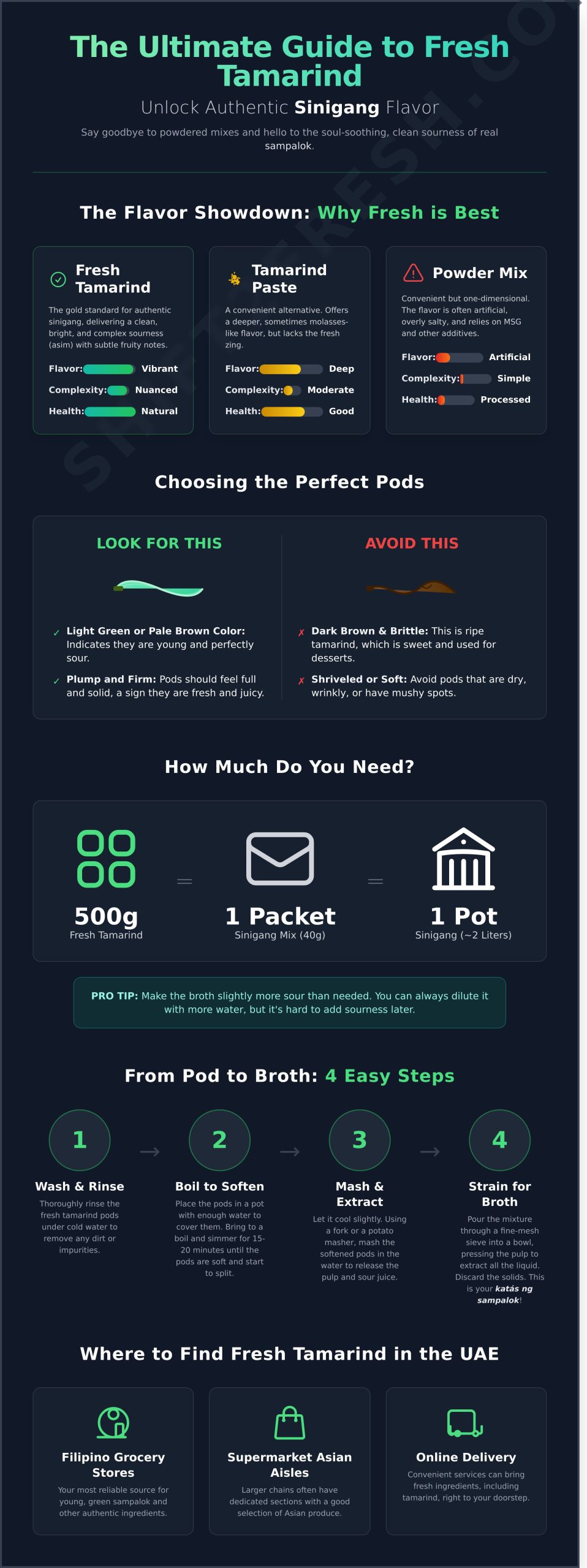
The Flavor Showdown: Fresh vs. Processed
Not all tamarind is created equal. The souring agent you choose directly impacts the final taste of your broth. Here’s a quick comparison:
- Fresh Tamarind (Sampalok): Delivers a vibrant, nuanced sourness that is both bright and complex. It has a clean finish and a natural, slightly sweet, fruity note that processed versions lack.
- Tamarind Paste/Block: A decent runner-up, this form is concentrated and often has a darker, deeper flavor profile. It can sometimes lean towards a molasses-like sweetness and may lack the bright “zing” of fresh tamarind.
- Sinigang Powder Mix: The most convenient option, but its flavor is often one-dimensional and heavily reliant on salt and artificial flavor enhancers. It delivers a consistent but generic sourness that can taste artificial.
Healthier and More Natural
Opting for fresh tamarind isn’t just about superior taste; it’s also a healthier choice. By making your own tamarind broth, you take full control of the ingredients. Fresh tamarind is a natural fruit, rich in vitamins and antioxidants. You completely avoid the high sodium content, MSG, and other preservatives commonly found in instant sinigang mixes. There is immense satisfaction in knowing you are serving a meal made from pure, whole ingredients-a truly wholesome and delicious dish for your family.
Your Guide to Choosing and Preparing Fresh Tamarind (Sampalok)
Before you can achieve that signature sour broth, you must understand its source: the humble sampalok, or tamarind. This fruit is the soul of authentic sinigang, a cornerstone dish in the rich Filipino culinary landscape. While powdered mixes are convenient, mastering the use of fresh tamarind for sinigang elevates the dish from a simple soup to a vibrant, deeply flavorful experience. This guide will walk you through selecting, measuring, and prepping the perfect pods for your pot.
How to Select the Perfect Tamarind for Sinigang
The secret to a powerfully sour sinigang lies in choosing the right kind of tamarind. Not all pods are created equal! When you’re at a Filipino grocery store or the Asian section of a larger supermarket in the UAE, you need to look for young, unripe tamarind. These are packed with the tartness you need.
- Look for Color: Choose pods that are light green or pale brown. They should still look fresh and vibrant, not dark and aged.
- Feel for Firmness: The pods should be plump and firm to the touch. This indicates they are fresh and full of pulp. Avoid any that are shriveled, dry, or have soft spots.
- Avoid Ripe Tamarind: Steer clear of dark brown, brittle pods. This is ripe tamarind, which is sweet and sticky, commonly used for candies and desserts, not for souring your soup.
How Much Tamarind Do You Need?
Figuring out the quantity can be tricky your first time, but a simple guideline makes it easy. For a standard family-sized pot of sinigang (around 2 liters of water), you will need approximately 500 grams of fresh tamarind pods. This amount, which might cost you between 5-10 د.إ, is a great starting point and is roughly equivalent to one large 40g packet of commercial sinigang mix. Our pro tip: It’s always better to make the broth slightly more sour than you think you’ll need. You can easily dilute it with a bit more water later, but it’s much harder to add more sourness once the other ingredients are in.
Step 1: Washing and Prepping the Pods
Once you have your perfect pods, the initial prep is straightforward. This is the very first step before you even think about boiling the tamarind to extract its sour pulp. Simply rinse the tamarind pods thoroughly under cool, running water to remove any dirt or residue from the market. You can leave them whole or use your hands to crack the shells open in a few places-this can help release the flavor more quickly. There is absolutely no need to peel them at this stage; the skin and shell contribute to the overall flavor profile during the initial boil.
How to Make Perfect Tamarind Broth (Katás ng Sampalok) from Scratch
This is where the magic happens. Forget the powdered mixes and concentrated pastes; creating your own tamarind broth, or katás ng sampalok, is the soul of an authentic sinigang. The process of using fresh tamarind for sinigang transforms the dish, giving it a depth of flavor that is both bright and complex. The tamarind fruit, known botanically as Tamarindus indica, contains a tart pulp that is prized in cuisines worldwide, a fact detailed in the University of Florida’s horticultural guide to tamarind. This step-by-step guide will help you extract that incredible flavor for a perfectly smooth and sour soup base.
Step 2: Boiling the Tamarind
Place your prepared tamarind pods into a medium-sized pot and cover them with about 4 to 5 cups of water. Bring the water to a rolling boil over high heat, then immediately reduce the heat to low. Allow the tamarind to simmer gently for 20 to 30 minutes. You are looking for the pods to become extremely soft and tender, to the point where they begin to split open. This process softens the pulp and begins infusing the water with its distinct sourness.
Step 3: Mashing and Extracting the Pulp
Once the tamarind is soft, remove the pot from the heat. Let it cool for about 10-15 minutes, or until the mixture is cool enough to handle safely. Using a large fork or a potato masher, begin mashing the softened pods directly in the pot against the sides and bottom. Be thorough and apply firm pressure. This action is crucial as it separates the sour pulp from the seeds and tough fibers, releasing its full flavor into the hot water.
Step 4: Straining for a Smooth Broth
Position a fine-mesh sieve over a large bowl that will serve as the base for your sinigang. Carefully pour the mashed tamarind mixture through the sieve. Let the liquid drain, then use the back of a spoon to press the solids firmly against the mesh. Work the pulp to squeeze out every last drop of the flavorful liquid. Discard the remaining seeds and fibers in the sieve. The beautiful, opaque liquid you have in the bowl is your pure tamarind extract-the perfect, authentic foundation when using fresh tamarind for sinigang.
Classic Pork Sinigang Recipe with Fresh Tamarind Broth
Now that you’ve mastered creating the vibrant, sour base, it’s time to bring it all together. This classic Sinigang na Baboy (Pork Sinigang) recipe is a household staple across the Philippines and a perfect showcase for your homemade tamarind broth. This comforting, soupy dish balances rich, tender pork with the sharp, clean sourness of tamarind and the freshness of hearty vegetables. It’s the ultimate Filipino comfort food, guaranteed to satisfy.
Ingredients You’ll Need
For an authentic taste, gathering the right components is key. The beauty of sinigang lies in its fresh, wholesome ingredients. Here’s what you’ll need to serve 4-6 people:
- 1 kg pork belly or pork ribs, cut into 2-inch cubes
- 2 litres water or hugas bigas (rice wash)
- 1.5 cups of your prepared fresh tamarind broth
- 2 medium onions, quartered
- 3 medium tomatoes, quartered
- 1 large daikon radish (labanos), peeled and sliced
- 1 bundle of long beans (sitaw), cut into 2-inch lengths
- 1 medium eggplant (talong), sliced
- 1 bundle of water spinach (kangkong)
- 2 pieces long green chili (siling pangsigang)
- Fish sauce (patis) to taste
Cooking Instructions
Creating the perfect bowl of sinigang is a process of layering flavours. Follow these simple steps for a foolproof result.
- Tenderize the Pork: In a large pot, combine the pork and water (or rice wash). Bring to a boil, then lower the heat to a simmer. Skim off any scum that rises to the surface. Cook for 60-90 minutes, or until the pork is fork-tender.
- Build the Broth: Add the quartered onions and tomatoes to the pot. Simmer for 10 minutes until they soften. Pour in your meticulously prepared broth made from fresh tamarind for sinigang and let it meld with the pork for another 5 minutes.
- Add the Vegetables: Add the vegetables in stages, starting with the ones that take longest to cook. First, add the daikon radish and cook for 5 minutes. Next, add the long beans and eggplant. Finally, add the water spinach and long green chilies in the last 2 minutes of cooking to ensure they remain crisp and vibrant.
- Season to Taste: The final and most crucial step. Turn off the heat and season the sinigang with fish sauce (patis). Add one tablespoon at a time, tasting after each addition until you reach your desired level of saltiness.
Serving and Pairing
Sinigang is best enjoyed immediately, served steaming hot in a large bowl with a side of freshly cooked jasmine rice. The rice provides the perfect neutral canvas for the dish’s rich, sour, and savoury flavours. For an extra layer of flavour, many Filipinos enjoy a small dipping bowl of patis, sometimes with crushed fresh chili, alongside their meal. To guarantee the best-tasting sinigang, using the freshest produce is non-negotiable. Order your vegetables online from Shift 2 Fresh! for farm-to-doorstep delivery across the UAE.
Where to Find Fresh Tamarind and Other Filipino Ingredients in the UAE
For many Filipino home cooks in the UAE, the biggest challenge in recreating the perfect sinigang isn’t mastering the recipe-it’s the treasure hunt for authentic, high-quality ingredients. The search for that distinctly sour, unripe green tamarind can often lead to multiple supermarket trips, only to end in disappointment or settling for powdered mixes that lack the depth of the real thing.
Fortunately, the convenience of online grocery shopping has revolutionised access to specialty produce. You no longer need to spend your weekend navigating different stores. Now, you can source the freshest Filipino vegetables and pantry staples from the comfort of your home, ensuring your kitchen is always ready for a comforting bowl of sinigang.
The Shift 2 Fresh Advantage
At Shift 2 Fresh, we bridge the distance between farms in the Philippines and your kitchen in the UAE. We specialise in directly importing seasonal Filipino produce, prioritising freshness and quality above all. This means you get access to ingredients that are often hard to find, including the essential fresh tamarind for sinigang. Forget the frustrating search; we bring the farm-fresh goodness straight to you.
- Direct Imports: We source our produce directly to ensure maximum freshness and authenticity.
- Home Delivery: Get everything you need, delivered conveniently to your doorstep anywhere in the UAE.
- Guaranteed Quality: We hand-pick the best produce, so you can cook with confidence.
Complete Your Sinigang Shopping List
Why stop at just tamarind? Shift 2 Fresh is your one-stop shop for all Filipino culinary needs. Alongside the perfect souring agent, you can find all the other vegetables that make sinigang a complete, hearty meal. Stock your cart with crisp kangkong (water spinach), fresh labanos (daikon radish), tender sitaw (long beans), and green siling haba.
We also carry essential pantry staples, including authentic fish sauce (patis) to achieve that perfect umami balance. Experience the ultimate convenience of building your entire Filipino meal from a single, reliable source. Shop for Fresh Tamarind and more today!
Embrace Authentic Flavor: Your Sinigang Will Never Be the Same
You’ve now seen how moving beyond instant mixes can completely transform your cooking. Making your own rich, tangy broth from scratch is the key to unlocking the soul-soothing, authentic taste that makes this dish a Filipino treasure. The vibrant, complex sourness you get from using real fresh tamarind for sinigang is simply unmatched, turning a good meal into an unforgettable one.
For those of us in the UAE, sourcing these essential ingredients is easier than ever. Shift 2 Fresh brings you farm-fresh tamarind directly imported from the Philippines, guaranteeing unparalleled freshness and quality for your kitchen. With convenient online ordering and reliable home delivery across the UAE, authentic flavor is just a click away. Get farm-fresh tamarind delivered to your door. Order now!
Go ahead, gather your ingredients and bring the true taste of the Philippines to your table. Happy cooking!
Frequently Asked Questions
Can I use ripe (brown) tamarind for sinigang?
Yes, you can, but it will significantly change the flavor. Green, unripe tamarind provides the signature sharp sourness essential for authentic sinigang. Ripe brown tamarind is much sweeter and less sour, resulting in a milder, sweeter soup. For that classic lip-puckering taste, it is best to use green tamarind. If brown is all you have, you may need to add another souring agent like calamansi to achieve a more traditional flavor profile.
How do I store leftover fresh tamarind or the prepared broth?
To store unused fresh tamarind pods, place them in a sealed bag or airtight container in your refrigerator’s crisper drawer, where they will last for up to two weeks. For the prepared tamarind broth, allow it to cool completely before transferring it to an airtight container. It can be safely stored in the refrigerator for 3 to 4 days, making it convenient for another quick meal later in the week.
Can I make a big batch of tamarind broth and freeze it for later?
Yes, this is an excellent way to save time! Prepare a large batch of the tamarind broth, let it cool completely, and then pour it into freezer-safe containers or ice cube trays for easy portioning. Frozen tamarind broth will maintain its quality for up to three months. When you’re ready to cook, simply thaw the amount you need for a delicious, homemade sinigang base without any of the prep work.
What other Filipino dishes use fresh tamarind?
Beyond sinigang, fresh tamarind is the star in Sinampalukang Manok, a sour chicken soup that often includes tamarind leaves. It can also add a unique layer of sourness to some regional versions of Paksiw na Isda (fish cooked in a vinegar-based sauce). Additionally, its pulp is used to create tangy dipping sauces (sawsawan) for grilled meats and seafood, highlighting its importance as a souring agent in Filipino cooking.
My sinigang isn’t sour enough. How can I fix it?
If your sinigang isn’t sour enough, the best solution is to add more of your homemade tamarind broth. Stir in a small amount, let it simmer for a minute, and taste. Repeat this process until you reach your preferred level of sourness. If you’ve run out of broth, a squeeze of fresh calamansi juice or a small splash of white vinegar can also help boost the acidity and brighten the flavor of your soup.
Besides pork, what other meats or seafood can I use for sinigang?
Sinigang is wonderfully versatile. Popular seafood options include prawns (Sinigang na Hipon) and fish like milkfish (bangus) or tilapia. For a richer soup, try beef short ribs (Sinigang na Baka), or for a lighter version, use chicken (Sinigang na Manok). The method of preparing fresh tamarind for sinigang is the same for all variations, just remember to adjust the cooking time to ensure your chosen protein is perfectly tender.
0 comments