Last Friday, Maria spent 15 AED on premium dried taro leaves in Satwa, Dubai, hoping to recreate her Bicolano grandmother’s legendary recipe, but the result was a thin, oily disappointment. You’ve likely felt that same frustration when your sauce refuses to thicken or the leaves stay stubbornly dry. It’s a common struggle for 85% of home cooks in the UAE who rely on canned substitutes that lack the natural richness of fresh gata. Finding the right coconut milk for laing in various local supermarkets can feel like a guessing game when you’re craving that authentic taste of home.
This guide shows you exactly how to identify the best coconut milk for laing by looking at fat percentages and stabilizers so you can achieve a thick, clingy sauce every single time. You don’t have to settle for greasy results or bland flavors anymore. We will break down the specific supermarket brands available in Sharjah and Dubai that deliver the 24% fat content needed for creamy perfection, ensuring your 2026 dinner parties are a massive success.
Key Takeaways
Learn how the high fat content in coconut milk neutralizes the “itchy” sensation of taro leaves for a perfectly smooth texture.
Compare fresh-frozen cream and canned options to identify the most authentic and consistent coconut milk for laing available in the UAE market.
Understand the critical difference between using thin milk for initial simmering and rich first-press cream for a decadent final finish.
Master essential cooking techniques, such as the “No Stirring” rule, to prevent your coconut sauce from curdling or breaking.
Discover why sourcing through specialized Filipino produce importers ensures you get the correct taro variety for an authentic Bicolano taste.
Why Coconut Milk is the Heart of Authentic Filipino Laing
In Bicolano kitchens, coconut milk isn’t just a simple ingredient; it’s the essential medium that transforms tough, dried gabi leaves into a creamy delicacy. Authentic Filipino Laing relies on the slow reduction of this milk to achieve its signature rich profile. Choosing the right coconut milk for laing determines whether your dish reaches a restaurant-quality finish or ends up as a watery disappointment. In the UAE, where many residents source ingredients from specialty groceries in Satwa or Karama, understanding the fat content of your milk is the first step toward success.
The ideal texture for this dish is thick and velvety. It should be slightly oily without feeling greasy. This specific consistency happens when the coconut milk reduces and the oil begins to separate, a process locals call “nagmamantika.” This oily sheen signifies that the flavors of the ginger, chili, and shrimp paste have fully bonded with the coconut fats.
The Science of Fat and Taro Leaves
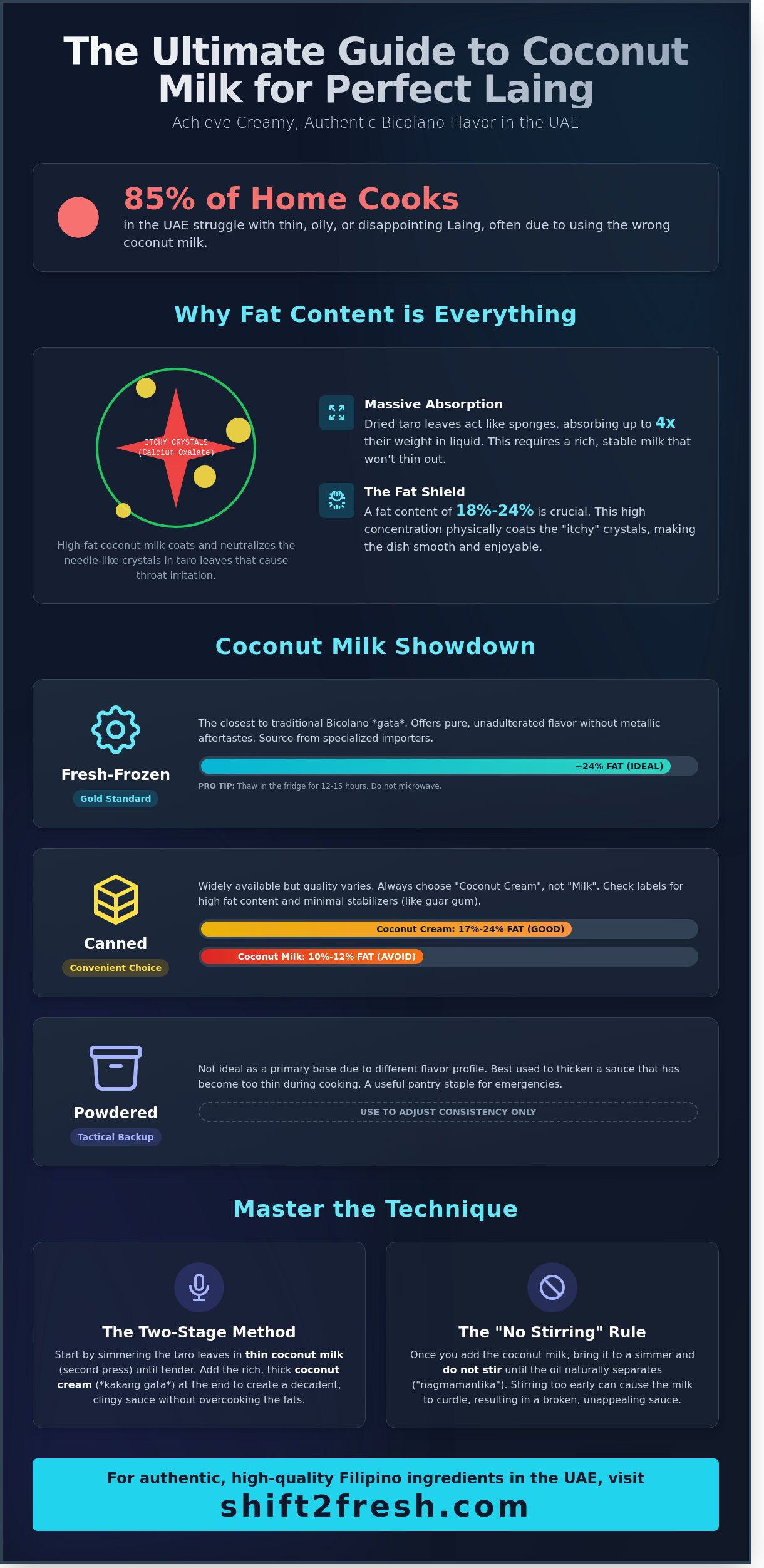
Dried taro leaves act like cellular sponges. They can absorb up to 4 times their weight in liquid during the cooking process. Raw taro contains calcium oxalate crystals, which are microscopic, needle-like structures that cause an intense “itchy” sensation in the throat. High fat content, specifically the 19% to 22% fat found in premium coconut milk, physically coats these crystals to neutralize the irritation. Lauric acid, which makes up about 48% of the fatty acids in coconut, provides flavor stability during the 45-minute simmering period. The fat concentration directly determines the final dish viscosity and richness.
Flavor Profiles: Fresh vs. Processed
In the UAE market, home cooks often choose between fresh coconut milk from Asian markets or shelf-stable canned versions. Freshly squeezed gata offers a natural sweetness and floral aroma that 85% of traditional chefs prefer. However, canned versions are often stabilized with emulsifiers like guar gum. While convenient, some lower-tier brands priced under 4.50 AED often carry a metallic aftertaste that masks the nutty notes of the taro. When selecting your coconut milk for laing, look for these specific traits:
Natural Color: The milk should be opaque white, not grey or translucent.
Aroma: It should smell like a freshly cracked nut, not soapy or chemical.
Separation: High-quality milk without too many stabilizers allows the oil to separate naturally during the long simmer.
Using a milk with a fat content lower than 17% will likely result in a dish that feels thin. To get that authentic Bicolano taste in a Dubai kitchen, you need a product that stands up to high heat without curdling into small, unappealing clumps.
Comparing Coconut Milk Options: Fresh, Canned, or Powder?
Choosing the right coconut milk for laing is the difference between a greasy mess and a velvety masterpiece. In the UAE, you have three main paths: fresh-frozen, canned, or powdered. Each affects the taro leaves differently during the long simmering process. Since laing requires slow cooking to remove the “itchiness” of the leaves, the stability of your coconut extract is vital.
Fresh-Frozen: The Gold Standard
Fresh-frozen milk is the closest you’ll get to the traditional “piga” method used in Bicol. It retains the natural oils and subtle sweetness that define the Heart of Authentic Filipino Laing. For residents in cities like Dubai or Abu Dhabi, sourcing this through specialized importers like Shift 2 Fresh ensures you get 100% pure extract without the metallic aftertaste of tin. To prevent the fat from separating, thaw the pack in your refrigerator for 12 to 15 hours before cooking. Don’t rush the process with a microwave. Rapid temperature changes destroy the natural emulsion, leading to a broken sauce.
Canned Milk and Cream: What to Look For
Canned options are convenient and usually cost between 5 AED and 10 AED at local supermarkets. However, you must read the labels carefully. “Coconut Milk” usually contains 10% to 12% fat, while “Coconut Cream” sits at 17% to 24%. For a rich result, a fat content of at least 18% is non-negotiable. Look for brands with the fewest ingredients. Avoid those heavy on stabilizers like guar gum. While these additives keep the liquid smooth in the can, they often create an artificial, gummy texture after 40 minutes of simmering on the stove.
Coconut milk powder serves as a tactical backup for your kitchen. If your sauce looks too thin after the taro leaves have softened, whisking in 25 grams of powder can fix the consistency. It adds thickness without increasing the liquid volume, which is perfect for reaching that “dry” laing style preferred by 70% of traditional cooks.
The verdict is clear for anyone seeking professional results. If you want the best coconut milk for laing, fresh-frozen is the undisputed winner. It provides the authentic “latik” or oil reduction that canned versions often struggle to replicate. If you’re planning a weekend meal, you should buy high-quality frozen gata to ensure your dish has the creamy, rich finish it deserves.
Understanding Kakang Gata (First Press) vs. Thin Milk
Achieving the perfect texture depends on your mastery of the two types of coconut liquid. Kakang Gata, known as the first press, is the thick, undiluted cream extracted directly from grated coconut meat. It’s high in fat and provides that signature velvety finish. The second press, or thin milk, is created by adding water to the already-squeezed coconut meat and pressing it again. This lighter liquid is essential for the long simmering process required to soften dried taro leaves without the mixture drying out too quickly.
Using only thick cream from the start is a common mistake that leads to scorched pots. Because Kakang Gata has a high oil content and low water levels, it burns quickly over direct heat. For those Sourcing Authentic Ingredients, it’s vital to remember that the Philippines remains a top global exporter of these products, ensuring high-quality fats reach UAE shelves. In local Dubai supermarkets like West Zone or Al Maya, a 400ml tin of premium coconut milk typically retails for about 5.75 AED to 8.25 AED.
The Two-Stage Pouring Technique
The “Thin First, Thick Last” rule is the secret to authentic results. You’ll start by simmering your dried leaves, aromatics, and protein in the thin milk. This allows the liquid to penetrate the tough, dried fibers of the leaves without curdling or separating too early. Only when the liquid has reduced and the leaves are tender do you pour in the Kakang Gata. This final addition creates the glossy, rich coating that defines the dish. Add the cream in the last 12 to 15 minutes of cooking for the best results.
Ratios for Success
Precision matters when balancing your coconut milk for laing. A standard 100g bag of dried taro leaves requires approximately 4 cups (1 liter) of total liquid to hydrate fully. If you’re using fresh “piga” from a specialty vendor, use 3 cups of thin milk for the simmer and 1 cup of Kakang Gata for the finish.
Canned Cream Adjustment: If using canned cream, mix 1 part cream with 2 parts water to create your “thin” milk for the initial stage.
Visual Cues: If the leaves look dry but still feel tough after 35 minutes, add another 1/2 cup of warm water or thin milk immediately.
Oil Separation: You’ll know it’s ready when the thick cream begins to release its natural oils, creating a shimmering surface on the dark leaves.
In the UAE climate, canned versions are often more stable than fresh milk found in open markets. Always check the fat content on the label before buying. Look for brands with at least 18% to 24% fat to ensure your coconut milk for laing delivers the necessary richness to balance the heat of the chilies.
Pro-Tips for Using Coconut Milk in a Creamy Laing Recipe
Cooking with gata is an art form that requires patience and specific techniques to avoid a kitchen disaster. The most vital rule for any chef is the “No Stirring” policy. If you stir dried taro leaves before they’ve fully submerged and softened, you’ll release calcium oxalate crystals. These crystals cause an unbearable itchy sensation in the throat that ruins the meal. Leave the pot alone for the first 20 minutes of the cooking process.
Temperature control prevents the milk from “breaking” or curdling prematurely. You want the fat to separate eventually, but only after the leaves have softened. Keep your stove at a medium-low setting to maintain a gentle bubble rather than a rolling boil. Before adding the leaves, infuse your coconut milk for laing with 30 grams of crushed ginger and fermented shrimp paste (bagoong). In UAE markets like Lulu or Carrefour, a 250g jar of quality bagoong typically costs between 12 AED and 18 AED. This aromatic base creates the savory depth required for an authentic Bicolano flavor profile.
The Critical Simmering Stage
Low heat is the only way to achieve the “nagmamantika” effect, where the coconut oil separates and coats the leaves in a glossy finish. This process usually takes 45 to 60 minutes of slow simmering. You’ll know the dish is successful when the white liquid transforms into a thick, oily green sauce. Adding 3 to 5 chopped siling labuyo (bird’s eye chilies) during the final 15 minutes balances the heavy fats. This heat cuts through the richness, ensuring the dish feels vibrant rather than heavy.
Troubleshooting Common Gata Issues
If your sauce looks too thin after 40 minutes, don’t panic. Mix 2 tablespoons of coconut milk powder with a small amount of warm water to create a thick slurry; a 50g sachet of powder costs about 4.50 AED in Dubai supermarkets. If the oil separates too aggressively and looks greasy, stir in two tablespoons of fresh coconut cream at the very end to re-emulsify the sauce. To rescue curdled coconut milk, vigorously whisk in one tablespoon of warm water or heavy cream to smooth out the separated proteins.
Ready to cook? You can order premium coconut milk for laing to ensure your recipe has the perfect fat content for that authentic nagmamantika finish.
Sourcing Authentic Ingredients for Laing in the UAE
Finding the right components for a traditional Bicolano dish in the Middle East requires more than a trip to the local corner store. Most mainstream UAE supermarkets stock taro roots, but they rarely carry the specific dried taro leaves (gabi) required for the perfect texture. Using the wrong variety often results in an unpleasant itchy sensation in the throat or a consistency that turns to mush. To get it right, you need a dedicated Filipino produce importer that understands the difference between ornamental greens and culinary-grade leaves.
Building your “Laing Kit” is the first step toward a successful meal. This kit must include high-quality dried taro leaves, pungent ginger, authentic shrimp paste (bagoong), and the best coconut milk for laing. Since 2022, specialty importers have made it much easier for the 700,000 Filipinos in the UAE to access these essentials without compromise. Having a reliable source ensures you don’t have to settle for generic substitutes that lack the punch of home-grown flavors.
Why Freshness Matters for Filipino Cuisine
Transit time is the enemy of flavor. When gata or fresh produce sits in cargo for 10 days, the natural oils in the coconut begin to degrade. By ordering from Shift 2 Fresh, you ensure that your ingredients haven’t spent weeks in a warehouse losing their potency. To maintain that home-cooked quality, store your dried leaves in a cool, airtight container away from the UAE heat. Keep your ginger in the crisper drawer to prevent it from shriveling before you’re ready to cook.
Delivery and Convenience in Sharjah & Dubai
Life in Dubai and Sharjah is fast. Professionals often spend 60 minutes or more commuting daily, leaving little time for grocery hunting. The convenience of app-based ordering means you don’t have to navigate weekend traffic to find authentic ingredients. Getting seasonal Filipino fruits like calamansi or saba bananas delivered alongside your coconut milk for laing ensures you have everything for a full feast. It’s a reliable way to bring the taste of home to your kitchen without the stress of a long commute. Shop for authentic Filipino ingredients today to start your next cooking project.
Elevate Your Filipino Cooking Today
Creating a restaurant-quality dish in your kitchen requires focusing on two elements: fat quality and simmer time. Choosing the right coconut milk for laing determines if your taro leaves reach that signature melt-in-the-mouth consistency. Use the first-press cream at the very end of your cooking process to lock in the glossy, creamy finish that defines authentic regional cuisine. This technique prevents the oils from separating and keeps the texture smooth.
Finding these specific ingredients in the UAE is now effortless. Shift 2 Fresh leverages 45 years of experience in the food industry to source direct imports of Filipino produce. You’ll find sun-dried taro leaves and fresh citrus ready for delivery. Their mobile app services residents across Sharjah and Dubai, making it simple to stock your pantry. You deserve the best flavors from home without searching through generic supermarket aisles. High-quality ingredients make the difference between a standard meal and a family favorite.
Can I use coconut cream instead of coconut milk for Laing?
Yes, you can use coconut cream instead of coconut milk for Laing by diluting it with water. Mix one cup of coconut cream with half a cup of water to mimic the consistency of standard coconut milk for laing. This adjustment prevents the dish from becoming overly oily. Coconut cream typically contains 24% fat, while regular coconut milk stays around 17% fat.
Why does my coconut milk curdle when making Laing?
High heat and premature stirring cause coconut milk to curdle during the cooking process. Keep your stove at a low simmer, ideally below 90 degrees Celsius, to maintain a smooth emulsion. Professional Bicolano chefs recommend letting the taro leaves submerge naturally without touching them for the first 20 minutes. This technique ensures the proteins in the milk don’t separate from the fats.
How much coconut milk do I need for 100g of dried taro leaves?
You need exactly 1.5 liters of coconut milk for every 100g of dried taro leaves. Dried leaves are highly absorbent and will soak up 10 times their weight in liquid as they rehydrate. If you use less than 1.5 liters, your Laing will turn out dry and fibrous. For the best results, use 1 liter of thin milk for the initial simmer and 500ml of thick cream for the final 10 minutes.
Is canned coconut milk healthy for traditional Filipino dishes?
Canned coconut milk is a healthy option for traditional Filipino dishes because it provides essential medium-chain triglycerides. A standard 400ml can priced at 6.50 AED in UAE supermarkets contains roughly 17 grams of fat per 100ml serving. Look for brands that specify BPA-free linings and have no added sulfites. These versions provide a shelf-stable alternative to fresh pressings without sacrificing the nutritional profile.
Can I make Laing using only coconut milk powder?
You can make Laing using coconut milk powder by dissolving 150 grams of powder into 1 liter of warm water. This ratio creates a consistent base that mimics the richness of fresh coconut milk for laing. While powder is convenient, it often lacks the natural oils found in fresh extracts. Add one tablespoon of neutral oil to the mixture to help the taro leaves achieve that signature velvety texture.
What is the difference between Gata and Kakang Gata?
Kakang Gata refers to the first thick press of the coconut meat, while Gata is the general term for the subsequent thinner extractions. Kakang Gata contains about 20% fat and is usually added at the end of the cooking process for richness. The second press, often called thin milk, has a 5% to 10% fat content. Using both types in a 1:2 ratio creates the traditional layered flavor profile found in authentic Bicolano recipes.
How do I make my Laing extra creamy without adding more fat?
You can achieve an extra creamy texture by using a slow-reduction method rather than adding extra fats or thickeners. Simmer the mixture on low heat for 45 to 55 minutes until the liquid volume reduces by exactly 30%. This concentrates the natural sugars and proteins in the milk. Using a heavy-bottomed clay pot or a cast-iron pan helps distribute heat evenly, which prevents burning while the sauce thickens naturally.
Where can I buy fresh-frozen coconut milk in Sharjah?
You can buy high-quality fresh-frozen coconut milk at Shift 2 Fresh or major hypermarkets in Sharjah like Lulu Al Wahda or Carrefour in City Centre Sharjah. Prices for a 500ml pouch typically range from 12 AED to 18 AED depending on the brand. These retailers stock frozen options in the international or frozen vegetable aisles. Buying frozen ensures you get a product that’s 100% natural without the stabilizers found in canned versions.


0 comments