

Last Tuesday, a home cook in Al Barsha spent 25 minutes scouring the meat section only to realize that the pork belly they wanted would take nearly two hours to tenderize before guests arrived. You’ve likely felt that same hesitation when choosing between chicken adobo vs pork adobo for a quick weeknight meal. It’s a tough call because while you crave the deep, savory richness of pork, your schedule often demands the speed and convenience of poultry.
You’re about to learn the definitive breakdown of flavor, texture, and nutrition between these two legendary dishes. We’ll help you decide which meat fits your kitchen tonight based on prep time and authentic taste. We’ve also included a guide to sourcing the best cuts in Dubai and Sharjah for under AED 45 per kilogram. You’ll see exactly how to achieve that perfect vinegar-soy balance without spending 120 minutes at the stove, ensuring your dinner is both delicious and efficient.
Key Takeaways
- Understand how the traditional combination of vinegar, soy sauce, and garlic serves as both a flavor powerhouse and a historical preservation method.
- Contrast the rich, savory umami of pork cuts like liempo with the cleaner, vinegar-forward profile of a lighter chicken alternative.
- Evaluate the nutritional breakdown of chicken adobo vs pork adobo to decide which version fits your protein needs and calorie targets.
- Learn how to optimize your cooking time and prep methods based on the specific textures and fat content of your chosen meat.
- Find the best spots in the UAE to source authentic Filipino pantry staples like Datu Puti to ensure your dish tastes just like home.
The Essence of Filipino Adobo: More Than Just a Dish
Adobo isn’t just a recipe; it’s a survival strategy that evolved into a national obsession. At its heart, it relies on a quartet of ingredients: vinegar, soy sauce, garlic, and black peppercorns. This combination creates the salty, tangy profile that defines Filipino Adobo. Historically, this method dates back to the pre-colonial era, specifically recorded by Spanish colonists in 1613. The high acidity of vinegar acted as a preservative, allowing meat to remain edible for days in the tropical heat without refrigeration. This historical necessity created a flavor profile that is now hardcoded into the Filipino palate.
Choosing between chicken adobo vs pork adobo often depends on family tradition or specific health priorities. Pork offers a rich, fatty mouthfeel, while chicken provides a leaner, quicker-cooking alternative. In the UAE, where approximately 700,000 Filipinos reside as of 2023, the availability of ingredients in major supermarkets like Carrefour and other well-stocked grocery stores has made these versions staples in households from Dubai to Abu Dhabi. The sauce-to-meat ratio also shifts based on the protein. Pork adobo often features a “naglalandi” or flirtatious oily sauce where the rendered fat emulsifies with the vinegar. Chicken versions are frequently served “tuyo,” which means dry, or with a thinner, more acidic braise that doesn’t rely on heavy fat rendering.
The Science of the Braise
Vinegar contains acetic acid, which lowers the pH level of the meat. This process breaks down tough muscle fibers, particularly in pork shoulder or chicken thighs. Soy sauce provides the salt necessary for osmosis, drawing moisture out and then pulling the seasoned liquid back in to create a dark glaze. Garlic contains allicin, which releases its signature aroma when crushed. In a typical 1kg batch of adobo, using 3 entire heads of garlic is common practice to achieve that pungent depth. The slow simmer ensures the harshness of the vinegar mellows, leaving behind a complex, savory base.
Regional Variations in the Philippines
Geography dictates the plate. In Southern Luzon, Adobo sa Gata incorporates coconut milk, adding a creamy 400ml layer of fat to the tang. Conversely, Adobong Puti omits soy sauce entirely, relying on salt and heavy vinegar for a clear, sharp profile. For the diaspora in the UAE, the debate of chicken adobo vs pork adobo is influenced by local availability. While pork is accessible in specialized “non-Muslim” sections of stores like Waitrose or Spinneys, chicken remains the most common choice for communal gatherings in areas like Al Satwa or Karama. This is due to its universal appeal and lower cost per kilogram, which usually averages AED 15 to AED 22 in local markets.
Pork Adobo: The King of Savory Indulgence
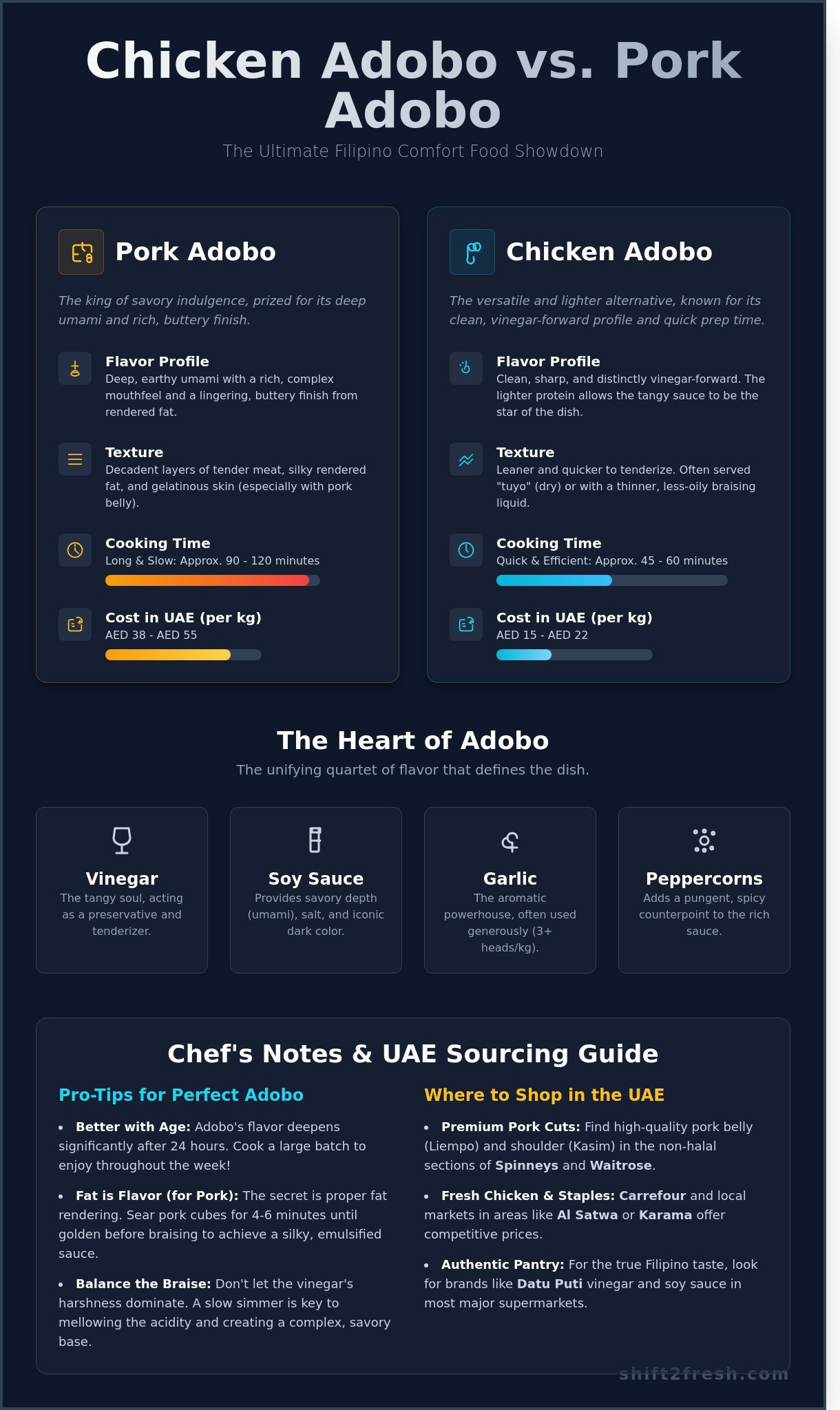
Pork adobo stands as the undisputed heavyweight champion of Filipino comfort food. While the chicken adobo vs pork adobo debate often comes down to personal health goals, pork wins every time on pure decadence. This version relies on the deep, earthy umami of soy sauce and vinegar working in tandem with rendered animal fat. Unlike its poultry counterpart, pork adobo offers a complex mouthfeel that transitions from the initial tang of the vinegar to a lingering, buttery finish on the palate. Its place in the history of adobo highlights how the dish evolved from a simple preservation method into a sophisticated braise that celebrates rich textures.
The sensory experience is defined by the contrast between the meat and the skin. When you use Liempo (pork belly), you get layers of lean meat, creamy fat, and gelatinous skin. In the UAE, high-quality pork cuts are available in specialized non-halal sections of retailers like Spinneys or Waitrose, typically priced between 38 AED and 55 AED per kilogram. If you prefer a meatier bite with less grease, Kasim (pork shoulder) is the better choice. It holds its shape during long cooking cycles while still providing enough connective tissue to thicken the sauce. Many home cooks find that using a 70/30 ratio of belly to shoulder creates the perfect balance for a family meal.
One unique characteristic of this dish is its ability to improve with age. After 24 hours in the refrigerator, the acetic acid in the vinegar further breaks down the muscle fibers, and the fat absorbs the garlic and peppercorn aromatics. This maturation process is why many Filipinos cook large batches on a Sunday to enjoy throughout the week. For the best results, you should source fresh, chilled pork rather than frozen varieties to ensure the proteins retain their moisture during the reheating process.
The Importance of Fat Rendering
Success with pork adobo depends entirely on how you manage the fat. As the pork simmers, the white layers of the belly should transform into a translucent, silky texture that coats every grain of rice. To achieve a professional finish, many chefs sear the pork cubes in a hot pan for 4 to 6 minutes before adding liquids. This creates a Maillard reaction, adding a smoky crust that prevents the meat from looking “boiled.”
Cooking Time and Patience
You cannot rush a great pork adobo. While chicken might be ready in 35 minutes, pork requires a slow braise of 60 to 90 minutes to reach peak tenderness. In modern Dubai kitchens, many residents opt for pressure cookers to cut this time down to 25 minutes; however, the traditional method using a heavy-bottomed pot or a clay palayok allows for better evaporation and flavor concentration. The 60-minute investment is necessary for the collagen to turn into gelatin, which gives the sauce its signature “lip-sticking” quality. When comparing chicken adobo vs pork adobo, the pork version is clearly the choice for those who value depth of flavor over speed of preparation.
- Liempo (Belly): Best for maximum flavor and “nagmamantika” style.
- Kasim (Shoulder): Best for those who prefer a higher protein-to-fat ratio.
- Pork Ribs: An excellent alternative that adds bone-in richness to the sauce.
Chicken Adobo: The Versatile and Lighter Alternative
Chicken adobo represents the modern, fast paced side of Filipino cuisine. While pork offers a heavy richness, chicken provides a cleaner palette that highlights the sharp tang of cane vinegar and the pungent depth of crushed garlic. This version is particularly popular in the United Arab Emirates, where poultry is a staple protein in most households. For those exploring the history and variations of adobo, it’s clear that chicken became the go to choice for a lighter, more accessible meal that doesn’t sacrifice the dish’s soul.
The nutritional profile is a major factor in the chicken adobo vs pork adobo debate. A 100g serving of skinless chicken thigh contains approximately 209 calories and 10g of fat. In contrast, the same portion of pork belly can exceed 500 calories and 50g of fat. This 58% reduction in caloric density makes chicken the better option for health conscious diners in Dubai or Abu Dhabi looking to maintain a balanced diet without giving up traditional flavors. It delivers a higher protein-to-calorie ratio, which is essential for muscle maintenance and satiety.
Speed is the other major advantage. Chicken adobo is the ultimate weeknight savior because it requires 60% less cooking time than pork. You can have a fully braised, tender chicken meal on the table in 35 to 40 minutes. Pork often requires 90 minutes or more to break down tough connective tissues. Whether you prefer your adobo “saucy” to pour over jasmine rice or “dry” where the sauce has reduced into a thick glaze, chicken adapts to both styles with ease.
Selecting the Right Chicken Cuts
Success depends on the cut. Always choose bone-in thighs and drumsticks over breast meat. The bones release marrow and collagen during the 20 minute simmer, which naturally thickens the sauce and adds a velvety mouthfeel. In UAE supermarkets like Carrefour or Lulu, a 1kg pack of fresh chicken thighs costs between 22 AED and 30 AED. Keeping the skin on is vital; it renders out fat that prevents the meat from drying out. Chicken breast lacks this fat and often turns rubbery before the vinegar has a chance to mellow.
Steps for the Perfect Chicken Adobo
The process starts with a 30 minute marinade in soy sauce, peppercorns, and bay leaves. This allows the seasoning to penetrate the lean fibers deeply. Once marinated, use the “Flash-Fry” technique. Sear the chicken in a hot pan with a tablespoon of oil for 3 minutes per side until the skin is golden and crispy. This step locks in moisture and creates a textured contrast to the soft meat.
- The Vinegar Rule: Pour the vinegar in after searing but do not stir it for the first 5 minutes. Let the “raw” acidity cook off to create a balanced, mellow sauce.
- The Liquid Balance: Use a 2:1 ratio of soy sauce to vinegar for a classic profile, or 1:1 if you prefer a sharper, traditional North Luzon style.
- The Garlic Factor: Use at least 6 to 8 cloves of smashed garlic for every 1kg of meat to ensure the aroma stands up to the soy sauce.
When comparing chicken adobo vs pork adobo, the chicken version wins on efficiency and heart health. It’s a forgiving dish that allows for local adjustments, such as adding a touch of honey or brown sugar to balance the saltiness, a common preference in the diverse culinary landscape of the Middle East.
Chicken vs Pork Adobo: The Ultimate Comparison
Deciding on chicken adobo vs pork adobo depends on your available time and nutritional priorities. Chicken thighs reach peak tenderness in about 40 minutes. Pork belly requires a minimum of 80 minutes of simmering to break down tough connective tissues. If you use a pressure cooker, you can reduce the pork cooking time to 30 minutes, though you might lose some of the sauce reduction quality that comes with slow simmering.
The macronutrient profiles differ sharply. A 150g serving of chicken adobo contains approximately 260 calories and 32 grams of protein. The same serving of pork belly adobo contains 720 calories and 68 grams of fat. For residents in the UAE tracking their macros, chicken provides a leaner alternative that fits into a standard 2,000 calorie daily diet easily. Pork remains the indulgent choice for special occasions or “cheat meals.”
- Chicken: Best for quick weeknight dinners and high-protein diets.
- Pork: Best for slow-cooked weekend feasts where flavor depth is the priority.
- Mixed (CP Adobo): The 50/50 blend provides the richness of pork fat with the faster-cooking volume of chicken.
Versatility plays a huge role in your choice. Chicken adobo is light enough to serve with cauliflower rice or a side of sautéed kangkong. Pork adobo is traditionally paired with heavy white jasmine rice to soak up the rendered lard. The high fat content in pork also makes it a better candidate for fusion dishes. Chefs often use leftover pork adobo for tacos or bao buns because the fat carries the soy-vinegar flavor through the doughy or corn-based shells.
Flavor Intensity vs. Ease of Use
Pork scores a 9/10 for flavor intensity due to the rendered fat. Chicken scores a 5/10 but wins on convenience. New cooks should start with chicken because it’s more forgiving and less likely to become tough. In the UAE market, budget is a major factor. Fresh local chicken costs roughly 24 AED per kilogram. Pork, found in specialized sections of retailers like Waitrose or Spinneys, averages 58 AED per kilogram. This means a family meal featuring pork costs 141 percent more than the chicken version.
The Leftover Test
The flavor of adobo intensifies after 48 hours in the refrigerator. The vinegar acts as a natural preservative by maintaining a low pH level, usually around 4.0 to 4.5. This prevents rapid spoilage and lets the garlic and peppercorns infuse the meat fibers deeply. You can transform leftovers into crispy adobo flakes by frying shredded meat in 10ml of hot oil. This creates a crunchy texture that works perfectly for breakfast. If you want the freshest ingredients for your next batch, order your fresh meat and poultry here for reliable delivery across the Emirates.
When you store adobo, ensure it’s completely cooled before sealing the container. This prevents condensation which can dilute the sauce. In the UAE heat, never leave the pot on the counter for more than 90 minutes. Move it to the fridge to keep the meat safe and the flavors locked in for your next meal.
Sourcing Authentic Ingredients in the UAE
The choice between chicken adobo vs pork adobo usually comes down to personal preference for protein, but the ingredients shouldn’t be up for debate. While the meat provides the texture, the sauce is the soul of the dish. In the UAE, the quality of your vinegar and soy sauce matters significantly more than the cut of meat you choose. If you use a generic white vinegar or a heavy, chemically produced soy sauce, you’ll lose the delicate balance of “linamnam” that defines Filipino cuisine. Authenticity starts with the right fermentation and acidity levels found in traditional brands.
Finding these specific items in Dubai used to require a trip to specialized pockets of the city like Al Satwa or Karama. Today, the availability of brands like Datu Puti and Silver Swan has improved, yet many home cooks still struggle to find the exact variants needed for a perfect braise. Datu Puti Cane Vinegar, for instance, provides a sharp yet clean acidity that apple cider vinegar simply cannot replicate. Silver Swan Soy Sauce offers a saltiness that is assertive without being overpowering, allowing the natural juices of the chicken or pork to shine through during the slow cooking process.
Fresh aromatics are the final piece of the puzzle. You cannot achieve a professional result with jarred garlic paste or old, brittle bay leaves. A standard family-sized pot of adobo requires at least one full head of garlic, crushed and sautéed until fragrant. In the UAE’s climate, garlic can dry out quickly in standard pantry conditions, so sourcing fresh, firm bulbs is essential. Similarly, the bay leaf provides a floral background note that bridges the gap between the vinegar’s bite and the soy sauce’s salt. Without high-quality aromatics, your chicken adobo vs pork adobo comparison will fall flat, regardless of which meat you prefer.
Must-Have Pantry Staples for Adobo
Cane vinegar is the non-negotiable foundation of this dish. While some recipes suggest apple cider vinegar as a substitute, the 5% acidity of cane vinegar offers a specific punch that cuts through animal fat more effectively. You should also prioritize whole black peppercorns over ground pepper. Whole peppercorns release their heat and oils slowly during the 40-minute simmer, preventing the sauce from becoming gritty. For the best results, use fresh bay leaves which carry a vibrant, menthol-like aroma that dried versions often lose after three months on a shelf.
Ordering from Shift 2 Fresh
Shift 2 Fresh bridges the gap for Filipino expats by providing direct access to Shift 2 Fresh Pantry Items without the need to navigate crowded local markets. They specialize in importing authentic goods directly from the Philippines, ensuring your kitchen stays stocked with the same brands used in Manila. This service is particularly helpful for busy professionals in areas like DIFC or Dubai Marina who need heavy pantry staples delivered to their door. A 1-liter bottle of soy sauce or a 5kg sack of jasmine rice is much easier to manage when it arrives via a reliable home delivery service. By sourcing directly, they ensure that the garlic and aromatics you receive are fresher than those sitting in bulk bins at high-traffic supermarkets, giving your adobo the competitive edge it deserves.
Whether you are cooking for a weekend gathering or meal-prepping for the week, the difference in quality is measurable. Authentic cane vinegar in the UAE typically costs between 5 AED and 9 AED per bottle, a small investment that yields a massive return in flavor. By focusing on these specific pantry staples and utilizing efficient delivery services, you can master the art of the adobo braise in any UAE kitchen.
Bring the Taste of the Philippines to Your UAE Kitchen
Choosing between chicken adobo vs pork adobo depends entirely on your schedule and cravings. If you want a melt-in-your-mouth richness that coats every grain of rice, pork belly is your best bet. If you need a healthy, 30-minute weeknight meal that doesn’t skimp on flavor, chicken thighs deliver every time. Both dishes rely on the perfect balance of vinegar and soy sauce to hit those authentic notes. You don’t have to settle for substitute ingredients that lack the true profile of home. Shift 2 Fresh leverages 45 years of food industry expertise to provide direct imports of authentic Filipino fruits and vegetables. We ensure your kitchen stays stocked with the same quality you’d find in a Manila market. You’ll enjoy free shipping across the UAE on all orders over AED 500. It’s time to fire up the stove and perfect your family recipe. Your next culinary masterpiece is just a few clicks away. Stock up on authentic Filipino pantry staples at Shift 2 Fresh today!
Frequently Asked Questions
Is chicken adobo healthier than pork adobo?
Chicken adobo is generally healthier because it contains less saturated fat and fewer calories per serving. A 100g portion of skinless chicken breast has approximately 165 calories, while the same amount of pork belly can exceed 518 calories. If you’re tracking macros in Dubai, choosing chicken helps you maintain a lower calorie intake without sacrificing the traditional soy and vinegar flavor.
Which meat cut is best for pork adobo?
Pork belly, often labeled as liempo in specialty shops, is the best cut for a traditional, melt in your mouth texture. It provides a 30% fat-to-meat ratio that creates a rich, silky sauce during the braising process. If you prefer a leaner dish, pork shoulder or kasim is a great alternative that stays tender after 45 minutes of simmering.
Can I cook chicken and pork adobo together in one pot?
You can definitely combine both meats to make what Filipinos call Adobong Mix. When weighing chicken adobo vs pork adobo, remember that pork requires about 20 minutes of extra simmering time. Start by cooking the pork first, then add the chicken pieces later so the poultry doesn’t become overcooked and rubbery while the pork tenderizes.
Why does my chicken adobo turn out dry?
Your chicken turns out dry if you use only breast meat or simmer it for more than 45 minutes. Chicken thighs are the preferred choice for this dish because they have 15% more fat, which keeps the meat moist during the cooking process. Try searing the meat for 4 minutes on high heat before adding liquids to help lock in the internal juices.
Where can I buy authentic Filipino vinegar in Dubai?
You can purchase authentic cane vinegar at West Zone Supermarket, Al Maya, or Carrefour branches throughout the UAE. A 750ml bottle of Datu Puti or Silver Swan typically costs between 5.50 AED and 8.75 AED. These stores in areas like Al Karama and Satwa carry 100% genuine imports that provide the specific acidity required for the dish.
What happens if I stir the vinegar too early in the cooking process?
Stirring the vinegar immediately after adding it results in a raw, sharp acidic taste that overpowers the other ingredients. You must let the liquid boil undisturbed for at least 5 minutes to allow the harsh acetic acid smells to evaporate. This traditional technique ensures the final sauce has a mellow, well-rounded tang rather than a stinging bite.
How long does adobo last in the refrigerator?
Adobo lasts for up to 7 days in the refrigerator when kept in a sealed container at 4 degrees Celsius. The high concentration of vinegar and salt acts as a natural preservative, preventing bacterial growth. Most people agree the flavor improves by 25% after 48 hours as the garlic and peppercorns deeply penetrate the meat fibers.
Can I use balsamic vinegar for Filipino adobo?
You can use balsamic vinegar, but it will make the dish much sweeter and darker than the original version. Balsamic has a higher sugar content than the traditional cane vinegar used in a standard chicken adobo vs pork adobo recipe. If you’re in a pinch and must use it, reduce the amount of added sugar or honey to balance the flavors.
0 comments