

Is there anything more comforting than the sharp, savory aroma of a truly perfect Sinigang? For many of us here in the UAE, that soul-soothing taste can feel a million miles away, a flavor we chase with packet mixes that never quite hit the mark. The secret to bridging that distance and recapturing the taste of home isn’t complicated-it all comes down to the authentic sinigang ingredients. From the tangy punch of real sampalok to the crisp freshness of kangkong, each component is a critical note in this beautiful culinary symphony.
This ultimate guide is your key to mastering the Philippines’ most beloved comfort food. We’ll dive deep into the heart of the dish, exploring the best souring agents, helping you choose the freshest vegetables, and selecting the most tender cuts of meat available right here in the Emirates. Forget the guesswork and the disappointing packet mixes. Get ready to unlock the secrets and finally cook a pot of Sinigang that tastes exactly like you remember it.
What is Sinigang? More Than Just a Soup, It’s a Flavor Profile
Ask any Filipino about their ultimate comfort food, and “sinigang” will almost certainly be the answer. More than just a dish, it is a cultural touchstone-a warm, savory, and distinctly sour soup that feels like a hug in a bowl. While often categorized as a soup, the term ‘sinigang’ actually refers to a cooking method: to stew in a sour and savory broth. This is why you’ll find endless variations, from sinigang na baboy (pork) to hipon (shrimp) and isda (fish). For a comprehensive overview of sinigang and its rich history, you’ll see just how integral it is to Filipino cuisine. It’s the perfect meal to enjoy on a cooler Dubai evening or whenever you crave something truly satisfying.
The ‘Asim’ Factor: The Sour Soul of Sinigang
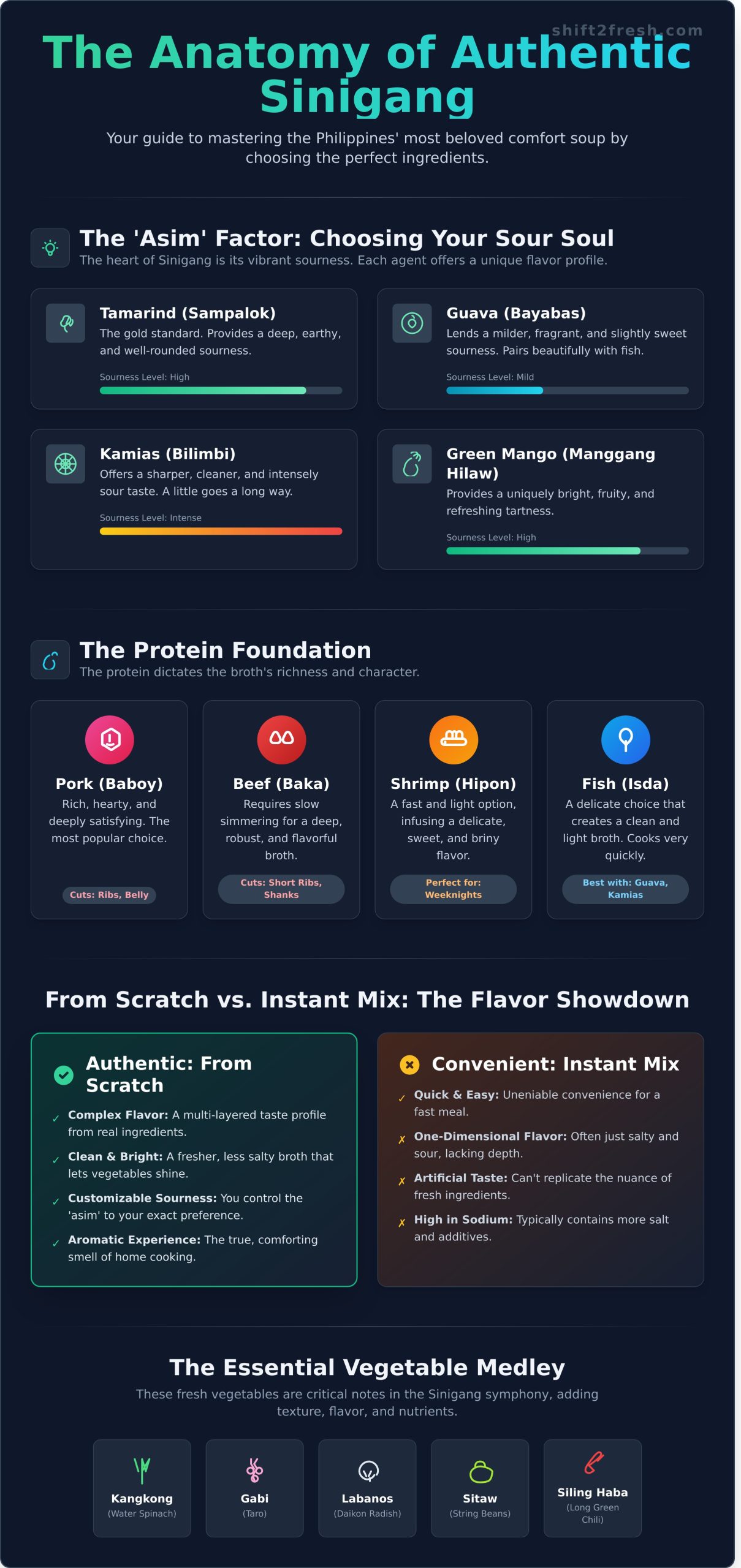
The single, non-negotiable element of any sinigang is its ‘asim’-a vibrant, palate-awakening sourness that defines the entire dish. This isn’t a subtle tartness; it’s the star of the show. The most traditional and beloved souring agent is tamarind (sampalok), which imparts a deep, well-rounded sour flavor. However, the beauty of sinigang lies in its regional flexibility, with different fruits used to achieve that signature tang:
- Guava (Bayabas): Lends a milder, slightly sweet and fragrant sourness.
- Kamias (Bilimbi): Offers a sharper, cleaner, and more intensely sour taste.
- Green Mango (Manggang Hilaw): Provides a uniquely bright and fruity tartness.
From Scratch vs. Instant Mixes: Why Authenticity Matters
In supermarkets across the UAE, you’ll easily find powdered sinigang mixes. While they offer undeniable convenience, they often deliver a one-dimensional, salty-sour flavor that pales in comparison to the real thing. Using fresh, authentic sinigang ingredients makes a world of difference. A broth made from scratch is cleaner, brighter, and infinitely more complex, allowing the true character of the souring agent and fresh vegetables to shine. This commitment to fresh components is what transforms a simple soup into a truly memorable culinary experience.
The Souring Agent: Choosing the Heart of Your Sinigang
The soul of any sinigang is its broth, and the souring agent-the pampaasim-is what gives the dish its signature, mouth-puckering character. While tamarind is the undisputed classic, the beauty of this Filipino staple lies in its versatility. Understanding your options is the first step to mastering one of the most essential authentic sinigang ingredients and tailoring the soup to your personal taste.
Tamarind (Sampalok): The Gold Standard
For the most traditional sinigang, fresh, unripe tamarind pods are non-negotiable. Preparing the extract from scratch creates a depth of flavor that is both earthy and intensely sour. You can find these pods in the produce sections of Filipino specialty stores or large supermarkets across the UAE.
- Boil: Simmer a handful of tamarind pods in water for about 15-20 minutes until they are very soft.
- Mash: Using a fork or a spoon, mash the softened pods in the water to release their pulp and juice.
- Strain: Pour the mixture through a fine-mesh sieve into your main soup pot, pressing on the solids to extract all the liquid. Discard the seeds and skin.
For convenience, tamarind paste, frozen pulp, or instant sinigang mixes are excellent alternatives that deliver a consistent sour taste without the extra prep time.
Exploring Other Authentic Souring Agents
Ready to experiment? Different regions in the Philippines use various local fruits to sour their sinigang, each lending a unique dimension to the broth. Many of these are available fresh or frozen in the UAE.
- Guava (Bayabas): Creates a wonderfully aromatic, subtly sweet, and less aggressive sourness. This is the star in Sinigang sa Bayabas, which pairs beautifully with fish.
- Kamias (Bilimbi): Delivers a distinct, sharp sourness that is brighter and more potent than tamarind. A little goes a long way!
- Green Mango (Manggang Hilaw): Offers a clean, fruity tartness that is incredibly refreshing, especially in pork or seafood sinigang.
- Calamansi: When other options aren’t available, the juice of this small citrus fruit provides a zesty, bright kick.
The key to a perfect bowl is balancing the sourness. Always start by adding less souring agent than you think you need. The process of building this foundational flavor, a crucial step in any classic pork sinigang recipe, allows you to taste and adjust until the broth’s signature tartness is just right for you and your family.
The Protein & Aromatics: Building a Flavorful Foundation
While the souring agent gives Sinigang its name, the protein and aromatics create its soulful, comforting body. The choice of protein dictates the broth’s richness and cooking time, while the savory base ingredients are non-negotiable for that classic taste. Understanding these core components is crucial for anyone sourcing authentic sinigang ingredients. The interplay between meat, vegetables, and seasoning is a tradition that speaks to the indigenous origins of sinigang, where local bounty was always the star.
Choosing Your Protein
The beauty of Sinigang lies in its versatility. The protein you select will fundamentally change the character of the soup. Here in the UAE, you can find excellent cuts for any version at your local butcher or the well-stocked aisles of supermarkets like Lulu or Carrefour.
- Pork (Baboy): The most popular choice. Pork ribs (buto-buto) or belly (liempo) are simmered until tender, creating a rich, hearty, and slightly fatty broth that is deeply satisfying.
- Shrimp (Hipon): For a faster, lighter version. The shrimp cook in minutes, infusing the soup with a delicate, sweet, and briny flavor. Perfect for a quick weeknight meal.
- Beef (Baka): A weekend project. Beef short ribs or shanks require a longer, slower simmer to become fall-off-the-bone tender, resulting in an incredibly deep and robust broth.
- Fish (Isda): A traditional and lighter option. Milkfish (Bangus) is the classic choice for its distinct flavor, while Maya-maya (Red Snapper) offers a milder, flakier alternative.
The Savory Base
Before any liquid is added, the flavor foundation is built with a few simple but essential aromatics. These are the constants in nearly every Sinigang recipe, providing the savory backbone that supports the signature sourness.
- Yellow Onion (Sibuyas) and Tomatoes (Kamatis): This duo is the starting point. Sautéing chopped onions and ripe tomatoes until soft releases their sweetness and forms the fragrant, savory-sweet base of the soup.
- Fish Sauce (Patis): This is the soul of Sinigang’s savory flavor. More than just salt, patis provides a deep, fermented umami kick that is impossible to replicate. It’s used to season the broth and as a dipping sauce on the side.
- Long Green Pepper (Siling Pangsigang): Don’t mistake this for a chili meant for intense heat. This pepper is added whole to the simmering broth primarily for its unique aroma and a very mild, background warmth that complements the sourness.
The Garden Harvest: A Guide to Essential Sinigang Vegetables
Beyond the souring agent and the protein, the vibrant mix of vegetables truly brings a bowl of Sinigang to life. These components add essential nutrition, a wonderful variety of textures, and flavors that perfectly complement the signature sour broth. The key to a memorable Sinigang is not just choosing the right vegetables, but also adding them at the right time. Using the freshest produce available in the UAE is a non-negotiable step for achieving that perfect, comforting taste. Getting the vegetable component right is a cornerstone of sourcing authentic sinigang ingredients.
Hardy Vegetables (Add These First)
These root and pod vegetables are dense and require a longer cooking time to become tender. Add them to the pot shortly after the meat has softened to ensure they are perfectly cooked through without turning to mush.
- Taro (Gabi): This is the secret to a heartier Sinigang. As it cooks, gabi breaks down slightly, acting as a natural thickener that lends a uniquely creamy and comforting consistency to the broth.
- Daikon Radish (Labanos): Don’t be fooled by its simple appearance. Labanos adds a mild, peppery sharpness and a satisfyingly tender crunch that cuts through the richness of the soup.
- Long Beans (Sitaw): Added for their delightful snap, sitaw should be cooked until tender-crisp, providing a pleasant textural contrast to the other, softer ingredients.
Tender Vegetables (Add Near the End)
To preserve their color, texture, and nutrients, these vegetables should be added during the last 5-10 minutes of cooking. They cook quickly and are meant to be vibrant and just-tender when served.
- Okra: A classic addition, okra offers a unique texture. Cook it just until it loses its raw taste but retains a slight bite to avoid it becoming overly slimy.
- Eggplant (Talong): Sliced eggplant acts like a sponge, beautifully absorbing the tangy and savory flavors of the Sinigang broth, making each bite a burst of flavor.
- Water Spinach (Kangkong): The quintessential leafy green for Sinigang. The leaves and tender stems wilt almost instantly, adding a fresh, earthy flavor that completes the dish.
Acceptable Substitutes for Kangkong
While kangkong is traditional, finding it perfectly fresh can sometimes be a challenge. Fortunately, several other leafy greens work wonderfully as part of your authentic sinigang ingredients list.
- Bok Choy or Pechay: These are the most common and delicious alternatives, offering a mild, sweet flavor and a pleasant crunch from their stems.
- Spinach: If you’re in a pinch, regular spinach is a good option. It wilts quickly and provides the necessary leafy green component.
Whatever greens you choose, their freshness is paramount to the final taste. Find all the fresh, authentic vegetables you need for Sinigang!
Assembling Your Sinigang Pantry in the UAE
For many Filipinos living across the UAE, the craving for a steaming bowl of authentic Sinigang is a familiar feeling. The real challenge, however, is often tracking down all the necessary components in one place. Hopping between different supermarkets and specialty stores can be time-consuming and often leads to compromise. This is where a dedicated one-stop solution like Shift 2 Fresh transforms your cooking experience, making it easier than ever to bring this beloved dish to your table.
Your Authentic Sinigang Shopping List
To create that signature asim-kilig flavour that defines a perfect Sinigang, you need the right building blocks. Forget the substitutes and powdered mixes; here is your definitive checklist for a truly satisfying and traditional soup.
- The Sour Power: Fresh Tamarind (Sampalok) is non-negotiable for that unparalleled tangy depth.
- Hearty Vegetables: Gabi (Taro) to naturally thicken the broth and Labanos (Daikon Radish) for its mild, peppery bite.
- Essential Greens: Crisp Sitaw (String Beans) and vibrant, leafy Kangkong (Water Spinach) added near the end of cooking.
- Aromatics: Yellow Onion and ripe Tomatoes to build the flavour base, plus Siling Pangsigang (Long Green Chili) for a gentle, warming heat.
- Pantry Staple: A quality bottle of Patis (Fish Sauce) for that essential umami saltiness that balances the sour notes.
Why Freshness Matters
The secret to an exceptional Sinigang isn’t just in the recipe-it’s in the vitality of the produce. Crisp vegetables and vibrant greens release more complex flavours into the broth, creating a soup that is bright and aromatic, not dull or muted. At Shift 2 Fresh, we are committed to sourcing and importing the freshest Filipino produce directly to the UAE. This dedication ensures you get the genuine taste of home that only high-quality, authentic sinigang ingredients can provide.
Gone are the days of compromising or settling for less. With the convenience of online ordering, you can have every fresh component-from the gabi to the kangkong-delivered directly to your doorstep, whether you’re in Dubai, Abu Dhabi, or Sharjah. It’s the simplest way to ensure your pantry is always stocked and ready for a comforting Sinigang feast. Stop searching and start cooking. Explore our complete selection and build your perfect Sinigang basket today at Shift2Fresh.com.
From Our Pantry to Your Pot: Crafting Perfect Sinigang in the UAE
Mastering sinigang is all about understanding its soul-the souring agent-and balancing it with a rich foundation of savory protein and crisp, garden-fresh vegetables. It’s more than a recipe; it’s a taste of home, a comforting embrace in a bowl. But finding all the authentic sinigang ingredients here in the UAE can be a challenge. That’s where the journey from craving to cooking becomes effortless.
Shift 2 Fresh is your reliable source for those hard-to-find Filipino essentials, offering freshly imported produce directly from the Philippines. With our convenient online ordering and home delivery, creating that perfect sour soup has never been easier.
Get all your authentic Sinigang ingredients delivered to your door! Shop now at Shift 2 Fresh.
So go ahead, fill your kitchen with the heartwarming aroma of a truly perfect sinigang. Happy cooking!
Frequently Asked Questions About Sinigang Ingredients
Can I use lemon juice as a souring agent for Sinigang?
While you can use lemon juice in a pinch, it isn’t a traditional choice for authentic Sinigang. Lemon provides a sharp, one-dimensional citrus sourness. Traditional souring agents like tamarind (sampalok), guava (bayabas), or bilimbi (kamias) offer a much deeper, more complex sour and savory flavor profile that is characteristic of the dish. For a taste closer to the original, tamarind paste or fresh pods are highly recommended and are often available in UAE supermarkets.
What is the best cut of pork for Sinigang na Baboy?
The best cuts for Sinigang na Baboy are those with a good combination of meat, fat, and bone. Pork belly (liempo) is a popular choice as its fat renders down to create a rich, flavorful broth. Pork ribs are also excellent because the meat becomes incredibly tender and falls off the bone after simmering. For a slightly leaner but still tender option, you can use pork shoulder (kasim). These cuts are all readily available in most butcheries across the UAE.
How do I prevent my Sinigang broth from becoming cloudy?
A cloudy broth is usually caused by boiling the meat too aggressively at the beginning, which releases impurities called scum. To achieve a clear broth, place your pork in a pot with water and bring it to a very gentle simmer, not a rolling boil. Carefully skim off all the greyish foam that rises to the surface. Once the scum stops appearing, you can proceed with adding your vegetables and souring agent for a beautifully clear soup.
Is it okay to use a powdered Sinigang mix instead of fresh tamarind?
Absolutely. Powdered Sinigang mixes are a very popular and convenient option, especially in the UAE where fresh ingredients can sometimes be inconsistent. They provide that signature sour flavor quickly and reliably. While many Filipino households use them for everyday cooking, using fresh tamarind paste or boiling whole pods will give you a more nuanced and traditional taste. For the most authentic sinigang ingredients, starting from scratch with fresh tamarind is the ultimate goal.
What’s the main difference between Filipino Sinigang and Thai Tom Yum soup?
The main difference lies in their flavor bases. Sinigang is a purely sour and savory soup, getting its distinct tang primarily from tamarind. Its flavor is earthy and deeply tart. In contrast, Thai Tom Yum is a hot and sour soup. Its complex flavor profile comes from a fragrant blend of lemongrass, galangal, kaffir lime leaves, lime juice, and chili. Tom Yum is often spicy and has a more aromatic, citrus-forward character than Sinigang.
How long can I store leftover Sinigang?
Leftover Sinigang can be stored safely in an airtight container in the refrigerator for up to three days. Keep in mind that the vegetables, especially leafy greens like kangkong, will soften and may become mushy upon reheating. For the best taste and texture, reheat it gently on the stovetop over low heat until just warmed through. Avoid boiling it again, as this can overcook the meat and vegetables further. Freezing is possible but not ideal for the vegetables.
0 comments