

A vivid purple colour doesn’t automatically mean a powder is ube. Ube is purple yam, or Dioscorea alata, so choosing purple yam powder for ube starts with checking what it’s made from, not just how it looks. That distinction matters when you want ube’s characteristic colour and flavour in a recipe.
Ube, taro and purple sweet potato are easy to confuse, especially as powders or in similar dishes. This guide explains how to tell them apart and what to look for when choosing ube powder. You’ll also learn how to store, rehydrate and cook with it, so you can use this pantry ingredient with more confidence.
Key Takeaways
- Identify ube by its botanical name, Dioscorea alata, and don’t mistake taro or purple sweet potato for the same ingredient.
- Learn how to rehydrate the powder into a paste and choose a storage method that helps preserve it for later recipes.
- Use nutrition figures as general context, not as proof of a health benefit; claims about effects need careful interpretation.
- Adjust the amount of powder to the recipe and the flavour and colour you want, rather than assuming every powder behaves the same way.
Differences between ube, taro and purple sweet potato
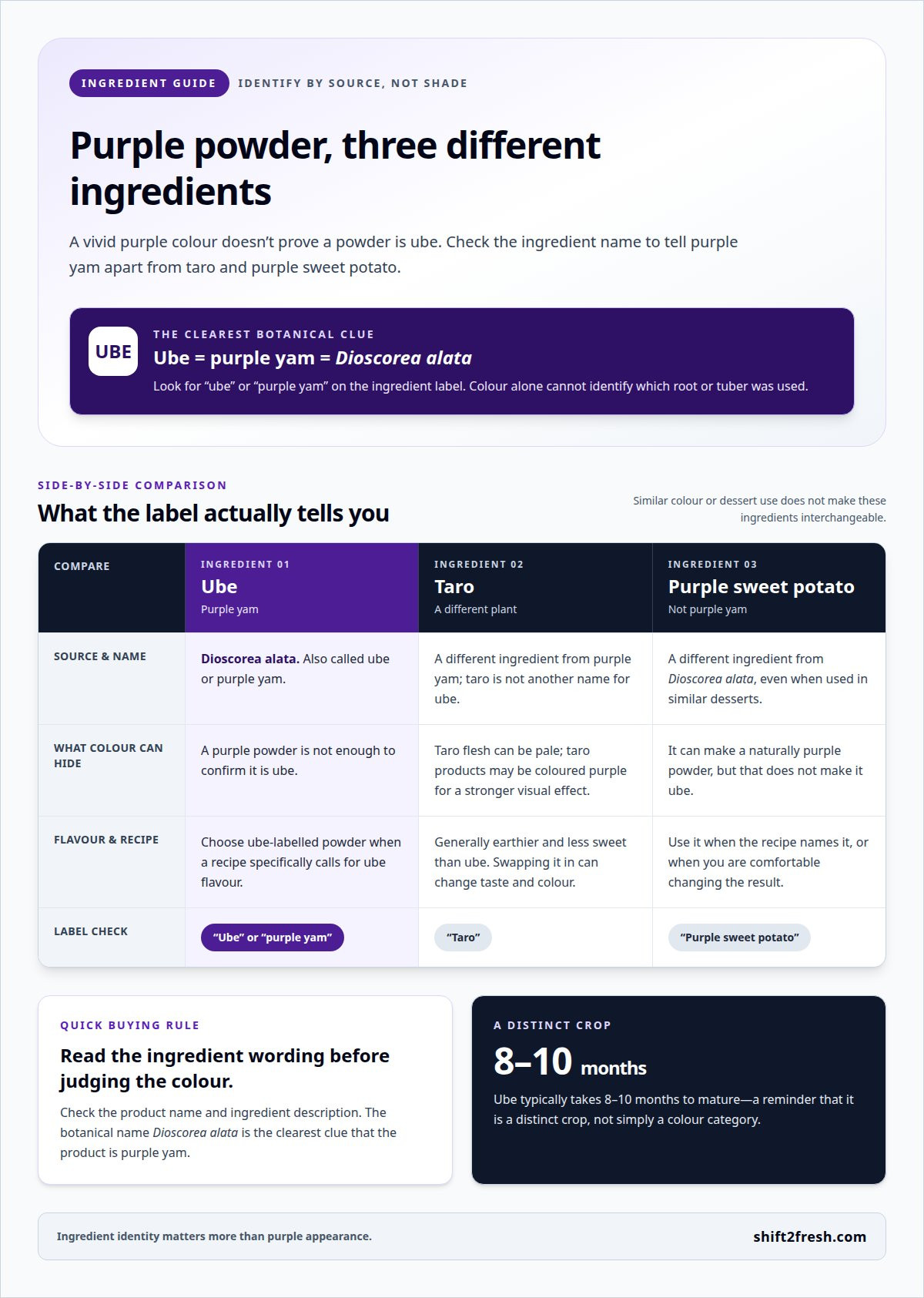
- Start with the plant name. Ube is purple yam, botanically Dioscorea alata. Taro and purple sweet potato are different ingredients, even when their colours look similar in a photograph or dessert. For purple yam powder for ube, look for “ube” or “purple yam” on the ingredient label. Colour alone doesn’t identify which root or tuber was used.
- Separate taro from ube. Taro comes from a different plant and isn’t another name for purple yam. Taro flesh can be pale, and taro products may be coloured purple for a stronger visual effect. Its flavour is generally earthier and less sweet than ube. In a recipe, swapping taro powder for ube powder can change both the taste and colour.
- Distinguish purple sweet potato. Purple sweet potato is different from Dioscorea alata, despite its vivid flesh and similar uses in desserts. It can make a naturally purple powder, but that doesn’t make it ube. Check the product name and ingredient description before buying. If the label says “purple sweet potato,” it’s a different ingredient from one labelled “ube” or “purple yam.”
- Choose by ingredient, then recipe. Use an ube-labelled powder when a recipe calls specifically for ube flavour. Choose taro or purple sweet potato only when the recipe names that ingredient or you’re comfortable changing the result. Ube typically takes 8-10 months to mature, a detail that helps explain why it is a distinct crop, not simply a colour category. The name Dioscorea alata is the clearest botanical clue.
The ingredient name and botanical name identify the same source: purple yam powder is made from Dioscorea alata, a tuber commonly known as purple yam or ube. Keeping these names in mind helps clarify what “ube” means when comparing products. Here, purple yam, ube and Dioscorea alata refer to the same tuber, not simply a colour shared by different ingredients. Check the product’s ingredient wording to distinguish purple yam powder from taro or purple sweet potato products.
Storage and cooking with ube
- Store dry powder airtight. Transfer it to a sealed container and keep it away from moisture. Ube or purple sweet potato powder can be stored in an airtight container for up to 6 months. For longer storage, freeze it for up to 12 months. Mark the container with the storage date, then use a clean, dry spoon each time. This helps keep moisture from reaching the powder.
- Rehydrate only what you need. Mix 2-3 tablespoons of powder with ½ cup of water. Stir until the mixture forms a paste. The rehydrated paste can be added to batters, fillings or drinks. Add the powder gradually and break up lumps as you stir. If a recipe needs a different amount, scale the ingredients together to keep the same ratio.
- Use fresh mash promptly. Cover freshly rehydrated ube mash and refrigerate it for up to a week. For imported ube or purple sweet potatoes, use them within a day or two of purchase. Cook the roots until tender before mashing them and drying the mash. Mash the flesh before drying it into a crisp sheet.
- Dry the mash until crisp. Spread mashed ube or purple sweet potato thinly in a dehydrator set to 113ºF/45ºC. Dry for 8-12 hours, until the pieces snap instead of bend. If your oven can’t reach that temperature, oven-dry the mash for 4-6 hours. Let the dried pieces cool before grinding and storing them. A fully crisp texture helps the pieces grind into powder instead of clumping.
Ube nutrition and claimed health benefits
Use nutrition figures as context for cooked purple yam, and distinguish measured nutrients from health claims. Serving size and preparation affect how a dish fits into a meal.
Review Ube Nutrition
Cooked purple yam provides energy and carbohydrates, though its nutritional profile can vary by preparation. The same amount provides 1 gram of protein, 0.1 grams of fat, and 13.5% of the Daily Value for potassium. These values describe cooked yam, not every powder or ube dessert.
Check the rest of the serving context before drawing conclusions. A 100-gram portion provides 40% of the Daily Value for vitamin C, while its sodium provides 0.83% of the Daily Value. Added ingredients can change a finished dish considerably, so distinguish plain cooked yam from a sweetened drink, cake, or filling.
Assess Claimed Health Benefits
Keep nutrient information separate from claims about preventing or treating disease. Purple yams contain anthocyanins, pigments associated with their colour, and some claims focus on their antioxidant properties. The presence of a nutrient alone doesn’t show that eating ube will produce a specific health outcome.
Consider the evidence type before accepting a headline. One rat study found dietary cyanidin reduced tumors by up to 45%, while a mouse study reported anti-inflammatory effects and fewer colitis symptoms. These animal findings don’t establish the same effects in people. Treat them as early research, not as a reason to use ube powder as medicine.
- Match claims to the actual serving. Use figures for cooked yam only when discussing cooked yam, and account for other ingredients in recipes. A sweetened ube latte or pastry isn’t nutritionally equivalent to plain purple yam. This keeps calorie and nutrient comparisons relevant to the food and preparation being discussed.
Ube powder servings and product details
Powder is convenient to portion, while frozen grated ube provides moist yam and extract adds concentrated flavour. Ube halaya is a sweetened yam spread, so it already contributes sweetness and texture. Pure ube powder has no added sugar; other ingredients vary by product. Check the label for allergens, additives and food colouring before use.
- Start with the recipe’s serving. A quick ube latte uses 1 teaspoon of powder mixed with 1 tablespoon of hot water, then 200-250 millilitres of milk. The stated preparation time is 10 minutes. Treat this as a recipe example, not a universal measure: adjust only when the recipe gives different directions or you want a stronger flavour.
- Compare forms by what they contribute. Powder is dry and easy to measure; frozen grated ube contributes moisture and yam texture. Ube extract provides concentrated flavour, while ube halaya is a sweetened spread. These forms aren’t interchangeable without changing a recipe’s liquid, sweetness or consistency.
- Read the ingredient list. Pure powder contains no added sugar, but blends may include ingredients for sweetness, flavour or colour. Check the exact label rather than assuming every purple powder has the same formulation. If you’re avoiding an allergen or additive, use the product’s printed ingredient and allergen information.
- Use yield figures as a planning guide. A recipe using 2.2 pounds of sweet potatoes reports about 9 ounces, or 255 grams, of powder, roughly 1 cup. That yield is specific to the recipe and its ingredients, not a guaranteed conversion for every yam or preparation. For Filipino pantry ingredients to use alongside your cooking, explore Filipino pantry items at Shift 2 Fresh.
Shift 2 Fresh
Shift 2 Fresh helps UAE readers bring Filipino and Asian ingredients into home cooking. If you’re planning an ube recipe, its Filipino pantry items can complement the other ingredients you choose, while seasonal Filipino fruits and Asian vegetables offer more options for meals inspired by Filipino and South Asian cooking. Mobile app ordering gives you a convenient way to browse these offerings alongside your grocery planning.
Use the ingredient distinctions in this guide to choose the right type of ube for your recipe, then build the rest of your shopping list around it. For help with your next grocery order, contact Shift 2 Fresh.
Make Your Next Ube Recipe Your Own
Choosing purple yam powder for ube is the start of your recipe, not the whole plan. Decide what you want to make, then build a simple shopping list around that dish. A familiar dessert or drink is a useful starting point for exploring ube’s flavour in your kitchen.
For your wider grocery list, Shift 2 Fresh offers Seasonal Filipino Fruits, Asian Vegetables and Filipino Pantry Items. These ingredients can help you bring more Filipino and Asian flavours into everyday meals, alongside the ube recipe you’re planning.
Take the next step when you’re ready to plan your groceries. Contact Shift 2 Fresh today, and enjoy discovering a new favourite to make at home.
Frequently Asked Questions
What Is Ube?
Ube is the edible purple yam used in Filipino cooking, especially in sweets and baked goods. It can be cooked and mashed or used as a powder in recipes. Its distinctive colour is familiar in desserts, but colour alone doesn’t identify an ingredient. For a reliable result, choose an ingredient labelled ube or purple yam.
How to rehydrate ube powder?
To rehydrate ube powder, stir it into water to form a smooth paste. Add the liquid gradually and whisk or press dry clumps against the side of the bowl. Let the paste stand briefly, then stir again before adding it to your recipe. This helps distribute the powder evenly through batter or filling.
How to use ube powder or purple sweet potato powder?
Use powder to add colour and flavour to foods such as cake batter, cookie dough, fillings or drinks. First mix the powder with a little liquid, then blend the paste into the main mixture. Ube and purple sweet potato are different ingredients, so their flavours vary. Follow the recipe’s specified ingredient for the intended result.
What Does Ube Taste Like?
Ube has a mild, sweet flavour often described as earthy, with hints of vanilla or nuttiness. Its taste may be more pronounced in a simple filling than in a heavily flavoured dessert. Pair it with complementary ingredients such as coconut or vanilla, and taste the mixture as you build the recipe.
Where Does Ube Come From?
Ube is closely associated with the Philippines, where purple yam is used in traditional cooking and desserts. It is a tuber, not a flavour invented for colourful sweets. In the UAE, it may be sold dried as powder or in other forms. Check the product description to understand which form you’re using in a recipe.
How do you use purple yam powder to make ube desserts?
Start by mixing the powder into a smooth paste, then blend it into a dessert mixture such as cake batter, custard or frosting. Mix thoroughly before baking or chilling so the colour and flavour spread evenly. Taste the mixture before finishing, especially if the recipe includes sweeteners or flavourings that may alter ube’s delicate character.
0 comments