

Bitter melon may affect blood sugar, but it isn’t a proven diabetes treatment. The possible benefits of eating bitter melon include fiber from a low-calorie fruit and a potential effect on blood glucose; findings on type 2 diabetes remain mixed. Also called Momordica charantia, it’s a distinctly bitter fruit used in cooking.
That balance matters if you’re considering it for a health reason: food and supplements aren’t interchangeable, and bitter melon shouldn’t replace prescribed diabetes care. This guide explains what bitter melon is, what studies suggest about blood sugar and type 2 diabetes, and how its fiber may relate to digestion. You’ll also get a practical view of the evidence and key safety considerations, so you can understand where this ingredient may fit in a balanced diet without treating it as a cure. Its strong taste can be softened by cooking.
Key Takeaways
- Blood sugar findings are mixed, so bitter melon is best viewed as a food rather than a dependable way to manage diabetes.
- Learn how bitter melon’s nutrients and naturally bitter flavor shape its role in meals, and why cooking can make it more palatable.
- A 100-gram serving provides 2.1 g of dietary fiber, which supports digestion as part of a varied diet.
- Supplements and extracts can be more concentrated than the fruit; understand the safety considerations before using them.
1. Possible blood sugar effects and type 2 diabetes
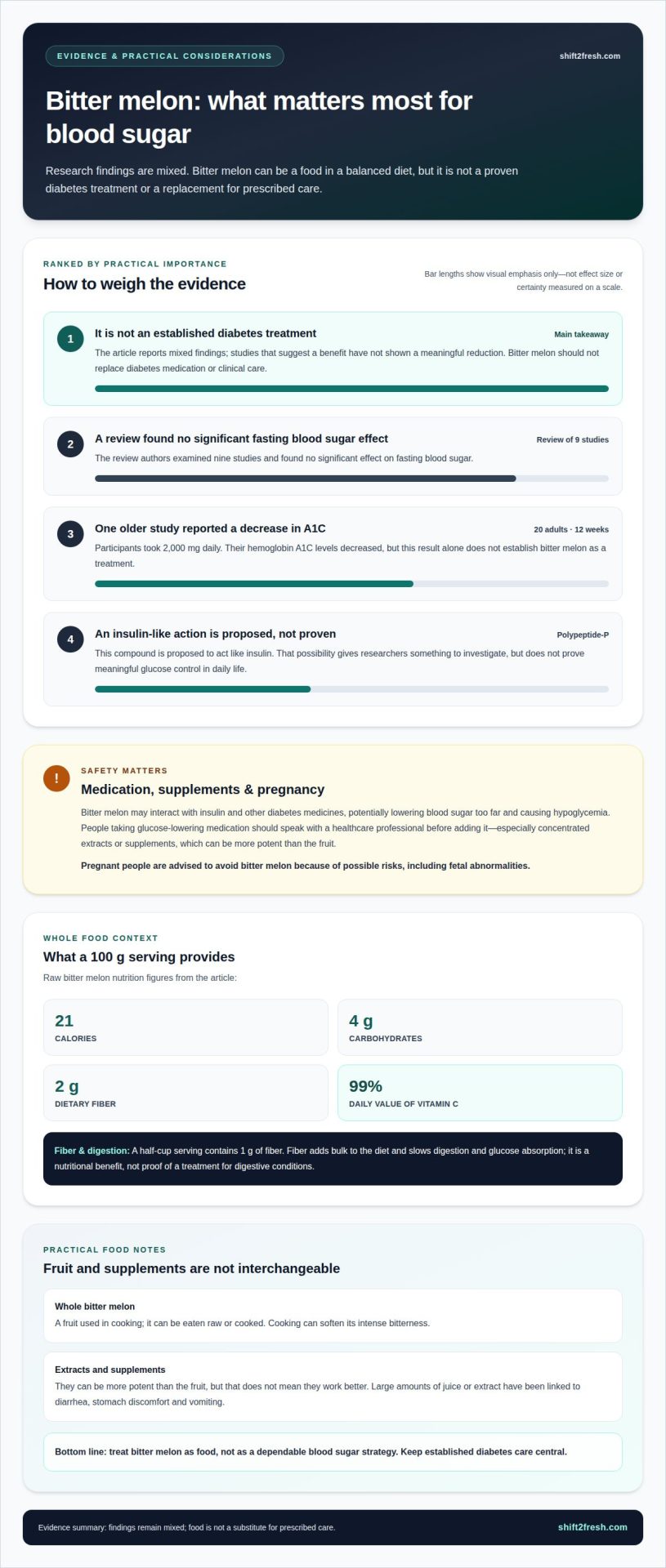
Bitter melon is studied for possible effects on blood sugar in people with type 2 diabetes. In one older study, 20 adults took 2,000 mg daily for 12 weeks, and their hemoglobin A1C levels decreased. The result is encouraging, but it doesn’t establish bitter melon as a diabetes treatment. A review by The review authors examined nine studies and found no significant effect on fasting blood sugar. Overall, findings are mixed, and studies reporting a benefit haven’t shown a meaningful reduction.
Polypeptide-P, a compound in bitter melon, is proposed to act like insulin. This possible action could affect how the body handles glucose, but it does not prove that bitter melon improves glucose tolerance or overall metabolic health. Blood sugar is influenced by many factors, including diet, activity and prescribed treatment. Bitter melon is a food, not a substitute for diabetes medication or clinical care.
Use caution when combining bitter melon with medication. It may interact with insulin and other diabetes medicines, potentially lowering blood sugar too far and causing hypoglycemia. If you take glucose-lowering medication, speak with a healthcare professional before adding bitter melon, especially concentrated extracts or supplements, which can be more potent than the fruit. Pregnant people are advised to avoid bitter melon because of possible risks, including fetal abnormalities.
Cholesterol claims also need restraint. Evidence for lower cholesterol levels comes mainly from laboratory studies and non-human models, while human evidence remains insufficient to establish an effect. A 2018 extract study included 43 participants, but that figure alone doesn’t demonstrate cholesterol reduction. Claims about cancer prevention are separate: test-tube and non-human research doesn’t establish a real-world benefit. For blood sugar, focus on established diabetes care and discuss any food or supplement changes with a healthcare professional.
2. What is bitter melon?
Bitter melon, or Momordica charantia, is a fruiting vine native to Asia. Its edible fruit is botanically related to cucumber and zucchini, but its sharp bitterness sets it apart. Chinese and Indian varieties are commonly known, and the fruit is used as food and flavoring in several regions. It can be eaten raw or cooked; cooking softens its intense taste.
In raw form, 100 grams provides 21 calories and 4 grams of carbohydrates. The same serving supplies 99% of the Daily Value for vitamin C, alongside 2% for vitamin A and 4% for iron. According to USDA, bitter melon is a good source of calcium, magnesium, potassium, vitamin A, vitamin C and zinc. These figures describe raw fruit, so preparation and serving size matter when comparing meal portions.
How does it compare nutritionally with other gourds? Bitter melon shares botanical relations with cucumber and zucchini, but a fair nutrition comparison needs matching serving sizes and preparation. Its standout figure here is vitamin C: 99% of the Daily Value per 100 grams raw. That doesn’t make it nutritionally superior overall; calories, carbohydrates and micronutrient levels vary among foods and cooking methods.
Is eating bitter melon more effective than taking supplements? Extracts and supplements can be more potent than the fruit, but that does not mean they work better. They also call for greater caution, particularly when used alongside medication or insulin. Whole bitter melon is a food, not a replacement for glucose-lowering treatment.
How much bitter melon should you eat, and how often? The 100-gram nutrition reference describes a serving, not a therapeutic dose or schedule. Use food portions suited to your meal rather than treating that figure as a treatment target. For cooking variety, pair unfamiliar produce with familiar ingredients from Filipino pantry items.
3. Fiber and digestion
Raw bitter melon, or Momordica charantia, provides dietary fiber in everyday food portions. A 100-gram serving contains 2 grams of fiber, while a half-cup serving contains 1 gram. Fiber is not digested by the body and does not produce glucose. Instead, it slows digestion and the absorption of glucose into the bloodstream. These are useful nutritional details, not proof that bitter melon treats digestive conditions.
Fiber supports digestive health by adding bulk to the diet and slowing how quickly food is processed. Pairing bitter melon with other fiber-rich foods can add variety to a meal. For example, include cooked slices in a vegetable dish rather than relying on bitter melon alone for digestive support. The fiber in one serving contributes to overall intake alongside other foods and fluids.
Cooking is a practical way to try bitter melon if its sharp taste puts you off. The fruit is commonly eaten cooked, and heat can soften its intense bitterness. Briefly blanching it and then transferring it to ice water may also mellow the flavor before cooking. These steps affect taste and texture, not the fruit’s fiber content. Any potential health benefits depend on the overall diet, not one ingredient.
Distinguish the whole food from concentrated products. Bitter melon extracts and supplements can be more potent than the fruit, and large amounts of juice or extract have been linked to digestive side effects, including diarrhea, stomach discomfort and vomiting. Stop consuming it and seek medical advice if diarrhea, fever or abdominal pain follows. Research on bitter melon often focuses on blood sugar, while fiber offers a separate nutritional benefit. Its vitamin C is associated with immune function, but bitter melon should not be treated as an immune supplement or digestive remedy.
4. Bitter melon and type 2 diabetes
For diabetes, the practical question is whether bitter melon reliably improves blood sugar levels. Current findings do not establish it as a treatment or show that it prevents diabetes. Polypeptide-P, a compound in bitter melon, has been described as insulin-like. This proposed function gives researchers a biological explanation to investigate, but it does not prove meaningful glucose control in daily life. Bitter melon may be included as food, but it should not replace prescribed diabetes care.
Study design matters. Researchers have examined whole fruit and extracts, which aren’t equivalent exposures. A 2018 extract study had participants take the product for 30 days. That duration alone can’t show whether bitter melon controls diabetes over time or prevents complications. A short study can observe a measured outcome, but it cannot establish lasting disease prevention. Results from one preparation also shouldn’t automatically be applied to cooked bitter gourd.
Safety matters when deciding whether to eat bitter melon. It may interact with insulin and diabetes medications, and combining it with glucose-lowering treatment could push blood sugar too low. If you use these medicines, discuss adding bitter melon with a healthcare professional first. Take particular care with supplements and extracts, which can be more potent than the fruit. This is especially important because products, amounts and existing treatments vary.
Use a clear distinction: bitter melon can be eaten as food, but it isn’t a proven way to manage type 2 diabetes. Its antioxidant content doesn’t establish diabetes prevention or replace treatments that support glucose control. Keep prescribed medication unchanged unless the treating professional adjusts it. For cooking, try bitter melon as one ingredient in a balanced meal, not as a medicinal dose. To plan meals around familiar ingredients, browse Filipino pantry items for complementary cooking staples.
Shift 2 Fresh
Shift 2 Fresh helps UAE shoppers bring Filipino and South Asian ingredients into everyday cooking. If you’re exploring bitter melon as a food, you can use its Seasonal Filipino Fruits, Asian Vegetables, and Filipino Pantry Items to build varied meals around produce and familiar pantry staples. Mobile App Ordering offers a convenient way to browse these grocery categories when planning what to cook.
Turn to Shift 2 Fresh when you’re looking for ingredients to broaden your home-cooking options, rather than treating a particular food as a diabetes remedy. Bitter melon’s possible health effects remain distinct from the practical choice of what to put on your plate. For questions about grocery orders, contact Shift 2 Fresh.
Make your next food choice with confidence
Let curiosity guide your next meal, while keeping health decisions grounded in your individual needs. Explore the benefits of eating bitter melon as part of balanced meals, not as a reason to change diabetes treatment on your own. If you are considering it for a health concern, discuss changes to your diet or supplements with a healthcare professional, especially if you use medication.
For everyday cooking, Shift 2 Fresh offers Seasonal Filipino Fruits, Asian Vegetables, and Filipino Pantry Items to help you bring more variety to your meals. Choose ingredients that suit your tastes and the dishes you enjoy making; a new vegetable can be a simple starting point, without expecting it to deliver a medical outcome.
Contact Shift 2 Fresh to ask about grocery options for your kitchen. Keep exploring new ingredients at a pace that works for you, and make each meal your own.
Frequently Asked Questions
What is bitter melon?
Bitter melon is the edible fruit of the vine Momordica charantia, also called bitter gourd. It is commonly grown in Asia, Africa, and the Caribbean, and has a long history of traditional use. Its deeply ridged fruit has a sharp, bitter taste. Cooking it in a stir-fry or curry can make that flavor less intense than eating it raw.
Are There Potential Drug Interactions?
Yes. Bitter melon may interact with insulin and other blood-sugar-lowering medicines, potentially causing hypoglycemia. If you take diabetes medication, discuss adding the fruit with a healthcare professional before changing your diet. Take particular care with extracts and supplements because they can be more potent than food portions. Continue taking prescribed medication as directed; do not replace or adjust it with bitter melon.
What nutrients are in bitter melon?
A 100-gram serving of raw bitter melon provides 21 calories and 99% of the Daily Value for vitamin C. It also provides 2% of the Daily Value for vitamin A and 4% for iron. According to the USDA, it is a good source of calcium, magnesium, potassium, vitamin A, vitamin C, and zinc. Nutrient amounts describe raw fruit.
What are the evidence-based health benefits of eating bitter melon?
Fiber is the clearest established dietary contribution of bitter melon and can support a varied eating pattern. Evidence for blood-sugar effects remains mixed, and research has not established bitter melon as a treatment. Claims that it lowers cholesterol rely largely on laboratory and non-human research. Findings related to cancer from test-tube or non-human studies also do not demonstrate prevention or treatment in people. Think of bitter melon as food, not medicine.
Can bitter melon help lower blood sugar in people with diabetes?
It may affect blood sugar, but evidence doesn’t show reliable diabetes control. In one study, 20 adults with diabetes took 2,000 mg daily for 12 weeks, with lower hemoglobin A1C reported. A review of nine studies found no significant effect on fasting blood sugar. These findings don’t justify replacing prescribed treatment; people using diabetes medicines should discuss bitter melon with a healthcare professional.
What are the risks and side effects of eating bitter melon?
Possible effects include diarrhea, vomiting, stomach discomfort, and abdominal pain. Large amounts of juice or extract have also been linked to more serious problems, including gastric bleeding and kidney injury. Pregnant people should avoid bitter melon, and its seeds may trigger favism in people with G6PD deficiency. Stop consuming it and seek medical advice if concerning symptoms develop after eating it.
0 comments