

Halo-halo is a mix-and-match Filipino dessert built from shaved ice, milk and sweet toppings. The ingredients for Filipino halo-halo can vary, but a bowl often combines sweetened fruit or beans with chewy jellies, coconut and a scoop of ice cream. One recipe uses 4 cups of shaved ice and 3 tablespoons of evaporated milk.
Choosing what to add can feel like the hardest part, especially when you’re looking for familiar Filipino ingredients in the UAE. There’s no single fixed combination: choose a few favourites and build your bowl around them.
This guide covers the icy base, classic sweet fillings and optional toppings, plus what to look for when sourcing ingredients in the UAE. You’ll also learn how the ingredients come together to create a balance of creamy, fruity and chewy textures.
Key Takeaways
- Start with shaved ice and a milk base, then adjust the creamy flavour to suit your preferred toppings.
- Layer sweetened fruit, beans and chewy add-ins to create a mix of textures in each bowl.
- Choose ube halaya or ice cream for a richer finish, or keep the toppings simple and let the fruit stand out.
- For Filipino pantry items and seasonal Filipino fruits in the UAE, Shift 2 Fresh offers mobile app ordering.
Core shaved-ice and milk base
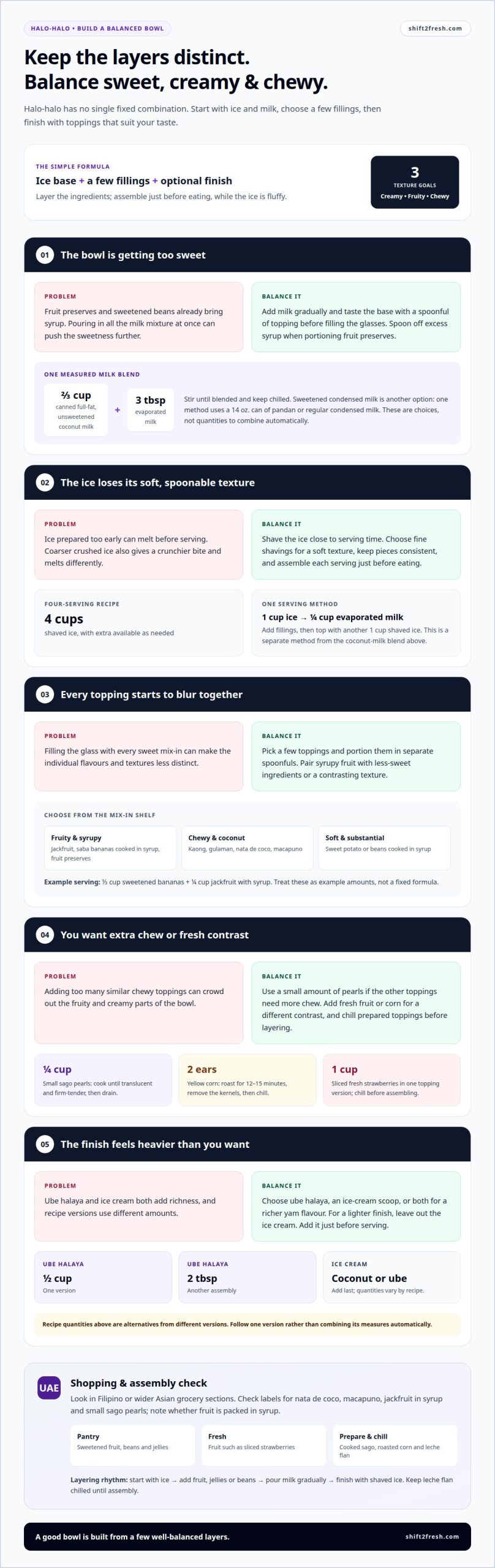
- Choose the milk base before assembling the dessert. Halo-halo commonly pairs crushed or shaved ice with evaporated milk, sometimes coconut milk, and varied sweet toppings. For one measured mixture, combine 2/3 cup canned full-fat unsweetened coconut milk with 3 tablespoons evaporated milk. Stir until evenly blended, then keep it chilled until serving.
- Add sweetness to match the fillings. One assembly method uses a 14 oz. can of pandan or regular sweetened condensed milk. Pandan adds its own flavour, while regular condensed milk keeps the base more neutral. Because fruit preserves and sweetened beans also bring syrup, pour the milk mixture gradually rather than adding it all at once.
- Prepare the ice close to serving time. A four-serving recipe calls for 4 cups of shaved ice, with extra available as needed. Use finely shaved ice for a soft, spoonable texture. Coarser crushed ice gives a crunchier bite and melts differently, so keep the pieces consistent for a more even bowl.
- Build each glass in layers instead of mixing everything immediately. One serving method starts with 1 cup of packed shaved ice, followed by 1/4 cup evaporated milk. Add the chosen fillings, then top each serving with 1 cup of shaved ice. This separate method has different quantities from the coconut milk mixture, so don’t combine both sets automatically.
- Taste the base with a small spoonful of topping before filling the glasses. Sweetened jackfruit or nata de coco can shift the balance, while coconut milk adds a distinct flavour. Add the milk gradually, then adjust the final layer of ice. Assemble each serving just before eating, while the shaved ice is still fluffy.
Where can I find halo-halo ingredients?
- In the UAE, look for Filipino pantry staples in Filipino or wider Asian grocery sections. When sourcing ingredients for Filipino halo-halo, check labels for nata de coco, macapuno, jackfruit in syrup and small sago pearls. Note whether fruit is packed in syrup, as this affects the sweetness and the amount of liquid in each glass.
- Prepare the toppings before assembling. One version uses 2 ears of yellow corn, ¼ cup of small sago pearls and 1 cup of sliced fresh strawberries. Cook the sago until translucent and firm-tender, then drain it. Roast the corn for 12-15 minutes, remove the kernels and chill both toppings.
- Use a 16-ounce glass to help portion a serving. A sample includes 1 tablespoon each of sugar palm fruit, coconut sport strings and coconut gel. Add leche flan or fruit preserves in spoonfuls, leaving space for the final ice layer. For a practical UAE shopping list, group ingredients for Filipino halo-halo by pantry items, fresh fruit and toppings that need preparation.
- Regional versions show how flexible the dessert can be. Monggo con hielo combines mung beans cooked in syrup with crushed ice, milk and sugar. Binignit, a Visayan dessert, uses several similar ingredients but is usually served hot. These examples offer different ideas for sweet mix-ins and serving temperature.
- Build each glass shortly before serving. Layer fruit, jellies or beans over the first layer of ice, pour in the milk mixture, then finish with shaved ice. There’s no standard portion for every topping, so let the glass size and your preferred balance of creamy, chewy and fruity textures guide the amounts. Keep leche flan chilled until assembly.
Sweetened beans and fruit preserves
- Choose sweetened mix-ins for contrasting flavours and textures. Common options include kaong, gulaman, nata de coco, jackfruit, saba bananas cooked in syrup and macapuno. Sweet potato or beans cooked in syrup can add a softer, more substantial layer. Pick a few instead of filling the glass with every option, so each topping remains distinct.
- Make a sweet banana mixture with 3 saba bananas, or 2 regular bananas, and 3/4 cup packed light brown sugar. Cut the bananas into pieces and cook them with the sugar until coated in syrup. Chill the mixture for about 2 hours before assembling. This gives the bananas time to cool and makes them easier to portion.
- Add small tapioca pearls when you want another chewy element. A recipe uses 1/4 cup of small pearls, which are optional, so leave them out if your other toppings already provide enough chew. Sweetened fruit preserves also bring syrup; spoon off excess liquid when portioning, or it can make the shaved ice soften faster.
- Use beans in a measured amount. An early variation, monggo con hielo, combined mung beans cooked in syrup with crushed ice, milk and sugar. For a topping portion, one recipe uses 1 tablespoon of sweetened red mung beans. Pair the beans with fruit or coconut for contrasting textures, rather than making every topping equally dense.
- Assemble the mix-ins in separate spoonfuls, then add the ice and milk base. A recipe portion includes 1/3 cup sweetened bananas and 1/4 cup jackfruit with syrup per serving. Treat these as examples, not a fixed formula: adjust the combination to the glass and balance syrupy fruit with less-sweet ingredients. Add toppings just before serving to preserve their separate textures.
Ube halaya and ice cream
- Use ube halaya for a concentrated purple yam flavour and a soft, dense texture. One version uses 1/2 cup of ube halaya, while another adds 2 tablespoons during assembly. These are different recipe quantities, not amounts to combine automatically. Spoon the halaya beside the fruit and coconut sport strings, then add ice cream last.
- Choose coconut or ube ice cream to complement the other toppings. One recipe uses 4 scoops of coconut or ube ice cream; another assembly calls for 1 pint of ube ice cream. Follow one version’s quantity rather than mixing measures. If you prefer a lighter finish, halo-halo can also be served without ice cream.
- Add the ice cream just before serving, so it sits visibly above the shaved ice. For individual glasses, one recipe suggests 1 scoop of ube ice cream as an optional topping. Ube halaya beneath the scoop deepens the yam flavour, while coconut ice cream offers a different pairing with macapuno and other coconut ingredients.
- Keep optional crunchy toppings modest. One recipe adds 2 chocolate wafer sticks and 1 tablespoon of Rice Krispies. Place them on top after the ice cream, where they remain distinct from syrupy fruit and soft ube halaya. Skip either topping if the glass already includes several textures.
- Balance the creamy finish with fruit rather than adding more sweetness. Seasonal Filipino fruits can bring a fresh contrast to ube, coconut sport strings and ice cream. Choose fruits to suit the bowl’s existing toppings, then add them during assembly. Choose seasonal Filipino fruits to add a fruity counterpoint to your halo-halo.
Shift 2 Fresh
Shift 2 Fresh can help UAE shoppers source ingredients for a homemade halo-halo through Filipino pantry items and seasonal Filipino fruits. These offerings are useful when you’re gathering sweet mix-ins and fresh fruit to complement your chosen ice, milk and toppings. Asian vegetables are also available for other meals, while mobile app ordering gives you a way to place grocery orders.
Use your ingredient list to guide your choices. Select fruits that balance the sweetness of preserves, then pair them with pantry ingredients for varied flavours and textures. Keep your bowl simple or choose a wider mix, depending on the version you want to make.
For help with your grocery needs, contact Shift 2 Fresh.
Make Your Next Bowl Your Own
Treat your first bowl as a starting point, not a fixed formula. Explore the combinations you enjoy, whether that’s a fruit-forward version, a chewy mix or a creamier finish. Make a note of the mix-ins you chose and what you might change next time. This makes it easier to create your own version while keeping halo-halo’s playful mix-and-match spirit.
Before your next grocery order, decide how you want the bowl to taste and feel. Pick a main flavour, then add contrasting textures. This small planning step helps you choose ingredients for Filipino halo-halo that suit your taste, rather than gathering toppings without a plan. Seasonal choices can inspire another variation, too. There’s no need to reproduce one exact version; the pleasure lies in finding a balance you’ll want to make again.
Plan your next grocery order with Shift 2 Fresh, then enjoy creating a bowl that feels like yours.
Frequently Asked Questions
What Is Halo-Halo?
Halo-halo is a Filipino shaved-ice dessert whose name means “mix-mix.” Its ingredients are layered, then stirred together before eating, so each spoonful can combine ice, creamy milk and sweet additions. One distinctive feature is that the toppings sit beneath the ice, unlike in some shaved-ice desserts where ingredients are placed mainly on top.
What are the traditional ingredients in Filipino halo-halo?
There’s no required ingredient list; combinations vary by household and preference. A familiar bowl brings together shaved ice, milk, sweetened fruit or beans, and chewy ingredients such as jellies or coconut. Choose a few components from each group rather than treating every possible topping as essential. That way, each flavour is easier to enjoy.
What fruits and sweetened preserves are used in halo-halo?
Common fruit additions include jackfruit, saba bananas cooked in syrup and sugar palm fruit. Preserves bring concentrated sweetness and a soft, tender bite, while fresh fruit adds a brighter contrast. For a balanced serving, combine a syrupy fruit with a less-sweet component, and avoid pouring excess syrup over the ice.
What beans and jellies go into halo-halo?
Sweetened mung beans are one option; jellies and coconut preserves offer different textures. Gulaman is a jelly ingredient, while nata de coco has a firmer, chewier bite. Sago pearls are another small, chewy addition. Choosing one or two of these creates contrast without making every mouthful equally soft or chewy.
What type of shaved ice and milk are used for halo-halo?
Halo-halo typically uses finely shaved or crushed ice with evaporated milk; coconut milk is another option. Fine ice creates a softer texture, while coarser pieces feel crunchier. Add milk gradually, especially when using syrup-packed fruit, because the preserves already contribute sweetness and liquid. Assemble the dessert shortly before serving to keep the ice distinct.
What toppings are commonly added to halo-halo?
Popular finishing touches include ube halaya, ube or coconut ice cream, leche flan, pinipig and crunchy wafer sticks. Choose a topping that contrasts with the other textures: ice cream makes the bowl creamier, while pinipig adds crispness. You can also serve halo-halo without ice cream, keeping the fruit and preserves at the centre.
0 comments