

A successful kamayan feast depends on more than the food: guests need a comfortable place to gather and easy access to the shared spread. Kamayan is a Filipino style of communal dining in which people share dishes and eat with their hands, traditionally without plates or cutlery. Setting up a kamayan table means lining the surface with banana leaves or parchment, placing rice and dishes within reach, and leaving room for everyone around the table.
It’s natural to focus first on the food, since a generous spread is central to the experience. But a thoughtful layout makes sharing easier, whether you’re hosting a family meal or a special gathering in the UAE. This guide explains how to prepare the table liner, arrange dishes within reach, and choose a mix of rice, proteins, seafood, vegetables, fruit, and condiments. You’ll also find practical tips for making space, keeping sauces manageable, and helping guests feel comfortable eating by hand. With a clear plan, the table can feel abundant without becoming crowded.
Key Takeaways
- Prepare a smooth, gap-free table liner so the shared spread has a clean, practical surface.
- Place communal dishes where everyone can reach them while keeping the table edges open for guests.
- Build a balanced feast around rice, then add proteins, seafood, vegetables, fruit, and condiments to suit the gathering.
- Plan guest space around the table’s usable surface and the room diners need to sit and share food comfortably.
Using banana leaves or parchment paper as a table liner
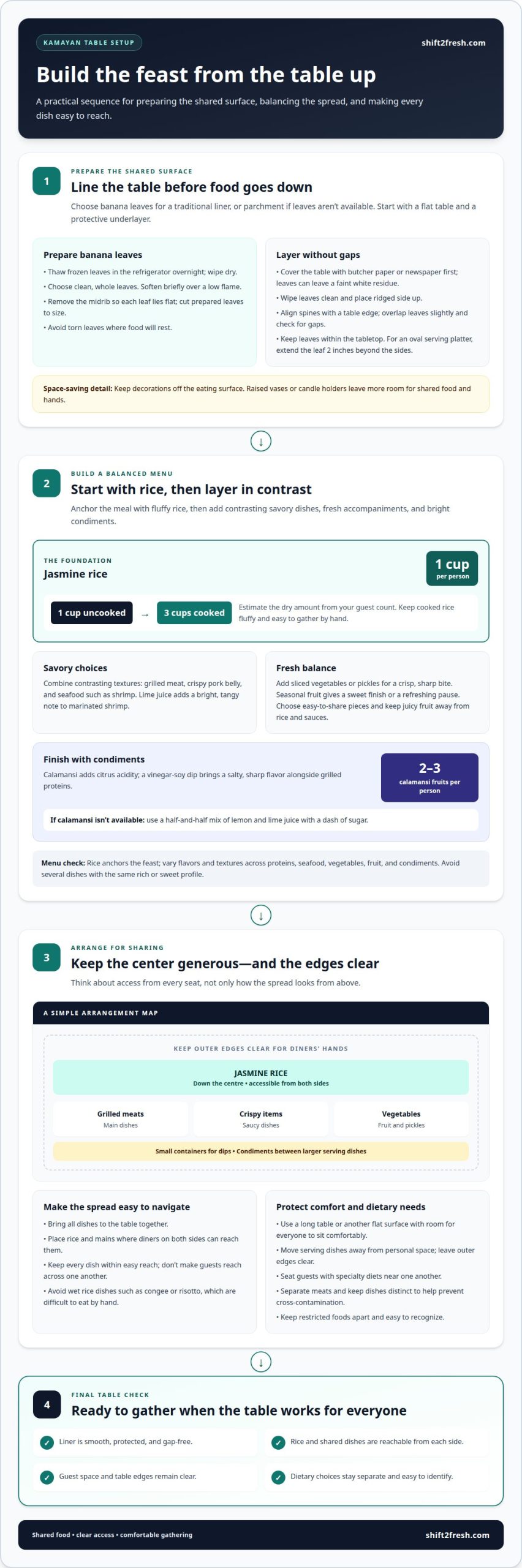
Choose banana leaves for a traditional surface, or parchment if leaves aren’t available. Prepare the liner before arranging the shared dishes.
At home, costs depend on the liner and the foods you prepare. A caterer’s charge depends on the menu, guest count, and service arrangement.
Use a flat table, a protective underlayer, and serving dishes for food. Keep decorations off the eating surface; raised vases or candle holders leave more room for sharing.
Prepare Banana Leaves
Thaw frozen banana leaves in the refrigerator overnight, then wipe them dry before use. Choose a clean, whole leaf, soften it briefly over a low flame, and remove its midrib so it lies flat. The Food and Agriculture Organization of the United Nations also describes cutting prepared leaves to size. Avoid using torn leaves where food will rest.
Clean and Layer the Leaves
Wipe each leaf clean, then lay it with the ridged side facing up. Align the spines with a table edge, overlap the leaves slightly, and check for gaps before adding food. Keep every leaf within the tabletop rather than letting it hang over the sides. For an oval serving platter, cut the leaf so it extends two inches beyond the sides.
Protect the Table
Cover the table with butcher paper or newspaper before laying down banana leaves. The underlayer helps protect the surface, since leaves can leave a faint white residue. Smooth the paper first, then arrange the leaves over it, keeping the protective layer underneath. If banana leaves aren’t available, use parchment paper as the table liner instead.
Arranging shared food and making space for guests
Arrange the spread so guests can share dishes easily and sit comfortably. When setting up a kamayan table, consider access from every seat, not just how the food looks from above.
Arrange Rice, Main Dishes, and Condiments
Place jasmine rice down the centre as the meal’s foundation. Set grilled meats, crispy items, saucy dishes, vegetables, and condiments around it. Keep dips in small containers, or use lettuce leaves to help hold sauces. Avoid wet rice dishes such as congee or risotto, which are difficult to eat by hand. Keep each dish within easy reach.
Set Out Food for Communal Sharing
Bring all the dishes to the table together so guests can choose from the full meal. Put rice and main dishes where diners on both sides can reach them. Place sliced vegetables, fruit, pickles, and condiments between larger serving dishes. Keep the arrangement clear, so guests can combine foods without moving bowls or reaching across someone else.
Make Space for Guests
Use a long table or another flat surface with enough room for everyone to sit comfortably. Leave the outer edges clear for diners’ hands, and move serving dishes away from personal space. Keep decorations off the eating surface. Raised vases or candle holders can add a festive touch without taking up room needed for food and hands.
Accommodate Dietary Needs and Food Safety
Seat guests with specialty diets near one another, and separate meats to help prevent cross-contamination. Keep dishes distinct so diners can identify suitable choices without mixing foods. A useful final check when setting up a kamayan table is to make sure restricted foods remain apart and easy to recognize. This helps guests navigate the spread comfortably.
Choosing rice, proteins, seafood, vegetables, fruit, and condiments
Build the menu around a satisfying rice base, contrasting mains, and fresh accompaniments. For a UAE gathering, look for folded frozen banana leaves and Filipino ingredients, then choose dishes that suit your guests.
- Start with jasmine rice, the foundation of the spread. Plan around one cup of rice per person. One cup of uncooked jasmine rice makes three cups cooked, so estimate the dry amount based on your guest count. Keep the cooked rice fluffy and easy to gather by hand rather than choosing a wet preparation.
- Choose proteins with contrasting textures, such as grilled meat and crispy pork belly. Add seafood, such as shrimp, for another savory option. Lime juice gives marinated shrimp a bright, tangy note. Place different proteins apart so diners can choose what suits them and move easily around the serving area.
- Add vegetables and fruit for freshness and contrast. Sliced vegetables or pickles bring a crisp, sharp bite alongside rich grilled dishes. Seasonal fruit can provide a sweet finish or a refreshing pause between savory foods. Choose pieces that are easy to pick up and share, and keep juicy fruit away from rice and sauces.
- Set out condiments that balance the meal. Calamansi adds citrus acidity; plan two to three fruits per person. If it isn’t available, a half-and-half mix of lemon and lime juice with a dash of sugar can work as a substitute. A vinegar-soy dip adds a salty, sharp flavor alongside grilled proteins.
- Review the menu as a whole before serving. Rice should anchor the feast, while proteins, seafood, vegetables, fruit, and condiments provide different flavors and textures. Avoid choosing several dishes with the same rich or sweet profile. A varied selection gives guests options and helps the gathering feel balanced.
How many people should you plan for per banana-leaf table setting?
There’s no universal guest count for a banana-leaf setting. Plan around the table’s usable surface, how many guests can sit comfortably, and whether everyone can reach the shared food.
- Start with the actual seating arrangement, not the leaf size. Place chairs or cushions around the table as guests will sit during the meal. A long table may fit diners along both sides, while a smaller surface may work better for a close group. Count available seats only after allowing people room to gather.
- Check the centre space next. Shared rice, main dishes, and condiments need to stay within reach without crowding each diner’s place. If a serving bowl blocks someone’s reach, reduce the number of dishes in that area or move the bowl. For example, place a dip between two dishes rather than at the far end.
- Use the banana-leaf coverage as a practical guide, not a headcount rule. Leaves should cover the eating area without hanging over the table’s sides. If the lined surface leaves no room for guests’ hands, the arrangement is too tight. Add another table or use a larger, flat surface instead.
- Test the layout before serving. Set out empty bowls where the food will go, then check for clear access from every seat. Guests should be able to reach shared dishes without leaning across another diner. Keep napkins and handwashing supplies nearby, but off the central eating area.
- Adjust the layout to suit the gathering. Guests who need extra space, including children or diners with limited mobility, may affect how many seats fit comfortably. Prioritize comfortable seating and easy reach over squeezing in more people. If the table feels crowded during the test, reduce the seating or split the meal across surfaces.
Shift 2 Fresh
Shift 2 Fresh helps UAE home cooks source ingredients for a Filipino kamayan gathering, from Seasonal Filipino Fruits and Asian Vegetables to Filipino Pantry Items. These ingredients can add familiar flavors and fresh accompaniments to a shared feast, alongside the rice, proteins, and dishes you’ve chosen. Mobile App Ordering offers a convenient way to place grocery orders as you plan the menu.
Use the spread you’ve planned to guide your ingredient choices: fruit can bring a sweet, refreshing contrast, vegetables add variety, and pantry items can support Filipino-style flavors. Contact Shift 2 Fresh for help with your grocery order.
Make your next gathering your own
Once you’ve settled on a menu and guest arrangement, leave room to adapt the spread for the people joining you. A kamayan meal can reflect family favorites, seasonal ingredients, and flavors your guests enjoy. As you plan the table, think beyond a fixed menu. Choose combinations that feel generous and easy to share, then let the gathering shape the details.
For ingredient planning in the UAE, Shift 2 Fresh offers Seasonal Filipino Fruits, Asian Vegetables, and Filipino Pantry Items. These can provide fresh accents and Filipino pantry flavors to complement the meal you have in mind. Start with an ingredient you’re excited to feature, then build a balanced menu around it. Consider how its taste and texture will work with the other dishes, and leave space for guests to enjoy each part of the spread at their own pace.
Explore ingredients with Shift 2 Fresh as you plan your next feast. Bring your favorite flavors to the table, invite everyone to share, and enjoy making the gathering your own.
Frequently Asked Questions
What Is Kamayan?
Kamayan is a Filipino communal meal centered on sharing food and eating with the hands. The name comes from kamay, the Filipino word for “hand.” It’s often part of celebrations, family gatherings, and special occasions. The format encourages diners to share a common spread, making the meal a social experience rather than a series of separate plated servings.
What is a kamayan feast and what foods are traditionally served?
A kamayan feast is a shared Filipino meal that brings rice, proteins, vegetables, fruit, and condiments together for diners to enjoy. A menu might pair grilled meat with seafood, sliced vegetables, pickles, and citrus- or vinegar-based dips. Choose dishes with varied flavors and textures, such as savory mains alongside fresh fruit. Serve the feast as a shared spread rather than as separate courses.
What ingredients and quantities are needed for a kamayan meal for 10 people?
For 10 guests, plan on 10 cups of cooked jasmine rice, using the guide of one cup per person. Since one cup of uncooked jasmine rice yields three cups cooked, that requires 3⅓ cups uncooked rice. Add a mix of proteins, seafood, vegetables, fruit, and condiments to suit your menu. Their quantities depend on the dishes chosen and how much variety you want to serve.
How do you prepare and clean banana leaves for a kamayan table?
Thaw frozen leaves in the refrigerator overnight, then wipe them dry before use. Start with a clean, whole leaf and briefly soften it over low heat. Remove the midrib so the leaf can lie flat, then cut it to fit the eating surface. Check for tears that could expose the surface underneath, and use parchment as an alternative liner.
How do you arrange rice, grilled meats, seafood, and sides on banana leaves?
Make rice the central anchor, then place grilled meats, seafood, sides, and condiments around it. Keep sauces in small containers or use lettuce leaves to help hold them. Arrange dishes so diners can reach them without leaning across the spread. Keep juicy fruit apart from rice and other foods, and place dips beside the dishes they complement.
Is kamayan traditionally eaten by hand, and what etiquette should guests follow?
Yes. Guests traditionally eat kamayan with their hands. Have everyone wash their hands thoroughly before the meal, and keep napkins or wet wipes nearby. Diners can use the nondominant hand to select food from shared dishes, then eat with the dominant hand, using their fingertips and thumb. Keep hands clean between reaching for shared dishes, and avoid using hand sanitizer instead of washing.
0 comments