

Filipino fusion cooking ideas work best when familiar dishes meet a new texture or flavor. Try adding crumbled longganisa, oyster sauce, and fried garlic to Chinese-style fried rice, or balance champorado’s sweet rice and chocolate with crispy dried fish. For soups and stews, give kare-kare a plant-based twist or bring Filipino-inspired seasonings to a comforting bowl.
Rice, soups, and stews are flexible starting points, but each dish’s character comes from the traditions and influences behind it. Filipino cooking draws on local foodways as well as ideas shaped by other cultures, so fusion can build on those layers instead of combining ingredients at random. This guide explores practical ways to adapt rice dishes, create fresh takes on soups and stews, and keep Filipino flavors at the heart of every plate. You’ll also find context on food traditions to help you choose combinations that feel thoughtful, balanced, and enjoyable to share.
Key Takeaways
- Build rice dishes around contrasts in flavor and texture, pairing savory additions with familiar Filipino staples.
- Use Filipino cuisine’s cultural influences as a guide to combining ingredients and cooking techniques thoughtfully.
- Adapt soups and stews with plant-based ingredients or richer sauces to create a fresh take on a comforting dish.
- Let regional traditions and the meaning behind Filipino dishes shape your fusion choices, not just the ingredients.
1. Rice dishes such as arroz caldo and garlic fried rice
For a comforting bowl, start with arroz caldo, a Filipino chicken-and-rice porridge seasoned with ginger. Simmer rice until it softens, then build flavor with chicken, broth, and aromatics. A fusion version can borrow the warming spices of another cuisine while keeping ginger and tender rice central. Add toppings at the end so each spoonful offers contrast. This approach suits breakfast, but a bowl can also anchor a shared meal. Across an archipelago of over 7,000 islands, regional ingredients and preferences help explain why Filipino cuisine has no single flavor profile.
Garlic fried rice, or sinangag, turns cooked rice into a savory side or a meal when served with an egg. Warm garlic in oil, add the rice, and stir until the grains separate and take on its aroma. For a twist, fold in chopped Asian vegetables or finish with a bright, sour note inspired by sinigang. Add ingredients gradually: too much moisture can make fried rice heavy. Combinations can shift with what you have on hand, so taste as you cook and adjust the salt, acidity, and crispness.
Rice also pairs naturally with Filipino barbecue and grilled dishes. Serve garlic rice with grilled chicken skewers, or pair it with lechon, whose crisp skin contrasts with the soft grains. For a fiesta table, serve rice alongside several dishes instead of mixing every flavor together. Guests can then combine a spoonful of rice with grilled meat, vegetables, or tangy sauce. Rice provides a steady base, while char, sweetness, and acidity bring changing notes.
Filipino noodles offer another way to build a rice-centered spread. Pancit is associated with prosperity, long life, and good luck at celebrations, making it a natural companion to rice dishes at a fiesta. Keep the noodles distinct, then let diners pair them with rice, grilled food, or vegetables. For a fusion plate, use pancit as the base and add a familiar grilled topping. Filipino fusion cooking ideas work best when every element has a clear role instead of competing for attention.
2. Filipino cuisine as a blend of cultural influences
Filipino cuisine reflects generations of exchange rather than one fixed style. Spanish colonisation of the Philippines lasted from the 16th to the 19th century, while Chinese traders introduced soy sauce, tofu, and stir-frying methods. Those influences sit alongside local ingredients and cooking practices. In a home recipe, the result can be a familiar dish with several layers: savory soy, soft tofu, crisp vegetables, and a bright finish. Understanding those layers helps make fusion choices purposeful.
Chinese influence offers a practical starting point. Stir-fry vegetables over high heat, add tofu for a soft, savory element, then season gradually with soy sauce. Taste before adding more, since soy sauce contributes salt as well as depth. To connect the dish to Filipino flavors, pair it with garlic rice or add a sour accent. The key is balance: let one influence lead, then use another for contrast rather than crowding the pan.
Spanish-era influence offers another way to read recipes, but it doesn’t mean every modern dish follows the same formula. Instead, consider the cooking method and the role of each ingredient. A slow-cooked dish can sit alongside quickly stir-fried vegetables, creating contrast in texture and pace. For a shared meal, serve them separately so diners can combine them to taste. This keeps each preparation distinct while making room for a new pairing.
Bring the same care to dessert. Bibingka is a Filipino snack cake made with rice flour and coconut milk, ingredients that give it a tender, fragrant character. Treat it as a sweet course, not a blank canvas: add a complementary topping or serve it after a savory meal rather than masking its flavor. Rice remains a staple across the menu, but its role shifts from savory base to dessert ingredient. A thoughtful fusion recipe respects that change and gives each tradition a distinct place at the table.
3. Filipino soups and stews
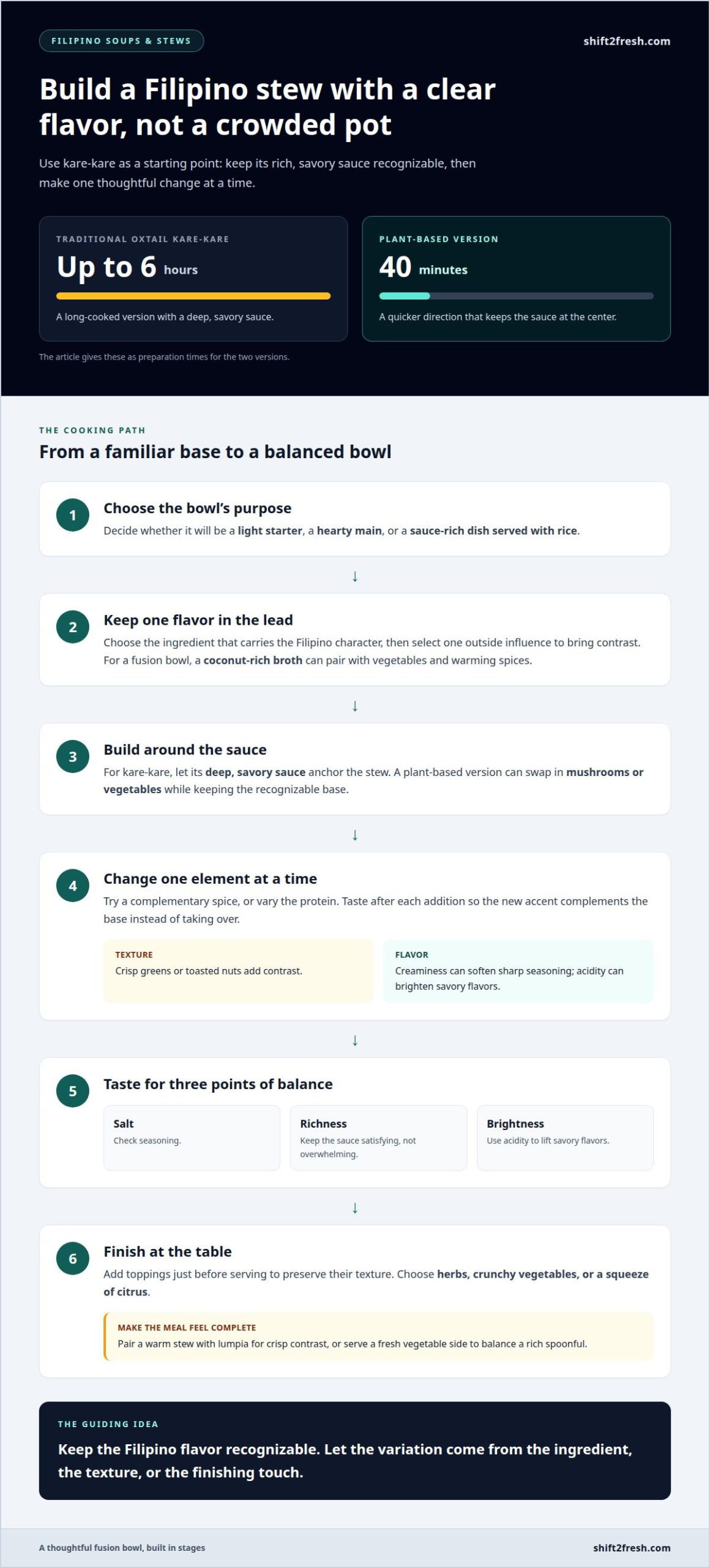
Kare-kare shows how a Filipino stew can anchor a meal through its deep, savory sauce. Traditional kare-kare made with oxtail can take up to 6 hours to cook. For a quicker plant-based direction, the vegan version described takes 40 minutes. Use the contrast as inspiration: build a vegetable stew around a rich sauce, then add texture with crisp greens or toasted nuts. Keep the main flavor recognizable, and let the variation come from its ingredients or topping.
For a fusion variation, keep the stew’s sauce at the center and change one element at a time. Swap the protein for mushrooms or vegetables, or add a spice that complements the base without overpowering it. Taste after each addition: a creamy sauce can soften sharp seasonings, while acidity can brighten savory flavors. This measured approach gives a classic dish a new accent without turning the pot into a jumble of unrelated flavors.
Consider the whole meal, too. Serve a warm bowl of stew with lumpia for a crisp contrast, or add a fresh vegetable side to balance a rich spoonful. Top the stew just before serving with herbs, crunchy vegetables, or a squeeze of citrus. Keep toppings separate until the last moment so they retain their texture. This simple serving choice adds variety at the table without changing the pot’s foundational taste.
Filipino food culture often brings dishes together for sharing, and soup can make a spread feel welcoming. To create a fusion bowl, first choose its purpose: a light starter, a hearty main, or a sauce-rich dish served with rice. Then decide which ingredient will carry the Filipino character and which addition will bring an outside influence. A coconut-rich broth, for example, can pair with vegetables and warming spices. Before serving, taste for salt, richness, and brightness so each flavor has a clear place in the bowl.
4. Filipino food traditions and fusion cooking
Filipino food traditions offer more than flavors to borrow: they show how dishes connect to place and occasion. Indigenous cooking uses bamboo, clay pots, and open flames, while adobo varies from region to region. For a fusion dinner, keep one traditional method or flavor in focus, then add a complementary influence. Sisig, for example, can become a filling for Mexican-style tacos or burritos, bringing its savory character to a handheld party dish.
For Japanese, Mexican, Korean, or Italian pairings, match ingredients by role. Add daing na bangus or tuyo flakes to sushi for a salty, crisp contrast, or use sisig in tacos. Korean-style rice bowls can take adobo flakes, while Italian-style pasta can feature garlic and vinegar notes inspired by adobo. Choose one clear Filipino element, then adjust its intensity to suit the other ingredients.
Sinigang’s sour profile can brighten a fusion broth, dress vegetables, or balance a rich sauce. Add its souring element gradually, tasting as you go, and pair it with savory ingredients rather than adding more acidity. For vegetarian or vegan adaptations, replace meat with mushrooms, tofu, or vegetables, and build flavor with aromatics and a well-seasoned broth. Keep the dish’s defining sourness in the foreground.
For parties, sisig dumplings bring Filipino-Asian flavors into a shareable format, while adobo flakes can top rice bowls prepared ahead. Keep crispy toppings separate until serving so they retain their texture. To balance salty, sour, sweet, and savory notes, introduce one at a time and taste after each addition. If a sauce tastes too sharp, add a savory or gently sweet component instead of more salt.
For safe cooking, keep raw ingredients separate from ready-to-eat toppings, and clean utensils between preparation steps. Cook proteins thoroughly, and keep cooked food covered until it’s served. To explore Filipino pantry items for experimenting with these flavor combinations, browse Filipino pantry ingredients.
Shift 2 Fresh
Shift 2 Fresh can help home cooks in the UAE bring Filipino ingredients into rice dishes, soups, stews, and creative fusion meals. Its selection includes Seasonal Filipino Fruits, Asian Vegetables, and Filipino Pantry Items, giving you ingredients to draw on when planning a dish or adding a fresh twist to familiar recipes. Mobile App Ordering offers a convenient way to browse and order these groceries.
Turn to Shift 2 Fresh when you’re preparing a Filipino-inspired meal and want ingredients that connect with the flavors and traditions discussed above. Whether you’re planning a shared dinner or trying a new combination in your kitchen, the right produce and pantry items can help shape your cooking. Contact Shift 2 Fresh to discuss your grocery needs.
Make Your Next Meal Your Own
Let Filipino fusion cooking ideas inspire a small experiment at your next meal. Choose a flavor you enjoy, then decide how you want it to appear: as a bright finishing touch, a savory base, or a contrasting texture. Keep brief notes on what you changed and what you’d adjust next time. This simple habit can help turn an intriguing combination into a personal recipe, whether you’re cooking for yourself or sharing dinner with friends.
There’s no need to make every plate a dramatic reinvention. A thoughtful variation can honor the Filipino food traditions behind a dish while giving you room to follow your own tastes. If you’re planning your next kitchen experiment and want help finding ingredients for it, contact Shift 2 Fresh. Choose a flavor direction, take it one dish at a time, and enjoy discovering combinations that belong on your table.
Frequently Asked Questions
What are popular Filipino fusion dishes and cooking ideas?
Popular combinations include sisig dumplings and adobo flakes served with nasi goreng, bringing Filipino flavors to familiar formats. For another direction, try fresh lumpiang sariwa with a dipping sauce inspired by another cuisine. Start with a Filipino filling or seasoning, then choose a format that suits the meal, such as a noodle bowl, handheld snack, or shared platter.
What are easy Filipino fusion recipes for beginners?
Fresh lumpiang sariwa is a manageable starting point: fill a soft wrapper with lettuce and lightly stir-fried vegetables, then add a simple dipping sauce with a flavor you enjoy. Prepare the filling first and let it cool slightly before wrapping so the wrapper stays easy to handle. Season lightly at first, then adjust the sauce to taste.
How do you make Filipino-Mexican fusion dishes such as adobo tacos or sisig quesadillas?
For adobo tacos, shred cooked chicken adobo, warm it in a pan with a little sauce, then spoon it into tortillas with crunchy vegetables. For sisig quesadillas, spread cooked sisig over half a tortilla, add cheese, fold, and toast until the cheese melts and the outside turns crisp. Serve both warm, with lime or another bright topping.
0 comments